JINGYING a premier Chinese OEM manufacturer specializing in fine and fashion jewelry. The article details the complete production workflow—from design conception and material sourcing through advanced electroplating techniques to final quality assurance—while examining the technical specifications that define authentic vermeil: a 925 sterling silver base with a minimum 2.5-micron gold layer of at least 10 karat purity. Drawing upon JINGYING’s established manufacturing protocols, industry standards, and material science principles, this guide serves as an authoritative resource for jewelry brands, designers, and industry professionals seeking to understand the precision, craftsmanship, and quality control systems required to produce enduring gold vermeil jewelry at scale.
Chapter 1: Understanding Gold Vermeil – Definitions and Standards
1.1 What Is Gold Vermeil?
Gold vermeil (pronounced “ver-may”) represents a distinguished category of gold-coated jewelry that occupies a unique position in the market—offering the luxurious appearance and substantial feel of solid gold at a fraction of the cost, while maintaining higher quality standards than conventional gold-plated pieces . The term originates from 18th-century France, where artisans perfected the technique of gilding sterling silver objects with gold, creating pieces that combined the value of precious metals with refined aesthetics .
To qualify as authentic vermeil, a piece must satisfy three stringent criteria that distinguish it from standard gold-plated jewelry:
- Base Metal Requirement: The foundation must be sterling silver of at least 925 purity (92.5% pure silver alloyed with 7.5% other metals, typically copper for strength)
- Gold Purity Standard: The gold layer must have a minimum purity of 10 karats, with premium manufacturers often utilizing 14k, 18k, or even 24k gold for enhanced color richness
- Minimum Thickness: The gold layer must measure at least 2.5 microns thick—substantially heavier than standard gold plating, which may be as thin as 0.1-0.5 microns
1.2 The Value Proposition of Vermeil
Gold vermeil occupies an essential market segment by bridging the gap between affordability and quality. Unlike standard gold-plated jewelry, which typically uses base metals such as brass or copper and applies an extremely thin gold layer, vermeil offers several distinct advantages:
- Hypoallergenic Properties: The sterling silver base is naturally hypoallergenic, making vermeil suitable for individuals with sensitive skin who cannot wear jewelry containing nickel or other reactive base metals
- Substantial Weight and Feel: Sterling silver provides a satisfying heft and cool touch that mirrors solid gold, unlike lightweight plated base metal pieces
- Enhanced Durability: The minimum 2.5-micron gold layer, combined with proper electroplating techniques, creates a finish that can withstand years of regular wear when properly maintained
- Intrinsic Material Value: Both the sterling silver base and the gold layer have inherent precious metal value, unlike base metal alternatives
1.3 Historical Context and Modern Relevance
The technique of gilding silver with gold dates back to ancient civilizations, including the Romans, who hammered gold leaf onto silver objects, and artisans in ancient Korea, China, and South America who developed similar methods . The modern term “vermeil” gained prominence in 18th-century France, where it was used for prestigious objects including tableware, ceremonial items, and royal regalia. Notably, Olympic gold medals have been crafted from gold vermeil since 1912, reflecting the technique’s association with excellence and achievement .
Today, vermeil has experienced a renaissance as consumers increasingly seek jewelry that balances quality with accessibility. The growing demand for sustainable, long-lasting pieces aligns perfectly with vermeil’s durability profile, positioning it as a preferred choice for both fashion-forward collections and heirloom-quality designs .
Chapter 2: JINGYING – The Manufacturing Partner
2.1 Company Overview and Manufacturing Philosophy
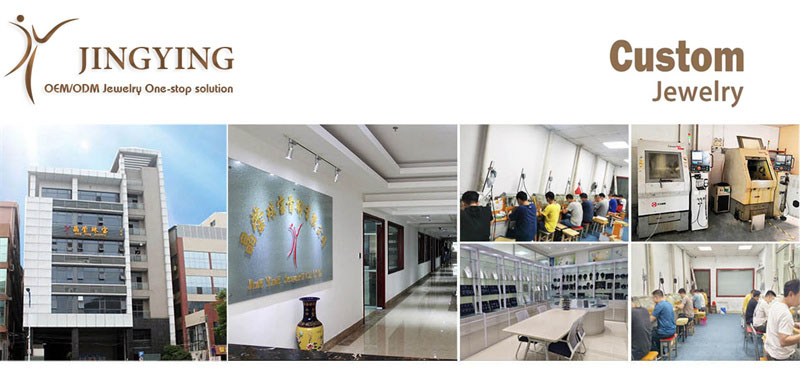
JINGYING has established itself as a premier outsourced manufacturing partner for fine and fashion jewelry brands worldwide. Founded in 2005 in Guangzhou, China, the company has grown from a specialized silver jewelry workshop into an international manufacturing powerhouse serving over 300 brands across 45 countries . With 35,000 square meters of manufacturing space across four specialized facilities and a workforce exceeding 600 skilled technicians and craftspeople, JINGYING combines industrial-scale production capabilities with artisanal craftsmanship .
The company’s manufacturing philosophy—”Precision Engineering Meets Artisanal Craftsmanship”—reflects a commitment to leveraging advanced technology while preserving the irreplaceable human touch that defines exceptional jewelry . This dual approach is particularly critical in vermeil production, where the precision of electroplating must be balanced with the nuanced finishing that only skilled artisans can provide.
2.2 Certifications and Quality Standards
JINGYING’s credibility as a manufacturing partner is underpinned by rigorous certifications and adherence to international standards:
- ISO 9001:2015 Quality Management System Certified: Demonstrating systematic quality control processes and continuous improvement protocols
- Responsible Jewellery Council (RJC) Code of Practices Certified: Verifying ethical sourcing, environmental responsibility, and social compliance
- Conflict-Free Material Sourcing: Compliance with Kimberley Process and LBMA Good Delivery List requirements for precious metals
- REACH and RoHS Compliance: Ensuring materials meet European Union safety and environmental standards
2.3 Technical Infrastructure
The company’s manufacturing capabilities are supported by substantial investment in advanced equipment:
- 35 CNC milling machines with 0.01mm precision
- 22 vacuum casting machines with climate control
- 12 automated electroplating lines
- 18 3D printing systems for rapid prototyping
- 8 laser welding and engraving stations
- XRF analyzers and spectrometers for material verification
This infrastructure enables JINGYING to achieve production capacities of 50,000-75,000 pieces monthly for fine jewelry and 100,000-150,000 pieces for fashion jewelry, with scalability allowing 40% capacity increases within 30 days .
Chapter 3: The Complete Manufacturing Process
3.1 Design and Development Phase
The manufacturing journey begins with collaborative design and engineering, where JINGYING’s technical team works alongside clients to optimize designs for manufacturability without compromising aesthetic intent .
3.1.1 CAD Design and Technical Optimization
JINGYING’s in-house CAD team utilizes advanced software including Rhino3D, MatrixGold, ZBrush, and Blender to create detailed 3D models of each design . This digital modeling phase is crucial for several reasons:
- Design for Excellence (DfX) Consultation: Technical engineers review designs proactively, suggesting enhancements for durability, wearer comfort, cost-efficiency, and production optimization
- Structural Integrity Assessment: Stress points in clasps, chain links, and structural elements are evaluated and reinforced where necessary
- Plating Coverage Analysis: Design features are assessed to ensure uniform gold deposition during electroplating, identifying areas that may require special attention
3.1.2 Prototyping and Sampling
Following CAD approval, JINGYING produces physical prototypes using advanced 3D printing systems. This stage includes:
- Rapid Resin Prototyping: SLA and DMLS printers create high-resolution prototypes within 48-72 hours for design verification
- Wear Testing: Prototypes are evaluated for comfort, fit, and functional performance
- Production Feasibility Analysis: Manufacturing engineers assess tooling requirements, casting complexity, and assembly considerations
The sample development process typically requires 7-10 business days, allowing for iterative refinement before full-scale production commences .
3.2 Material Sourcing and Preparation
3.2.1 Sterling Silver Base Material
JINGYING sources sterling silver from certified refiners on the Shanghai Gold Exchange and LBMA Good Delivery List, ensuring complete traceability and ethical provenance . The silver used meets strict purity standards:
- Composition: 92.5% pure silver, 7.5% copper (or other alloying metals) for optimal hardness and workability
- Testing: XRF analysis and fire-assay certificates verify purity and composition for each incoming batch
For vermeil production, the quality of the silver base is particularly critical. Any impurities or porosity in the silver can compromise adhesion of the gold layer or create weak points that lead to premature wear .
3.2.2 Gold for Plating
The gold used for plating is sourced from ethical refiners with documented conflict-free supply chains. JINGYING offers various gold karat options for vermeil:
- 14k Gold: Provides excellent durability with a balanced yellow color
- 18k Gold: Offers richer color with higher gold content (75% pure gold)
- 24k Gold: Delivers the purest gold color but is softer and more prone to wear
The gold is prepared as plating solutions with precisely controlled chemistry, maintained through continuous filtration and purification systems to ensure consistent deposition quality .
3.3 Component Fabrication
3.3.1 Casting and Formation
JINGYING employs multiple casting methods depending on design complexity and production requirements:
- Vacuum-Assisted Casting: Used for intricate designs requiring complete metal fill and minimal porosity; vacuum casting machines with climate control ensure consistent results
- Investment Casting: The lost-wax method provides exceptional detail capture for complex designs
- CNC Machining: For precision components such as clasps and settings, CNC milling from solid sterling silver stock eliminates porosity issues and achieves tolerances of ±0.01mm
For vermeil necklaces, the chain components and decorative elements are typically produced through casting, while functional components such as clasps often benefit from CNC machining for superior mechanical performance .
3.3.2 Pre-Plating Finishing
Before any plating occurs, all components undergo meticulous finishing to create a flawless surface foundation:
- Initial Polishing: Coarse to progressive fine polishing using specialized wheels and compounds to remove casting lines, sprue marks, and surface imperfections
- Multi-Stage Ultrasonic Cleaning: Components are immersed in ultrasonic baths with specialized cleaning solutions to remove polishing residues, oils, and microscopic contaminants
- Electrochemical Cleaning: An electrochemical process activates the silver surface at the molecular level, ensuring optimal bonding with subsequent plating layers
- Acid Dipping: A final mild acid treatment removes any remaining oxides, leaving a chemically clean surface
The importance of this preparation phase cannot be overstated. Any imperfection or contaminant on the silver surface will be magnified under the gold layer, potentially causing adhesion failure or visible defects .
3.4 The Electroplating Process
3.4.1 The Science of Electroplating
Gold vermeil is created through electroplating—an electrochemical process where an electrical current deposits gold ions onto the prepared silver surface . The process occurs in temperature-controlled plating baths where:
- Anodes: Bars of plating gold (14k, 18k, etc.) dissolve into the electrolyte solution
- Cathode: The jewelry components, suspended in the solution, attract gold ions
- Electrolyte: A carefully formulated solution containing gold ions and chemical additives that control deposition characteristics
The electrical current, bath chemistry, temperature, and plating duration are precisely controlled to achieve the specified gold thickness and quality .
3.4.2 JINGYING’s Advanced Plating Technology
JINGYING employs proprietary pulse-reverse current electroplating technology that significantly enhances gold layer quality compared to conventional direct-current plating . This advanced method:
- Pulses the current: Deposits gold ions evenly into every microscopic crevice, ensuring complete coverage of complex geometries
- Reverses current momentarily: Dissolves high points during deposition, creating a denser, more compact, finer-grained crystalline structure
- Reduces porosity: The resulting gold layer has significantly fewer microscopic voids, enhancing durability and corrosion resistance
This technology produces gold deposits that are not only thick but exceptionally dense and adherent—comparable to the difference between loosely packed snow and solid ice .
3.4.3 The Vermeil Plating Protocol
For vermeil production, JINGYING follows a rigorous multi-stage plating protocol:
Stage 1: Copper Strike (Optional)
For certain applications, a thin copper strike layer may be applied to enhance adhesion and level the surface.
Stage 2: Rhodium Base Layer
A critical step in JINGYING’s vermeil process is the application of a rhodium base layer over the sterling silver . Rhodium, a platinum-group metal, provides:
- Permanent anti-tarnish barrier: Rhodium is highly inert and does not react with air or skin
- Extreme hardness: Significantly harder than gold or silver, providing exceptional scratch resistance
- Brilliant white foundation: Enhances the brightness of subsequent gold layers
Stage 3: Gold Layer Application
The gold layer is applied over the rhodium base using pulse-reverse current technology. For vermeil certification:
- Minimum thickness of 2.5 microns is verified through XRF testing
- JINGYING typically exceeds this minimum, applying 3-5 microns of gold for critical wear areas
- Multiple gold layers may be applied—for example, a 14k underlayer for durability followed by 18k or 24k for final color
Stage 4: Protective Coating
After gold plating, JINGYING applies a microscopically thin, clear protective coating that serves as an initial barrier against everyday abrasives, sweat, and atmospheric chemicals . This nano-coating or specialized lacquer:
- Is engineered to be breathable and non-yellowing
- Does not alter the gold color or appearance
- Extends the pristine life of the gold finish
3.5 Stone Setting (When Applicable)
For vermeil necklaces incorporating gemstones, JINGYING’s stone-setting department employs specialized techniques:
- Pavé Setting: Small diamonds or gemstones set closely together, secured by tiny beads of metal
- Channel Setting: Stones set in a channel between two metal walls
- Bezel Setting: A metal rim encircles the stone for secure protection
- Claw/Prong Setting: Metal prongs hold stones securely while maximizing light exposure
JINGYING’s gemologists verify each stone parcel for quality and authenticity, while skilled setters handle diamonds and colored gemstones with microscopic precision .
3.6 Final Assembly
Assembly involves joining all components—chain, decorative elements, clasps, and set stones—into the finished necklace:
- Laser Welding: For precise, clean joins without visible solder
- Mechanical Joining: For components requiring flexibility, such as chain links
- Clasp Integration: Ensuring the clasp operates smoothly and securely
For clasps specifically, JINGYING’s CNC-machined components ensure:
- Positive engagement with definitive click or snap
- Smooth operation of moving parts
- Consistent tension for thousands of openings and closings
Chapter 4: Quality Assurance and Testing
4.1 Multi-Stage Quality Control Protocol
JINGYING’s quality assurance system operates through a series of rigorous checkpoints:
Incoming Material Inspection
All metals and gemstones are tested upon arrival using XRF analyzers, spectrometers, and gemological verification .
First-Article Inspection
The first piece from each production run undergoes full dimensional, aesthetic, and functional analysis against the approved prototype .
In-Process Inspection (IPI)
At every production stage—post-casting, post-setting, post-polishing—batches are statistically sampled and inspected .
Pre-Shipment 100% Final Inspection
Every single piece receives final inspection under calibrated lighting by trained QC specialists, checking:
- Finish uniformity and surface defects
- Stone security and setting integrity
- Plating thickness and adhesion
- Clasp function and structural soundness
- Overall appearance and packaging
4.2 Specialized Testing for Vermeil
JINGYING subjects vermeil pieces to specialized tests that simulate years of wear:
- Thickness Testing: XRF gauges verify gold layer thickness at multiple points, ensuring compliance with vermeil standards
- Adhesion Testing: Tape tests, heat-quench tests, and friction tests confirm the gold layer is irrevocably bonded and will not peel or flake
- Durability Testing: Salt-spray chambers simulate accelerated corrosion; abrasion machines test wear resistance
- Hypoallergenic Verification: Testing ensures compliance with nickel-free directives, confirming safety for sensitive skin
4.3 Traceability Systems
JINGYING implements comprehensive traceability through lot numbering and production logs. Every piece can be traced back to:
- Its specific batch of metals
- The craftsman who performed electroplating
- The quality controller who gave final approval
- Production date and parameters
Chapter 5: Longevity and Care
5.1 Expected Lifespan of Vermeil
When manufactured to JINGYING’s standards, gold vermeil jewelry can maintain its appearance for many years with proper care . The 2.5-5 micron gold layer, combined with dense crystalline structure from advanced plating technology, resists the common pitfalls of thinning at edges and friction points.
Industry standards suggest that 5 microns of gold plating typically provides approximately 5 years of wear before the gold begins to show signs of wear . JINGYING’s quality standards often exceed this baseline, with pieces engineered for decades of enjoyment.
5.2 Care and Maintenance
To maximize the longevity of vermeil jewelry:
Recommended Practices:
- Store in a dry, soft container when not in use
- Put on jewelry after applying cosmetics, perfumes, and hair products
- Remove before swimming, showering, or heavy exercise
- Clean gently with a soft, lint-free cloth
Avoid:
- Abrasive polishing cloths, which can remove the gold layer
- Ultrasonic cleaners for plated pieces
- Exposure to harsh chemicals, including chlorine and household cleaners
5.3 Replating Services
One advantage of vermeil over solid gold is that pieces can be replated when the gold layer eventually shows wear. JINGYING offers replating services, restoring the original gold finish at a fraction of the cost of replacing the piece .
Chapter 6: OEM Partnership with JINGYING
6.1 Service Models
JINGYING offers two primary partnership models:
OEM (Original Equipment Manufacturing)
Clients provide complete design specifications, and JINGYING executes manufacturing to exact requirements. This model includes:
- Custom tooling and mold development
- Brand-specific quality protocols
- Private labeling and packaging
- Intellectual property protection
ODM (Original Design Manufacturing)
JINGYING provides design and development services, creating collections based on market trends and client direction. Advantages include:
- Reduced time to market
- Lower development costs
- Manufacturing-optimized designs
- Scalable production solutions
6.2 Minimum Order Quantities and Lead Times
- Minimum Order Quantity: 500 pieces per design
- Sample Lead Time: 7-10 business days
- Production Lead Time: 20-35 business days
- Rush Order Capability: 15-20 business days
6.3 Communication and Transparency
JINGYING assigns dedicated project management teams including:
- Account manager for commercial coordination
- Production engineer for technical oversight
- Quality control liaison for inspection reporting
Clients receive scheduled updates with photos and video walkthroughs at critical milestones, with access to secure portals for order status and documentation .
Conclusion
Manufacturing gold vermeil jewelry at JINGYING represents a sophisticated integration of material science, precision engineering, and artisanal craftsmanship. The process transforms 925 sterling silver into enduring luxury through advanced electroplating techniques that deposit substantial, dense gold layers meeting strict vermeil standards of minimum 2.5-micron thickness and 10-karat purity.
For jewelry brands, partnering with a manufacturer like JINGYING provides access to vertical integration, rigorous quality control, and scalable production capacity. The resulting vermeil pieces offer consumers the aesthetic appeal and substantial feel of solid gold at accessible price points, with durability that exceeds standard gold-plated alternatives.
As consumer demand grows for quality, ethically sourced jewelry with meaningful longevity, vermeil manufactured to JINGYING’s standards positions itself as a compelling category—bridging the gap between disposable fashion and heirloom-quality investment, and representing the evolution of outsourced manufacturing where “Made in China” is redefined as “Crafted with Precision, Integrity, and Vision.”