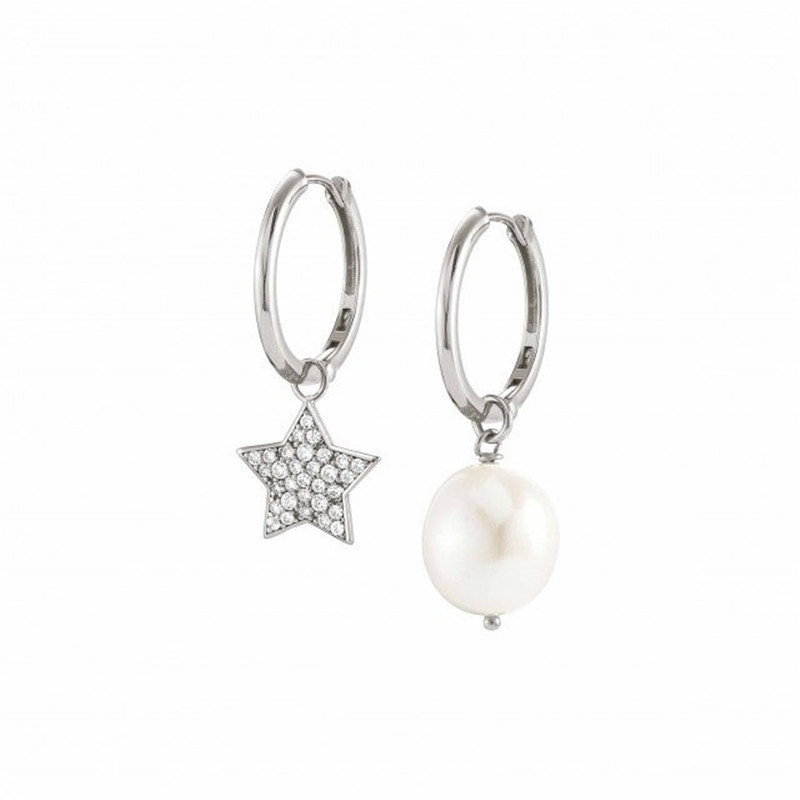
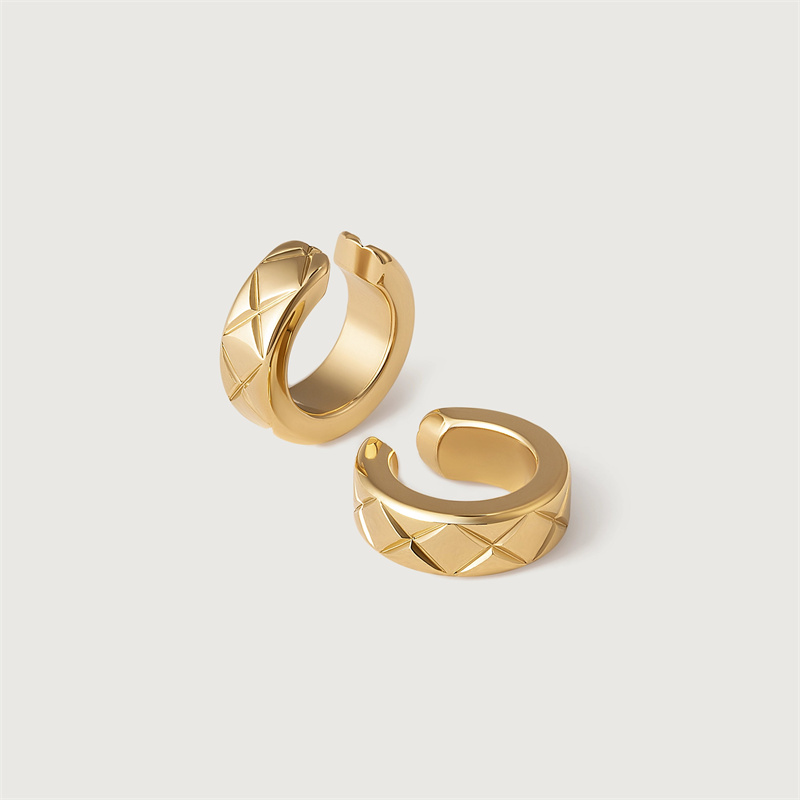
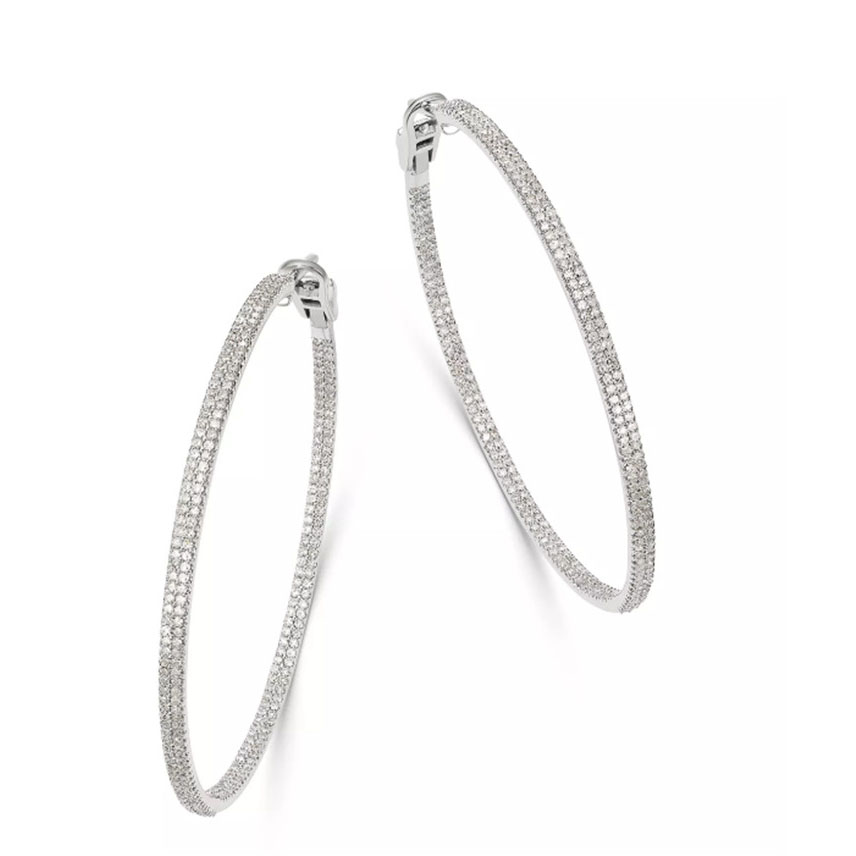
Italy 925 two-tone twist creole hoop earrings OEM ODM jewelry factory
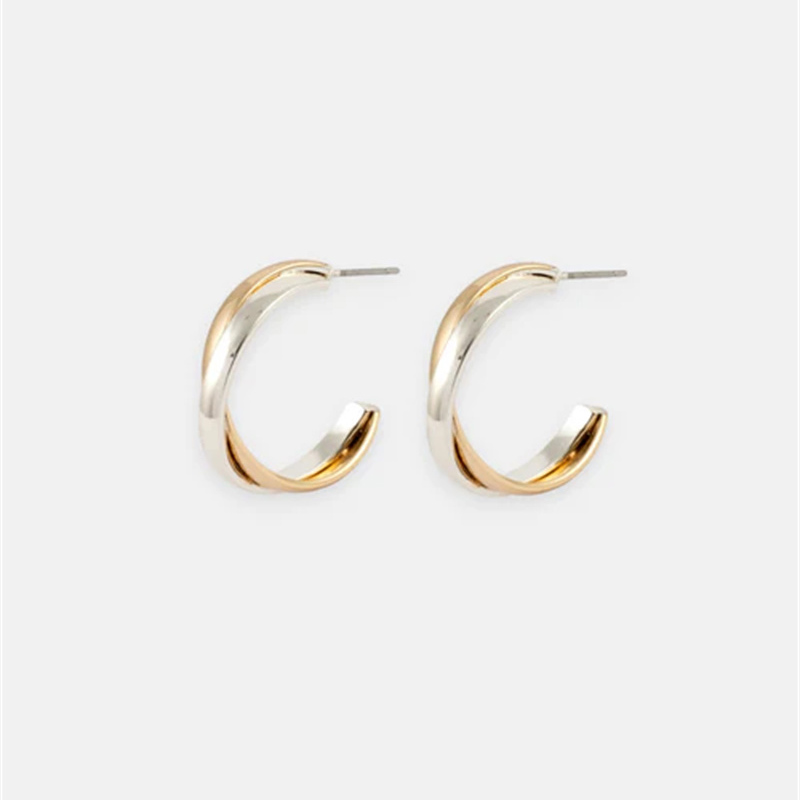
Italy 925 two-tone twist creole hoop earrings OEM ODM jewelry factory
LET’S GET STARTED : mo@kingjy.com
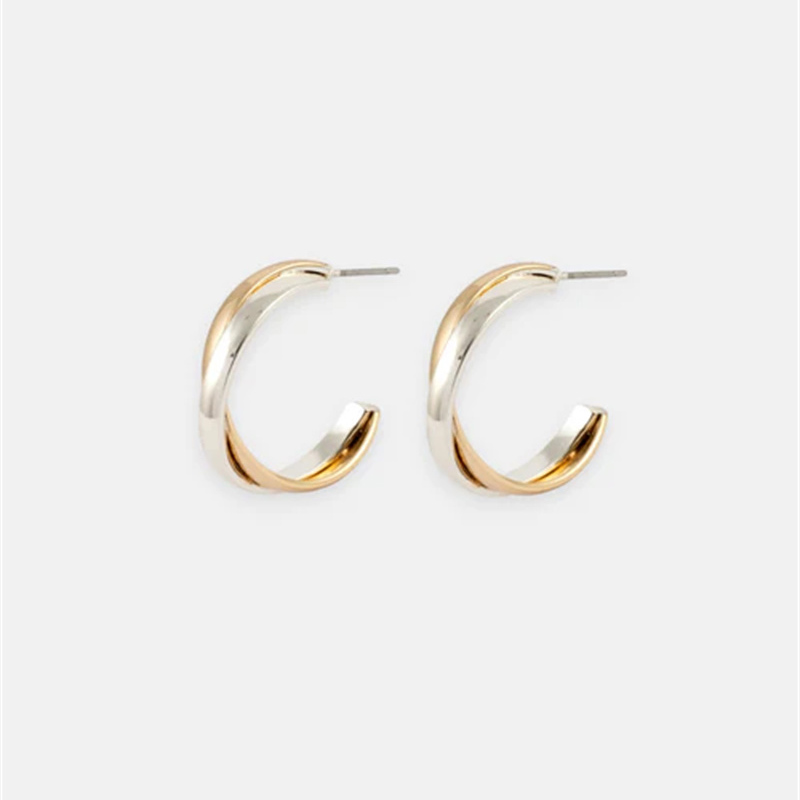
The Art and Industry of Italian Jewelry: OEM & ODM Manufacturing of 925 Silver Two-Tone Twist Creole Hoop Earrings
Introduction
In the global jewelry industry, few items achieve the perfect balance between timeless elegance and contemporary fashion like the two-tone twist creole hoop earring. Crafted from 925 sterling silver with sophisticated dual-metal plating, this design represents a pinnacle of modern jewelry craftsmanship. Italy, with its centuries-old tradition of goldsmithing and innovative manufacturing capabilities, has emerged as a premier destination for Original Equipment Manufacturing (OEM) and Original Design Manufacturing (ODM) of such pieces. This article explores the intricate world of Italian jewelry manufacturing, focusing on the production of 925 sterling silver two-tone twist creole hoop earrings through OEM and ODM partnerships.
Understanding the Product: Anatomy of a Masterpiece
925 Sterling Silver: The Foundation of Quality
The designation “925″ represents a global standard of purity and quality in silver jewelry. This alloy comprises 92.5% pure silver and 7.5% other metals, typically copper. Pure silver (999 fine) proves too soft for durable jewelry, easily scratching and losing shape. The addition of copper creates a metal that retains brilliant, hypoallergenic luster while gaining necessary strength and resilience for everyday wear .
For the global market, 925 sterling silver represents a benchmark for skin safety. Its high silver content minimizes allergic reactions, making it a trusted choice for consumers worldwide. Italian manufacturers source their silver from certified refiners, ensuring batch-to-batch consistency in color, workability, and finish .
The Two-Tone Aesthetic
The two-tone finish represents a deliberate design choice that significantly expands the earring’s versatility. The most popular pairing combines natural bright white sterling silver with warm yellow gold or modern rose gold tones . This effect is achieved through high-precision electrochemical processes like plating or physical vapor deposition (PVD). The base remains 925 sterling silver, with specific sections plated with micron-thin layers of another metal. For twisted wire designs, one strand may remain natural silver while the other receives gold plating, creating stunning visual contrast .
Two-tone jewelry serves as strategic product offerings for brands, allowing single pieces to coordinate with multiple jewelry wardrobes—silver, gold, and mixed-metal—catering to modern consumers’ preference for versatility .
The Art of the Twist
The twisted wire element represents where artistry meets engineering. This transformation turns simple metal wire into dynamic, light-catching sculpture. The twisting creates grooves and peaks that play with light, giving the hoop movement, depth, and texture that smooth wire cannot achieve. Creating a perfect, consistent twist requires specialized skill—taking multiple wires and twisting them around a central axis with precise tension and rotation . The tightness of the twist, from loose wavy spirals to tight rope-like effects, defines the final character of the earring.
The Creole Hoop Form
The term “creole” in jewelry refers to a specific hoop style featuring a distinctive closure mechanism. Creole hoops typically incorporate a latch or tongue closure where a wire tongue clicks into a hollow tube on the opposite end . This classic and secure method ensures both aesthetic integrity and practical wearability. The engineering of such closures requires precision—integrating them so seamlessly they become virtually invisible parts of the design .
The Italian Manufacturing Advantage
A Legacy of Craftsmanship
Italy has long been synonymous with high-end luxury, craftsmanship, and style in the jewelry world. The country’s rich history and world-renowned artisanship have established it as one of the leading global players in jewelry manufacturing . From Venice’s intricate glasswork to Florence’s historic jewelry-making techniques, Italy has earned its reputation as the home of exquisite design .
In recent years, Italy has become a significant hub for OEM and ODM jewelry manufacturing. Many international jewelry brands partner with Italian manufacturers who produce pieces based on their designs while the brands focus on marketing and distribution .
The Vicenza and Valenza Districts
Italian jewelry manufacturing concentrates in historic districts that have cultivated expertise across generations. The Vicenza district, home to companies like Al-ba (founded 1967) and Aquaforte (established 2008), specializes in 925 silver jewelry production . These manufacturers pride themselves on classic Made in Italy craftsmanship while maintaining export capabilities .
Valenza represents another historic center, where companies like Tinelli & C. have operated since 1966. The late Luciano Tinelli’s creative adventure began in the capital of Italian jewelry, blending fascinating new ideas with well-preserved handcraft tradition . These districts maintain small-to-medium operations with 6-10 employees, emphasizing quality over quantity .
OEM vs. ODM: Understanding the Partnership Models
Original Equipment Manufacturing (OEM)
OEM refers to the practice where a company designs a product but outsources manufacturing to a specialized production company . In the context of jewelry, international brands partner with Italian manufacturers who produce pieces based on their exact design specifications. The manufacturer focuses on precision production, quality control, and timely delivery while the brand maintains design ownership and marketing responsibilities .
For 925 silver two-tone twist creole hoops, OEM partnerships involve translating client designs into production reality. This process begins with collaborative consultation—understanding target markets, price points, and aesthetic preferences .
Original Design Manufacturing (ODM)
ODM represents a more comprehensive partnership where the manufacturer not only produces the product but also contributes to its design . An ODM manufacturer collaborates with brands to create custom designs, allowing greater flexibility in product aesthetic and functionality .
Many Italian jewelry factories work with international brands to create exclusive collections through these collaborations. This model proves particularly valuable for brands lacking in-house design expertise or those seeking fresh creative perspectives .
The Italian Advantage in OEM/ODM
Italy’s long-standing tradition of jewelry-making, combined with expertise in design and manufacturing, has made the country an ideal destination for brands seeking OEM or ODM partnerships. These arrangements allow companies to leverage world-class craftsmanship while focusing on branding, marketing, and distribution .
The Manufacturing Process: From Concept to Completion
Phase One: Collaborative Consultation and Design Development
The process begins with dialogue. Italian jewelry manufacturers engage with clients—ranging from nascent jewelry brands to established fashion houses—to understand their vision .
Using Computer-Aided Design (CAD) software, engineering teams create precise 3D models of the hoop earring. These models allow clients to visualize proportions, twist intricacy, and closure integration. Digital modifications save time and cost before physical prototyping begins .
Phase Two: Prototyping and Sampling
This critical phase ensures client satisfaction before mass production. Resin or wax prototypes are created from CAD models, allowing physical assessment of size, weight, and feel. Once approved, production samples are handcrafted using actual materials: 925 sterling silver twisted to specification and finished with two-tone plating .
Phase Three: Mass Production
Upon sample sign-off, mass production commences. Sterling silver rods are drawn through progressively smaller dies to achieve precise wire gauges . Prepared wires feed into precision twisting machines—controlling speed and tension to ensure every millimeter has identical twist patterns .
The twisted wire is carefully coiled around mandrels of specific diameters to form hoop shapes, with extreme care to avoid distorting delicate twist patterns . Closure components are meticulously soldered onto hoops, requiring high skill for strong, seamless joints .
Phase Four: Plating and Finishing
Raw hoops undergo multi-stage polishing processes—tumbling in abrasive media to smooth rough edges, followed by hand or machine polishing to achieve desired luster .
Two-tone plating represents a delicate electrochemical ballet. Areas not intended for plating are masked off. Earrings are thoroughly cleaned and immersed in electroplating solutions. Electric current bonds layers of gold or rose gold atoms onto exposed sterling silver surfaces. The thickness of this layer, measured in microns, is carefully controlled for durability and color consistency .
Phase Five: Quality Control
Italian manufacturers maintain rigorous multi-stage quality control processes. Dimensional checks verify diameter and wire gauge. Twist consistency inspections ensure uniform patterns across pairs . Plating quality tests examine color accuracy, coverage, and adhesion—often using salt spray tests to simulate wear . Clasp functionality undergoes repeated opening and closing to ensure longevity and secure hold . Each earring receives individual visual inspection under bright light before cleaning and packaging .
Certifications and Standards
The Hallmark System
Authentic Italian silver jewelry carries specific hallmarks verifying purity and origin. Aquaforte jewelry, for example, features double hallmarks: one certifying 925‰ silver purity and the 406VI mark identifying the Aquaforte laboratory . These marks provide consumer confidence and brand protection.
International Certifications
Major Italian manufacturers pursue international certifications demonstrating commitment to quality and responsibility. DML Dal Maso achieved RJC (Responsible Jewellery Council) certification, establishing ethical, social, environmental, and human rights practices . They also obtained Chain of Custody certification, defining responsible sourcing requirements for precious metals .
Eco-Friendly Innovations
Progressive Italian manufacturers incorporate environmentally conscious practices. Aquaforte treats silver with galvanic plating using 23-carat gold that is cadmium and nickel-free, with surfaces protected by e-coating varnish for wear resistance . Many hand-finishing processes minimize environmental impact through traditional techniques requiring fewer chemicals .
The Commercial Landscape
Major Markets and Distribution
Italian jewelry manufacturers export globally, with significant presence in Hong Kong, the Middle East, Southeast Asia, and Taiwan . Major industry trade fairs in Milan, Vicenza, Hong Kong, Dubai, and Las Vegas serve as crucial business development platforms .
The Client Base
Italian manufacturers serve diverse B2B clientele: start-up jewelry brands with design visions but limited manufacturing capabilities; e-commerce businesses needing reliable suppliers for trending products; established fashion brands outsourcing specific lines; and influencers seeking signature collections .
Brand Stories
Companies like Bysimon Group, operating since 1970, exemplify Italian jewelry manufacturing success. They design silver jewelry for women—rings, bracelets, earrings, necklaces, and brooches, embellished with zircons or natural stones, with men’s lines including cufflinks. Their quality principles balance distinctive style, unique products, advanced business concepts, and punctual service .
The Future of Italian OEM/ODM Manufacturing
Technological Integration
Italian manufacturers increasingly integrate traditional goldsmithing techniques with 3D printing and advanced processes. Lost-wax microfusion allows creation of gold, silver, and brass jewelry with impeccable finishes and intricate details . This technology enables both individual custom pieces and serial production, always maintaining Made in Italy quality .
Sustainability and Ethics
Market trends toward sustainability are reshaping manufacturing practices. RJC certification, environmentally friendly materials, and responsible sourcing have become competitive advantages . Italian manufacturers emphasize their ability to minimize environmental impact while maintaining quality standards .
Market Positioning
Italian manufacturers maintain competitive advantage through distinctive positioning: design excellence, artisanal heritage, technological innovation, and brand prestige. While Asian manufacturers may offer lower cost structures, Italian manufacturers compete on quality, design credibility, and the powerful “Made in Italy” brand .
Conclusion
The 925 sterling silver two-tone twist creole hoop earring represents a sophisticated product where material science, design artistry, and precision manufacturing converge. Italy’s jewelry manufacturing industry, with its centuries of tradition, world-class craftsmanship, and modern OEM/ODM capabilities, stands uniquely positioned to produce these pieces for the global market.
From the historic districts of Vicenza and Valenza to innovative manufacturers embracing 3D printing and RJC certification, Italian jewelry factories combine time-honored techniques with modern efficiency. For international brands seeking manufacturing partners, Italian OEM and ODM jewelry factories offer not just production capacity but a partnership infused with design heritage, quality commitment, and market credibility.
The two-tone twist creole hoop, with its timeless form and contemporary finish, serves as a fitting symbol of this industry—where traditional craftsmanship meets modern design, and Italian manufacturing excellence serves the global jewelry market. As consumer preferences evolve toward versatile, high-quality, ethically produced jewelry, Italian OEM and ODM manufacturers continue to demonstrate their essential role in bringing these treasured pieces to life