Custom OEM Service of Rectangle Aquamarine Bezel Stud Earrings in 10K/14K Solid
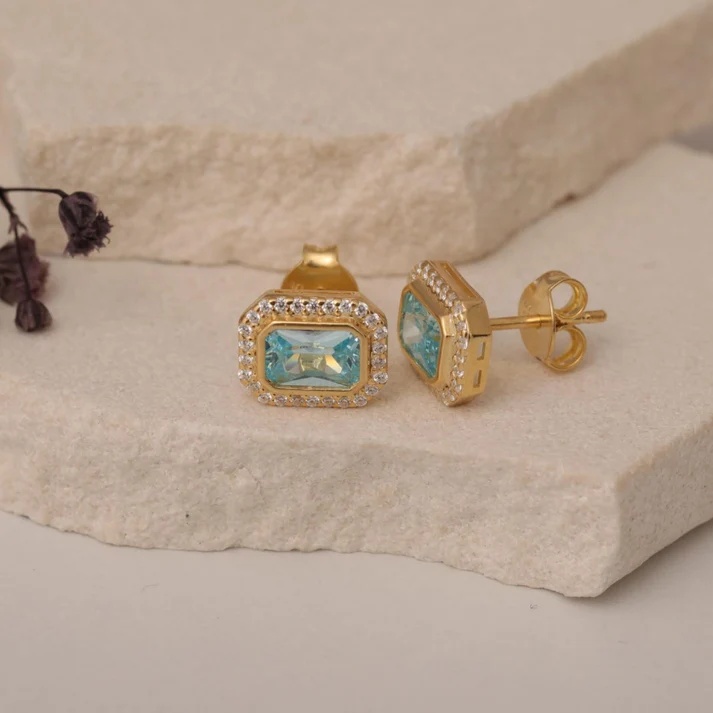
Custom OEM Service of Rectangle Aquamarine Bezel Stud Earrings in 10K/14K Solid at JINGYING
LET’S GET STARTED : mo@kingjy.com
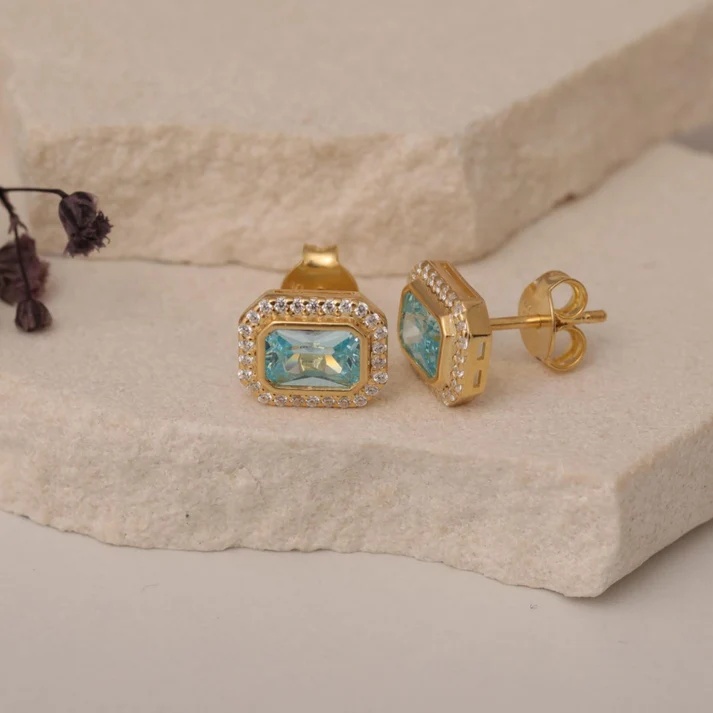
The Manufacturing Process of Rectangle Aquamarine Bezel Stud Earrings in 10K/14K Solid Gold at JINGYING
Introduction
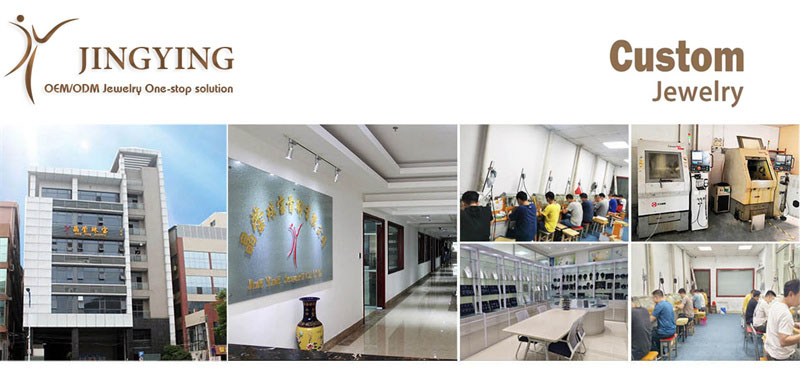
In the competitive landscape of fine jewelry manufacturing, the creation of a seemingly simple piece—a rectangle aquamarine bezel stud earring in solid gold—requires a sophisticated interplay of digital precision, metallurgical expertise, and traditional craftsmanship. JINGYING Jewelry, a Guangzhou and Wuzhou-based manufacturer with over two decades of vertical integration experience, has refined a comprehensive workflow that transforms raw materials into retail-ready assets. This article provides a detailed examination of how JINGYING produces these specific earrings in 10K or 14K solid gold, exploring each phase from design conception to final quality inspection.
Phase 1: Design Consultation and CAD Modeling
The manufacturing journey begins with design development. JINGYING’s engineering team collaborates with clients to translate concepts into manufacturable specifications. For rectangle bezel stud earrings, critical parameters include precise dimensions, metal composition (10K or 14K gold), and the setting type—bezel, which requires a continuous metal rim encircling the aquamarine.
JINGYING works with industry-standard CAD software including Rhino, MatrixGold, and ZBrush. The design phase involves:
- Digital 3D modeling: Creating a photorealistic representation of the earring, including the rectangle bezel’s exact geometry, the post alignment, and the overall weight balance
- Manufacturability review: Engineers assess the CAD file for casting viability, recommending modifications to enhance durability and reduce production costs
- Stone integration planning: The bezel dimensions must precisely match the aquamarine’s measurements to ensure secure setting
For stud earrings, the balance between the post (the component passing through the ear) and the decorative front is critical—an improperly weighted earring will droop. JINGYING’s CAD specialists optimize this balance digitally before any metal is cast.
Phase 2: Prototyping and Client Approval
Before committing to solid gold production, JINGYING creates a prototype using high-resolution SLA/DLP 3D printing. This process produces a wax or resin model that allows clients to:
- Assess the design’s aesthetics tangibly
- Verify the bezel’s fit around the aquamarine
- Evaluate comfort and wearability
- Request adjustments before final production
The prototyping stage is particularly important for bezel settings, as the metal rim must accommodate the stone precisely without gaps or excessive pressure that could damage the aquamarine. JINGYING’s iterative approach enables client feedback and modifications, ensuring the final product aligns with expectations.
Phase 3: Rubber Mold Creation (For Volume Production)
For designs requiring multiple units or future repeat orders, JINGYING crafts silicone or vulcanized rubber molds. These molds serve as the foundation for wax injection in the lost-wax casting process:
- Durability: High-quality rubber molds capture intricate details and textures
- Efficiency: A single mold can produce hundreds of identical wax models
- Consistency: Ensures uniform dimensions across production batches
This step is optional for small-batch production but becomes essential for scaling.
Phase 4: Lost-Wax Casting for Solid Gold
With the prototype approved, JINGYING initiates the casting process for solid 10K or 14K gold. The lost-wax casting method—a centuries-old technique refined with modern technology—proceeds as follows:
- Wax injection: The rubber mold produces wax replicas of the earring design
- Tree assembly: Multiple wax models are attached to a wax “tree” for simultaneous casting
- Investment: The wax tree is encased in a refractory plaster (investment)
- Burnout: The plaster is heated, melting away the wax and leaving a cavity
- Gold casting: Molten 10K or 14K gold is poured into the cavity using vacuum or centrifugal methods to minimize porosity
For designs requiring exceptional precision—particularly geometric rectangles with sharp corners—JINGYING may employ CNC milling instead of or in addition to casting. CNC machines carve the earring from a solid block of gold, ensuring exact dimensions that casting alone cannot guarantee.
Gold Composition Specifications
The solid gold used adheres to international purity standards:
- 10K gold: 41.7% pure gold by weight, alloyed with copper, silver, and other metals for durability
- 14K gold: 58.5% pure gold by weight, offering a balance of luxury and strength
The choice between 10K and 14K affects both the final color and the alloy composition. For white gold variants, the alloy includes palladium and other whitening agents.
Phase 5: Bezel Setting Preparation
Once the gold castings are cooled and separated from the tree, JINGYING’s artisans prepare the bezel settings:
- Cleaning: The castings undergo pickling (an acid solution) to remove oxidation and investment residue
- Filing and sanding: Rough edges are smoothed, and the bezel walls are refined to ensure a precise fit for the aquamarine
- Fit testing: The aquamarine is placed into the bezel to verify a snug yet non-damaging fit
The bezel setting technique involves a continuous metal rim that encircles the stone, protecting it while creating a sleek, modern aesthetic—ideal for active lifestyles. Unlike prong settings that expose the stone to potential impacts, bezel settings offer superior security for valuable gemstones like aquamarine.
Phase 6: Stone Setting
With the bezel prepared, JINGYING’s specialized setters mount the rectangle aquamarine into the gold frame. The process requires exceptional skill:
- Seating: The aquamarine is carefully positioned within the bezel
- Burnishing: The metal rim is gradually pushed over the stone’s edge using specialized tools
- Securing: The bezel is compressed uniformly around the entire perimeter, holding the stone firmly without cracking or scratching it
JINGYING employs expert artisans who perform these operations using engraving balls and chasing hammers, often mounting the earring in sealing wax to hold it steady during setting.
Phase 7: Finishing and Polishing
After stone setting, the earrings undergo comprehensive finishing:
- Hand polishing: Artisans polish the gold surfaces to achieve the desired finish—high-polish (mirror), matte, or brushed
- Edge smoothing: All edges are rounded for wearing comfort
- Final detailing: Any remaining tool marks or imperfections are removed
For solid gold pieces, plating is typically unnecessary since the metal itself provides the golden hue. However, for white gold variants, rhodium plating may be applied for extra shine and tarnish resistance. JINGYING’s plating technology can achieve thicknesses up to 3 microns, ensuring long-lasting brilliance.
Phase 8: Quality Assurance
JINGYING implements a rigorous multi-stage quality control process:
- Metal purity verification: Confirms the 10K or 14K gold composition meets international standards
- Stone security check: Ensures the aquamarine is firmly held in the bezel
- Surface inspection: Magnified examination for scratches, porosity, or finishing flaws
- Weight and balance testing: Verifies the earring sits properly on the ear
- Post alignment: Confirms the earring post is correctly positioned
Phase 9: Packaging and Delivery
Upon passing inspection, each pair of earrings undergoes final polishing and is carefully packaged in custom-branded presentation boxes. JINGYING coordinates international logistics with DDP or FOB options for worldwide delivery.
Lead Time and Production Capacity
Standard production lead time for custom jewelry at JINGYING ranges from 25 to 35 days. With a workforce exceeding 200 employees and a monthly production capacity of up to 80,000 pieces of jewelry, the company efficiently handles both small-batch bespoke orders and large-scale production runs.
Conclusion
The manufacture of rectangle aquamarine bezel stud earrings in 10K or 14K solid gold at JINGYING exemplifies the modern jewelry industry’s fusion of digital precision and artisanal skill. From initial CAD modeling through 3D printing, lost-wax casting, bezel setting, and final polishing, each phase contributes to a finished product that combines aesthetic appeal with lasting durability. For brands and designers seeking a manufacturing partner capable of translating creative visions into high-quality solid gold jewelry, JINGYING’s vertically integrated approach offers a proven pathway from concept to market-ready asset.