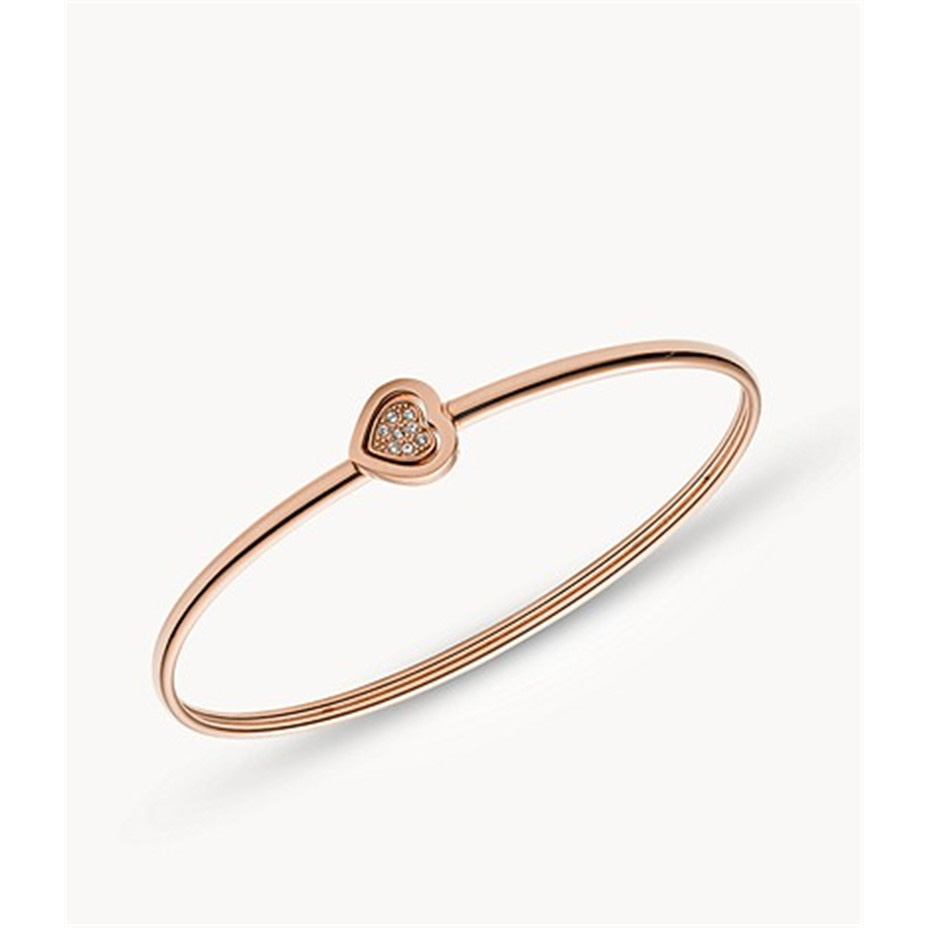
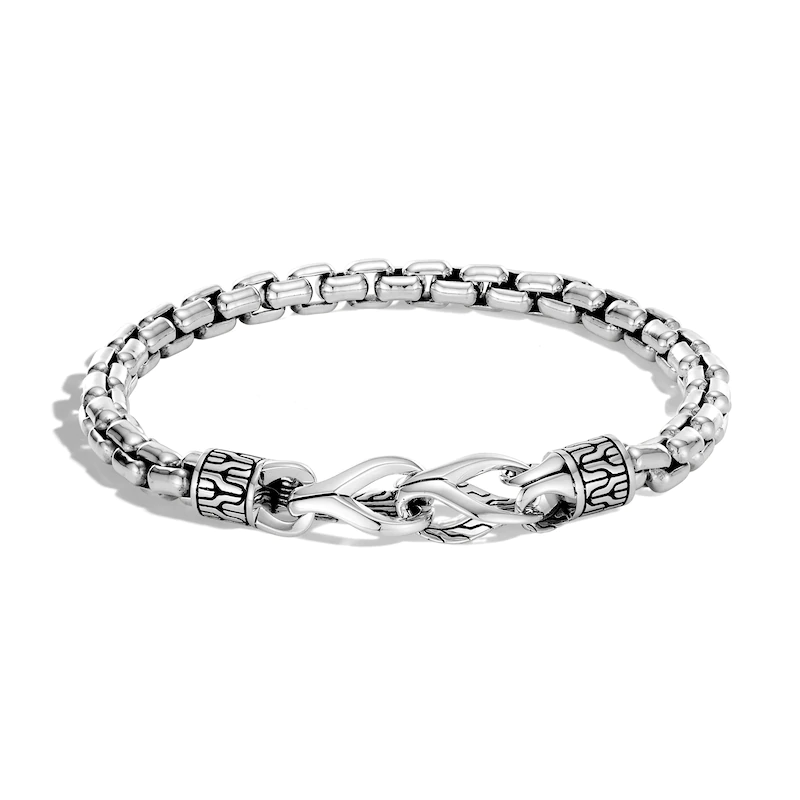
Fashion 18K Chain Ladder Chain Bracelet Custom Jewelry Manufacturer
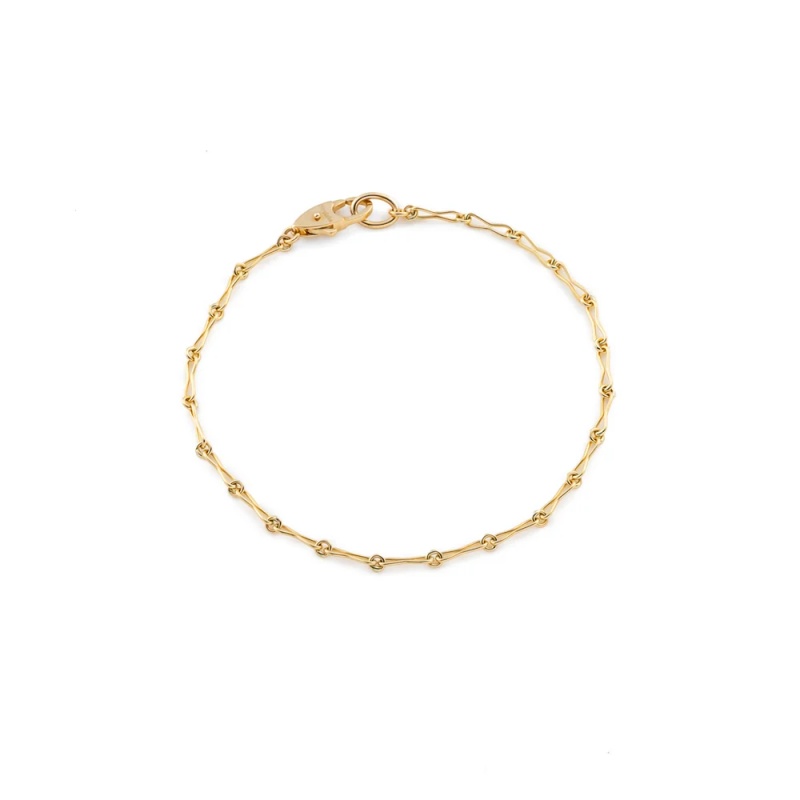
Fashion 18K Chain Ladder Chain Bracelet Custom Jewelry Manufacturer
LET’S GET STARTED : mo@kingjy.com
JINGYING: Engineering Minimalism – The Art of Manufacturing the Fashion 18K Chain Ladder Bracelet
Introduction: The Paradox of the “Basic”
In the luxury fashion industry, the term “basic” is often the most deceptive label in the product catalog. While a simple t-shirt or a plain leather tote may appear effortless, their creation relies on a deep mastery of material science and precision construction. The same principle applies to fine jewelry, particularly to the minimalist aesthetic of the 18K Chain Ladder Bracelet.
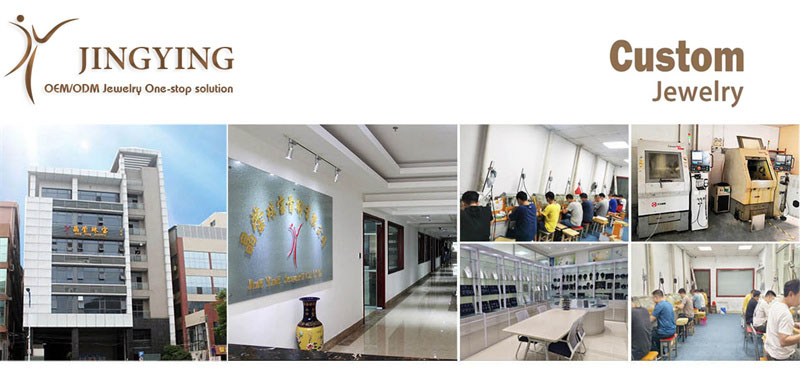
Characterized by its geometric, interconnected links that resemble the rungs of a ladder, this bracelet is the ultimate test of a manufacturer’s capability. It demands absolute uniformity, structural integrity, and an immaculate finish. At the forefront of this niche manufacturing stands JINGYING, a Guangzhou-based OEM/ODM manufacturer with over two decades of experience in bridging the gap between delicate designer concepts and industrial reality . This report explores the meticulous process behind JINGYING’s production of the 18K “ALL ABOUT BASICS” Chain Ladder Bracelet, detailing how raw precious metals are transformed into a symbol of modern elegance through a symphony of metallurgical science and artisanal skill.
Phase 1: The Chemistry of Color and Strength
The journey of the JINGYING Chain Ladder Bracelet does not begin with wax or a sketch, but with chemistry. The “18K” designation legally mandates that the bracelet is 75% pure gold. However, pure gold (24K) is notoriously soft; for a structured chain subjected to the tension of daily wear, it would stretch, deform, and lose its geometric integrity within days.
To counter this, JINGYING’s metallurgical team formulates a specific alloy to achieve the perfect balance of hardness, durability, and color. For the signature yellow gold “ALL ABOUT BASICS” line, the composition is strictly controlled. According to industry standards and JINGYING’s internal quality protocols, the standard alloy mix often involves approximately 75% Gold (Au), combined with precise ratios of Copper (Cu) and Silver (Ag) . For instance, a common formula for high-quality 18K yellow gold uses roughly 75.2% gold, 13.69% copper, 7.44% nickel, and 3.66% zinc .
This specific ratio of copper and silver is critical for the “ladder” design; copper provides the tensile strength needed to keep the oblong links rigid while retaining the warm yellow luster, while zinc and silver contribute to workability and tarnish resistance. Quality control begins here: before the metals are smelted, JINGYING utilizes XRF (X-ray fluorescence) spectrometry to verify the alloy. If the color deviation exceeds a strict threshold (such as a ΔE<1.0 in CIELab measurements), the entire batch is rejected and recycled to maintain consistency .
Phase 2: From Ingot to Wire – The Transformation
Once the metal is melted and cast into an ingot (a solid bar), the transformation into a chain begins. This phase is critical for ensuring the metal has no internal porosity that could cause the chain to snap later. JINGYING employs a precise wire-drawing process that uses high-tech machinery to transform the gold ingot into a long, continuous wire of a specific diameter.
The gold is pulled through a series of tungsten carbide or diamond dies, each with a progressively smaller hole . This process, common in high-end jewelry manufacturing, reduces the wire’s diameter while increasing its length and strength.
However, metal is stubborn; as it is rolled and drawn through the dies, it “work-hardens” and becomes brittle. To prevent cracking, the metal is subjected to Annealing. The gold strip is heated to a specific temperature—just below the melting point—and then quenched or cooled. This resets the crystalline structure of the metal, making it soft and pliable again . This cycle—Roll, Harden, Anneal, Cool, Roll Again—repeats until the metal reaches the precise gauge (thickness) required for the ladder links, with tolerances held to within 0.01mm .
Phase 3: The Art of the “Ladder” Construction
Unlike a standard rolo or curb chain, the “Ladder” design requires a specific and complex assembly method to ensure the “rungs” remain parallel and the links move fluidly.
- Forming the Links: At JINGYING, precision machines coil the gold wire around a mandrel (a metal rod of specific diameter), creating a tight spring. This spring is then cut vertically to produce individual open rings . This process yields two distinct components: the “Rungs” (horizontal bars cut to a specific length, e.g., 5mm width) and the “Connectors” (smaller oval rings that will hold the rungs together).
- Weaving the Ladder: While machines handle the initial cutting, the weaving of the ladder chain often requires a level of skill that only human hands can provide—or specialized custom jigs. Skilled technicians manually or semi-manually weave the links. A custom jig (a specific tool) holds the parallel rungs in place while the small connector rings are meticulously looped over the ends of the rungs . This step is crucial for ensuring the structural integrity of the bracelet; the gaps between the ladder rungs must be perfect to ensure they do not snag on clothing.
Phase 4: CAD Engineering and Design for Manufacturing
In the modern production line at JINGYING, the “ALL ABOUT BASICS” aesthetic is heavily reliant on digitization. Once the design parameters are defined, CAD engineers take the conceptual sketch and convert it into a high-resolution 3D model . However, they do not simply copy a shape; they perform a DFM (Design for Manufacturing) analysis.
This process involves a deep analysis of the piece’s structural viability.
- Link Spacing: The engineers calculate the precise gap between the side bars to ensure the “rungs” do not snag on clothing.
- Charm Weight Distribution: For variants with an oblong charm, JINGYING adjusts the internal mass distribution of the 3D model to prevent the charm from twisting sideways on the wrist .
- Tolerance: The CNC (Computer Numerical Control) waxing machinery at JINGYING allows for a precision tolerance of ±0.01mm, ensuring that the 3D printed wax model perfectly mimics the final gold piece .
Phase 5: Lost-Wax Casting and Assembly
For the final production of the “Ladder Chain,” JINGYING often utilizes the lost-wax casting process.
- The Wax Tree: The ladder chain is laid out in a straight line within a casting cylinder, supported by wax sprues (channels) that allow molten gold to flow in. To ensure the links do not fuse together during the metal pour, the gaps between the ladder rungs are meticulously spaced and reinforced with a delicate layer of investment material .
- Casting: The assembled wax tree is placed into a flask, and a liquid investment (plaster) is poured over it. Once set, the flask enters a kiln where it heats to extreme temperatures, burning out the wax and leaving a perfect negative cavity of the ladder chain. Molten 18K gold is then forced into this cavity via centrifugal force or vacuum pressure.
- Assembly and Plating: After the gold is cast, the individual links are connected. For pieces that are gold-plated (Vermeil), the base metal (often 925 Sterling Silver for the top-tier “ALL ABOUT BASICS” line) is cast first. The final step involves electroplating the silver chain with a thick layer of 18K gold—often a minimum of 2.5 microns (targeting 3.0-3.5 microns) to ensure long-lasting durability .
Conclusion
The Chain Ladder Bracelet is a testament to the phrase “less is more.” While the aesthetic is minimalist, the engineering and craftsmanship required to produce it are anything but simple. For JINGYING, manufacturing this piece is not merely a manufacturing task; it is the culmination of rigorous metallurgical science, 0.01mm precision engineering, and the delicate, time-honored art of hand-finishing .
By mastering the complex processes of alloy formulation, wire drawing, and precision casting, JINGYING positions itself not just as a supplier, but as an essential partner for fashion brands looking to deliver “basic” elegance with uncompromising quality. It is the marriage of cutting-edge technology and old-world craftsmanship that allows JINGYING to turn raw gold into the wearable, fluid architecture of the chain ladder bracelet.