Custom Made Sterling Silver Jewelry Triangle Hoop Earrings in Gold
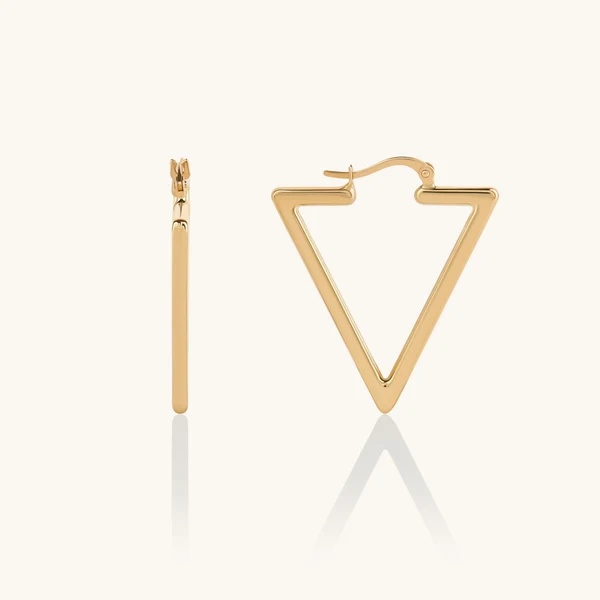

Custom Made Sterling Silver Jewelry Triangle Hoop Earrings in Gold
LET’S GET STARTED : mo@kingjy.com
How to Custom Made Sterling Silver Jewelry Triangle Hoop Earrings in Gold
Sterling silver triangle hoop earrings with gold plating represent a perfect marriage of contemporary geometric design and timeless luxury. The triangular silhouette offers a modern edge over traditional round hoops, while the warm glow of gold plating elevates silver’s cool brightness into something truly sophisticated. For jewelry brands, boutique owners, or individuals seeking a unique accessory, understanding the custom manufacturing process is essential to bringing this vision to life. This guide provides a comprehensive walkthrough of how to custom make sterling silver triangle hoop earrings with gold plating—from initial concept to finished product.
Understanding the Product: What Makes Triangle Hoop Earrings Special
Triangle hoop earrings are crafted from solid 925 sterling silver, which consists of 92.5% pure silver alloyed with 7.5% other metals (typically copper) to enhance durability and resistance to wear. The “hoop” designation refers to the continuous loop construction, while the triangular shape creates a bold, architectural aesthetic that remains lightweight and comfortable for everyday wear. These earrings are naturally hypoallergenic, containing no nickel or lead, making them suitable for sensitive ears.
The gold plating—whether 14K, 18K, or 22K yellow gold—transforms the silver base into a piece that rivals solid gold in appearance while remaining far more accessible in price. The combination of sterling silver’s durability and gold’s luxurious finish makes this product category exceptionally popular in contemporary jewelry collections.
Step 1: Design and CAD Modeling
The custom manufacturing journey begins with design. Whether you have a hand-drawn sketch, a reference image, or a fully formed concept, the first technical step is creating a digital 3D model using Computer-Aided Design (CAD) software. Professional jewelry manufacturers employ CAD design teams who convert concepts into precise digital models optimized for production.
For lost-wax casting compatibility, CAD files must meet specific technical requirements: minimum layer separation of 0.4 mm, minimum wall thickness of 1 mm, and raised textures or reliefs with a minimum height of 0.8 mm. The triangular hoop design must account for these parameters while maintaining the desired aesthetic—sharp, clean angles that define the triangle silhouette, balanced weight distribution for comfortable wear, and appropriate thickness to ensure structural integrity during casting and everyday use.
CAD modeling also allows for customization of dimensions. Typical triangle hoop earrings measure approximately 25mm by 22mm, though sizes can be adjusted based on client preferences. The digital model serves as the blueprint for everything that follows.
Step 2: Prototype and Mold Making
Once the CAD design is finalized, the next phase involves creating a physical prototype. The digital model is printed in high-resolution jewelry resin, producing a “positive” model that can be examined and validated before committing to silver casting. Some manufacturers offer brass test casting at this stage—a more affordable option than silver—to verify proportions, ergonomics, and finish before final production.
After prototype approval, a vulcanized rubber mold is produced. This mold is a one-time investment that enables multiple identical copies of the earrings to be produced efficiently. A standard mold can produce from one to hundreds of units with consistent detail, making serial production cost-effective.
Step 3: Lost-Wax Casting
The lost-wax casting technique, a method refined over thousands of years, is the industry standard for producing sterling silver jewelry. The process begins with injecting wax into the rubber mold to create wax replicas of the earrings. These wax models are attached to a wax base, forming a “tree-like” structure in a process called sprueing.
The wax tree is then invested in a plaster-like material called investment. Once the investment hardens, it is heated in a kiln to burn out the wax, leaving a precise cavity in the shape of the earrings. Molten .925 sterling silver is poured into this cavity at high temperature, filling every detail of the original design. After cooling, the investment is broken away to reveal the raw silver castings.
Step 4: Filing, Finishing, and Polishing
Raw castings emerge from the mold with rough surfaces, sprue attachments, and minor imperfections that must be removed through meticulous handwork. Artisans refine each piece through filing, sanding, and cleaning to correct flaws and prepare the surface for polishing.
Polishing occurs in multiple stages: rough polishing for shaping, followed by fine polishing to achieve brightness, and finally mirror polishing for a high-gloss finish. The goal is a perfectly smooth, blemish-free surface that will accept gold plating evenly. Available finish options include high polish/mirror finish, satin/brushed finish, oxidized finish to highlight textures, and hammered finishes.
Each piece undergoes hand inspection at this stage. Quality control checks include examining for casting flaws, verifying polishing smoothness, and ensuring dimensional accuracy.
Step 5: Gold Plating—The Transformation
Gold plating is where sterling silver triangle hoop earrings acquire their luxurious golden appearance. The plating process is technically complex because silver is a “troublesome” substrate—silver atoms migrate quickly, and if the gold layer is too thin, the silver can migrate into the gold, causing the金色 to fade to a pale green or white within months. Silver also oxidizes and tarnishes instantly; plating over tarnished silver will cause the gold to peel.
The plating process follows a carefully controlled sequence:
Pre-treatment (Gentle Cleaning): The silver pieces undergo ultrasonic degreasing using mild alkaline jewelry cleaner at 60°C for 2-3 minutes. This is followed by cathodic electro-cleaning (never anodic, as that would instantly oxidize the silver surface), and finally acid activation to ensure the surface is bright and water-break-free.
Gold Strike (Adhesion Anchor): Silver cannot be plated with thick gold directly. A “strike” layer is applied first to bond the subsequent gold layers. This thin, pale yellow coating immediately seals the silver surface, preventing tarnishing in the main plating tank.
Main Gold Plating: The pieces are immersed in an acid hard gold system (typically cobalt-alloyed). Operating at 40°C with a current density of 1.0 A/dm², the deposition rate is approximately 0.2 microns per minute. The thickness of plating determines both durability and classification:
- Standard Gold Plating: 0.03–0.05 microns, color retention approximately 6 months
- Thick Gold Plating: 0.1 microns or more, offering extended durability
- Gold Vermeil: 2.5 microns minimum, color retention 1–2 years
- Gold-Filled: At least 5% of total weight in solid gold, color retention 3–5 years
Barrier Layer Decision (Optional but Recommended): Manufacturers may choose between direct gold plating (silver → gold strike → thick gold) or palladium barrier plating (silver → palladium 0.3μm → gold). The palladium barrier prevents silver migration into the gold layer, significantly extending the plating’s lifespan—a recommended approach for premium products.
Common gold purities for plating include 14K, 18K, and 22K yellow gold, with 18K being the most popular for its optimal balance of color richness and durability. The higher the purity, the shinier the color and the more luxurious the appearance.
Step 6: Quality Control and Certification
Every custom piece should undergo rigorous quality control before shipping. This typically includes six inspection checkpoints: raw silver material testing, casting flaw screening, polishing smoothness verification, stone stability testing (if applicable), plating anti-tarnish detection, and finished size calibration.
XRF metal testing confirms the silver purity meets 925 standards and complies with international regulations such as EU RoHS. The U.S. Federal Trade Commission enforces the Jewelry Industry Guide, which defines terms like “plated” and “sterling silver” to prevent consumer deception. Finished pieces should bear the “.925″ or “sterling” hallmark, certifying their silver content.
Customization Options Beyond the Basics
Beyond the core manufacturing process, custom triangle hoop earrings offer numerous personalization possibilities:
- Plating Color: 14K gold, 18K gold, rose gold, rhodium white gold, or two-tone mixed plating designs
- Plating Thickness: Standard flash plating to premium vermeil
- Surface Effects: Mirror polish, matte, brushed, oxidized, or textured finishes
- Engraving: Laser precision engraving for logos, initials, dates, or custom messages
- Stone Setting: Cubic zirconia, natural pearls, or precious gemstones can be added
Minimum Order Quantities and Cost Considerations
Custom manufacturing typically requires minimum order quantities (MOQ). Some manufacturers offer flexibility with MOQs as low as 30 pairs for wholesale orders, while others may require 100 units for custom plating specifications. Costs are influenced by:
- Weight: Silver weight is a primary cost factor
- Plating Thickness: Thicker gold layers (vermeil or gold-filled) significantly increase cost
- Mold Fees: One-time tooling costs for rubber molds
- Complexity: Intricate designs or additional finishing work add to production time and cost
Care and Maintenance for Gold-Plated Sterling Silver
To maximize the lifespan of custom gold-plated triangle hoop earrings, proper care is essential:
- Daily Care: Wipe gently with a soft, dry cloth after each wear to remove oils and sweat—this is the single most effective daily habit
- Cleaning: For deeper cleaning, dissolve a small drop of mild dish soap in lukewarm water, soak briefly, rinse with clean water, and pat completely dry
- Storage: Keep earrings in a dry, cool place away from prolonged sunlight or humidity; store separately in sealed plastic bags to prevent scratching and reduce tarnishing
- What to Avoid: Never use abrasive polishes, silver cloths, toothpaste, baking soda, ultrasonic cleaners, or silver dips—these will scratch and strip the gold layer
- Chemicals: Avoid contact with perfumes, lotions, cosmetics, and water; remove earrings before swimming, showering, or exercising
Conclusion
Custom making sterling silver triangle hoop earrings in gold is a sophisticated process that transforms a design concept into a wearable piece of art. From CAD modeling and lost-wax casting to meticulous polishing and precision gold plating, each step requires specialized skills and careful quality control. The result—a geometric, gold-plated sterling silver earring—offers the luxury of gold with the durability and affordability of silver, wrapped in a contemporary triangular silhouette that stands out in any jewelry collection.
Whether you are a jewelry brand looking to expand your product line, a boutique owner seeking exclusive designs, or an individual desiring a truly personalized accessory, understanding this manufacturing process empowers you to make informed decisions about materials, finishes, and customization options. With proper care, these custom creations will maintain their golden brilliance for years to come.