Custom Gold Vermeil Jewelry oem odm China Pave Mini Heart Stud Earrings
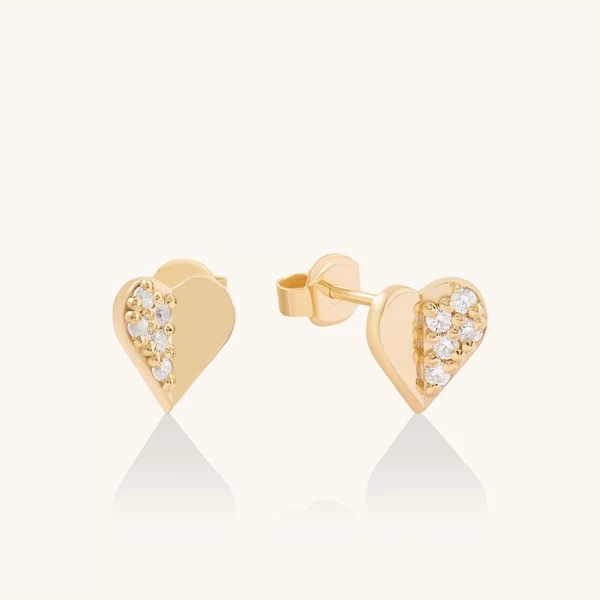
Custom Gold Vermeil Jewelry oem odm China Pave Mini Heart Stud Earrings
LET’S GET STARTED : mo@kingjy.com
How to Customise Gold Vermeil Jewelry Pave Mini Heart Stud Earrings
There is something universally endearing about the heart shape. It is the most recognised symbol of love, worn close to the skin as a quiet declaration of affection—for a partner, a child, a friend, or simply for oneself. When that heart takes the form of a pair of mini stud earrings, paved with tiny diamonds that catch the light with every turn of the head, the effect is both delicate and dazzling.
But what if you could make that pair entirely your own? What if the metal tone, the diamond quality, the exact size of the heart, and even the setting style were chosen by you, for you? Custom jewellery is no longer the exclusive domain of heirloom rings and extravagant necklaces. Today, you can commission a bespoke pair of pave mini heart stud earrings that fits your budget, your style, and your story.
This guide walks you through every step of the process—from understanding what gold vermeil actually is, to selecting your diamonds, refining the design, and caring for your finished piece.
Step 1: Understand What Gold Vermeil Really Is
Before you design anything, you need to understand the material you are working with. Gold vermeil (pronounced vehr-may) is often misunderstood, lumped together with ordinary gold-plated jewellery. But the distinction matters—especially when you are investing in a custom piece.
The Legal Definition
Gold vermeil is not simply “gold plating.” According to standards set by the Federal Trade Commission, genuine gold vermeil must meet three strict requirements:
- The base metal must be sterling silver (925 silver), not nickel, copper, or brass.
- The gold layer must be at least 2.5 microns thick—approximately five times thicker than standard gold plating.
- The gold used must be at least 10 karats, though most high-quality vermeil pieces use 14K or 18K gold.
This combination results in jewellery that is far more durable than standard gold-plated pieces, yet significantly more affordable than solid gold. The sterling silver base also makes vermeil hypoallergenic, which is particularly important for earrings worn against sensitive skin.
Why Vermeil for Earrings?
Earrings are subjected to constant movement, friction from hair and clothing, and exposure to natural oils from the skin. A thicker gold layer means the plating will resist wear for much longer than standard plated jewellery. While vermeil may not last for generations like solid gold, a well-made pair can maintain its beauty for a decade or two with proper care.
When shopping for custom vermeil, always look for the ’925′ hallmark, which confirms the sterling silver base. Be aware that not all countries follow the same standards—Canadian regulations, for instance, only require 1.0 microns of gold plating, which means you could receive up to 60% less gold than you expect. Always verify your jeweller’s standards.
Step 2: Choose Your Gold Karat and Colour
Once you have confirmed that your jeweller uses genuine vermeil, the next decision is the gold itself.
Karat Options
- 14K Gold Vermeil: This offers the best balance between purity and durability. It provides a warm, rich gold colour while being strong enough for everyday wear. For earrings that you plan to wear frequently, 14K is an excellent choice.
- 18K Gold Vermeil: With a higher gold content, 18K has a deeper, more luxurious colour. It is slightly softer than 14K, but for stud earrings—which experience less abrasion than rings or bracelets—this is rarely an issue. Many bespoke vermeil pieces use 18K gold for its premium appearance.
Colour Choices
- Yellow Gold: The classic choice. Yellow gold provides a warm, traditional backdrop that makes white diamonds pop beautifully.
- White Gold: Sleek and contemporary, white gold offers a cool, silvery finish. Note that white gold vermeil is typically rhodium-plated to enhance its shine; this plating may wear over time and require replating.
- Rose Gold: Soft and romantic, rose gold has a pinkish hue that has become enormously popular in recent years. It pairs beautifully with diamonds and offers a distinctive alternative to yellow or white gold.
Some jewellers also offer two-tone designs, where the heart is rendered in one colour and the post or backing in another.
Step 3: Design Your Mini Heart
The heart is the soul of your earrings. Getting the proportions right is essential—too large and the earrings feel heavy; too small and the pave details may be lost.
Size Considerations
“Mini” heart studs typically range from 6mm to 12mm in width. The right size depends on your ear lobe anatomy, your personal style, and how noticeable you want the earrings to be. A smaller heart (6–8mm) offers subtle everyday elegance, while a slightly larger heart (10–12mm) makes a bolder statement without overwhelming the ear.
Shape and Proportions
Not all hearts are created equal. Some are tall and narrow; others are wide and rounded. Work with your designer to refine the exact silhouette. The curve of the top lobes, the sharpness of the bottom point, and the overall symmetry all contribute to the final look. Many jewellers use CAD (Computer-Aided Design) software to create a digital model, allowing you to see and adjust the proportions before any metal is cast.
Solid or Open Work?
Do you want a solid heart shape with diamonds set into the surface, or an open-frame heart with diamonds tracing the outline? A solid heart allows for more extensive pave coverage, creating a fully diamond-dusted surface. An open-frame design is lighter and more delicate, with diamonds following the contour of the heart like a sparkling outline.
Step 4: Select Your Diamonds and Pave Setting
The pave setting is what gives these earrings their signature sparkle. The word “pavé” comes from the French meaning “paved”—and that is exactly what it looks like: a surface paved with tiny diamonds, with minimal metal visible between them.
Understanding Pave
In a pave setting, small diamonds are set closely together, held in place by tiny beads or prongs of metal. The result is a continuous field of sparkle that seems to glow from every angle. For heart-shaped studs, pave is particularly effective because it follows the curves of the heart, creating a shape that shimmers with light.
There are several variations:
- Standard Pave: Diamonds are set with small beads of metal between them. This is the most common and durable option.
- Micro-Pave: Even smaller diamonds are set with microscopic beads, creating an almost seamless surface of diamonds. This requires exceptional skill from the setter and is often more expensive.
- Bright-Cut Pave: The metal between stones is cut at an angle to reflect additional light, enhancing the overall brilliance.
Choosing Your Diamonds
For pave earrings, you are typically selecting a collection of small diamonds rather than a single centre stone. The 4Cs still matter, but the priorities shift slightly:
- Cut: The most important factor for brilliance. Well-cut small diamonds will sparkle far more than poorly cut ones, regardless of colour or clarity.
- Colour: Diamonds in the G-H range offer an excellent balance of near-colourless appearance and value. For pave, where stones are small, slight colour differences are even less noticeable to the naked eye.
- Clarity: SI1-SI2 clarity is generally sufficient for pave diamonds, as inclusions are too small to see without magnification.
- Carat: The total carat weight (TCW) is spread across all the diamonds in the pair. A typical mini heart pave stud might have a TCW of 0.10 to 0.30 carats per pair, depending on the size of the hearts and the density of the pave.
Natural vs. Lab-Grown Diamonds
Both natural and lab-grown diamonds are optically and physically identical. Lab-grown diamonds are often more budget-friendly and ethically transparent, making them an excellent choice for pave earrings where you want maximum sparkle for your budget. Many custom jewellers now offer both options.
Step 5: Consider the Practical Details
Custom earrings are not just about how they look—they are about how they feel and function.
Post Gauge and Backing
The post is the part that goes through your ear piercing. Standard posts are typically 0.8mm or 1.0mm in thickness. If you have sensitive ears or heavier earrings, a thicker post may provide more stability.
Backing options include:
- Push-back (friction): The most common and secure option for studs.
- Screw-back: Offers extra security for valuable earrings.
- Lever-back: A hinged backing that snaps into place.
Weight
Even mini heart studs should be lightweight enough for all-day comfort. The sterling silver base of vermeil is lighter than solid gold, which is an advantage for earrings. However, the density of the pave—how many diamonds are set and how much metal is used—affects the final weight. Discuss this with your designer to ensure your earrings are comfortable for extended wear.
Matching the Pair
For stud earrings, symmetry is paramount. The two hearts should be identical in size, shape, and diamond placement. Reputable jewellers use precision casting and setting techniques to ensure a perfect match.
Step 6: The Custom Manufacturing Process
Once you have made all your decisions, the jeweller brings your vision to life. Here is what you can expect.
1. Consultation and Design Brief
Your journey begins with a conversation. You will discuss your style preferences, budget, metal choice, diamond specifications, and any special details. Some jewellers offer online consultations; others prefer in-person meetings.
2. CAD Modelling and 3D Rendering
Using Computer-Aided Design software, the designer creates a precise digital model of your earrings. You will see the design from multiple angles and can request adjustments before any metal is cast. This is your opportunity to fine-tune the heart shape, the pave density, and every other detail.
3. 3D Printing and Casting
A wax or resin model is 3D-printed from the CAD file. This model is then used to create a mould, into which molten sterling silver is cast to form the rough shape of your earrings.
4. Hand Finishing and Polishing
Skilled jewellers file, shape, and polish the cast pieces, refining every curve and edge. The hearts are brought to a mirror finish in preparation for stone setting.
5. Diamond Setting
This is where the magic happens. Each tiny diamond is carefully set by hand into the pave channels. The setter must ensure every stone is level, secure, and aligned with its neighbours to create a seamless sparkle.
6. Electroplating
The final and critical step for vermeil is the electroplating process. The earrings are submerged in an electroplating bath containing a gold solution. An electric current bonds the gold to the sterling silver surface at the required thickness of at least 2.5 microns. This creates the durable, luxurious gold finish that defines vermeil.
7. Quality Inspection and Packaging
The finished earrings are inspected for quality—checking the gold thickness, the security of every diamond, and the overall finish. They are then packaged and shipped to you.
Timeline
Custom vermeil earrings typically take 2 to 6 weeks from consultation to delivery, depending on the jeweller’s workload and the complexity of the design.
Step 7: Care and Maintenance
Gold vermeil is durable, but it requires more care than solid gold. With proper maintenance, your custom pave heart studs can remain beautiful for many years.
Cleaning
Gently clean your earrings in warm, soapy water using a soft brush. Rinse thoroughly and pat dry with a soft cloth. Avoid ultrasonic cleaners, which can loosen pave diamonds over time.
Protection
Remove your earrings before swimming, showering, or applying lotions, perfumes, and sanitizers. Chemicals and prolonged water exposure can accelerate wear on the gold plating.
Storage
Store your earrings separately from other jewellery to prevent scratching. A soft pouch or a compartmentalised jewellery box is ideal.
When to Replate
Over time—typically after several years of regular wear—the gold layer may begin to show signs of wear, particularly on the posts and backings. Many jewellers offer replating services to restore your earrings to their original lustre.
Choosing the Right Jeweller
Not all custom jewellers are created equal. Here is what to look for:
Transparent standards: Your jeweller should clearly explain their vermeil specifications—the karat of gold, the thickness of the plating, and the quality of the sterling silver base.
In-house craftsmanship: Jewellers who handle design, casting, setting, and plating in-house offer greater quality control.
CAD visualisation: The ability to see a 3D rendering before production is essential for ensuring the design matches your vision.
Ethical sourcing: Many reputable jewellers now use ethically sourced or lab-grown diamonds and recycled metals.
After-sales service: Consider whether the jeweller offers cleaning, repair, and replating services after purchase.
Conclusion
Customising a pair of gold vermeil pave mini heart stud earrings is a journey of self-expression. From the warmth of 14K yellow gold to the contemporary cool of white gold, from the romantic blush of rose gold to the icy brilliance of pavé-set diamonds, every choice shapes a pair that is uniquely, irreversibly yours.
The process may take a few weeks, and the decisions may feel numerous, but the reward is a pair of earrings that no one else in the world will ever own. They will catch the light with every turn of your head, whisper your story without a word, and remind you—every time you glance in the mirror—that you are worth the investment.
Whether you are designing them for a milestone birthday, an anniversary, a wedding, or simply as a gift to yourself, your custom pave mini heart studs will be more than jewellery. They will be a legacy of love, crafted in gold and diamonds, made just for you.
Key Takeaways:
- Gold vermeil is sterling silver plated with at least 2.5 microns of 10K+ gold—more durable than standard plating, more affordable than solid gold.
- Choose your gold karat (14K or 18K) and colour (yellow, white, or rose) based on your style and wear habits.
- Design the heart shape and size (typically 6–12mm) with CAD visualisation before production.
- Select pave diamonds (standard, micro, or bright-cut) and decide between natural or lab-grown stones.
- Consider practical details like post gauge, backing type, and overall weight for all-day comfort.
- Allow 2 to 6 weeks for the custom manufacturing process, from casting to electroplating.
- Care for your earrings with gentle cleaning, protective storage, and occasional replating.
- Choose a jeweller with transparent standards, in-house craftsmanship, and strong after-sales support.