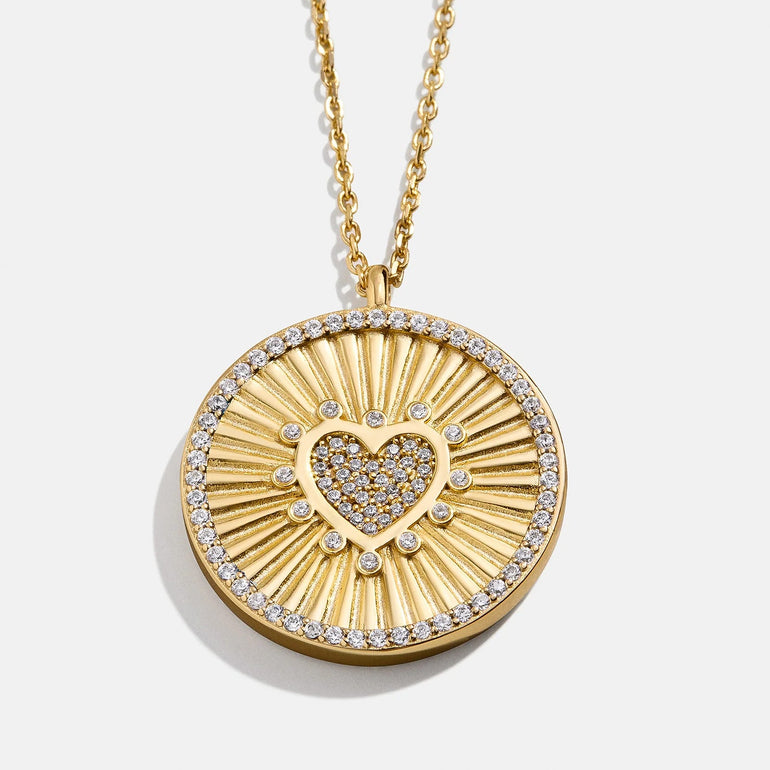
18K Gold Heart Reversible Pendant Necklace Custom Jewelry Manufacturer
18K Gold Heart Reversible Pendant Necklace Custom Jewelry Manufacturer
LET’S GET STARTED : mo@kingjy.com
The Manufacture of an 18K Gold Heart Reversible Pendant Necklace
The creation of an 18K gold heart reversible pendant necklace is a fascinating intersection of artistic design, traditional craftsmanship, and modern metallurgical precision. This process transforms raw precious metals into a piece of jewelry that carries both emotional symbolism and functional versatility—the ability to be worn with either side facing outward. This article details the comprehensive manufacturing process, from alloy preparation to the final quality control.
1. Alloy Preparation: The Foundation of 18K Gold
The journey begins not with pure gold, but with the deliberate creation of a durable alloy. Pure gold, at 24 karats, is too soft for everyday jewelry; it would easily deform or scratch. Therefore, to achieve 18K gold—which is 75% pure gold by weight—it must be alloyed with other metals to enhance its strength and, in some cases, to influence its color.
For a classic yellow or rose gold heart pendant, a typical alloy composition is prepared. While the exact recipes are proprietary, a standard 18K yellow gold alloy consists of 75% pure gold, with the remaining 25% being a precise blend of silver, copper, and sometimes zinc. For rose gold, the copper content is increased to give it a pinkish hue. The formulation is critical; for instance, deep green 18K gold uses a different combination of silver and copper. These raw materials are weighed with extreme precision to ensure the final product meets legal and purity standards (75% gold).
The metals are then placed in a crucible and melted in a high-temperature furnace under the protection of an inert gas like argon. This protective atmosphere is crucial as it prevents oxidation, which could compromise the metal’s integrity and final appearance. The molten, homogenous liquid is then poured into a graphite or steel mold to form a solid ingot. This ingot is the fundamental building block for the entire piece.
2. Forming the Base Metal: Rolling and Drawing
Once cooled, the gold ingot is transformed into a workable form. To create the main body of the pendant, the ingot is passed through a rolling mill, a machine with hardened steel rollers that compress the metal. With each pass, the ingot becomes thinner, longer, and more pliable. This work-hardens the metal, making it brittle, so the goldsmith periodically anneals it—heating it to a specific temperature and allowing it to cool slowly. This restores the metal’s softness and ductility, allowing further processing. This cycle of rolling and annealing continues until the gold is a perfectly flat sheet of the desired thickness for the pendant’s body.
Conversely, to create the chain or the delicate bail (the loop that connects the pendant to the chain), the gold must be formed into wire. The strip from the rolling mill is pulled through a series of progressively smaller holes in a tool called a draw plate. Like rolling, this process requires frequent annealing to prevent the wire from breaking. The result is a fine, precisely dimensioned wire ready for shaping.
3. Crafting the Pendant: The Reversible Design
The creation of the heart-shaped pendant employs a combination of traditional fabrication and advanced manufacturing.
Traditional Fabrication
For a handcrafted, solid piece, the goldsmith may begin by cutting the heart shape from the gold sheet using a jewelry saw. This is a delicate and highly skilled process that requires precision and patience. The key to the “reversible” feature lies in the design. The pendant must be crafted to be aesthetically pleasing from both sides. This is often achieved by creating two identical halves of the heart and joining them, or by ensuring the finishing process makes both faces equally beautiful. A bezel or frame can be created to hold two different elements, one for each side, allowing the wearer to choose which to display.
The bail is then constructed separately from the gold wire. It is meticulously soldered to the top of the heart. This connection must be robust enough to bear the weight of the pendant while remaining invisible to the eye.
Advanced Methods: Additive Manufacturing
A more modern and technologically sophisticated approach utilizes 3D printing, or additive manufacturing. This method was prominently demonstrated in the “HeartBeat” project, where a bashed-up metal heart was reverse-engineered and replicated in gold. The process for a new design would follow a similar path:
- Design and Digitization: A 3D computer-aided design (CAD) model of the reversible heart pendant is created. This model accounts for every nuance of the design.
- 3D Printing: The digital file is used to print a “green” part, typically made of a high-quality wax or resin, using a 3D printer. This creates a perfect, intricate replica of the pendant, complete with its reversible features.
- Lost-Wax Casting: The wax model is attached to a “tree” with sprues (channels for the metal to flow). It is then invested in a heat-resistant plaster. When this is placed in a high-temperature oven (up to 750°C), the wax burns out, leaving a perfectly detailed mold. This process requires precise temperature control and high-quality materials to prevent bubbles or imperfections in the final casting.
- Gold Casting: Molten 18K gold is then injected into this plaster mold, often using a centrifugal casting machine to force the metal into the finest details. The mold is then quenched in water, dissolving the plaster and revealing the raw, cast pendant in all its detail.
4. The Art of Finishing and Polishing
Whether fabricated traditionally or 3D-printed and cast, the raw casting is just the beginning. The finishing stage transforms the rough piece into a brilliant, wearable piece of art.
The jeweler begins with “cutting,” a process using files, abrasive papers, and silicone wheels to remove excess metal from casting sprues and to smooth the surface. This stage is vital to define the sharp, crisp edges of the heart and to eliminate any imperfections, including porosity or surface irregularities that may have appeared during casting.
Following the cutting phase is the “coloring” stage. This is where the true luster is achieved. Using a series of progressively finer abrasives—from stiff bristle brushes to soft muslin buffs—the metal is polished to a high shine. A typical sequence involves using a cutting compound like Tripoli to remove the deepest scratches, followed by a finishing compound like red rouge. Applying the polishing compounds with different types of wheels—from stiff felt for sharp edges to softer muslin for large, flat surfaces—allows the artisan to control the final finish. The goal is to achieve a flawless, mirror-like surface on both faces of the heart, completing its reversible nature. An expert fine polisher can achieve this with minimal metal loss, preserving the piece’s weight and detail.
While traditional mechanical polishing is common, modern workshops are also exploring advanced techniques like electropolishing, which uses an electrochemical process to smooth the surface. Recent research has focused on developing cyanide-free electrolytes for this process, improving safety while achieving an exceptional finish.
5. Quality Assurance and Final Assembly
The final step is a rigorous quality control process. The pendant and its accompanying chain are meticulously inspected, often under a magnifying glass, to ensure every detail is perfect. The piece is then cleaned, often in an ultrasonic cleaner, to remove any residual polishing compounds.
The hallmark for 18K gold—the “eagle’s head” in France or a similar assay mark in other countries—is applied, guaranteeing the piece’s purity to the consumer. The chain is then attached to the bail, and the reversible heart pendant is complete, ready to be worn as a symbol of love, versatility, and impeccable craftsmanship.