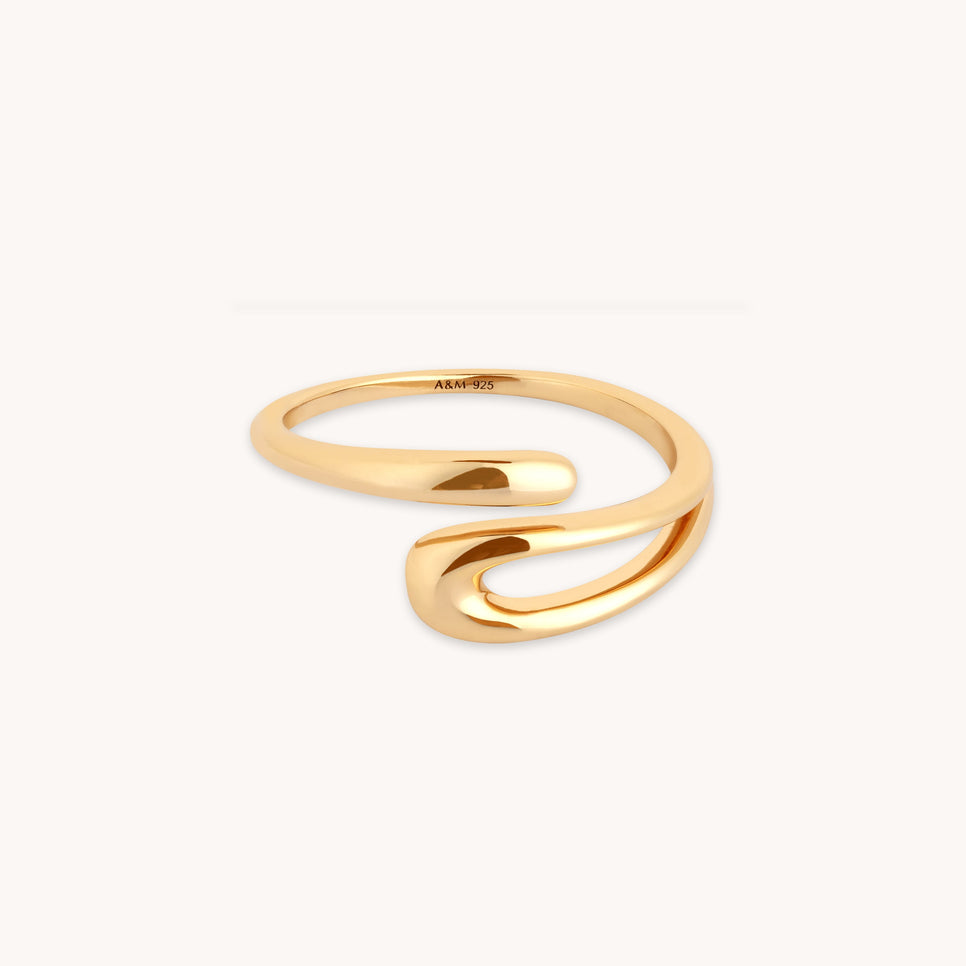
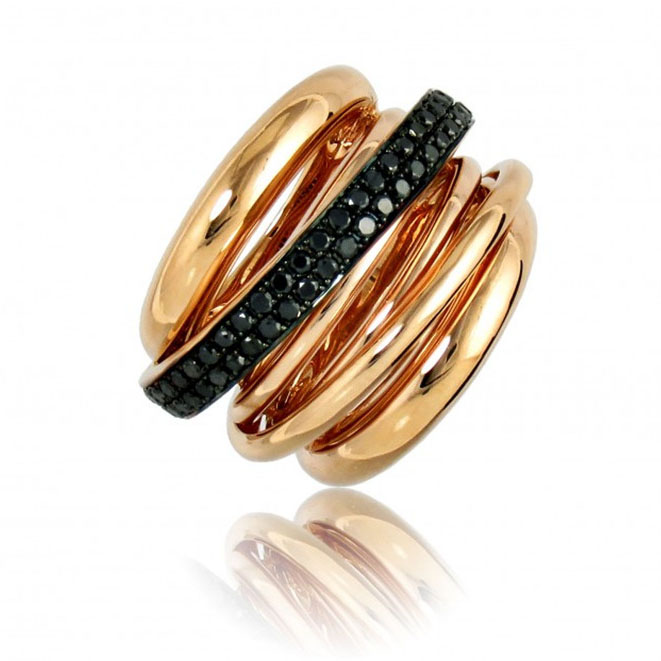
18 Karat Pink Gold/Fresh Water Pearl Ring OEM ODM Manufacturer
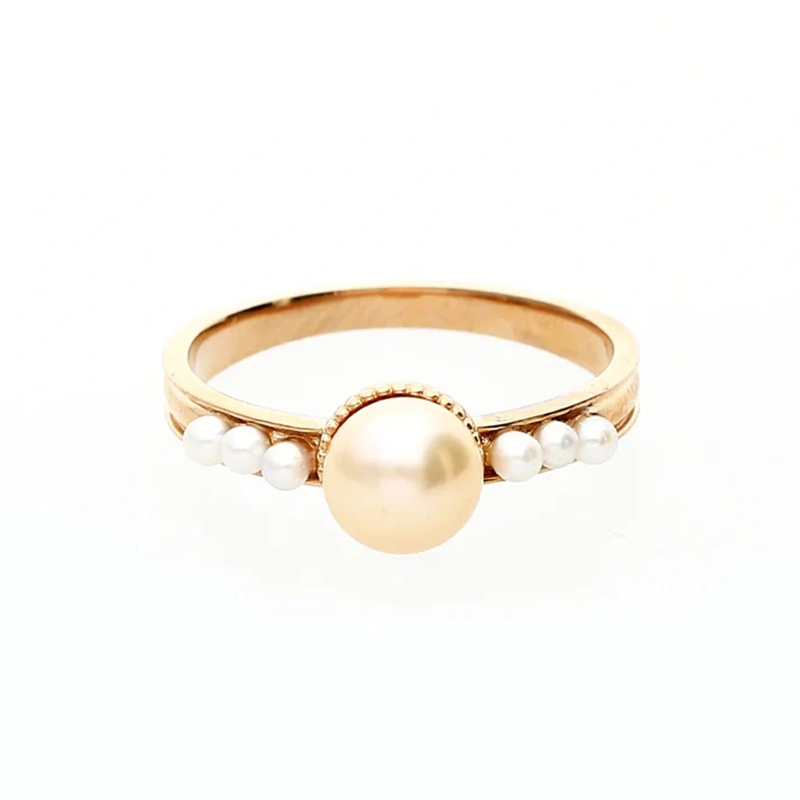
18 Karat Pink Gold/Fresh Water Pearl Ring OEM ODM Manufacturer
LET’S GET STARTED : mo@kingjy.com
How to Produce an 18-Karat Pink Gold Freshwater Pearl Ring at JINGYING
In the world of fine jewelry, the union of warm pink gold and lustrous freshwater pearls represents a timeless elegance that few combinations can match. At JINGYING Jewelry—a Guangzhou-based manufacturer with over two decades of experience in OEM and ODM services—this vision becomes reality through a sophisticated marriage of advanced technology and artisanal craftsmanship . This article provides a comprehensive exploration of how JINGYING produces an 18-karat pink gold ring featuring a freshwater pearl, from initial concept to final quality control.
The Foundation: Understanding Materials and Design Intent
Before production begins, every project at JINGYING starts with a clear understanding of the materials involved. 18-karat pink gold—also known as rose gold—is an alloy composed of 75% pure gold and 25% copper and silver, with the copper content responsible for its distinctive warm blush . This composition requires careful alloying to achieve the precise color and workability required for fine jewelry.
Freshwater pearls, grown in mussels within lakes and rivers, offer a organic softness that contrasts beautifully with the warm metallic tones of rose gold. At JINGYING, each pearl undergoes authentication and quality verification through X-ray Fluorescence (XRF) testing and visual inspection—a process that confirms not only authenticity but also surface quality and luster . The company’s rigorous material selection protocols ensure that only conflict-free, ethically sourced materials enter production .
The design phase is where vision meets feasibility. JINGYING’s design team collaborates with clients—whether they arrive with detailed CAD files, hand-drawn sketches, or simply a conceptual mood board—to refine the ring’s aesthetics and structural integrity . For a pearl ring, critical considerations include prong strength for securing the pearl, the proportions of the setting relative to the pearl’s size, and overall ergonomics for comfortable wear .
The Design and Prototyping Phase: From Concept to CAD
The production process officially begins with Computer-Aided Design (CAD) modeling. JINGYING’s design team utilizes industry-standard software including Rhino, Matrix, and JewelCAD to transform concepts into precise 3D models . This phase is crucial for optimizing the final product before any metal is cast, allowing designers and clients to visualize exact dimensions, proportions, and structural elements.
At this stage, the design must account for the specific properties of 18K pink gold. The alloy’s warm hue, achieved through its copper content, requires consideration of how different polishing techniques will affect its final appearance. High-polish finishes enhance the pink tones and create brilliant reflections, while matte or brushed finishes offer a more contemporary aesthetic .
Clients receive detailed renders for review, with the opportunity to request revisions before prototyping begins. JINGYING emphasizes this collaborative approach, noting that “this virtual try-on capability significantly reduces risk and ensures design perfection before any metal is cast” . For pearl rings, particular attention is paid to the pearl setting—whether a traditional prong setting, a bezel setting for a sleek modern look, or a more elaborate design featuring accent stones.
Prototyping: Testing the Vision
Following CAD approval, JINGYING produces physical prototypes using high-resolution 3D printing technology. SLA (Stereolithography) or DLP (Digital Light Processing) printers create detailed resin models that replicate the design with remarkable precision . For a pink gold pearl ring, this prototype serves several essential functions:
First, it allows evaluation of actual weight and balance—critical factors for ring comfort and wearability. Second, it permits testing of the pearl’s fit within the setting, ensuring that the prongs or bezel will properly secure the pearl without exerting excessive pressure that might damage its surface. Third, it provides a tangible preview of how the design translates from digital concept to three-dimensional form.
This prototyping stage distinguishes JINGYING’s process from less meticulous manufacturers. The company understands that certain design elements—such as the precise curve of a band, the proportion of a setting, or the interplay between metal and pearl—can only be fully evaluated through physical examination. Any final adjustments are made at this stage before production moves to casting .
Casting: The Lost-Wax Process
With an approved prototype in hand, production advances to the casting phase. JINGYING employs the lost-wax casting method—a technique refined over millennia but enhanced with modern precision . For an 18K pink gold ring, the process unfolds as follows:
The resin prototype is attached to a “tree” along with multiple other pieces, then encased in a plaster-like investment material. The flask is heated in a kiln to burn out the resin, leaving a perfect negative cavity of the ring’s form. Molten 18K pink gold is then injected into this cavity using vacuum or centrifugal casting machines, ensuring complete fill and minimal porosity .
Following casting, each piece undergoes initial inspection. JINGYING’s casting team examines for common defects such as porosity, incomplete fills, or surface imperfections. Only castings that pass this inspection proceed to the finishing stages . X-ray imaging may be employed at this stage to detect internal voids or structural issues not visible to the naked eye .
Finishing and Setting: Bringing the Ring to Life
Raw castings, known in the trade as “rough casts,” now enter the hands of JINGYING’s master artisans. This is where the ring transforms from raw metal into a finished treasure. The finishing process involves several critical steps.
Benchwork and pre-polishing begin the transformation. Each piece is meticulously filed and sanded to remove casting seams and surface irregularities. For a pink gold pearl ring, this stage demands particular care, as the metal’s copper content requires specific techniques to achieve a smooth, even surface without introducing discoloration.
Stone setting follows, with JINGYING employing master setters who specialize in various setting techniques. For a pearl ring, the setting method depends on the design—prong settings for classic pearl rings, bezel settings for a sleek contemporary aesthetic, or pavé settings if accent stones are incorporated. JINGYING uses micro-inlay machines imported from Japan to ensure precise gemstone setting with minimal stone loss .
Polishing represents the culmination of metalwork, determining the ring’s final character. JINGYING’s polishers can achieve various finishes: high polish for a mirror-like shine that enhances the warm pink tones of 18K gold; satin or matte finishes for a soft, non-reflective surface; or hammered textures for an organic, artisanal feel . For the pearl itself, specialized polishing techniques—using soft materials such as chamois leather or corn cob cores—enhance luster without damaging the pearl’s delicate nacre surface .
Plating and Final Finishing
While 18K pink gold possesses inherent warmth and beauty, JINGYING’s plating process adds both durability and aesthetic refinement. For rings crafted in solid gold, plating may not be necessary to achieve color, but for pieces crafted in sterling silver with gold plating—a more accessible option—the plating process is critical.
When producing gold-plated pieces, JINGYING applies multiple plating layers to ensure longevity and durability. The company performs an initial silver plating as a base, followed by real gold plating with thicknesses up to 3 microns—a standard classified as “vermeil” for sterling silver base pieces . This multi-layer approach ensures surface smoothness and plating adhesion that can withstand daily wear.
For solid 18K gold rings, rhodium plating may be applied selectively to specific areas to create contrast, or the natural pink gold finish may be enhanced through specialized polishing compounds. JINGYING’s plating factory specializes in high-quality plating technologies, ensuring consistent color and finish across production batches .
Quality Control: Ensuring Excellence at Every Stage
Quality control at JINGYING is not a single checkpoint but an integrated system of inspections throughout production. The company’s comprehensive QC protocols encompass multiple stages and testing methods designed to ensure every piece meets rigorous standards for quality, durability, and safety .
Material verification begins with XRF testing, which confirms metal purity—verifying that 18K gold contains exactly 75% gold, with the correct proportions of copper and silver to achieve the desired pink hue . This testing ensures that pieces meet hallmark requirements for stamped “750” purity markings.
During production, dimensional accuracy checks using micrometers and laser scanners ensure that the ring’s dimensions precisely match the CAD specifications. Solder joint integrity is verified to prevent weak seams that could compromise the ring’s durability over time. Surface finish inspections ensure that polished, brushed, or matte finishes meet specifications with no scratches or imperfections .
For the pearl setting, microscopic inspection examines every prong or bezel to confirm stones are secure. Tension and pressure testing simulates wear conditions to prevent gem loss—critical for pearl rings, where the pearl’s softer composition requires settings that protect without exerting excessive pressure .
Final inspection occurs before packaging, with each piece undergoing visual inspection at 10x magnification to detect any scratches, misalignments, or imperfections. Weight verification confirms metal content matches specifications, and functional testing ensures that the ring is comfortable and free of sharp edges .
For brands, JINGYING offers additional assurance through advanced testing methods: X-ray imaging to detect internal defects, tarnish and corrosion resistance testing through salt spray and sweat simulation, and mechanical durability testing including ring pull tests that measure resistance to bending . The company also provides assay office certification guaranteeing metal purity stamps.
Packaging and Delivery
The final stage of production involves private label packaging with custom branding. JINGYING offers comprehensive packaging solutions, ensuring rings arrive ready for retail presentation . Each piece is carefully packaged to prevent damage during shipping, and JINGYING coordinates logistics through established carriers such as DHL and UPS for reliable international delivery .
Why JINGYING Stands Apart
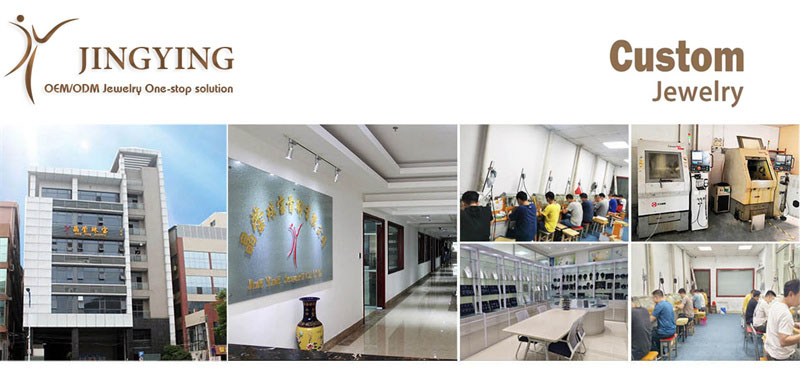
Several factors distinguish JINGYING as a manufacturing partner for fine jewelry. The company offers end-to-end solutions—from design consultation through final delivery—simplifying what can otherwise be a fragmented and complex process . With over 23 years of experience, two state-of-the-art factories, and a monthly production capacity exceeding 100,000 pieces, JINGYING combines scale with craftsmanship .
The company’s commitment to quality is reflected in its rigorous testing protocols, its investment in advanced manufacturing technologies, and its team of skilled artisans who bring designs to life with precision and care. For brands and designers seeking to produce 18-karat pink gold freshwater pearl rings—or any custom jewelry—JINGYING offers a reliable bridge between creative vision and manufacturing excellence .
As the custom jewelry market continues to grow, partners like JINGYING play an increasingly vital role in democratizing access to high-quality, ethically produced fine jewelry. Through its comprehensive OEM/ODM services, advanced technology, and unwavering commitment to quality, JINGYING enables brands to bring their most ambitious jewelry concepts to market with confidence