OEM ODM Service of Italian 14kt Yellow Gold-Plated Snake-Chain Necklace
OEM ODM Service of Italian 14kt Yellow Gold-Plated Snake-Chain Necklace
LET’S GET STARTED : mo@kingjy.com
How to Customize an Italian 14kt Yellow Gold-Plated Snake-Chain Necklace at JINGYING
Introduction: The Art of the Snake Chain
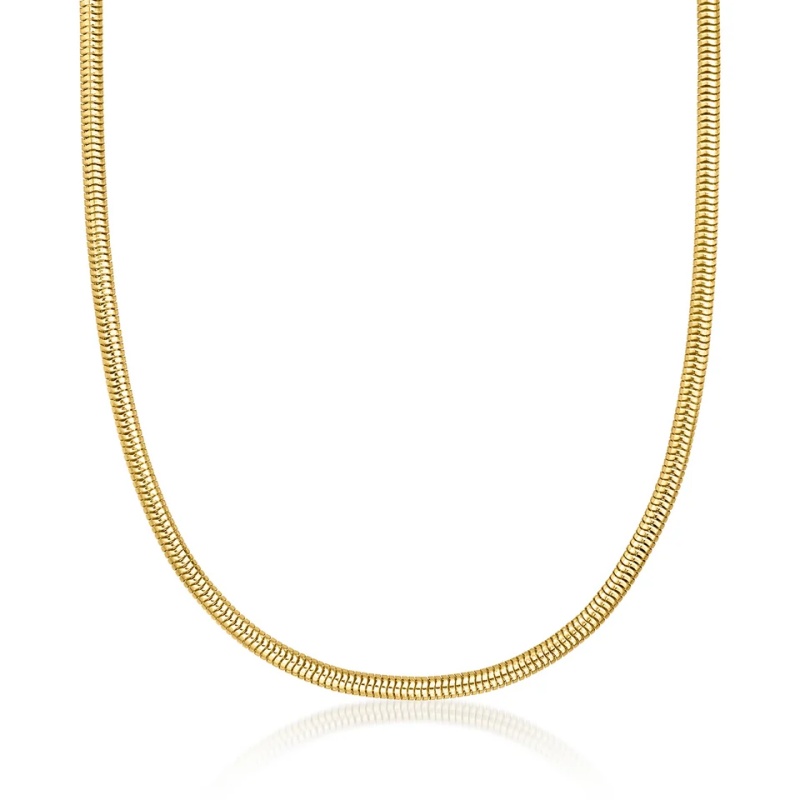
The Italian snake chain is one of the most recognizable silhouettes in the world of fine jewelry. Its smooth, tubular profile—formed by tightly interlocking rings that create a fluid, serpentine surface—has made it a staple of both minimalist and layered styling. When rendered in 14kt yellow gold plating over a durable base metal, the snake chain achieves an ideal balance: the warmth and luster of gold at a fraction of the cost of solid gold, with the structural integrity required for everyday wear. For jewelry brands, designers, and entrepreneurs seeking to offer this iconic style under their own label, understanding the customization process at a manufacturer like JINGYING is the first step toward bringing a product line to market.
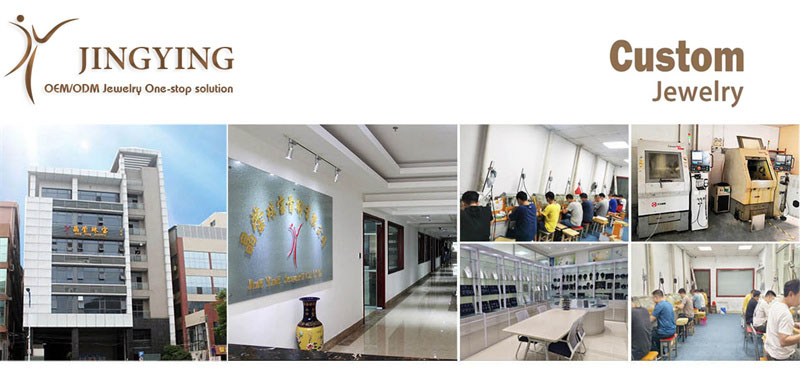
JINGYING, also known as Guangzhou Jingying Jewelry Co., Ltd., has operated since 1998 and has grown into a significant OEM/ODM manufacturer serving global brands across more than 30 countries. Operating from a 15,000-square-meter facility, the company specializes in 925 sterling silver, copper-based gold-plated jewelry, and solid gold options in 9K, 10K, 14K, and 18K. This guide walks through every stage of customizing an Italian 14kt yellow gold-plated snake-chain necklace at JINGYING, from the initial concept consultation to final delivery.
Why Choose JINGYING for a Custom Snake Chain?
Before examining the process itself, it is worth understanding what distinguishes JINGYING as a manufacturing partner. The company positions itself as a one-stop solution for brand jewelers, offering full OEM and ODM services that encompass necklaces, pendants, bracelets, earrings, and rings. Its expertise extends to a variety of finishes, stone settings, and platings, all applied according to client specifications.
For a snake-chain project specifically, several capabilities are particularly relevant. JINGYING produces pieces in copper gold-plated and sterling silver gold-plated materials, with a stated focus on quality, durability, and long-lasting plating. The company also offers gold vermeil—a thicker gold layer of 2.5 to 3.0 microns applied over sterling silver—which represents a premium tier above standard gold plating. Clients can specify 14kt yellow gold as the plating material, ensuring the final product matches the requested specification.
Additionally, JINGYING emphasizes strict quality control, with certifications including SGS and ISO, and offers low minimum order quantity options starting as low as 50 pieces for custom designs. For a snake-chain necklace line, this flexibility allows emerging brands to test the market without committing to large production volumes. The company also signs non-disclosure agreements before manufacturing begins, protecting clients‘ unique designs and intellectual property.
Understanding the Italian Snake Chain: Form and Function
The Italian snake chain derives its name from its resemblance to the smooth, scaled body of a serpent. Unlike cable chains, which feature distinct oval links with visible gaps, a snake chain is constructed from closely fitted rings that create a continuous, rounded tube. This construction gives the chain a liquid-like drape and a high surface sheen that catches light from multiple angles. The style is traditionally associated with Italian craftsmanship, where chain-making has been refined over generations.
When specifying a snake chain for customization, several design parameters come into play. The diameter or width of the chain determines its visual weight: a 1mm chain reads as delicate and understated, suitable for pendant layering, while a 3mm or wider chain makes a bolder statement as a standalone piece. The length of the necklace—typically ranging from 16 to 24 inches—affects how it sits on the wearer, from a choker-length fit to a longer, more relaxed drape. The clasp mechanism must also be considered; lobster clasps are common for their security and ease of use, while some designs incorporate adjustable elements or decorative clasps that double as focal points.
For a 14kt yellow gold-plated snake chain, the base metal is typically 925 sterling silver or copper. Sterling silver offers a hypoallergenic, tarnish-resistant foundation that is well-suited for gold plating, while copper provides a more economical option. JINGYING manufactures in both materials, and the choice between them will influence both the cost and the perceived quality of the final product. The plating thickness is another critical specification: standard gold plating may range from 0.5 to 1 micron, while gold vermeil requires a minimum of 2.5 microns over sterling silver. JINGYING’s vermeil plating process applies a base layer of thick silver plating followed by the chosen gold thickness, a step that enhances both adhesion and durability.
Step One: Initial Consultation and Design Concept
The customization process at JINGYING begins not with machinery or metal, but with a conversation. The company’s design team works with clients to define the intention behind the piece: the accessory type, preferred style, budget range, and any specific design elements. For a snake-chain necklace, this consultation will establish the fundamental specifications: chain width, necklace length, clasp type, and the exact plating composition.
Clients are encouraged to submit reference images, sketches, or competitor samples to communicate their vision. JINGYING’s designers can work from visual references or adapt existing samples, starting with an original design sketch based on the client’s request. At this stage, it is also advisable to discuss production timelines and estimated costs. JINGYING notes that custom jewelry manufacturing generally takes more than one month, with a “slow and detailed” approach that prioritizes craftsmanship. For clients with urgent deadlines, it is important to communicate this early so the team can assess feasibility.
Step Two: Material Selection and Technical Specifications
Once the design concept is established, the next phase involves locking down the technical specifications. For an Italian 14kt yellow gold-plated snake chain, the key decisions include:
Base Metal: Choose between 925 sterling silver and copper. Sterling silver is the preferred choice for higher-end lines, as it is hypoallergenic, tarnish-resistant, and provides a superior surface for gold plating. Copper is a more economical option suitable for fashion jewelry with a shorter lifecycle.
Plating Type and Thickness: Standard gold plating or gold vermeil. If the product is to be marketed as vermeil, the gold layer must be at least 2.5 microns over sterling silver. JINGYING can apply 14kt yellow gold plating in thicknesses ranging from standard plating to thick vermeil, depending on the client’s requirements.
Chain Dimensions: Specify the width of the snake chain (e.g., 1mm, 1.5mm, 2mm, 3mm) and the total length of the necklace. Consider whether an extender chain or adjustable clasp is desired.
Clasp Type: Lobster clasp, spring ring, or a custom-designed clasp. The clasp should be proportionate to the chain width and suitable for the intended wearer.
Finish: Polished, satin, or matte. A high-polish finish maximizes the reflective quality of the snake chain, while a satin or brushed finish offers a more subdued, contemporary look.
JINGYING’s engineers use these specifications to create a digital model and, where necessary, a physical prototype for approval.
Step Three: CAD Design and 3D Modeling
With specifications confirmed, JINGYING’s design team creates a CAD (computer-aided design) model of the snake chain. The company uses industry-standard software such as Rhino or JewelCAD to map out the necklace with precision. For a snake chain, the CAD model must account for the interlocking ring structure, the diameter of the tube, and the integration of the clasp. Millimeter tolerances are critical: the CAD render will show how the metal will look in three dimensions, allowing the client to review proportions and make adjustments before physical production begins.
This stage typically takes a few days. The client receives a digital render for review and approval. Any modifications to chain width, length, or clasp design can be made at this point before proceeding to mold creation.
Step Four: Master Mold and Sample Casting
Once the CAD design is approved, JINGYING creates a master mold using high-precision CNC machining. A physical sample is then cast in the chosen base metal and finished without the final plating, allowing the client to inspect the chain’s weight, clasp security, and overall construction. For a snake chain, the sample stage is particularly important because it reveals how the chain drapes and moves—qualities that are difficult to assess from a digital render alone.
The client reviews the sample and provides feedback. If adjustments are needed, the mold can be modified before mass production. This stage typically spans several days to a week, depending on the complexity of the design.
Step Five: Mass Production and Plating
Upon sample approval, mass production begins using the lost-wax casting method. The raw metal chains are cast, then aggressively hand-polished to remove micro-burrs and achieve a smooth surface. Polishing is especially important for snake chains, as the smooth, continuous surface of the chain depends on a uniform finish.
The plating stage follows. JINGYING applies a base layer of thick silver plating, followed by the chosen gold thickness—in this case, 14kt yellow gold. The plating is applied via electroplating, a process that bonds the gold layer to the base metal at a molecular level. The thickness of the gold layer determines both the color richness and the durability of the finish. For gold vermeil, the 2.5-micron minimum ensures that the gold layer will withstand regular wear without fading or wearing through to the base metal.
Production timelines vary based on order quantity and complexity. For a standard snake-chain necklace order, the mass production and plating phase typically takes two to three weeks.
Step Six: Quality Control and Certification
JINGYING implements quality control procedures at multiple stages of production. After plating, each chain is inspected for uniformity of the gold layer, smoothness of the snake chain surface, and security of the clasp. The company’s quality control protocols include durability testing, such as drop tests from a controlled height to ensure that clasps and connections will not fail during shipping or consumer wear.
For clients requiring certification, JINGYING can provide documentation related to material composition and plating thickness. The company holds SGS and ISO certifications, which serve as third-party verification of its quality management systems.
Step Seven: Branding, Packaging, and Order Fulfillment
One of JINGYING’s strengths as an OEM/ODM partner is its ability to deliver finished products under the client’s brand. The company offers personalized logos and packaging solutions, allowing brands to present the snake-chain necklace as their own product. Custom tags, branded pouches, and gift boxes can all be specified during the order process.
The final step is order fulfillment. JINGYING handles order management and delivery, coordinating logistics to ensure that the finished necklaces reach the client’s destination. The company exports to more than 30 countries, giving it experience with international shipping and customs documentation.
Minimum Order Quantity and Pricing Considerations
JINGYING’s MOQ policy is tiered and flexible. For most standard custom projects, the MOQ is typically set at 150 to 200 pieces per design. However, for simpler designs or initial sample orders, the company may accept as few as 50 pieces. This flexibility is advantageous for emerging brands that want to test a snake-chain style before committing to larger volumes.
Pricing for a custom 14kt yellow gold-plated snake-chain necklace is influenced by several factors: the base metal (sterling silver vs. copper), the plating thickness (standard vs. vermeil), the chain width and length, the clasp type, and the order quantity. JINGYING’s cost structure for custom jewelry includes the actual amount of gold used, the cost of any stones, labor, and design fees. For a plating-only project without gemstones, the primary cost drivers are the metal base and the gold plating thickness. A 30% deposit is typically required to initiate production, with the balance due upon inspection and approval of finished goods.
Tips for a Successful Customization Experience
Several practical considerations can help ensure a smooth customization process. First, be as specific as possible in the initial consultation: provide clear reference images, specify exact dimensions, and communicate any brand-specific requirements. Second, request a physical sample before mass production. While samples add time and cost to the project, they provide invaluable insight into how the snake chain will look and feel in person. Third, discuss plating thickness explicitly. If the product is intended for daily wear, a thicker plating—ideally in the vermeil range—will provide better longevity. Finally, confirm the MOQ and production timeline early in the process, and factor in buffer time for sample approval and any design revisions.
Conclusion
Customizing an Italian 14kt yellow gold-plated snake-chain necklace at JINGYING is a structured, collaborative process that transforms a design concept into a finished product ready for market. From the initial consultation through CAD design, sample approval, mass production, plating, and quality control, each stage is designed to ensure that the final necklace meets the client’s specifications for quality, durability, and aesthetic appeal. With its 23 years of manufacturing experience, low MOQ options, and comprehensive OEM/ODM services, JINGYING offers a viable pathway for brands and designers seeking to add this iconic chain style to their collections. The snake chain’s timeless appeal—its fluid drape, luminous surface, and Italian heritage—makes it a compelling addition to any jewelry line, and with the right manufacturing partner, bringing it to life is a matter of clear communication and careful specification.