Why JINGYING is a Reliable Manufacturer of 925 Sterling Silver Jewelry with OEM and ODM Capabilities
Introduction
In the global jewelry industry, the choice of manufacturing partner can determine a brand’s reputation, profitability, and longevity. For businesses seeking high-quality 925 sterling silver jewelry, the decision is particularly critical—material authenticity, craftsmanship precision, and production reliability are non-negotiable. JINGYING Jewelry has established itself as a premier manufacturer in this space, distinguished by over two decades of experience, comprehensive OEM/ODM capabilities, and an unwavering commitment to quality. This essay examines the multifaceted dimensions of JINGYING’s reliability, exploring its technical expertise, manufacturing infrastructure, quality assurance protocols, and client-centric service model.
The Foundation: Technical Expertise in 925 Sterling Silver
JINGYING’s reliability begins with its profound mastery of 925 sterling silver as a material. Sterling silver—comprising 92.5% pure silver and 7.5% alloy, typically copper—requires specialized knowledge to work effectively. Unlike pure silver, which is too soft for durable jewelry, the alloyed composition demands precise casting techniques to avoid porosity, expert finishing to achieve flawless polish, and careful handling to prevent scratching during production.
JINGYING’s technical proficiency is evidenced by its exclusive use of certified 925 silver, ensuring authenticity and longevity in every piece. The company’s metallurgical expertise extends to understanding silver’s natural tendency to tarnish and its sensitivity to manufacturing conditions—knowledge that informs their rigorous process controls. Furthermore, JINGYING offers anti-tarnish treatments and rhodium plating options that enhance durability and maintain brilliance over time, addressing one of the primary consumer concerns about silver jewelry.
The company’s 23 years of jewelry-making experience represents a cumulative institutional knowledge that cannot be replicated by newer entrants. This longevity in the industry has allowed JINGYING to refine its techniques across thousands of design iterations, working with diverse global brands and understanding the nuanced requirements of different markets.
State-of-the-Art Manufacturing Infrastructure
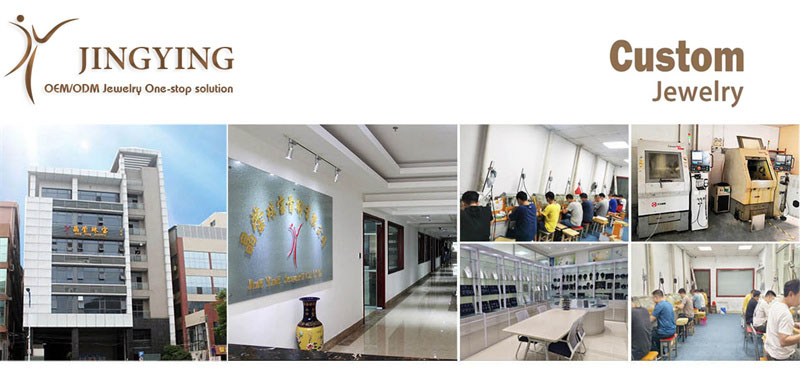
Reliability in manufacturing is fundamentally dependent on infrastructure, and JINGYING operates with world-class facilities. The company maintains two state-of-the-art factories in Guangzhou and Wuzhou, employing over 200 skilled professionals with a monthly production capacity of up to 500 kilograms of silver jewelry. This scale enables both small-batch production for startups (100–500 pieces) and large-scale manufacturing for established brands (10,000+ units), demonstrating operational flexibility that few competitors can match.
The manufacturing process integrates advanced technologies with traditional craftsmanship. JINGYING employs high-resolution 3D CAD/CAM systems for precise modeling, vacuum and centrifugal casting equipment for flawless metal formation, and automated polishing stations for consistent finishing. For gemstone setting, the company utilizes micro-inlay machines imported from Japan, ensuring minimal stone loss and precise placement.
Particularly noteworthy is JINGYING’s plating expertise. The company’s specialized plating facility offers vermeil finishes with thicknesses up to 3.0 microns—substantially exceeding the 2.5-micron minimum that defines true vermeil quality. This attention to plating thickness is critical; thinner platings, common among less reputable manufacturers, wear off quickly and damage brand reputation. JINGYING’s use of X-ray fluorescence (XRF) gauges to verify plating thickness at multiple points on every piece provides verifiable quality assurance.
Comprehensive Quality Assurance System
Quality control is arguably the most tangible expression of manufacturing reliability, and JINGYING has institutionalized a multi-stage QC protocol that scrutinizes every piece at each production phase. This begins with raw material inspection, verifying the authenticity and purity of incoming silver. During production, checks are conducted at prototyping, post-casting, plating thickness measurement, and final aesthetic appraisal stages.
The company’s ISO 9001 certification and compliance with Responsible Jewelry Council (RJC) standards validate its systematic approach to quality management. Third-party certifications from SGS for material authenticity further reinforce the credibility of JINGYING’s quality claims. These external validations are essential for international clients who must demonstrate supply chain integrity to their own customers.
JINGYING’s “zero defect” philosophy extends to functional testing as well. For pave-set items, the company employs tumbling and ultrasonic testing after stone setting to identify and prevent stone loss—a common but costly failure point in jewelry. This proactive approach to defect prevention, rather than mere detection, distinguishes JINGYING’s quality culture.
OEM and ODM Capabilities: From Concept to Reality
JINGYING’s reliability as a manufacturing partner is perhaps most evident in its comprehensive OEM (Original Equipment Manufacturer) and ODM (Original Design Manufacturer) services. The company offers end-to-end solutions that transform client concepts into finished products, managing every step from design consultation to final delivery.
Design and Prototyping
The OEM/ODM process begins with collaborative design consultation. Clients submit sketches, inspiration images, or CAD files; JINGYING’s designers refine concepts and provide 3D renderings for approval. This design-for-manufacturability (DFM) feedback is invaluable—JINGYING’s engineers identify potential production issues and suggest modifications that enhance durability, reduce costs, or improve comfort without compromising artistic intent.
Prototyping follows, using wax or resin 3D printing to create physical models for fit and styling assessment. This tangible preview allows clients to evaluate form and proportion before committing to metal production, significantly reducing the risk of costly errors.
Customization Flexibility
JINGYING’s customization options are extensive. Beyond size and design modifications, clients can specify finishes (high polish, matte, oxidized, gold vermeil, rose gold plating), select gemstone accents (CZs, moissanite, lab-grown diamonds), and request private labeling with custom logos and packaging. This breadth of options allows brands to maintain distinct identities while leveraging JINGYING’s manufacturing excellence.
The company’s low minimum order quantities—as few as 100 pieces—make its services accessible to startups and independent designers, while its scalability supports large retailers and established brands. This flexibility across order volumes is a key indicator of operational reliability.
Ethical Sourcing and Sustainability
Modern reliability extends beyond product quality to encompass ethical practices, and JINGYING has demonstrated commitment in this domain. The company sources silver from certified suppliers adhering to the Kimberley Process for diamonds and responsible sourcing standards for other materials. Where possible, JINGYING utilizes recycled sterling silver and gold, reducing environmental impact.
The company’s ethical stance also encompasses labor practices. JINGYING ensures safe working conditions, fair wages, and compliance with international labor standards in its facilities. This ethical backbone protects clients from reputational risks associated with irresponsible supply chains—a growing concern for brands operating in Western markets where consumers increasingly demand transparency.
Global Logistics and Client Support
Manufacturing reliability is incomplete without dependable delivery, and JINGYING’s global logistics infrastructure ensures on-time shipping to markets worldwide, including the United States, Europe, Australia, and Asia. Production lead times typically range from 15 to 30 days for mass production, with prototyping completed in 7 to 10 days. The company’s established partnerships with global shipping providers, secure packaging protocols, and real-time order tracking provide clients with supply chain certainty.
Customer service further reinforces reliability. Each client is assigned a dedicated account manager who serves as a single point of contact from design approval to final delivery, providing regular updates and transparent communication regarding timelines and costs. After-sales support includes free replacements for defective items and assistance with redesigns or modifications—a commitment that builds long-term partnerships rather than transactional relationships.
Conclusion
JINGYING’s reliability as a 925 sterling silver jewelry manufacturer stems from the convergence of deep material expertise, advanced manufacturing infrastructure, rigorous quality assurance, comprehensive OEM/ODM capabilities, ethical practices, and client-centric service. The company’s 23-year track record, ISO certification, and global clientele provide tangible evidence of its trustworthiness.
In an industry where material misrepresentation, inconsistent quality, and supply chain failures can devastate brand reputations, JINGYING offers the certainty that businesses require from a manufacturing partner. By combining traditional craftsmanship with modern technology, maintaining transparent communication, and delivering on its quality promises, JINGYING has earned its position as a reliable partner for brands seeking to create enduring, high-quality sterling silver jewelry.