JINGYING: Redefining Custom Jewelry Manufacturing Through CAD Excellence and Unmatched Customization Capabilities
Introduction
In the global jewelry industry, where precision meets artistry, the difference between a good piece and an exceptional one often lies in the hands of the manufacturer. For brands, designers, and retailers seeking to bring unique visions to life, the choice of an Original Equipment Manufacturer (OEM) partner is critical. Among the growing number of manufacturers in this space, JINGYING has emerged as a distinguished name — a custom jewelry OEM manufacturer distinguished by its powerful CAD (Computer-Aided Design) capabilities and an unwavering commitment to customization.
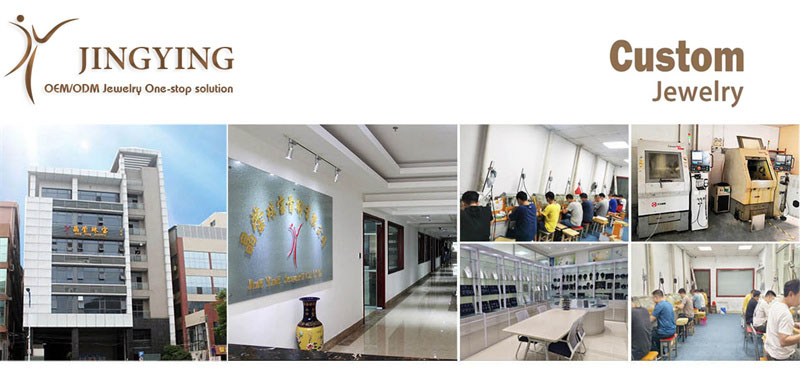
JINGYING is not merely a production facility; it is a collaborative partner that bridges the gap between creative concepts and tangible, high-quality jewelry. In an industry increasingly driven by personalization, rapid prototyping, and complex geometries, JINGYING’s technical expertise and flexible manufacturing processes position it as a preferred partner for businesses ranging from emerging independent designers to established luxury brands. This article explores the depth of JINGYING’s capabilities, the strategic importance of CAD in modern jewelry manufacturing, the company’s comprehensive customization offerings, and how these elements combine to deliver value in a competitive global market.
Chapter 1: The Evolution of Jewelry Manufacturing and the Rise of OEM Specialists
The jewelry manufacturing landscape has undergone a profound transformation over the past three decades. Traditionally, jewelry production was dominated by artisan workshops where master craftsmen handcrafted each piece — a process that, while rich in heritage, was time-consuming, expensive, and difficult to scale. The rise of globalization in the 1990s and 2000s shifted production hubs to regions with skilled labor and cost advantages, particularly in Asia. China, in particular, became the world’s jewelry manufacturing powerhouse, with cities like Shenzhen, Guangzhou, and Shanghai housing thousands of factories serving international brands.
However, as the market matured, a new demand emerged: brands no longer wanted just low-cost production; they sought partners capable of delivering design complexity, speed, and customization. This gave rise to the OEM model, where manufacturers produce goods based on a client’s specifications, often handling everything from design refinement to final finishing. Within this model, a subset of manufacturers began specializing in high-complexity, low-volume, highly customized orders — a niche that requires not only production capacity but also deep technical expertise.
JINGYING was founded with this niche in mind. Recognizing that the future of jewelry would be defined by individuality and rapid iteration, the company built its operations around two core pillars: advanced CAD capabilities and a flexible customization framework. Unlike mass-production factories optimized for thousands of identical units, JINGYING is structured to excel in projects where each piece tells a different story — whether that’s a limited-edition collection for a fashion label, a bespoke bridal set for a private client, or a branded corporate gift line.
Chapter 2: CAD Excellence — The Digital Backbone of Modern Jewelry Design
At the heart of JINGYING’s manufacturing prowess lies its mastery of Computer-Aided Design (CAD) . In contemporary jewelry manufacturing, CAD is far more than a design tool; it is the central nervous system that connects creative vision to production reality. JINGYING’s investment in CAD technology and talent forms the foundation upon which all customization is built.
2.1 The Technical Sophistication of JINGYING’s CAD Team
JINGYING employs a team of highly trained CAD engineers who specialize in jewelry design software, including industry standards such as Rhino 3D with Grasshopper, MatrixGold, ZBrush, and AutoCAD. What sets JINGYING apart is not just the software proficiency but the team’s deep understanding of jewelry manufacturing constraints. A CAD model, no matter how visually stunning, is useless if it cannot be cast, set, polished, and finished with structural integrity.
JINGYING’s CAD engineers work at the intersection of aesthetics and engineering. They understand the nuances of metal shrinkage during casting, the minimum thickness required for durability, the tolerances needed for stone setting, and the flow dynamics necessary for successful casting. This technical knowledge is embedded into every digital model, ensuring that what is designed on screen translates flawlessly into precious metal.
2.2 From Concept to 3D Model: A Collaborative Process
The CAD process at JINGYING typically begins with client input, which may come in various forms: a rough sketch, a reference image, a hand-drawn rendering, or even a verbal description of a concept. JINGYING’s design team works closely with clients to interpret these inputs and create an initial 3D model.
What distinguishes this process is the emphasis on collaboration and iteration. Clients are not presented with a final model without input; rather, JINGYING uses a structured review process where models are shared for feedback at multiple stages. This approach minimizes misunderstandings and ensures that the final output aligns precisely with the client’s vision. For clients without formal design backgrounds, JINGYING’s team offers guidance on proportion, balance, structural feasibility, and cost optimization — adding value that extends beyond mere modeling.
2.3 Photorealistic Rendering and Pre-Visualization
One of the most powerful benefits of advanced CAD is the ability to generate photorealistic renderings before any physical production begins. JINGYING utilizes high-end rendering engines to produce images that simulate final materials — whether yellow gold, platinum, rose gold, or silver — as well as stone colors, light reflection, and surface finishes. These renderings serve multiple purposes:
- Client Approval: They provide a near-perfect preview, reducing the need for costly physical prototypes.
- Marketing Assets: Clients can use the renderings for pre-orders, lookbooks, and marketing campaigns before inventory is produced.
- Design Refinement: Subtle issues with proportion, stone placement, or ergonomics can be identified and corrected in the digital phase.
This capability is particularly valuable for brands operating on tight launch schedules or those using pre-sale models to gauge market interest before committing to full production.
2.4 CAD as a Gateway to Digital Manufacturing
Beyond design visualization, JINGYING’s CAD capabilities enable seamless integration with digital manufacturing technologies. The company employs 3D printing (additive manufacturing) for pattern creation, using high-resolution wax or resin printers that capture even the most intricate details — filigree work, micro-pavé settings, and complex undercut geometries that would be impossible or prohibitively expensive to achieve through traditional hand-carving.
By controlling both the CAD modeling and the 3D printing processes in-house, JINGYING ensures tight quality control and rapid turnaround times. A design that might have taken weeks to prototype using traditional methods can now be modeled, printed, cast, and sampled in a matter of days.
Chapter 3: Customization Capabilities — Beyond the Standard Catalog
While many jewelry manufacturers offer some degree of customization, JINGYING has structured its entire operation around the principle that every client’s needs are unique. Customization at JINGYING is not an add-on service; it is the core business model.
3.1 A Spectrum of Customization Models
JINGYING supports a wide range of customization models, catering to different client types and business needs:
| Customization Type | Description | Ideal For |
|---|---|---|
| Design Refinement | Client provides a base design or reference; JINGYING enhances for manufacturability, aesthetics, or cost efficiency. | Brands with existing concepts needing technical optimization. |
| Full Custom Design | Client provides concept, sketch, or inspiration; JINGYING creates original CAD model from scratch. | Designers, celebrities, private clients seeking one-of-a-kind pieces. |
| Modular Customization | Client selects from existing components (settings, bands, clasps) and combines in unique ways. | Brands offering semi-custom collections with faster turnaround. |
| Material & Finish Variation | Standard designs produced in different metals, plating, or surface finishes (matte, high polish, sandblasted, rhodium). | Retailers wanting exclusive variations without full redesign. |
This flexible approach allows JINGYING to serve clients across the spectrum — from those who come with fully developed technical drawings to those who have only a vague idea of what they want.
3.2 Material Expertise: Precious Metals, Plating, and Beyond
JINGYING works with a comprehensive range of materials, ensuring that design concepts are not constrained by material limitations. The company’s material capabilities include:
- Solid Precious Metals: 9K, 10K, 14K, 18K, and 22K gold in yellow, white, rose, and custom alloy formulations; platinum (PT950, PT900); sterling silver (925).
- Plated Finishes: High-quality electroplating for silver and brass-based pieces, including gold, rose gold, rhodium, and black rhodium finishes.
- Alternative Materials: For clients exploring non-traditional aesthetics, JINGYING offers options such as titanium, stainless steel, and ceramic, each with its own set of design possibilities and durability characteristics.
The company maintains strict control over metal sourcing and alloy mixing, ensuring consistency in color, karat accuracy, and compliance with international standards such as those required for hallmarking in key markets like the UK, US, and EU.
3.3 Gemstone and Diamond Setting
No custom jewelry piece is complete without the careful selection and setting of gemstones. JINGYING offers extensive capabilities in stone setting, supported by a network of trusted gemstone suppliers and in-house setters skilled in a variety of techniques:
- Pavé Setting: Micro-pavé, French pavé, and standard pavé for surfaces covered in small diamonds.
- Prong Setting: Classic claw or prong settings for center stones.
- Bezel Setting: Full or partial bezels for a modern, secure look.
- Channel Setting: For rows of stones set flush between metal walls.
- Invisible Setting: A high-skill technique where stones appear to have no visible metal between them.
- Pearl and Soft Stone Setting: Specialized techniques for delicate materials like pearls, opals, and emeralds.
JINGYING also supports clients in stone sourcing, offering guidance on quality (cut, color, clarity, carat) and ethical sourcing practices. For clients who supply their own stones, the company provides secure handling and detailed stone mapping to ensure accountability.
3.4 Low MOQ and Scalable Production
One of the most significant barriers for emerging jewelry brands is the high minimum order quantity (MOQ) required by traditional manufacturers. JINGYING addresses this by offering flexible MOQs that accommodate small-batch and even single-piece production. This allows designers to test new collections, fulfill bespoke client orders, or manage inventory risk without being forced into large, capital-intensive production runs.
At the same time, JINGYING’s operational model is scalable. For clients whose designs prove successful and require larger volumes, the company can seamlessly transition to higher-capacity production while maintaining the same quality standards. This scalability makes JINGYING a suitable partner for brands at any stage of growth — from startup to established enterprise.
Chapter 4: The Manufacturing Process — From Digital Model to Finished Jewelry
Understanding JINGYING’s manufacturing process provides insight into how CAD expertise and customization capabilities translate into tangible products. The company follows a structured workflow designed for quality, consistency, and efficiency.
4.1 Step 1: Design and CAD Modeling
As described earlier, the process begins with collaborative CAD modeling. Once a design is finalized and approved via photorealistic rendering, the CAD file is prepared for 3D printing. JINGYING uses high-resolution wax printers that produce patterns with exceptional detail, capturing textures, engravings, and fine filigree.
4.2 Step 2: 3D Printing and Tree Assembly
The printed wax patterns are carefully inspected and then attached to a wax “tree” — a central sprue that will allow molten metal to flow into all cavities during casting. The configuration of the tree is critical; poor placement can cause porosity, incomplete fills, or distortion. JINGYING’s technicians apply years of experience to optimize tree layouts for each unique design.
4.3 Step 3: Investment Casting
The wax tree is placed in a flask and surrounded by investment plaster, which hardens to form a mold. The flask is then heated in a kiln, burning out the wax and leaving a precise cavity. Molten precious metal is poured (or forced via centrifugal or vacuum casting) into the cavity. JINGYING utilizes modern casting equipment capable of handling a variety of metals and alloys, ensuring consistent density and minimal porosity.
4.4 Step 4: Post-Casting Processing
Once cooled, the cast pieces are cut from the tree and undergo a series of finishing steps:
- Grinding and Filing: Removal of sprue marks and surface imperfections.
- Polishing: Progressive polishing to achieve the desired surface finish — high polish, matte, satin, or textured.
- Stone Setting: Skilled setters place stones according to the design specifications, often under magnification to ensure precision.
- Plating and Rhodium Finishing: White gold pieces are typically rhodium-plated for brightness and durability; other pieces may receive custom electroplating.
4.5 Step 5: Quality Inspection
Every piece undergoes rigorous quality control. JINGYING’s inspection process includes:
- Visual Inspection: Checking for surface defects, porosity, and finishing consistency.
- Stone Security: Ensuring each stone is securely set and properly aligned.
- Weight Verification: Confirming metal weight matches specifications.
- Dimensional Accuracy: Using calibrated tools to verify measurements against CAD data.
- Durability Testing: For structural pieces, stress testing to ensure clasps, hinges, and prongs meet functional requirements.
4.6 Step 6: Packaging and Delivery
Finished pieces are carefully cleaned, packaged in anti-tarnish materials, and prepared for shipment. JINGYING offers custom packaging options for clients who wish to present pieces in branded boxes or pouches, adding another layer of customization to the final product.
Chapter 5: Quality Assurance and Ethical Standards
In the jewelry industry, trust is paramount. JINGYING operates with a commitment to quality assurance and ethical manufacturing that aligns with the expectations of international clients.
5.1 Material Integrity
JINGYING uses only certified precious metals and sources from reputable suppliers. Metal purity is verified through internal testing and, when required, third-party assays. Clients receive accurate karat markings and can request hallmarking services for compliance with their target markets.
5.2 Ethical Sourcing
The company is committed to responsible sourcing practices. While not all clients require formal certification, JINGYING can provide documentation regarding metal origins and can work with clients who require compliance with the Kimberley Process for diamonds or similar ethical sourcing frameworks.
5.3 Quality Control Systems
JINGYING employs a multi-stage quality control system that tracks each piece from CAD approval to final inspection. Defect rates are monitored continuously, and the company maintains a systematic approach to process improvement. For clients, this translates into reliability — orders are delivered on time and to specification.
Chapter 6: Competitive Advantages and Market Positioning
To understand JINGYING’s place in the global jewelry manufacturing landscape, it is useful to consider its competitive advantages relative to other OEM providers.
| Competitive Factor | JINGYING’s Position |
|---|---|
| CAD Expertise | In-house team with deep manufacturing knowledge; supports complex geometries and rapid iteration. |
| Customization Flexibility | Low MOQs, broad material and setting options, and full design collaboration. |
| Turnaround Time | Streamlined digital-to-physical workflow reduces sampling and production lead times. |
| Quality Consistency | Rigorous multi-stage QC and experienced craftsmen. |
| Scalability | Capable of both single bespoke pieces and larger production runs. |
| Communication | English-fluent project management; transparent client communication. |
| Cost Competitiveness | Efficient processes and strategic location offer competitive pricing without compromising quality. |
These advantages make JINGYING particularly well-suited for:
- Independent Jewelry Designers: Who need a partner capable of translating their creative visions into high-quality, market-ready pieces without requiring massive upfront investment.
- Fashion and Lifestyle Brands: Expanding into jewelry as a category, often requiring custom designs that align with seasonal collections or brand aesthetics.
- Retailers: Seeking exclusive, private-label collections to differentiate themselves from competitors.
- Corporate and Promotional Clients: Requiring custom pieces for employee recognition, client gifts, or special events.
- Bridal and Engagement Specialists: Where each piece is unique and demands exceptional craftsmanship and stone-setting skill.
Chapter 7: Future Outlook — Innovation and Expansion
As the jewelry industry continues to evolve, JINGYING is positioned to grow alongside emerging trends. Several areas represent opportunities for continued innovation:
7.1 Integration of AI in Design
The rise of AI-assisted design tools presents new possibilities for accelerating the creative process. JINGYING is exploring how generative design algorithms can be used to create variations on client themes, offering more options in less time while still maintaining the human oversight necessary for manufacturability.
7.2 Sustainable Manufacturing
Sustainability is becoming an increasingly important consideration for jewelry brands and consumers. JINGYING is actively working to expand its use of recycled precious metals and to reduce energy consumption in its casting and finishing processes. The company is also exploring partnerships with suppliers of lab-grown diamonds and other sustainable gemstone alternatives.
7.3 Expanded Geographic Reach
With a strong foundation in the Chinese manufacturing ecosystem, JINGYING is focused on expanding its direct relationships with international clients. Enhanced digital communication tools, virtual design reviews, and sample shipping programs make it easier than ever for clients outside of Asia to collaborate seamlessly.
7.4 Enhanced Digital Client Portals
To improve transparency and streamline project management, JINGYING is developing digital portals where clients can track the progress of their orders, view CAD models, approve renderings, and access quality documentation — all in one place. This investment in digital infrastructure reflects the company’s commitment to being not just a manufacturer, but a technology-enabled partner.
Conclusion
In an industry where craftsmanship, precision, and personalization converge, JINGYING has established itself as a distinguished custom jewelry OEM manufacturer. Its strength lies not in a single capability, but in the integration of advanced CAD technology, deep manufacturing expertise, and a genuine commitment to customization. For designers and brands, this combination offers something increasingly rare: a partner capable of bringing unique visions to life with fidelity, efficiency, and care.
The jewelry market of the future will be defined by individuality — consumers increasingly seek pieces that reflect their personal stories, and brands that can deliver that individuality will thrive. JINGYING provides the foundation upon which such brands can build. By transforming ideas into precisely crafted jewelry, the company does more than manufacture; it empowers creativity.
For any brand or designer seeking a jewelry manufacturing partner that combines technical mastery with the flexibility to accommodate unique visions, JINGYING represents not just a service provider, but a true collaborator in the art of jewelry making.
About JINGYING
JINGYING is a custom jewelry OEM manufacturer specializing in CAD-driven design and comprehensive customization services. With expertise spanning precious metals, gemstone setting, and scalable production, JINGYING partners with designers, brands, and retailers worldwide to bring unique jewelry concepts to life. For more information or to discuss a project, inquiries are welcome through official channels.