How to Custom Design Your Jewelry At JINGYING Jewelers
In a world saturated with mass-produced accessories, the desire for jewelry that tells a personal story has never been stronger. JINGYING Jewelers stands at the intersection of artistic vision and technical mastery, offering a comprehensive custom design service that transforms ideas into heirloom-quality pieces. With over two decades of experience and a 15,000-square-meter facility, JINGYING has evolved from a small workshop into a premier OEM/ODM manufacturer serving global brands across more than 30 countries. This guide walks you through the complete journey of custom designing jewelry with JINGYING—from the initial spark of inspiration to the final polished piece arriving at your doorstep.
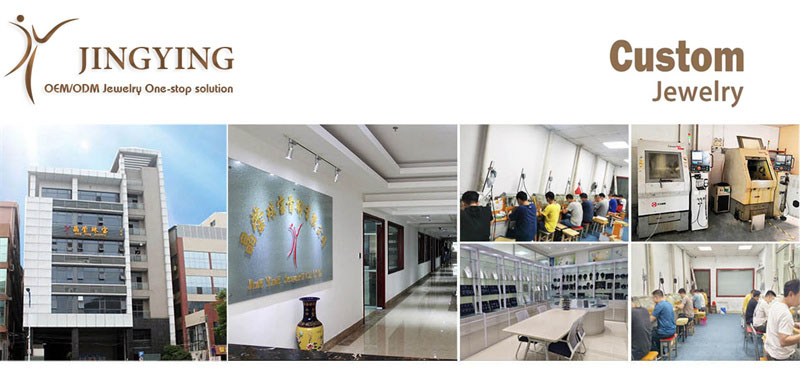
Understanding the JINGYING Philosophy
The name 晶英 (JINGYING) embodies the company’s core principles: 晶 (JING), meaning “crystal,” represents clarity, purity, and brilliant light, while 英 (YING), meaning “essence” or “excellence,” signifies the pinnacle of quality and spirit. This philosophy permeates every aspect of their custom jewelry service.
What distinguishes JINGYING is not merely technical capability but a collaborative, client-centric approach. Their master jewelers are custodians of centuries-old craft traditions, trained in techniques passed down through generations. They view custom design not as a transaction but as a creative partnership—a shared exploration of creativity where your vision is refined and realized with expert guidance.
The company’s commitment extends beyond craftsmanship to ethical and sustainable practices. Sterling silver is sourced from certified, ethically managed mines, and manufacturing incorporates zero-waste approaches where possible. For brands and individuals alike, JINGYING offers a one-stop solution that eliminates the need to coordinate multiple vendors, saving time while ensuring quality consistency from design through delivery.
Phase One: The Genesis of Your Design
Every custom piece begins with a conversation. JINGYING’s design consultants are trained to listen not just to specifications but to the “why” behind your vision. Understanding the narrative—whether commemorative, symbolic, aesthetic, or deeply personal—is essential for infusing the design with authentic meaning.
Gathering Your Inspiration
You don’t need to be an artist to communicate your vision. Inspiration can come from anywhere:
- Nature: The organic swirl of a seashell, the geometric pattern of a honeycomb, the delicate veins of a leaf
- Architecture: Sleek Art Deco lines, intricate Gothic curves, minimalist modern geometry
- Personal Narrative: Symbols representing strength, love, freedom, or eternity
- Existing Pieces: Photographs of jewelry you admire—even if from different contexts
Creating a mood board using platforms like Pinterest or Instagram can be invaluable. Collect images that resonate—not just jewelry, but textures, colors, and forms that evoke the feeling you want to capture.
Defining Your Design Inputs
JINGYING accepts various forms of design input, making the process accessible regardless of your technical expertise:
Photographs: A photo of a wilting rose from a wedding bouquet, the intricate geometry of a historic building, or even a beloved pet can serve as inspiration. The design team analyzes key lines, textures, and focal points, creating interpretive sketches that capture the essence in wearable form.
Sketches: Hand-drawn sketches—whether detailed technical drawings or rough doodles—provide direct insight into your creative intent. JINGYING’s CAD engineers analyze sketches for anatomical feasibility, ensuring designs are not only beautiful but structurally sound and comfortable to wear.
3D Files: For clients with advanced design capabilities, provided 3D files (in formats like .STL, .OBJ, or .Rhino) represent the most streamlined path to production. JINGYING performs comprehensive Digital Design for Manufacturing (DFM) analysis, checking for issues like wall thickness, undercuts, and non-manifold edges that could derail production.
Samples: If you have an existing piece you wish to reproduce or enhance, JINGYING can perform meticulous reverse engineering using advanced 3D scanners to capture every detail.
Phase Two: The Collaborative Blueprint
Once your vision is understood and feasibility assessed, the design moves into visualization—the stage where abstract ideas become concrete.
CAD Modeling and Photorealistic Rendering
JINGYING’s skilled CAD engineers translate approved concepts into precise, manipulable 3D models using advanced software like Rhino, MatrixGold, and JewelCAD. These digital blueprints allow you to view the piece from every angle, zoom in on intricate details, and assess how light might play across different surface textures.
The real magic lies in the photorealistic renderings. JINGYING doesn’t just send raw 3D models; they provide high-resolution images that simulate different metal types (yellow gold, rose gold, platinum) and stone settings, allowing you to see a near-perfect representation of the final product before any physical work begins. For certain products like rings and bracelets, augmented reality integration enables virtual try-on using your smartphone camera, providing an unparalleled sense of scale and proportion.
Material Selection
With the design approved, you’ll make critical material decisions:
Base Metals:
- 925 Sterling Silver: Composed of 92.5% pure silver and 7.5% other metals (typically copper), this alloy balances beauty with structural integrity. It’s hypoallergenic, safe for sensitive skin, and compliant with international regulations like the EU’s nickel-free standards.
- Brass: An affordable, durable choice for fashion jewelry, excellent for plating.
- Copper: Sometimes used, though it may require lining to prevent skin staining.
- Solid Gold: Options in 10K, 14K, and 18K yellow, white, and rose gold for premium pieces.
Plating Options:
- Vermeil: Thick gold plating (2.5 microns or more) over sterling silver, offering exceptional durability and a rich, luxurious color.
- Rhodium: A bright, white, extremely hard platinum-group metal that provides exceptional tarnish resistance.
- Gold Plating: Available in various karats and colors, with thickness measured in microns—standard plating at 0.5 microns, heavy plating at 2-3 microns for greater longevity.
Gemstones: JINGYING offers an extensive network for procuring diamonds (with GIA or other reputable certifications) and colored gemstones, including sapphires, rubies, emeralds, and semi-precious stones. They can advise on selection based on budget, durability, and color preference.
Phase Three: Physical Prototyping
Once the 3D model receives final approval, it’s time to bring the design into the physical world.
3D Printing and Master Model Creation
For most designs, JINGYING creates a wax prototype through high-precision 3D printing using Stereolithography (SLA) or Digital Light Processing (DLP) technology. These printers use lasers or projectors to cure liquid photopolymer resin layer by layer, building models with exceptional detail and smoothness—fine enough to capture textures as subtle as a fingerprint or the veining of a leaf.
This physical model allows you to feel the weight, size, and form of the design—a critical checkpoint for comfort and aesthetic appeal before committing to metal casting.
Prototype Evaluation
Receiving the physical sample is a “moment of truth.” Scrutinize it with a critical eye:
- Weight and Feel: Does it feel substantial and high-quality?
- Finish: Is the polish mirror-like, or are there imperfections?
- Functionality: Does the clasp open and close smoothly and securely?
- Stone Setting: Are stones tight and secure, with perfect alignment?
- Comfort: Wear the piece yourself. Are edges smooth? Is it too heavy for prolonged wear?
JINGYING typically offers 1-3 rounds of sample revisions to achieve perfection. The final approved sample becomes the “gold standard” for the entire production run.
Phase Four: The Alchemy of Creation
With the perfected prototype as the master guide, full-scale manufacturing begins—a symphony of technology and handcraftsmanship.
Lost-Wax Casting
This ancient technique, perfected with modern technology, is ideal for intricate, three-dimensional designs. Hot wax is injected into rubber molds (created from the approved prototype) to produce wax models, which are assembled into a “tree.” This tree is encased in a heat-resistant plaster (investment) and placed in a kiln. The wax burns out, leaving a perfect cavity. Molten metal—heated to approximately 960°C (1760°F) for sterling silver—is forced into this cavity using vacuum or centrifugal force. Once cooled, the plaster is broken away to reveal the metal tree, which is then cut apart into individual rough castings.
Stamping and CNC Machining
For flatter, more geometric designs, stamping offers efficiency: a strip of metal placed between custom-made dies in a powerful press cuts and shapes the silver in a single action. For designs requiring absolute precision or hard angles difficult to cast, CNC machining uses computer-guided drills and lathes to carve jewelry directly from solid metal.
Assembly and Soldering
Many pieces require assembly by master jewelers. Using techniques like soldering and laser welding, artisans join individual links, attach clasps, and secure findings—creating seamless, strong connections without visible marks.
Phase Five: The Revelation of Beauty
At this stage, the piece exists but remains rough, matte, and unremarkable. The finishing process reveals its true character.
Surface Refinement
Tumbling: Pieces are placed in vibrating barrels with abrasive media and lubricants to smooth rough edges and work-harden the metal.
Filing and Sanding: Skilled workers hand-file remaining casting attachments and prepare surfaces for polishing.
Polishing: Using rotating wheels with progressively finer abrasive compounds, pieces are brought to their final luster—mirror-like high polish, soft satin/matte finish, or specialized textures like hammered or sandblasted.
Stone Setting
If your design includes gemstones, this critical stage demands exceptional skill. JINGYING’s stone-setters, working under microscopes, place each stone using specialized techniques:
- Prong Settings: Metal claws hold stones for maximum light exposure
- Bezel Settings: A custom-fitted metal collar encircles stones for secure, modern looks
- Pavé Settings: Many small stones set close together for surfaces of brilliance
- Channel Settings: Stones arranged in rows between two metal walls
Plating
If your design calls for gold or rhodium plating, the finished piece enters the electroplating bath. Multiple layers may be applied to ensure even coverage, with thickness carefully monitored to meet JINGYING’s stringent standards.
Quality Control
No piece leaves JINGYING without passing a rigorous multi-point inspection:
- Dimensional verification against approved specifications
- Surface finish inspection for imperfections
- Structural integrity testing of clasps and connections
- Stone security verification
- Plating thickness measurement
This systematic quality assurance results in a defect rate of less than 0.3%.
Phase Six: Delivery and Aftercare
Your finished piece is professionally cleaned and packaged according to your instructions—whether in a branded box, a luxury presentation case, or simple protective packaging. JINGYING offers global shipping with full insurance and tracking.
Caring for Your Custom Piece
Gold plating is durable but requires care to maintain longevity:
- Put jewelry on after applying makeup, perfume, and lotions
- Remove before swimming, cleaning, or bathing
- Store in a dry, soft-lined box or pouch, separately to prevent scratching
- Clean gently with a soft, lint-free cloth
JINGYING typically offers re-plating and restoration services. Over years of wear, plating may eventually thin—your piece can be returned to be stripped, re-polished, and freshly re-plated, essentially given a new lease on life.
The JINGYING Difference
What truly distinguishes JINGYING is the depth of the partnership they offer:
End-to-End Service: A true one-stop shop from concept to delivery, eliminating the need to coordinate multiple vendors.
Design for Manufacturing Expertise: Their engineers’ early intervention identifies potential structural problems before they become costly mistakes, ensuring jewelry is not only beautiful but also functional and durable.
Scalability: Equally adept at creating a single intimate piece as they are at producing limited editions or full commercial collections—with flexible minimum order quantities to support emerging brands.
Transparent Communication: Dedicated project managers guide you through every step, translating technical jargon and providing regular updates.
Confidentiality: Intellectual property rights are respected, with non-disclosure agreements available to ensure unique designs are never shared.
Conclusion
Custom jewelry design at JINGYING is more than a service—it’s a collaborative journey where your vision meets expert craftsmanship. From the initial spark of inspiration through CAD modeling, prototyping, casting, finishing, and quality control, every step is guided by over two decades of experience and a commitment to excellence. Whether you’re designing a personal heirloom, launching a boutique brand, or scaling an established collection, JINGYING provides the architecture to transform your vision into a tangible, wearable reality—a piece that carries not just aesthetic value but emotional weight, telling your story for generations to come.