From Concept to Creation: How to Custom Demi-Fine 14K Gold Stud Earrings in JINGYING
Introduction: The Rise of Demi-Fine and the JINGYING Advantage
The jewelry industry has witnessed a significant shift in consumer behavior over the past decade. The old binary choice between expensive fine jewelry (solid gold, diamonds) and disposable fashion jewelry (cheap alloys, flash plating) has blurred. Enter Demi-Fine Jewelry—the golden mean. Demi-fine pieces offer the luxury look of precious materials, the durability for daily wear, and the accessibility of a mid-range price point. At the heart of this movement is the demand for high-quality 14K gold stud earrings: everyday essentials that are hypoallergenic, tarnish-resistant, and elegantly minimalist.
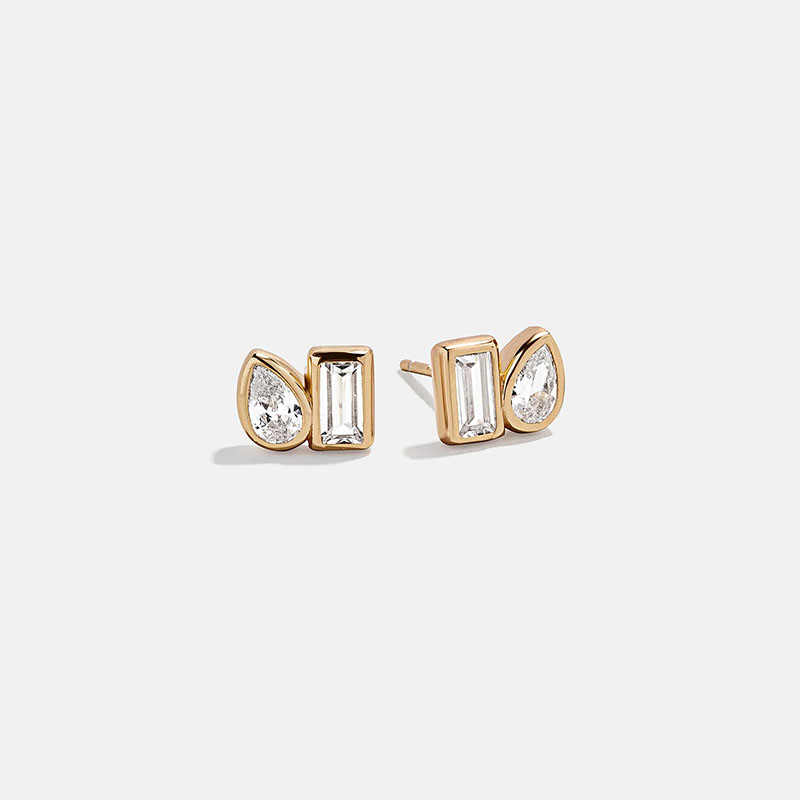
For brands and entrepreneurs looking to enter this market, manufacturing is the biggest hurdle. You need a partner who understands the specific technical requirements of demi-fine: thick gold plating (vermeil), solid 14K gold posts for safety, and precision stone setting—all without the minimum order quantities of a legacy fine jewelry house.
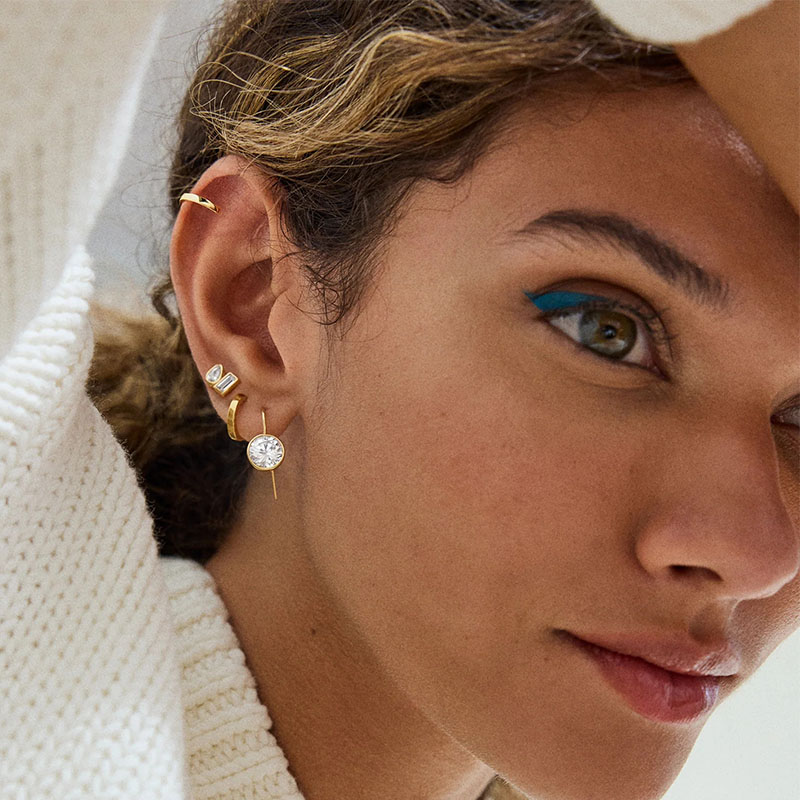
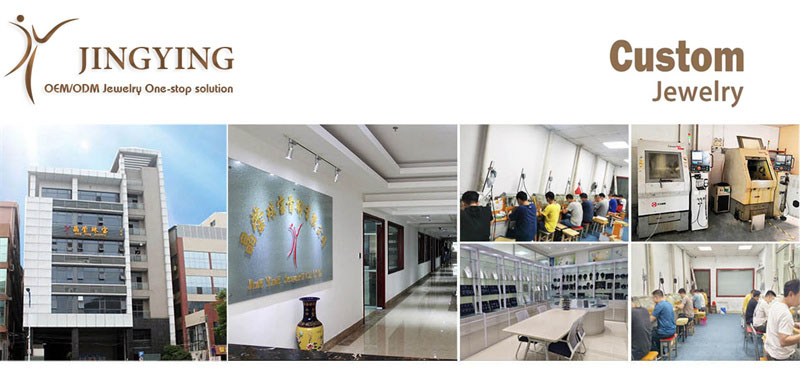
JINGYING Jewelry (also found under the domain kingjy.com) has emerged as a powerhouse in this specific niche. With over 23 years of experience, JINGYING is not just a factory; it is a one-stop OEM/ODM solution that bridges the gap between artisan craftsmanship and industrial scalability. This guide will walk you through every step of customizing demi-fine 14K gold stud earrings with JINGYING, from initial material selection to quality control and shipping.
Chapter 1: Understanding JINGYING’s Core Capabilities
Before diving into the design process, it is crucial to understand what JINGYING does best. Unlike manufacturers who specialize only in casting or only in plating, JINGYING offers a vertically integrated service.
1.1 The “Three Pillars” Philosophy
According to their manufacturing briefs, JINGYING operates on three foundational principles: Exceptional Quality, Inherent Durability, and Long-Lasting Plating. For stud earrings, durability is non-negotiable. Earrings endure friction from hair, contact with perfumes, and the acidity of skin. JINGYING engineers their pieces to survive this.
1.2 Material Versatility
While they work with copper, brass, and sterling silver, their specialty for the demi-fine market lies in:
- 925 Sterling Silver Base: Hypoallergenic and waterproof. It will not turn your skin green.
- Gold Vermeil: Legally, this requires a minimum of 2.5 microns of 10K/14K/18K gold over sterling silver. JINGYING adheres to this standard rigorously, using X-ray fluorescence (XRF) gauges to verify thickness.
- Solid 14K Gold: For posts and hooks (the parts that go inside the ear), solid 14K gold is the gold standard for sensitivity.
1.3 OEM/ODM Services
- OEM (Original Equipment Manufacturer): You provide the design (or a sample), and they manufacture it.
- ODM (Original Design Manufacturer): You give them an idea or a sketch, and their in-house designers create the technical CAD for you.
Chapter 2: Defining Your Demi-Fine 14K Gold Stud Earring Design
The “Demi-Fine” label dictates specific design constraints. You cannot design a heavy, thick pendant and sell it at a demi-fine price point. You must design for efficiency and wearability.
2.1 The Anatomy of a Stud Earring
For a custom stud, we are looking at three components:
- The Front Face (The Motif): This could be a geometric shape (circle, hexagon), a symbol (star, cross, heart), or a stone setting (pavé, bezel).
- The Setting/Mounting: How the stone or shape is held.
- The Post & Backing: The pin that goes through the ear and the clutch.
The “14K” Strategy: To hit the demi-fine price point ($50-$150 wholesale), many JINGYING clients use a hybrid model:
- Solid 14K Gold: Only for the post and butterfly clutch. This ensures the part contacting a piercing is safe for sensitive ears.
- 14K Gold Vermeil (2.5-3 microns): For the front face (motif). This keeps the visual weight and color consistent while reducing material cost.
- Alternative: 14K Gold Filled for the front (1/20th gold by weight bonded to brass) offers even more durability than plating.
2.2 Popular Styles in the JINGYING Portfolio
Research indicates JINGYING excels in specific aesthetic categories:
- Minimalist Geometric: Thin lines, hexagons, and tiny disc studs.
- Birthstone & Gemstone: Bezel-set lab-created sapphires or cubic zirconia (CZ) in 14K rose or yellow gold.
- Textured Finishes: Hammered, matte sandblasted, or high-polish mirror finishes.
Chapter 3: The Step-by-Step Customization Process
Once you have your sketch or reference image, here is the technical workflow when working with JINGYING. Communication is typically handled via email (e.g., mo@kingjy.com), and they are geared for B2B (Business to Business) interactions.
Phase 1: Consultation & Technical Quotation
You send your design brief to JINGYING. At this stage, be specific. Instead of saying “I want a star earring,” say: *”14K Yellow Gold Vermeil star stud. Star width: 8mm. Thickness: 1.2mm. High-polish finish. Solid 14K gold post. Friction back.”*
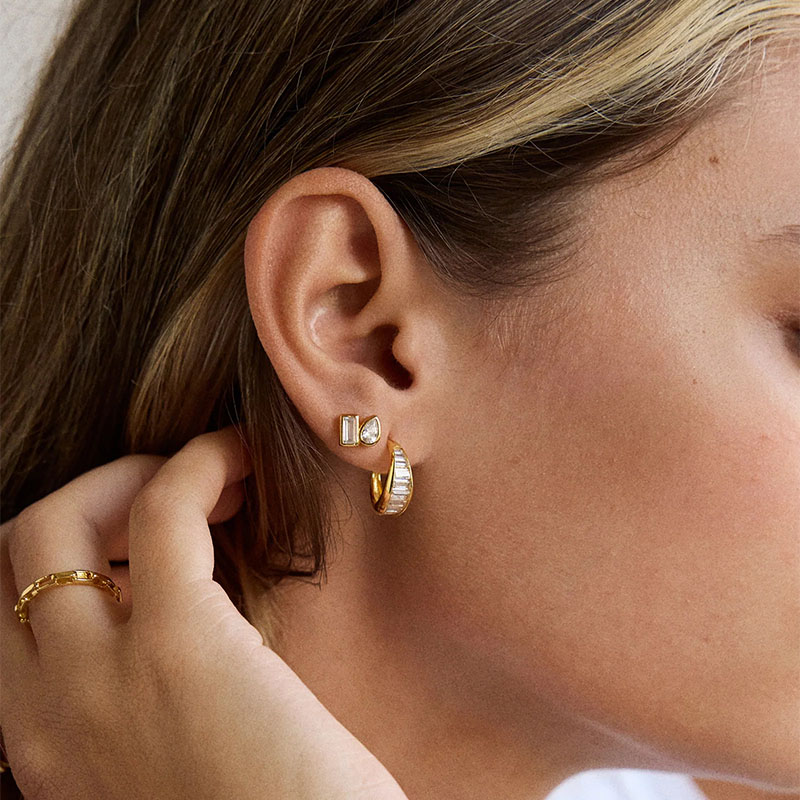
JINGYING will respond with a Proforma Invoice (PI) or quotation that includes:
- Mold/CAD Fee: A one-time charge for creating the 3D model (usually $50-$100 per design).
- Sample Cost: Cost of materials + labor for 1-3 pairs.
- Bulk MOQ: Typically, they are flexible, but 50-100 pairs per design is the sweet spot for demi-fine pricing.
Phase 2: CAD (Computer-Aided Design) Rendering
This is where JINGYING’s technical expertise shines. They use 3D modeling software to create a virtual representation of your earring.
What to check in the CAD:
- Post Placement: Is the post centered? If the motif is a 10mm circle, the post must be perfectly centered, or the earring will droop.
- Weight: JINGYING will estimate the gram weight. Demi-fine studs should ideally be light (under 2-3 grams per pair) to ensure comfort.
- Stone Depth: If using stones, the CAD shows how deep the setting is. Too shallow, and the stone falls out; too deep, and it pokes the ear lobe.
Key Insight: JINGYING allows unlimited revisions at the CAD stage. Do not approve until you are 100% happy.
Phase 3: Prototyping (The “Sample” Stage)
After CAD approval, JINGYING produces a “wax” or “resin” prototype, then casts it in metal. They will send you a physical sample (or photos/videos) of the actual 14K vermeil or gold piece.
Why the prototype is vital:
- The Feel: You can test how sharp the edges are. Demi-fine pieces must be smooth.
- The Color: 14K gold can vary in hue (more copper for rose, more silver for green). You need to approve the color batch.
- The Clutch: Test the friction back. Does it hold tightly? JINGYING uses reinforced clasps to prevent loss.
Phase 4: Production & Quality Control
Once the sample is signed off, JINGYING moves to bulk production.
The Plating Process (for Vermeil pieces):
JINGYING does not simply dip the jewelry. They follow a rigorous electroplating process:
- Polishing: The 925 silver base is polished to a mirror finish.
- Deep Cleaning: Ultrasonic cleaning removes microscopic oils.
- Copper Layer (optional): A base layer of copper is applied for adhesion.
- 14K Gold Layer: A thick layer (2.5 microns+) of 14K gold is electroplated onto the silver.
- Sealing (Optional): An e-coating or rhodium flash may be applied to prevent scratching.
Quality Control (QC):
JINGYING claims a “Quality First” policy. Every piece is inspected under magnification. They test for:
- Gold Thickness: Using XRF machines to ensure the 2.5-micron standard is met.
- Tensile Strength: Pulling the post to ensure it doesn’t snap off the motif.
- Skin Safety: Ensuring no nickel is present (hypoallergenic).
Chapter 4: Pricing Structure and Budgeting
Understanding the cost breakdown helps you price your retail product. Based on industry data and JINGYING’s operational model, here is how your budget is allocated.
| Cost Component | Percentage of Total | Notes |
|---|---|---|
| Material (Metal & Stones) | 30% – 40% | 925 Silver base is cheap; Solid 14K posts cost more. CZ stones are negligible; Moissanite adds cost. |
| Labor & Craftsmanship | 25% – 35% | JINGYING’s bench jewelers are paid for precision stone setting and polishing. |
| Plating & Finishing | 10% – 15% | The thick 14K gold layer (Vermeil) is the most expensive part of the chemical process. |
| Packaging & Logistics | 10% | Custom logo pouches and shipping. |
| Profit/Margin for JINGYING | 10% – 15% | Competitive for Asian OEM manufacturers given the quality level. |
Estimated Example: A pair of 8mm Round CZ Studs in 14K Yellow Gold Vermeil.
- Silver Weight: ~1.5g (Cost ~$2)
- Gold Plating (2.5 microns): ~$3
- Labor & Setting: ~$8
- Total Ex-Works Price (per pair for 100 MOQ): Approximately $13 – $18 per pair.
- Retail Price: These would retail for $49 – $89 in the US/European demi-fine market.
Chapter 5: Logistics, Packaging, and Launch
Your job is not done when the earrings are made. JINGYING offers services to get the product ready for the end customer.
5.1 Custom Branding & Packaging
JINGYING provides private label services. You can have your logo engraved on the butterfly clutch (the metal back) or printed on the insert card. They can source:
- Velvet pouches with gold foil logos.
- Recycled cardboard boxes (eco-friendly options are available).
- Wax seals and ribbons for a luxury unboxing experience.
5.2 Certification
If you claim “14K Gold Vermeil,” you need proof. JINGYING can provide certificates of authenticity or detailed commercial invoices specifying the metal purity. For pieces with lab-grown stones, they confirm they are “Lab-Grown” to avoid customs issues.
5.3 The “JINGYING Standard” for Shipping
Because plating can react to humidity, JINGYING ships pieces with anti-tarnish strips. They recommend storing unsold inventory in airtight bags.
Conclusion: Why JINGYING is the Right Partner
Customizing demi-fine jewelry requires a partner who respects the balance between luxury and affordability. JINGYING understands that a 14K gold stud earring is often a customer’s “first real gold purchase.” If it tarnishes in two months, you lose that customer for life.
JINGYING’s 23-year track record, mastery of thick 14K vermeil, and willingness to do low MOQs (Minimum Order Quantities) for startups make them a unique player. They take the guesswork out of metallurgy. Whether you choose the economical route of 14K Gold Plating over silver or the heirloom route of Solid 14K, JINGYING has the tooling and the talent.