How to Choose Outsourcing Jewelry Production in China: A Strategic Guide for Global Buyers
China remains the undisputed leader in global jewelry manufacturing, accounting for over 70% of fashion jewelry exports and serving as the production backbone for brands ranging from luxury houses to fast-fashion retailers. The country’s dominance stems from highly specialized industrial clusters, integrated supply chains, and a manufacturing ecosystem that combines traditional craftsmanship with advanced automation. However, selecting the right outsourcing partner amid thousands of suppliers requires a structured, data-driven approach. This guide provides a comprehensive framework for evaluating, selecting, and managing jewelry production partners in China.
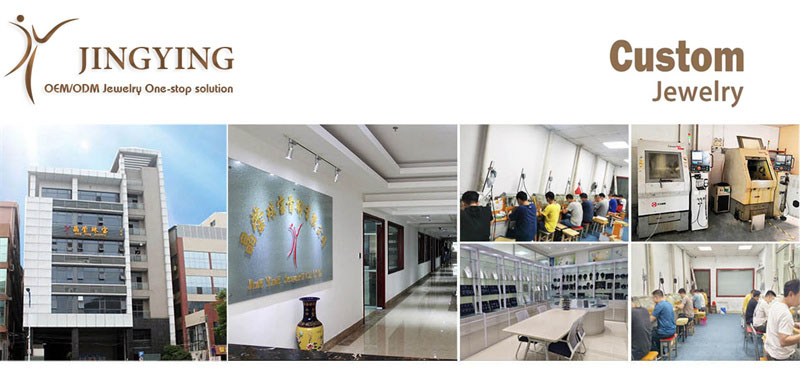
Understanding China’s Jewelry Manufacturing Landscape
The first step in choosing an outsourcing partner is understanding where to look. China’s jewelry production is concentrated in several distinct regions, each offering different capabilities and cost structures.
Guangdong Province: The Innovation Hub
The Pearl River Delta—encompassing Shenzhen, Guangzhou, and Dongguan—represents the epicenter of China’s export-oriented jewelry industry. Shenzhen’s Shuibei district alone hosts a dense network of manufacturers, gemstone cutters, and plating facilities within a few square kilometers. This vertical integration enables rapid prototyping, complex custom designs, and strict quality control.
Guangdong suppliers excel in:
- CAD/CAM modeling and 3D printing for custom designs
- Advanced plating technologies including PVD and IP plating
- Compliance with international standards (REACH, RoHS)
- Proximity to major ports (Shenzhen, Hong Kong) for efficient logistics
For brands requiring high customization, precision finishing, or compliance documentation, Guangdong is the preferred choice. The region is also home to “深圳标准” (Shenzhen Standard) certified manufacturers, a government-backed quality certification signaling “domestic leading, internationally advanced” production standards.
Zhejiang Province: Cost-Effective Scale
Yiwu and surrounding cities in Zhejiang Province specialize in high-volume, affordable fashion jewelry. The Yiwu International Trade Market provides direct access to raw materials, components, and finished goods at competitive price points. Suppliers here prioritize cost efficiency and rapid turnaround, making them ideal for:
- Mass-market fashion jewelry
- Seasonal collections requiring large volumes
- Components and findings for DIY assembly
- Brands testing new markets with flexible MOQs
Fujian and Guangxi: Artisanal Niches
Fujian offers competitive labor rates for handcrafted products, while Guangxi’s Liuzhou region is known for intricate filigree and enamel work. These regions suit boutique brands seeking unique, artisan-quality pieces rather than fully automated mass production.
Supplier Evaluation Framework: Beyond Price
Choosing a supplier based solely on unit cost is a common mistake that often leads to quality issues, delayed shipments, and hidden expenses. A rigorous evaluation should assess five key dimensions.
1. Production Infrastructure and Capabilities
Verify that the supplier actually owns its production lines rather than acting as a trading company. Request live video walkthroughs showing active machinery—casting equipment, polishing stations, electroplating tanks, and CNC machines. Factories with in-house mold-making, laser welding, and automated plating lines reduce dependency on subcontractors, improving consistency and lead time control.
Key questions to ask:
- What specific equipment do you operate (models, capacities)?
- Do you handle casting, plating, and setting in-house?
- Can you share video footage of your production floor?
2. Material Compliance and Quality Assurance
For export-bound jewelry, material compliance is non-negotiable. Demand:
- Assay reports for precious metals (e.g., 925 silver verification)
- Plating thickness certifications (minimum 0.5μm for gold plating)
- REACH and RoHS compliance documentation, particularly for nickel content in base metals
- Third-party test reports from labs like SGS or Bureau Veritas
Implement a three-stage quality control protocol:
- Pre-production: Review digital mockups and material samples
- In-line: Schedule random inspections during assembly
- Final audit: Conduct AQL 2.5 sampling before shipment
Suppliers who welcome such scrutiny—and proactively share progress updates—are more likely to deliver reliably. Note that China has also introduced group standards like T/GAC 24-2025 for e-commerce jewelry quality control, which cross-border buyers can reference.
3. Operational Performance Metrics
Objective data reveals more about a supplier’s reliability than marketing claims. Track these key performance indicators:
| Metric | Target | Why It Matters |
|---|---|---|
| On-time delivery rate | ≥97% | Reflects logistical discipline and production planning |
| Response time | ≤4 hours | Indicates proactive client service |
| Reorder rate | ≥25% | Signals client satisfaction and product consistency |
| Annual online revenue | $70,000+ | Suggests market validation and stable operations |
For example, Beinis Trading (Shenzhen) achieves a 100% on-time delivery rate and 31% reorder rate, indicating both reliability and customer satisfaction. Similarly, Zhuhai Rinntin Jewelry maintains 99.6% on-time delivery with sub-2-hour response times.
4. Customization Depth and Design Support
Top-tier suppliers support full OEM/ODM workflows—from 3D modeling to logo engraving and custom packaging. Evaluate their ability to:
- Accept CAD files (RhinoGold, MatrixGold) for custom designs
- Develop custom molds (costs typically $100–$500, amortized over order volume)
- Offer micro-customization: clasp variations, metal finishes, engraved branding
- Provide packaging solutions: branded boxes, pouches, hangtags, NFC tags for authentication
JINGYING, a Shenzhen-based ODM specialist, exemplifies this depth—offering AI-powered stone sorting, CNC setting robots with 0.01mm accuracy, and blockchain-integrated chain-of-custody tracking for ethically sourced materials.
5. Communication and Risk Management
Effective communication is the backbone of successful international sourcing. Establish clear channels early, preferably using platform-integrated messaging for traceability. Define expectations around:
- File formats (CAD, STEP, reference images)
- Revision limits and approval timelines
- Payment terms (common structure: 30% deposit, 70% before shipment)
Use secure payment methods like Alibaba Trade Assurance or escrow services for initial orders. Clarify Incoterms upfront—FOB Shenzhen is common, but DDP may suit smaller buyers unfamiliar with customs clearance.
Supplier Comparison: Performance Benchmarks
The following table compares top-rated suppliers across key metrics, illustrating the trade-offs between cost, customization, and reliability.
| Supplier | Location | Focus Area | Price Range (USD) | MOQ | On-Time Delivery | Reorder Rate | Key Advantage |
|---|---|---|---|---|---|---|---|
| Beinis Trading | Shenzhen | Custom Silver/Gold | $3–25 | 1 pc | 100% | 31% | Full design flexibility, no MOQ barrier |
| Guangzhou Liwan Yucheng | Guangzhou | 925 Silver Chains | $4–26 | 2 pcs | 98.1% | 24% | Certified silver, packaging customization |
| Zhuhai Rinntin | Zhuhai | Fine Jewelry | Varies | Varies | 99.6% | 30% | Sub-2h response, ISO compliance |
| Yiwu Linsa | Yiwu | Chain Accessories | $1.89–5.99 | 10 meters | 100% | N/A | Fastest response (≤2h), ideal for urgent reorders |
| Dongguan Tai Shang | Dongguan | Stainless Steel | $0.75–1.96 | 10 pcs | N/A | N/A | Lowest per-unit cost for bulk runs |
| Hebei Bestone | Hebei | Fashion Necklaces | $0.85 | 500 pcs | 98.9% | 28% | High polish finish, eco-friendly plating |
Strategic Takeaways
- For luxury or custom brands: Beinis Trading and Zhuhai Rinntin offer superior flexibility and quality assurance
- For high-volume, cost-sensitive buyers: Dongguan Tai Shang and Yiwu-based suppliers provide competitive pricing
- For time-sensitive campaigns: Suppliers with response times under 2 hours and near-perfect delivery records (e.g., Yiwu Linsa, Dehua Yiqu) reduce project risk
The Cost Advantage: Why China Still Wins
Despite rising wages and tariffs, China maintains a significant cost advantage in jewelry production—particularly for technically demanding items like tennis bracelets, where labor and cluster effects create non-replicable efficiencies.
Three Pillars of Cost Competitiveness
- The Cluster Effect: In Shenzhen’s Shuibei district, 90% of global calibrated gemstone cutters operate within a 2km radius. This proximity reduces material logistics costs to near zero and enables just-in-time sourcing.
- Labor Agility: Setting a tennis bracelet is 80% skill and 20% time. A European setter might charge €3 per stone; a Shenzhen master setter brings the cost down to approximately $0.25 per stone for volume orders.
- Vertical Integration: Suppliers who own wax printers, kilns, polishing tumblers, and packaging lines save the 15–20% margin that subcontractors would take.
Illustrative Wholesale Pricing (FOB Shenzhen)
| Product Type | Price Range (USD) |
|---|---|
| Silver Moissanite Tennis Bracelet (3mm) | $28–45 |
| 14k Gold Lab-Grown Diamond Bracelet (2ct) | $450–600 |
| 18k Gold Natural Diamond Bracelet (5ct, G/VS) | $2,800–3,500 |
Source: JINGYING pricing examples
These prices are approximately 40% lower than comparable manufacturing in Thailand or Italy, and 65% lower than the US.
Risk Mitigation and Verification Protocol
Sourcing from overseas factories involves inherent risks. Implement these strategies to protect your investment:
Step 1: Validate Business Credentials
Cross-check business licenses using official Chinese government portals (SAMR). Confirm that registration details match those provided by the supplier.
Step 2: Start with Paid Samples
Never skip sampling. Most suppliers charge $20–$100 per sample, refundable against future orders. Evaluate:
- Material authenticity (verify “925 silver” stamping with acid kits)
- Plating thickness and durability
- Clasp strength and stone setting security
- Packaging quality and branding accuracy
Step 3: Conduct Factory Inspections
Schedule live virtual tours via Zoom or WeChat. Observe:
- Workshop cleanliness and workflow organization
- Equipment maintenance logs and plating bath chemical records
- Worker safety protocols and waste management practices
Reputable suppliers welcome transparency and often provide real-time production updates during manufacturing.
Step 4: Negotiate Payment Terms
Avoid full upfront payments. A common structure is 30% deposit, 70% before shipment. Larger buyers may negotiate net-30 terms after establishing trust. Use Alibaba Trade Assurance or escrow services for initial orders.
Step 5: Establish Chain of Custody
For precious metals and diamonds, request blockchain-enabled tracking (e.g., Everledger, IBM Blockchain) to ensure ethical sourcing and prevent stone switching. Suppliers like JINGYING provide digital passports: “Mined in Botswana / Cut in Surat / Set in Shenzhen / Shipped to New York”.
Optimizing Your Sourcing Workflow
A streamlined procurement cycle enhances speed-to-market and reduces errors. Consider this workflow:
- Design Finalization: Prepare technical drawings or reference images
- Supplier Shortlisting: Filter by specialization (silver vs. stainless steel), MOQ, and customization depth
- Sample Request: Order prototypes; many suppliers refund sample fees against future orders
- Production Agreement: Lock in price, timeline, packaging, and QC standards in writing
- Batch Monitoring: Use scheduled updates (weekly video walkthroughs) to track progress
- Final Inspection & Shipment: Approve goods after AQL sampling
Brands launching seasonal collections can leverage suppliers with low MOQs to test trends with minimal financial exposure. For example, Shenzhen Guangming District Qianyin Jewelry Factory accepts orders as low as 2–3 pieces for premium stainless steel designs.
Frequently Asked Questions
How can I confirm a factory actually owns its production line?
Request a recorded tour showing active machinery, worker stations, and QC processes. Verified suppliers often publish real-time updates or live streams. Cross-check equipment names (e.g., “laser welder,” “electroplating tank”) against their listed capabilities.
What’s the average lead time for custom jewelry?
Standard items take 15–25 days, including mold creation and plating. Complex pieces with stone settings or multi-layer engraving may require up to 35 days. Sample delivery typically takes 7–14 days after design approval.
Do suppliers handle global shipping?
Most manage FOB shipments and coordinate with freight forwarders for air or sea consolidation. Always confirm insurance coverage, export documentation, and compliance with destination-country regulations.
What certifications should I look for?
Prioritize RJC (Responsible Jewellery Council) for ethical sourcing, ISO 9001 for quality management, and REACH/RoHS compliance for chemical safety. “深圳标准” certification is a valuable regional quality signal.
How extensive is customization in modern jewelry manufacturing?
Leading suppliers support full customization: alloy type, plating method (IP or PVD), stone selection, engraving style, and branded packaging. Submit CAD files or sketches for accurate quoting; most return digital mockups within 48 hours.
Conclusion: Choose Partners, Not Just Suppliers
The best jewelry sourcing outcomes come from treating suppliers as strategic partners, not transactional vendors. Look beyond price to evaluate responsiveness, repeatability, and adaptability. Whether you are building a luxury brand or scaling a fast-fashion line, aligning with manufacturers who match your operational tempo and quality standards ensures long-term success.
By leveraging data-driven evaluation, enforcing clear communication protocols, and selecting partners based on holistic performance—not just cost—you position your business for sustainable growth in the dynamic world of global jewelry commerce. Start with thorough due diligence, prioritize suppliers who demonstrate consistency and transparency, and build relationships that can scale with your brand’s ambitions.