The Timeline for Custom Pearl Earrings at JINGYING: A Comprehensive Guide for Brands
In the fast-paced world of fashion retail, time is as valuable as the materials themselves. For brands and designers planning to launch a new jewelry line, understanding production lead times is crucial for inventory planning, marketing strategies, and cash flow management. When it comes to custom pearl earrings at JINGYING Jewelry, the question “how long does it take?” requires a nuanced answer that considers design complexity, order volume, and the client’s own responsiveness throughout the process.
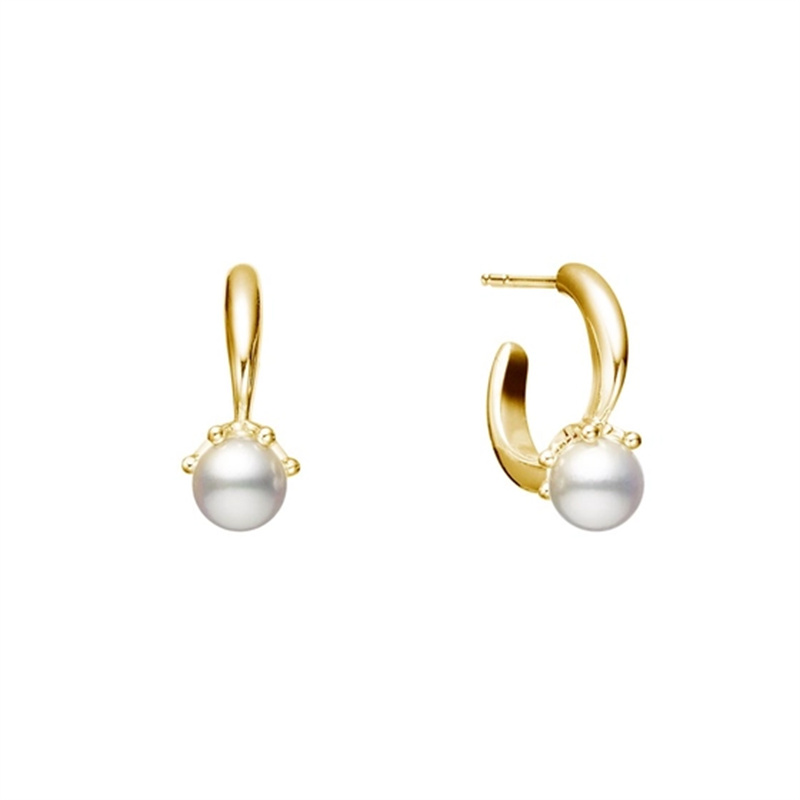
JINGYING, a Guangzhou-based manufacturer with over two decades of experience, has built its reputation on providing a one-stop solution for custom jewelry—from initial sketches to final packaging. With three specialized factories spanning 25,000 square meters and a workforce of over 450 professionals, the company offers the infrastructure to handle both small-batch prototypes and large-scale productions efficiently. However, even with this capability, the production timeline for custom pearl earrings follows a structured, multi-phase process that deserves careful examination.
The Standard Lead Time Framework
JINGYING quotes a standard total lead time of 25 to 35 business days for a typical custom jewelry order. However, this figure represents a streamlined scenario with an approved design, no major revisions, and a standard order volume. The actual duration can vary significantly based on several key factors.
The company’s lead time structure can be broken down into distinct phases:
| Phase | Standard Duration | Rush Option |
|---|---|---|
| CAD Development & Design | 7-10 business days | 5-7 days |
| Prototyping & Sampling | 7-10 business days | 5-7 days |
| Mass Production | 20-30 business days | 15-18 days |
| Reorders | 12-15 business days | 10-12 days |
Phase One: Design and Development (Days 1–10)
The journey begins with the translation of a client’s vision into a precise digital blueprint. This phase is arguably the most variable in terms of duration, depending entirely on what the client provides as a starting point.
Initial Consultation and Brief (Days 1–3): The clock starts when a client contacts JINGYING with an idea. Whether the client provides a hand-drawn sketch, a photograph, a mood board, or a precise 3D CAD file, the team conducts a “Technical Feasibility Review” to analyze the design for structural integrity. For pearl earrings specifically, this includes evaluating the size and placement of pearls, the security of settings, and the overall durability of the design.
CAD Modeling and Rendering (Days 4–10): Once the concept is approved, JINGYING’s CAD engineers use advanced software like Rhino and MatrixGold to create precise 3D models. For clients who provide their own 3D files, the team performs a “Design for Manufacturing” (DFM) analysis to check for potential issues like insufficient wall thickness or problematic undercuts—a proactive step that takes 2-3 days but prevents costly delays later. For clients starting from sketches or photographs, the modeling process takes 5-7 days, with photorealistic renderings provided for approval.
Key variable: A client with a fully resolved CAD file and quick decision-making can move through this phase in under a week, while a client developing an idea from scratch may require two weeks or more.
Phase Two: Prototyping and Sampling (Days 8–25)
This is arguably the most critical phase in the timeline. Rushing it is a false economy—discovering a design flaw after thousands of pieces have been cast is a catastrophic and costly error.
3D Printing the Master Pattern (Days 8–14): The approved CAD file is sent to JINGYING’s high-resolution SLA or DLP 3D printers. These machines cure liquid photopolymer resin layer by layer, building an exact physical replica of the digital model with exceptional detail. This process typically takes 1-3 days, depending on the number of patterns being printed.
Lost-Wax Casting (Days 11–18): The resin pattern undergoes the ancient process of lost-wax casting, refined with modern precision. The pattern is attached to a wax “tree” and encased in investment plaster. After the plaster hardens, it is heated in a kiln to burn out the resin, leaving a perfect hollow cavity. Molten sterling silver is then forced into this cavity using centrifugal force or vacuum pressure. This entire cycle takes approximately 3-4 days.
Initial Finishing and Polishing (Days 15–22): The raw castings are cut from the tree. At this stage, the pieces are recognizable but have a rough, matte surface. They undergo initial finishing: tumbling with abrasive media to smooth surfaces and pre-polishing by skilled craftsmen to remove any remaining casting seams or imperfections.
First Sample and Client Review (Days 18–30): The finished prototype, often called a “first article sample,” is carefully inspected, photographed, and shipped to the client via international courier (typically 3-5 days). Upon receiving the sample, the client enters a crucial review period of 2-5 days to evaluate not just the aesthetics, but the feel, weight, comfort, and functionality. This is the time to test the pearl setting, the clasp mechanism, and the overall wearability.
Revisions: If the sample requires adjustments—such as modifying the pearl size, adjusting the setting security, or changing the finish—the process loops back. A new CAD model is created, a new resin prototype is printed, and a new sample is cast. Each revision cycle adds another 1-3 weeks to the timeline.
Case study example: In a documented collaboration with a Korean brand for a large pearl earring order, JINGYING sent an 18K gold sample, which the client reviewed in approximately two weeks. Feedback included a request for minor size and clasp refinements, which were incorporated before mass production began.
Phase Three: Mass Production (Days 25–55+)
With the client’s final sign-off on the physical sample, the project moves into its most intensive phase. The timeline here is directly proportional to the order quantity and complexity.
Production Planning and Material Preparation (Days 25–28): Before production begins, materials must be allocated. JINGYING sources high-grade metals—925 sterling silver being the premium choice for pearl earrings due to its durability and hypoallergenic properties. The specific karat of gold for plating is readied, and pearls are sourced from certified suppliers.
Casting and Assembly (Days 28–40): This stage replicates the casting process from Phase Two, but on a massive scale. JINGYING’s vacuum casting machines and high material utilization rates ensure efficiency. For an order of 1,000 pairs of earrings, the casting phase might take 5-7 days. For 10,000 pairs, it could take two weeks or more. After casting, pieces are cut from their trees, and any necessary assembly is performed.
Stone Setting (Days 35–50): For pearl earrings, this is one of the most time-sensitive steps. Pearls require delicate handling and precise setting to ensure they are secure without damaging the nacre. A master setter, often working under a microscope, places each pearl into its seat and carefully secures it. This meticulous hand process is labor-intensive—a simple single-pearl stud setting is relatively quick, but designs with multiple pearls or complex settings require significantly more time.
Polishing, Plating, and Finishing (Days 40–55): Before plating, every component is hand-polished by skilled artisans. The quality of this pre-plating polish directly determines the final shine. For gold-plated pearl earrings, the pieces enter an electrochemical plating bath. For “heavy gold plating” or vermeil (thick gold over sterling silver), the pieces remain in the bath longer to achieve the required thickness. JINGYING’s 8 automated plating lines with environmental controls ensure consistency across the entire batch.
Quality Control (Days 50–55): JINGYING employs a multi-point quality inspection process. For pearl earrings, this includes:
- Dimensional verification against approved specifications
- Surface finish inspection for polishing and plating consistency
- Structural integrity testing of clasps and connections
- Pearl security check—verifying every pearl is tight and secure
- XRF testing to verify metal purity for 925 silver certification
Key Factors Influencing the Timeline
Several variables can accelerate or extend the production timeline for custom pearl earrings:
1. Design Complexity: Simple stud pearl earrings move through production faster than intricate designs with multiple pearls, complex settings, or detailed engraving.
2. Order Volume: JINGYING’s lead time framework shows that small batches (100-500 pieces) typically require 15-20 days for production, while larger orders (1,000+ pieces) can take 25-30 days.
3. Pearl Sourcing: While JINGYING maintains strategic inventory of common materials, specific pearl sizes, shapes, or qualities may require additional sourcing time.
4. Revision Cycles: This is the single most controllable variable. Prompt feedback and decisive approval at each stage are the greatest accelerants. Indecision or major revisions after casting has begun can add weeks of delay.
5. Time of Year: Peak seasons (November through Valentine’s Day) often see extended lead times due to high demand across the industry.
Real-World Example: Large-Scale Pearl Earring Production
In a documented project, JINGYING produced 45,000 rose gold pearl earrings for a South Korean client. The production required scaling up capacity across multiple phases. Pearl drilling capacity was increased to 2,000 units per day by adding night shifts and new laser drills. Metal casting was partnered with a secondary foundry. Quality inspection was upgraded from 20% sampling to 100% pearl inspection. The phased production timeline was carefully orchestrated to meet delivery commitments.
While this was a massive order, it demonstrates JINGYING’s ability to scale production while maintaining quality standards—a capability that benefits clients of all sizes.
Conclusion: Setting Realistic Expectations
For brands planning a custom pearl earring order at JINGYING, the total lead time typically ranges from 4 to 8 weeks from initial consultation to finished product, assuming:
- A reasonably clear design concept is provided
- The sample is approved with no major revisions
- The order volume is standard (100-1,000 pieces)
- Pearls are readily available from existing inventory
However, this timeline can extend to 8-12 weeks or more for:
- Highly complex, multi-pearl designs
- Orders requiring custom pearl sourcing
- Multiple revision cycles
- Very large order volumes (10,000+ pieces)
JINGYING’s vertical integration—with in-house CAD designers, 3D printing lab, casting facilities, and master setters all under one roof—provides a significant efficiency advantage over manufacturers that outsource these steps. This integration, combined with scalable capacity and experienced craftsmanship, enables the company to deliver custom pearl earrings with predictable timelines that balance quality with efficiency