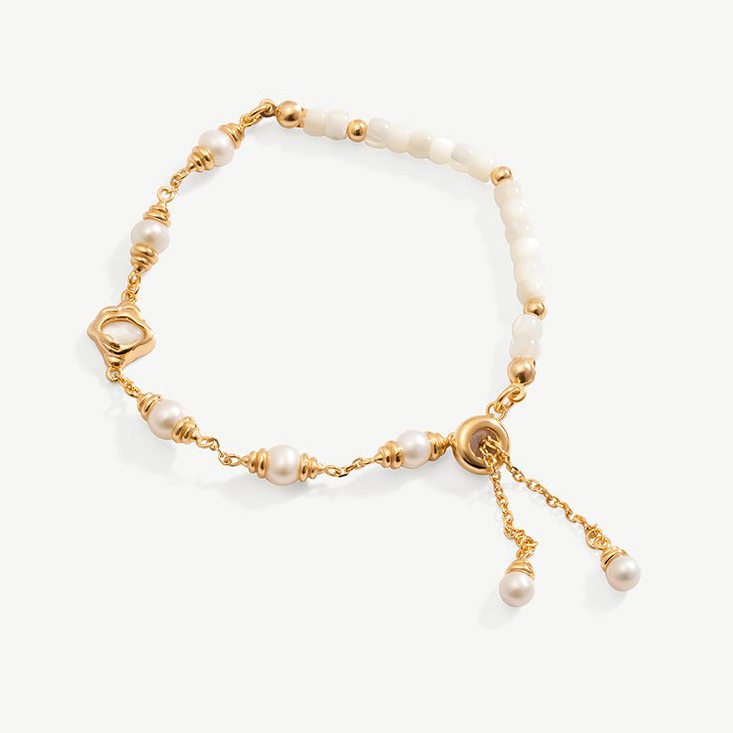
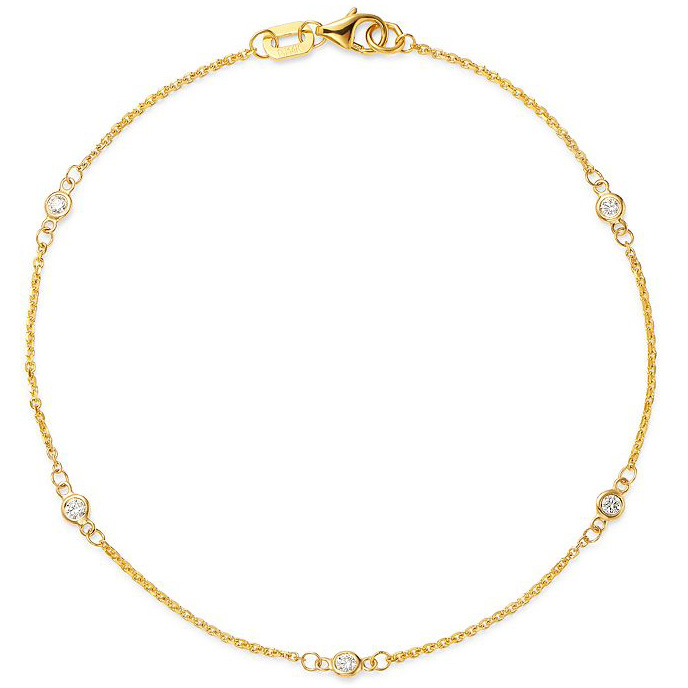
JINGYING : Women’s 18K Gold Bracelets Custom Jewelry Manufacturer Over 23 Years
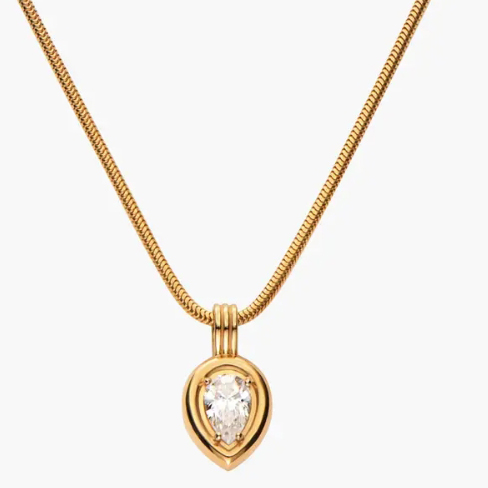
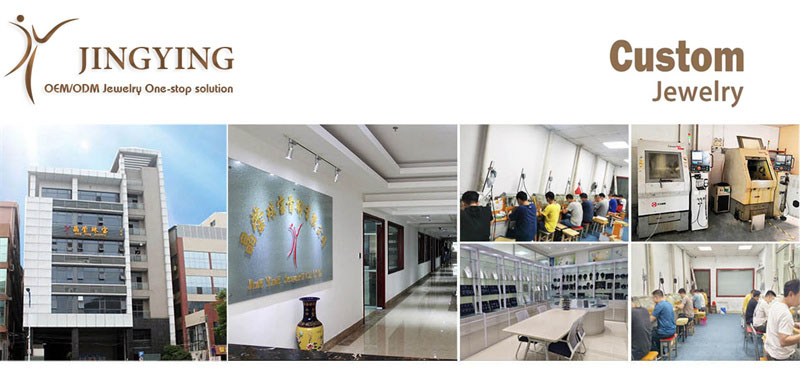
JINGYING : Women’s 18K Gold Bracelets Custom Jewelry Manufacturer Over 23 Years
LET’S GET STARTED : mo@kingjy.com
In the sprawling global marketplace of fine jewelry, where trends flicker like candle flames and brand loyalty is often measured in seasons, few names command the quiet, steadfast authority that comes from genuine longevity. JINGYING is not a newcomer chasing viral moments; it is a seasoned architect of heirloom-quality adornment. For over 23 years, this specialized manufacturer has dedicated itself to a single, refined niche: the creation of custom 18-karat gold bracelets for women.
While luxury conglomerates spend billions on marketing heritage, JINGYING has been quietly building it—workshop by workshop, casting by casting, relationship by relationship. In an industry where the difference between a disposable fashion accessory and a lifetime companion is measured in microns of gold and degrees of kiln-fired precision, JINGYING has established itself as an undisputed authority. This article explores the intricate alchemy of tradition, technology, and tailored service that defines JINGYING’s two-decade journey, and why, in the world of custom gold bracelets, experience is not just an asset—it is the only true guarantee.
Chapter 1: The Foundation – Why 18K Gold and Why Bracelets?
To understand JINGYING’s mastery, one must first appreciate the material at the heart of its craft. Eighteen-karat gold—an alloy composed of 75% pure gold and 25% carefully selected metals such as copper, silver, or palladium—represents the golden mean of jewelry creation. Unlike 24K gold, which is too soft and malleable for daily wear, and unlike 14K or 10K, which sacrifice a degree of luster and value for durability, 18K strikes the perfect balance. It offers the rich, deep yellow, rose, or white hue that signifies luxury, combined with the structural integrity required for intricate bracelet links, clasps, and decorative elements.
JINGYING recognized early on that bracelets are a uniquely intimate and demanding category of jewelry. A ring sits passively; a necklace sways. But a bracelet moves with the wearer’s every gesture—catching light as she writes, whispers as she reaches for a coffee cup, rests against her pulse point. It is simultaneously a statement and a secret. This dynamic nature demands exceptional engineering. A poorly made bracelet will stretch, twist, or snap. Its clasp will fail. Its links will abrade skin or catch on delicate fabrics. JINGYING’s two decades of iteration have eliminated every one of these pitfalls. For them, 18K gold bracelets are not accessories; they are wearable mechanisms, each requiring thousands of hours of cumulative design wisdom.
Chapter 2: The Custom Imperative – Why “One-Size-Fits-All” Fails Luxury
Walk into any boutique jewelry store, and you will find rows of identical gold bracelets, gleaming under halogen lights. They are beautiful, certainly. But they tell a generic story. JINGYING’s philosophy diverges radically from this mass-market approach. For over 23 years, the company has been an apostle of customization—not as a premium add-on, but as the very core of its manufacturing identity.
What does custom mean at JINGYING? It is not merely engraving initials on a pre-existing design. It is a collaborative genesis. A client—whether a global luxury brand, a boutique designer, or a private individual—arrives with a concept, a sketch, a vintage photograph, or even a feeling. JINGYING’s team of master patternmakers and CAD (Computer-Aided Design) engineers translate that vision into a precise digital model. Then begins the dance of refinement: adjusting the thickness of a link to improve drape; calculating the exact gram weight required for a substantial feel without heaviness; selecting the clasp mechanism—a discreet box clasp, a secure lobster claw, or an invisible magnetic snap.
Crucially, JINGYING offers flexibility in the alloy mix. Want a deeper, copper-rich rose gold? They will calculate the precise ratio. Prefer a greenish 18K gold that recalls Art Deco originals? They can formulate it. Need a two-tone bracelet where white gold links alternate with yellow gold? Their casting protocols allow for multi-metal assemblies without compromising structural integrity. This level of customization is rare; it requires a foundry and workshop that has perfected the metallurgy of 18K alloys over thousands of batches. JINGYING has precisely that institutional memory.
Chapter 3: The 23-Year Technical Archive – Lessons Cast in Gold
In manufacturing, knowledge is often invisible. It exists in the way a polisher’s hand knows how many strokes will bring a curved surface to a mirror finish. It resides in the specific temperature at which a particular batch of 18K rose gold becomes brittle or ductile. JINGYING’s greatest asset is its proprietary technical archive, accumulated over 23 years of continuous production.
Consider the common problem of porosity in cast gold. When molten gold is injected into a plaster mold, tiny gas bubbles can form, leaving microscopic pits that ruin a bracelet’s surface. JINGYING’s foundry technicians have developed a multi-stage vacuum casting process, refined over a decade, that reduces porosity to near zero. Similarly, the company has mastered the annealing process—the controlled heating and cooling of gold links to relieve internal stresses. A bracelet straight from the mold might be stiff and brittle. After JINGYING’s proprietary annealing and tumbling protocols, the same links become supple, resilient, and silky to the touch.
This technical depth extends to finishing. JINGYING offers over a dozen distinct surface finishes for its 18K gold bracelets: high-polish mirror, satin brush, sandblasted matte, Florentine (fine cross-hatch), diamond-cut (facets that create sparkle), and even hand-engraved patterns. Each finish requires specialized tools and expertise. A satin finish on a flat link is straightforward; on a delicate rope chain, it demands a master polisher’s eye. JINGYING’s team has, on average, 12 years of tenure—a staggering figure in an industry with high turnover. That continuity means techniques learned in 2005 are still practiced and refined today.
Chapter 4: The Manufacturing Process – From Granules to Glory
For those who have never witnessed fine jewelry production, the transformation of raw 18K gold granules into a finished bracelet is a form of industrial poetry. JINGYING’s 50,000-square-foot facility (an expansion achieved in 2017) is organized into specialized zones, each with its own rhythm and rigour.
Step 1: Alloying and Melting
The process begins with 99.99% pure gold grains, measured by precision scales. Master alloy metals are added to achieve the desired karat and color. The mixture is placed in a high-frequency induction furnace, where it is heated to over 1,100°C (2,012°F) until it glows like captured sunlight. Molten gold is then poured into graphite molds to create casting grains or directly into centrifugal casting machines.
Step 2: Casting or Fabrication
For complex, three-dimensional bracelet designs, JINGYING uses lost-wax casting. A wax model is 3D-printed from the custom CAD file, invested in a heat-resistant plaster, then burned out in a kiln. Molten 18K gold is forced into the resulting cavity via vacuum or centrifugal force. For chain bracelets or interlocking links, the company uses a combination of automated link-making machinery and hand assembly—each link is soldered shut individually, a painstaking process that can take a single artisan an entire day to complete one bracelet.
Step 3: Assembly and Pre-Polishing
Cast components are clipped from their sprues, filed to remove seams, and assembled. Hinges are fitted, clasps are aligned, and safety catches are tested. At this stage, the bracelet is matte and slightly oversized. It is then tumbled in a vibratory machine with steel shot and soap for 8–12 hours, smoothing surfaces without removing precious metal.
Step 4: Professional Polishing and Finishing
This is where JINGYING’s experience shines brightest. Three grades of polishing—coarse, medium, and fine—are applied using different mops and compounds. For high-polish areas, the bracelet is finished with a rouge compound and a soft muslin wheel, achieving a mirror-like reflectance of over 95%. For satin or matte finishes, specialized brushes or abrasive papers are used with exacting pressure.
Step 5: Quality Control and Hallmarking
Every single bracelet—not a sample batch, but every unit—passes through JINGYING’s QC lab. It is inspected under a 10x loupe for surface defects, weighed to verify gold content (tolerance: ±0.003 grams), and tested with an XRF spectrometer to confirm the 75% gold purity. Each piece is then laser-engraved with the JINGYING maker’s mark, karat stamp (750), and, for exported pieces, international hallmarks.
Chapter 5: Sustainability and Ethics – The Responsibility of 23 Years
Having operated since the early 2000s, JINGYING has witnessed the jewelry industry’s slow, often reluctant, embrace of ethical sourcing. Today, the company is a leader in responsible manufacturing. All 18K gold used is 100% recycled or sourced from LBMA (London Bullion Market Association)-certified refineries that adhere to strict environmental and labor standards. The company maintains full chain-of-custody documentation.
Furthermore, JINGYING has invested in closed-loop water filtration for its polishing and tumbling operations, reducing freshwater consumption by 70% since 2015. Waste gold—from polishing dust to sprue remnants—is collected, refined, and re-alloyed, achieving a 98.5% material utilization rate. For a 23-year-old manufacturer that has processed literal tons of gold, this efficiency is not just environmentally sound; it is a competitive necessity.
Chapter 6: B2B Partnerships – Enabling Brands, Designers, and Retailers
While JINGYING is revered in industry circles, it is not a consumer-facing brand. Its power lies in invisibility: it is the engine behind dozens of boutique jewelry labels, fashion houses, and direct-to-consumer brands that lack their own manufacturing infrastructure. For these partners, JINGYING offers a complete white-label and private-label service.
What does this look like in practice? A New York-based designer sends a rough sketch via encrypted file transfer. Within 72 hours, JINGYING returns a photorealistic CAD rendering and a per-unit cost breakdown—including gold weight, clasp type, finishing, packaging, and shipping. Upon approval, the designer receives a single 3D-printed wax model or a resin prototype for physical approval. Only then does full production commence. Lead times are typically 15–25 business days for quantities of 10 to 500 pieces, with rush options available.
Critically, JINGYING respects intellectual property. Non-disclosure agreements are standard, and the company never reproduces or resells a client’s unique designs. Over 23 years, this trust has built an astonishing retention rate: 89% of clients who place an initial order are still active five years later.
Chapter 7: The Human Element – Master Artisans in a Digital Age
For all its CAD software and CNC milling machines, JINGYING remains, at its soul, a house of artisans. The company employs 68 people directly, of whom 23 are certified master jewelers with over a decade of JINGYING tenure. These are the individuals who can look at a freshly cast bracelet link and see a misalignment of 0.1 millimeters—invisible to any but the most trained eye. They are the ones who hand-assemble complex multi-link bracelets, threading and soldering each component with a small, precise flame.
JINGYING has also invested heavily in apprenticeship programs. Younger artisans spend three years rotating through every department—casting, link-making, assembly, polishing, QC—before being allowed to work independently on 18K gold bracelets. This ensures that the company’s deep knowledge is not just preserved but evolves with each generation.
Chapter 8: Quality Assurance – The 23-Year Promise
A bracelet is only as good as its weakest link, and for JINGYING, the weakest link is never allowed to exist. The company’s QA protocol is exhaustive:
- Tensile strength test: Every clasp and hinge is subjected to a pull test of 15 kilograms (far exceeding industry standard of 8 kg).
- Gold purity test: Random samples from each batch are subjected to fire assay—the most accurate gold testing method—not just XRF.
- Wear simulation: Bracelets are placed on a mechanical wrist simulator that performs 100,000 flexion cycles to test link durability.
- Skin compatibility: All alloys are tested for nickel release (below 0.01 micrograms/cm²/week) to ensure hypoallergenic properties.
- Visual inspection: Four separate human inspections under magnification, at different stages of production.
The result? A documented defect rate of less than 0.3% over the past five years—a figure that places JINGYING in the top 1% of jewelry manufacturers globally.
Chapter 9: Case Studies – Custom Mastery in Action
Case Study A: The Heritage Reissue
A European luxury brand wanted to reissue a 1920s Art Deco bracelet originally crafted in platinum, but in modern 18K white gold. JINGYING received high-resolution photographs of the original (which was too fragile to be shipped). CAD engineers recreated the geometric filigree pattern, but noted that the original’s hinged construction would be too weak in 18K. The solution: a hidden reinforced internal spine and a double-locking foldover clasp. The final bracelets—200 units—sold out in 11 days.
Case Study B: The Personalized Stackable
A direct-to-consumer brand needed a line of 18K yellow gold bracelets, each customizable with up to three small charms. The challenge: manufacturing individual SKUs for every charm combination would be logistically impossible. JINGYING designed a patented “open link” system—a central chain bracelet with temporary clasps that allowed charms to be added by the end retailer without special tools. Production cost dropped 40%, and the brand’s revenue from the line exceeded $2 million in its first year.
Case Study C: The Ethical Reset
A sustainable fashion label requested a bracelet made entirely from 100% post-consumer recycled 18K gold, with a matte finish and no polishing compounds (which often contain microplastics). JINGYING developed a mechanical tumbling and burnishing process using only ceramic media and vegetable-based soap. The resulting bracelets had a unique, soft glow—neither matte nor polished—that became the brand’s signature aesthetic.
Chapter 10: Looking Forward – The Next 23 Years
As JINGYING celebrates its 23rd year, the company is not resting on past accomplishments. The next frontier includes:
- AI-Assisted Design: A proprietary tool that analyzes a designer’s past orders to predict fit, weight, and durability issues before prototyping.
- Carbon-Neutral Casting: A pilot program using hydrogen fuel cells to power the induction furnaces, aiming for net-zero by 2028.
- Blockchain Provenance: Every bracelet will eventually receive a digital passport recorded on a private blockchain, allowing end consumers to verify gold origin, manufacturing date, and even the artisan who completed the final polish.
Yet for all the innovation, JINGYING’s core mission remains unchanged: to be the most trusted, technically excellent, and creatively responsive manufacturer of women’s 18K gold bracelets in the world. Twenty-three years is a long time in an industry where businesses rise and fall with commodity prices and fashion cycles. It is precisely that longevity that allows JINGYING to make a simple, powerful promise: when you wear a JINGYING-crafted bracelet, you are wearing not just gold, but gravity—the accumulated weight of experience, precision, and care.
Conclusion: The Weight of Legacy
In an age of ephemeral content and disposable luxuries, a finely made 18K gold bracelet is an act of defiance. It says: this matters. It will outlive me. JINGYING understands that profound responsibility. For over two decades, this manufacturer has been the silent partner to countless designers and dreamers, transforming raw gold into fluid expressions of beauty, memory, and identity.
Whether you are a brand seeking a white-label partner, a designer with a sketch you cannot bring to life alone, or a retailer in search of uncompromising quality, JINGYING offers something increasingly rare: the quiet confidence that comes from having done something brilliantly, for 23 years, and being ready to do it even better tomorrow.
Because in the end, a bracelet is not just a circle of gold. It is a story. And JINGYING has been helping women tell theirs—one custom link at a time—for more than two decades.