JINGYING : Gold Stud Earrings Outsource Jewelry Production Factory
JINGYING : Gold Stud Earrings Outsource Jewelry Production Factory
LET’S GET STARTED : mo@kingjy.com
JINGYING: The Premier Outsourcing Partner for Gold Stud Earring Manufacturing
Abstract
In the intricate ecosystem of global luxury goods, the stud earring occupies a unique position. It is often the “first fine jewelry” purchase for a young consumer and the daily staple for a seasoned collector. However, beneath its simple aesthetic lies a manufacturing process that demands extreme precision, material integrity, and surface finishing perfection. For brands looking to scale, the difference between a mediocre stud earring and a masterpiece is the factory behind it. This article provides a deep dive into JINGYING, a Guangzhou and Wuzhou-based manufacturer with over two decades of vertical integration expertise, analyzing why it has become the gold standard for outsourcing gold-plated and sterling silver stud earrings.
1. The Strategic Imperative: Why Outsource Stud Earring Production?
The global jewelry market is projected to grow significantly, yet the barriers to entry remain high due to capital expenditure (CapEx) requirements for machinery. For fashion brands, boutique designers, and e-commerce retailers, manufacturing stud earrings in-house is rarely feasible. The requirements for casting, electroplating, and stone setting demand specialized environments.
Outsourcing is no longer just a cost-cutting exercise; it is a strategy for accessing R&D and speed. JINGYING positions itself as an extension of the brand’s own operations, offering what the industry terms a “one-stop solution.” This is particularly vital for gold stud earrings, where the margin for error is zero. A poorly plated post can cause allergic reactions (a cardinal sin in jewelry), and an off-center stone ruins the symmetry required for a stud .
2. Company Profile: The JINGYING Legacy
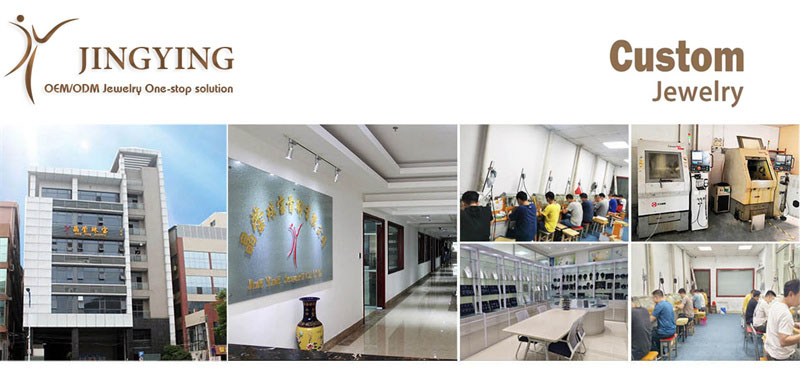
Established in 1998, JINGYING Jewelry has evolved through two and a half decades of market shifts, moving from simple OEM (Original Equipment Manufacturer) to a dominant force in ODM (Original Design Manufacturer). Unlike trading companies that broker deals between buyers and anonymous factories, JINGYING owns and operates its manufacturing bases in Guangzhou and Wuzhou, China .
Production Capacity: The facility boasts a monthly output capacity of up to 80,000 pieces. This scale is critical for buyers; it signals the ability to handle high-volume holiday season rushes without compromising lead times .
Vertical Integration: The factory is vertically integrated, meaning casting, polishing, setting, and plating all occur under one roof. For a product like a gold stud earring, this reduces logistical friction and ensures quality accountability at every step .
3. Material Mastery: The “Gold” Standard
When outsourcing “gold” stud earrings, brands must navigate the complex terminology of plating versus solid gold. JINGYING specializes in a “Gold-Filled” and “Gold-Plated” hierarchy that balances luxury aesthetics with durability.
3.1 Base Metal Integrity
Most of JINGYING’s high-end studs utilize 925 Sterling Silver as the base metal. This is crucial because the metal must be hypoallergenic. While cheap alloys cause green skin or black rashes, 925 silver is biocompatible. The factory ensures that their sterling silver jewelry “will NOT turn green,” a fundamental promise for customer retention .
3.2 Advanced Plating Technology
The “Gold” in JINGYING’s earrings is applied via heavy gold plating (vermeil standard). The company offers finishes in 18K, 14K, and 24K yellow, white, and rose gold. A critical technical specification for buyers to note is the plating thickness. JINGYING can achieve plating thicknesses of up to 3.0 microns. For context, standard fashion jewelry often uses 0.5 microns. This thicker layer ensures the earrings resist sweat, perfume, and daily abrasion far longer than mass-market alternatives .
4. The Manufacturing Process: From Sketch to Stud
Creating a perfect gold stud earring involves micro-engineering. JINGYING has refined a workflow that transforms raw metal into retail-ready assets .
Phase 1: CAD & 3D Prototyping
The process begins with Matrix and RhinoGold software. For stud earrings, the balance of the post (the part that goes through the ear) and the pad (the decorative front) must be perfect to prevent drooping. JINGYING utilizes high-resolution 3D printing to cast wax models. This allows designers to see exactly how the earring will sit on the ear before metal is ever poured .
Phase 2: Lost-Wax Casting & CNC Precision
Once the wax model is approved, the lost-wax casting process begins. For high-precision geometric studs (a popular trend in modern minimalist design), JINGYING employs CNC milling. Carving the earring from a solid block of metal ensures that corners are sharp and dimensions are exact to the micron—something casting alone cannot always guarantee .
Phase 3: Expert Stone Setting
A gold stud is nothing without its centerpiece. JINGYING employs specialized setters for various techniques:
- Prong Setting: For maximum light exposure on diamonds or CZ.
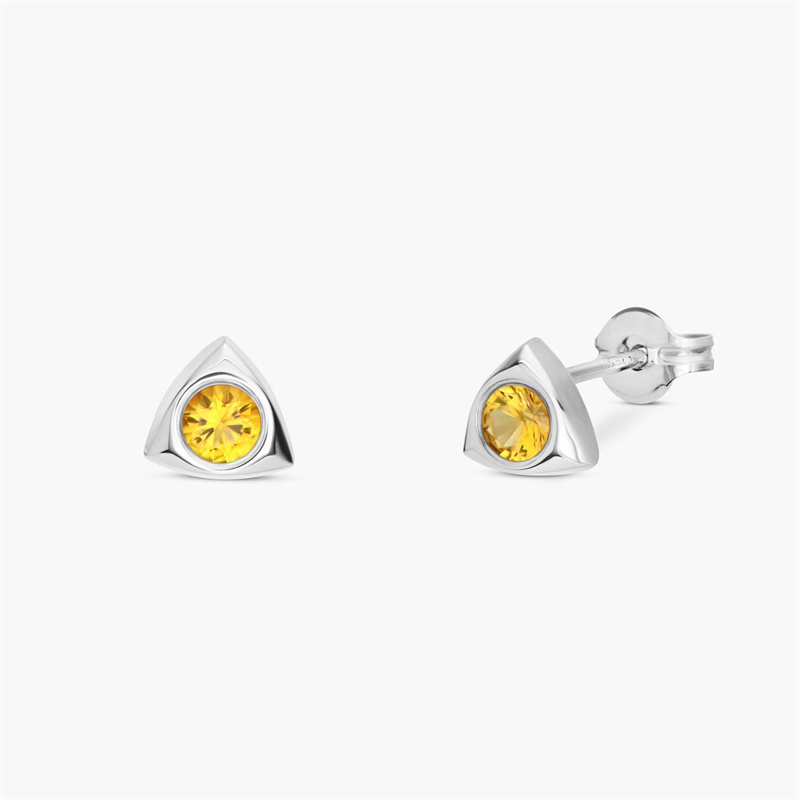
- Bezel Setting: A sleek metal rim that protects the stone—ideal for active lifestyles.
- Pavé Setting: For halo studs that require tiny diamonds covering the surface .
Phase 4: Polishing and Plating
The final aesthetic comes from the finish. JINGYING offers high-polish (mirror finish), matte, or brushed textures. The plating process involves electroplating where the earrings are submerged in a chemical bath to bond the gold particles to the silver base. This step is strictly monitored for wastewater treatment and environmental compliance .
5. Quality Control (QC): The Unseen Value
In the world of stud earrings, the biggest risk is not the design but the durability of the clasp and the integrity of the plating. JINGYING’s quality control is structured as a multi-layered “gate” system .
- Post Straightness: Every earring post is checked for perpendicular alignment to the earring pad. A tilted post makes wearing painful.
- Clutch Tension: The butterfly or push-back clutch must hold firmly. JINGYING tests clutch resistance to ensure earrings don’t fall off, a common complaint in cheap imports.
- Plating Adhesion: The factory performs adhesion tests (tape tests and heat shock tests) to ensure the gold layer does not peel or bubble.
- Skin Compatibility Tests: All materials are verified to be lead-free and nickel-free, compliant with EU REACH and US Prop 65 standards .
6. Customization and Branding (OEM/ODM Services)
For a brand, selling a “gold stud” is a commodity; selling a “JINGYING-made stud” is a value proposition. The factory excels in private labeling, allowing brands to integrate their identity into the product .
Packaging Solutions
JINGYING can source or manufacture custom packaging, including:
- Luxury velvet boxes with foam inserts cut specifically to hold the stud earrings securely.
- Pouches and branded cards.
This “ready-to-ship” packaging saves brands the logistical headache of packing the jewelry themselves.
Design Library
For buyers with no design team, JINGYING offers a robust catalog of ODM designs. Brands can select a base design (e.g., a classic round 6mm gold stud) and modify the plating color or stone type. This drastically reduces time-to-market to as little as 25-35 days from order .
7. Ethical Manufacturing and Transparency
Modern consumers demand sustainability. JINGYING addresses this through ethical sourcing channels. The factory adheres to the Kimberley Process (ensuring diamonds are conflict-free) and actively promotes the use of lab-grown diamonds and recycled precious metals.
By offering lab-grown stones set in recycled 925 silver with gold plating, JINGYING allows brands to market their stud earrings as “Eco-Luxury” or “Sustainable Fine Jewelry,” commanding higher price points while appealing to Gen Z demographics .
8. Competitive Advantages Over Other Hubs
Compared to manufacturing in Europe (Italy/France) or other Asian hubs (Thailand/Vietnam), JINGYING offers a distinct ratio of quality to cost.
| Feature | JINGYING (China) | Typical European Manufacturer |
|---|---|---|
| MOQ (Minimum Order Quantity) | Low (Starting at 50-100 pieces) | High (Often 500+) |
| Speed | Sampling in 5-7 days | Sampling in 15-30 days |
| Plating Quality | Up to 3 microns (Heavy Gold) | Standard 1-2 microns |
| Cost Structure | Mid-Range (Value optimized) | High (Brand prestige) |
This makes JINGYING the “sweet spot” for mid-tier brands that cannot afford Italian prices but refuse to sell disposable street-market quality .
9. Overcoming Outsourcing Challenges
Potential clients often fear communication gaps, IP theft, or quality inconsistency.
- IP Protection: JINGYING addresses this head-on. They sign strict Non-Disclosure Agreements (NDAs) and operate secure digital servers for CAD files. Your design is not resold to other buyers—a common fear when dealing with Asian factories .
- Communication: The management team at JINGYING is proficient in English and attuned to Western market trends, bridging the cultural gap effectively.
- Logistics: With DDP (Delivered Duty Paid) shipping options, they handle customs clearance and tariffs, delivering the studs directly to the brand’s warehouse door .
10. Conclusion
Outsourcing the production of gold stud earrings is a decision that defines a jewelry brand’s reputation. A single returned item due to bad plating can erase the profit margin of ten sales. JINGYING offers a solution that mitigates these risks through technical mastery, vertical integration, and a client-centric partnership model.
From the initial CAD wireframe to the final quality check of the butterfly clutch, JINGYING treats each gold stud earring as an engineering precision instrument and a piece of art. For brands looking to scale their fine jewelry lines without building a factory, JINGYING represents not just a supplier, but a strategic asset in the competitive landscape of luxury accessories.