JINGYING : Custom Manufacturer of Carezza Bracelet over 18kt yellow gold and rubies
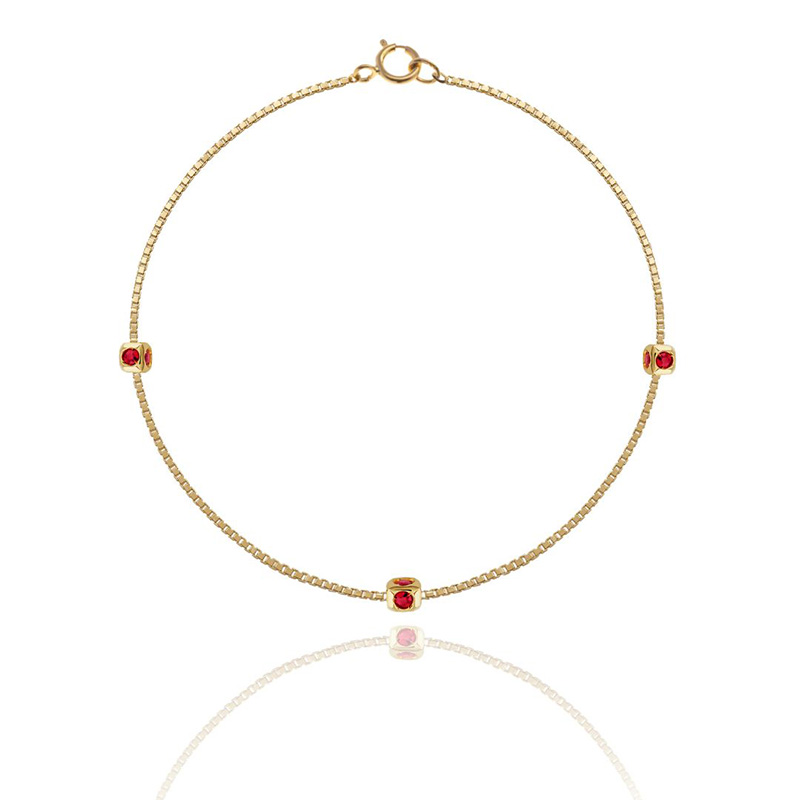
JINGYING : Custom Manufacturer of Carezza Bracelet over 18kt yellow gold and rubies
LET’S GET STARTED : mo@kingjy.com
The Alchemy of Precision: How to Produce the Carezza Bracelet in 18kt Yellow Gold and Rubies at JINGYING
Introduction: The Philosophy of the “Caress”
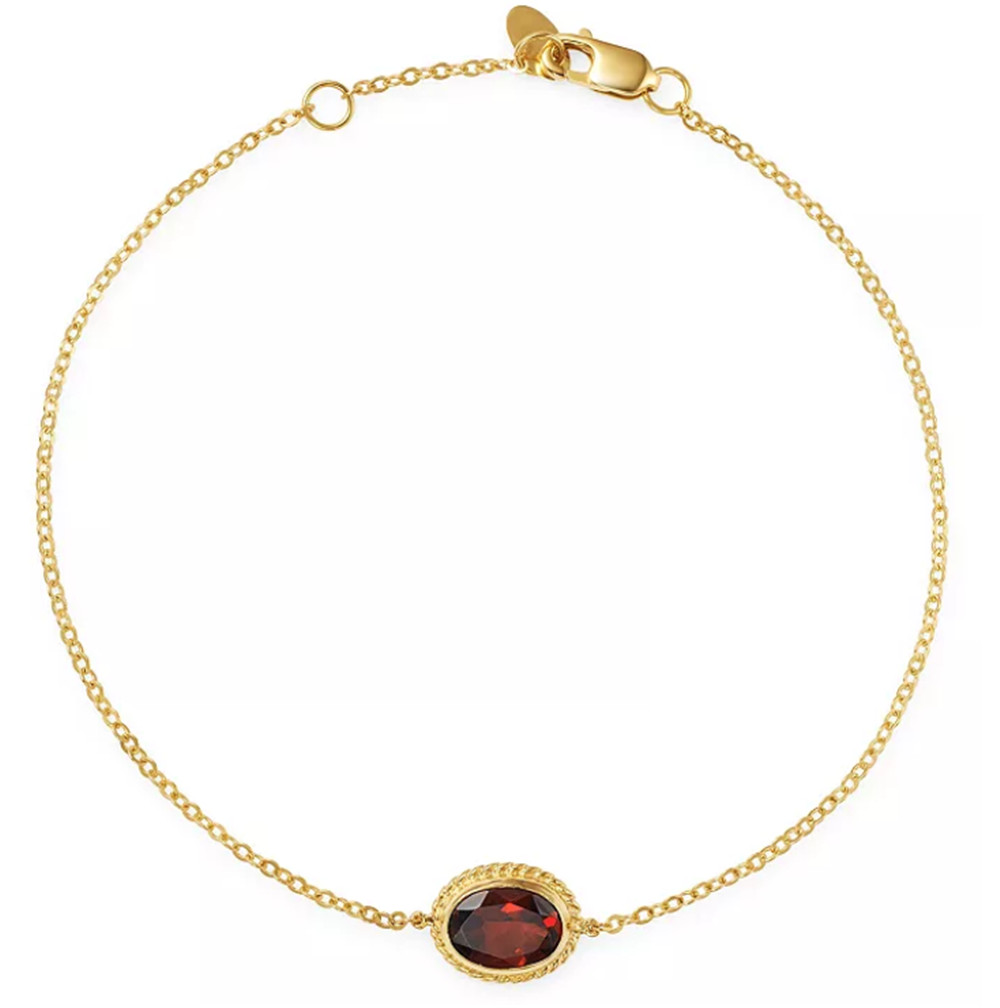
In the hierarchy of jewelry design, the most challenging pieces to produce are often those that appear the simplest. The Carezza Bracelet—whose name derives from the Italian word for “caress”—epitomizes this paradox. It is not merely a chain with a gemstone; it is a study of light, movement, and tactile sensation. At JINGYING, we have deconstructed this iconic archetype to produce a version that utilizes 18kt yellow gold and natural rubies, transforming a delicate Venetian link into a permanent-wear welded bracelet.
This document outlines the exacting, multi-stage process of manufacturing the Carezza Bracelet at JINGYING’s facilities. Unlike mass production, the creation of this piece bridges the gap between Old-World craftsmanship and 21st-century precision engineering. We will move from the initial alloying of the gold to the final laser welding that seals the bracelet around the client’s wrist.
Phase I: Material Alchemy & The JINGYING Vault
Before a single link is formed, the raw materials must be perfected. The “Carezza” demands a specific hue of gold and the precise optical performance of rubies.
1. The Metallurgy of 18kt Yellow Gold
At JINGYING, we reject the notion of standard, off-the-shelf casting grain. For the Carezza, we utilize a proprietary 18kt Yellow Gold alloy (Gold 750) . While pure gold is 24kt, 18kt consists of 75% pure gold mixed with a 25% alloy of silver and copper.
- The Color Target: We aim for a specific “old-world” yellow—warm and rich, but not brassy. Our metallurgists adjust the silver-to-copper ratio to achieve a specific L-value (lightness) on the spectrophotometer.
- Melting Protocol: Using high-vacuum induction melting furnaces, we melt the granulated gold in an oxygen-free environment. This prevents oxidation, ensuring the metal remains ductile (bendable) rather than brittle .
2. Ruby Selection: The “Blood of the Caress”
The ruby is the focal point of the Carezza. JINGYING sources natural, untreated rubies (often from Mozambique or Madagascar) for this specific design.
- The Cut: The Carezza charm requires a calibrated brilliant-cut ruby, typically 2.5mm to 3mm in diameter. The stone must be faceted, not cabochon, to catch ambient light as the bracelet twists on the wrist .
- Quality Rejection: We reject any stone with visible silk (rutile inclusions) or fractures. The stone must be “eye-clean” to ensure the sparkle mimics a drop of water or blood against the yellow gold.
Phase II: The Anatomy of the Chain (Micro-Engineering)
The Carezza is defined by its Venetian box chain—a sequence of small, geometrically perfect modules. At JINGYING, we utilize a hybrid method of stamping and casting to achieve this.
3. The Single Link: Precision Stamping
While wax casting is useful for organic shapes, the rigid geometry of the Carezza chain requires die striking.
- The Tooling: CNC machined tungsten carbide dies are created to punch the 18kt yellow gold sheet into tiny “C” shapes and closed boxes.
- The Process: The gold is rolled into sheets of exacting thickness (usually 0.4mm for a delicate chain). A high-speed stamping press (rated at 300 strokes per minute) punches out the individual links. Stamping aligns the molecular grain structure of the gold, making the final chain significantly stronger than a cast chain .
4. Chain Assembly: The Venetian Weave
The magic of the Carezza is that it looks solid but moves like liquid silk.
- Interlocking: Our bench jewelers manually interlock the stamped components. The chain is woven link-by-link to ensure zero snagging potential.
- Soldering vs. Laser Welding: For structural integrity, every single link is welded shut. We use laser spot welding (0.3mm spot size) rather than traditional torch soldering. This prevents solder from flowing into the joints and freezing the chain. The result is a “diamond-cut” chain that flexes effortlessly .
Phase III: The Charm – Where Ruby Meets Gold
The “Carezza” charm is a connector charm. It is a 3mm cube (or spherical bezel) that slides onto the chain. This is the most delicate phase of production.
5. Micro-Casting the Bezel
The setting that holds the ruby is created using Lost-Wax High-Speed Casting.
- The Burnout: A resin tree of 50-100 charm settings is placed into a 750°C kiln. The resin vaporizes, leaving a negative space in the investment plaster.
- The Cast: Using centrifugal force, molten 18kt gold is forced into the cavity. Because the charm is small, we use a fine-grain casting investment to replicate the tiny prongs (the claws that hold the ruby) without porosity .
6. Stone Setting: The Micro-Pavé Technique
A ruby is hard (9 on the Mohs scale), but it is also brittle. Setting requires microscopic precision.
- The Microscope: The setter works under a 10x-20x binocular microscope.
- Seating the Stone: The brilliant-cut ruby is placed into the gold seat.
- Prong Lifting: Using a micro-grainer (a hand tool with a tiny V-cut), the gold prongs are lifted, pushed over the crown of the ruby, and pressed down.
- The “Click”: The setter listens for the tactile “click” that indicates the stone is level and secure but not cracked by pressure. Each prong is then meticulously polished to a mirror finish so it reflects light into the ruby .
Phase IV: The Finishing Line (The JINGYING Polish)
Once the chain is woven and the charm is set, the raw piece is technically a “Carezza,” but it lacks the caress. It must feel like warm butter to the touch.
7. Tumbling vs. Hand Polishing
- Pre-Polish (Tumbling): The assembled bracelet (minus the charm) is placed in a rotating barrel with mixed-size stainless steel pins and a high-luster soap. This “mass finishing” step polishes the hard-to-reach interior of the chain links.
- Final Luster (Hand): The charm, containing the ruby, cannot be tumbled (it would damage the stone). Our master polisher uses a felt bobbin charged with red rouge (jeweler’s polish) to bring the gold to a high-shine. We then use a steam cleaner (120°C) to blast away any residual compound from under the ruby.
8. Quality Control – The 7-Point Inspection
At JINGYING, no bracelet is packed without passing our digital QC log .
- Purity Test: X-Ray Fluorescence (XRF) scan to verify 75% gold, 25% alloy (no nickel, hypoallergenic).
- Tension Test: The chain is pulled to 5kg of force. It must not elongate by more than 0.5mm.
- Stone Security: A needle probe tries to move the ruby. Zero movement allowed.
- Surface Scan: 10x magnification. Scratches or “orange peel” texture result in a return to the polishing room.
- Articulation: The chain is draped over a mandrel. It must drape like fabric; a stiff chain is rejected.
- Weight verification: The exact gram weight of the bracelet is recorded.
- Ultrasonic Cleaning: Final bath to remove dust.
Phase V: The Welded Experience (The Final Seal)
The defining feature of the contemporary Carezza is that it is often a permanent weld bracelet. It has no clasp.
9. Sizing the Wrist
Unlike a clasped bracelet, the welded Carezza must fit perfectly.
- The “Comfort Fit” Rule: We measure the client’s wrist circumference using a soft tape. For a welded 18kt gold bracelet, we add exactly 1.2cm to 1.5cm to the measurement. This allows the bracelet to slide over the hand and sit loosely enough for the charm to rotate to the top of the wrist, but tight enough that it doesn’t snag on clothing .
10. Laser Welding the Connection
The final step of production (or final step of retail installation) is the welding.
- The Setup: The chain is placed around the client’s wrist (protected by a heat shield).
- The Weld: A LaserStar welding machine emits a precise burst of energy. The two ends of the yellow gold chain melt momentarily and fuse.
- The Invisible Seam: The jeweler then uses a sanding disc to smooth the weld mark. To the naked eye, the bracelet becomes a continuous loop of gold. The ruby charm is slid onto the chain before this weld, locking it onto the wearer permanently unless cut off by a professional .
Why JINGYING for the Carezza?
Producing a piece like the Carezza 18kt Yellow Gold and Ruby Bracelet requires an ecosystem of expertise that is rare in the modern manufacturing world.
1. The Scale of Precision
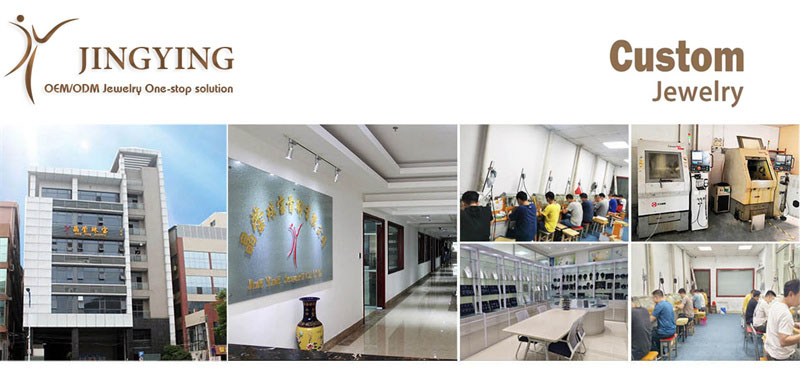
With facilities spanning over 25,000 square meters, JINGYING operates 25 CNC milling machines and 15 vacuum casting machines. However, for the Carezza, we rely on our 12 SLA/DLP 3D printers for the initial wax validation of the charm, and our 6 laser welding systems for the final assembly . This hybrid approach ensures that the organic curves of the charm are cast perfectly every time.
2. The “Zero Defect” Gemstone Protocol
Because we handle the entire process in-house—from metal rolling to stone setting—we control the risk. The loss rate for micro-setting rubies in the industry is usually 5-8%. At JINGYING, our bench setters maintain a sub-1% fracture rate on rubies due to our use of microscope-assisted setting and high-quality 18kt alloys that are soft enough to push, but hard enough to hold .
3. Ethical and Durable
We utilize XRF analyzers to guarantee the 18kt purity. Furthermore, because the Carezza is often a “forever bracelet” (welded), durability is paramount. The tensile strength of our laser-welded joint is actually higher than the tensile strength of the rest of the chain, ensuring that the bracelet will last for years of daily wear without failing.
Conclusion
The production of the Carezza Bracelet at JINGYING is a dialogue between the ancient elements and modern engineering. The 18kt yellow gold provides the warmth; the ruby provides the passion; and the Venetian chain provides the sensuous movement.
From the initial alloying in the vacuum furnace to the final laser pulse that seals the bracelet around the wrist, every step is governed by a pursuit of the invisible—the elimination of friction, the perfection of the polish, and the security of the stone.
At JINGYING, we do not just produce jewelry; we manufacture the feeling of a “caress” in solid gold, ensuring that when the light hits the ruby, the wearer is reminded that true luxury lies in the details they cannot see, but can certainly feel