Design And Manufacture Bolt Ring At JINGYING
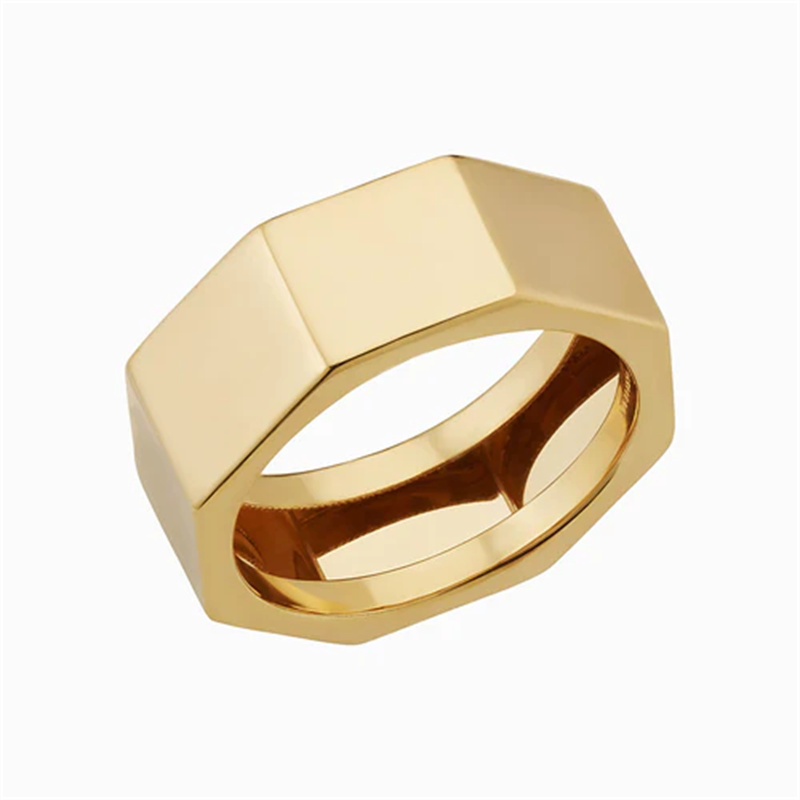
Design And Manufacture Bolt Ring At JINGYING
LET’S GET STARTED : mo@kingjy.com
How to Design and Manufacture Bolt Rings at JINGYING
Introduction
JINGYING has established itself as a comprehensive manufacturer of high-quality fasteners and precision metal components, serving industries ranging from electronics and sheet metal fabrication to aerospace and mechanical equipment . Among the specialized products in JINGYING’s portfolio, bolt rings — critical components for creating secure, vibration-proof connections — require meticulous design and manufacturing processes. This article provides a comprehensive guide to designing and manufacturing bolt rings at JINGYING, covering material selection, engineering considerations, production methods, quality assurance, and practical applications.
Understanding Bolt Rings and Their Applications
A bolt ring, also known as a locking ring or retaining ring for bolted connections, serves as a secondary fastening element that creates a positive-locking connection between a bolt and a workpiece . These components are essential in applications where:
- High shear and tensile stresses must be absorbed
- Pre-stressed, vibration-proof connections are required
- Connections must withstand dynamic loading conditions
- Quick assembly and disassembly capabilities are needed
At JINGYING, bolt rings are manufactured alongside a comprehensive range of fastening products including PEM-type nuts, PEM-type studs, panel fasteners, plastic inserts, welding nuts, spot welding screws, and various non-standard components . The company’s extensive production capabilities and ISO 9001/ISO 14001 certifications ensure that every bolt ring meets rigorous quality standards .
Design Principles for Bolt Rings
Material Selection
The design process at JINGYING begins with careful material selection based on the intended application. Bolt rings can be manufactured from various materials including:
- Carbon steel: For general-purpose applications requiring good strength and cost-effectiveness
- Alloy steel: For high-strength applications demanding superior mechanical properties
- Stainless steel (304, 316): For corrosion-resistant applications in harsh environments
- Copper alloys: For specialized applications requiring specific electrical or thermal properties
JINGYING’s design engineers evaluate factors such as operating temperature, environmental exposure, load requirements, and compatibility with mating components when selecting materials. The company’s manufacturing capabilities allow for customization of materials to meet specific client requirements .
Geometric Design Considerations
The geometry of a bolt ring is critical to its performance. Key design parameters include:
Ring Profile: The ring should feature a frustoconical outer face that tapers in the axial direction outward from the seating face. This geometry ensures proper engagement with the bolt and workpiece .
Groove Configuration: For locking ring bolts, the holding geometry is typically embodied as radially peripheral grooves that may be interrupted by at least one web running perpendicular to the grooves. These webs serve as anti-rotation elements and reduce the forming forces necessary for shaping the locking ring .
Recess Design: The seating face of the bolt ring should incorporate a cylindrical depression with shallower recesses extending radially outward. These recesses accommodate excess ring material during compression and prevent extrusion into gaps between components .
Tolerance Specifications: JINGYING’s manufacturing engineers establish precise tolerance ranges to ensure proper fit and function. The company’s advanced inspection capabilities, including laser full inspection systems and online full-size detection systems, verify that all dimensions meet specifications .
The Manufacturing Process at JINGYING
Raw Material Preparation
The manufacturing process begins with raw material procurement. JINGYING sources high-quality wire rod (wire rod) and bar stock from qualified suppliers. The material is inspected upon arrival to verify chemical composition and mechanical properties.
For high-volume production, the company employs automatic material handling systems, including AS/RS (Automated Storage and Retrieval Systems), to manage raw material inventory efficiently . This system ensures that materials are properly stored, tracked, and available when needed for production.
Cold Heading and Forming
The primary manufacturing method for bolt rings at JINGYING is cold heading — a process that offers significant advantages in terms of production speed, material utilization, and product quality.
Multi-Station Cold Forming: JINGYING employs six-die, six-blow multi-station forming machines capable of producing up to 150 parts per minute . These high-speed machines perform multiple operations in a single production cycle:
- Blank separation from wire
- Forward extrusion to form the shaft
- Upsetting to form the ring portion
- Flange formation
- Piercing of recessed areas
- Thread formation
Advantages of Cold Forming: The cold forming process work-hardens the material, eliminating the need for subsequent heat treatment in many applications . The process also provides excellent dimensional accuracy and surface finish, reducing or eliminating secondary machining operations.
Precision Forging for Specialized Applications
For applications requiring enhanced mechanical properties, JINGYING may employ precision forging techniques. The forging process for bolt rings typically follows these steps:
- Billet Preparation: The raw material is cut to a predetermined size and shape
- Heating: For hot forging applications, billets are heated to appropriate forging temperatures (typically 1232-1288°C for steel alloys)
- Upsetting and Blocking: The heated workpiece is upset to form a pancake-shaped billet, then blocked to create a preform
- Precision Forging: The preform is forged to near-net shape in a precision forging operation
- Trimming: Flash and center slug portions are trimmed to produce the final geometry
JINGYING’s engineering team has developed optimized forging parameters that minimize heat loss and oxidation, ensuring consistent material properties throughout the production run.
Heat Treatment
While cold forming often eliminates the need for heat treatment, certain applications may require additional thermal processing to achieve specific mechanical properties. JINGYING’s heat treatment capabilities include:
- Normalizing: To optimize metallurgical structure for machining
- Carburizing: To create hard, wear-resistant surfaces (heating to 871-927°C in a high-carbon atmosphere)
- Induction Hardening: For localized surface hardening of specific features
The company’s continuous controlled-atmosphere heat treatment furnaces ensure consistent processing and prevent surface oxidation or decarburization .
Surface Treatment and Finishing
JINGYING offers a variety of surface treatment options to enhance the performance and appearance of bolt rings:
- Zinc Plating: For corrosion protection in general applications
- Hot-Dip Galvanizing: For heavy-duty corrosion protection in outdoor environments
- Electroplating: For decorative and functional applications
- Phosphate Coating: For improved lubrication and corrosion resistance
The company’s automated electroplating lines ensure consistent coating thickness and quality .
Inspection and Quality Assurance
Quality control is integral to JINGYING’s manufacturing process. The company employs 48 quality inspectors and maintains comprehensive inspection capabilities :
- Dimensional Inspection: Using precision measuring instruments and automated inspection systems
- Mechanical Testing: Including tensile, hardness, and torque testing
- Metallurgical Examination: For verifying material structure and heat treatment quality
- Non-Destructive Testing: Including laser inspection and magnetic particle inspection for detecting surface and subsurface defects
JINGYING’s ISO 9001 and ISO 14001 certifications demonstrate the company’s commitment to quality management and environmental responsibility .
Application-Specific Considerations
Automotive Applications
Bolt rings used in automotive applications must meet stringent requirements for strength, fatigue resistance, and reliability. JINGYING’s manufacturing processes are validated to produce components meeting automotive specifications, including Grade 8.8, 10.9, and 12.9 strength classes .
Aerospace Applications
For aerospace applications, bolt rings must demonstrate exceptional reliability and traceability. JINGYING’s comprehensive quality management system ensures complete traceability from raw material to finished product.
Industrial Equipment Applications
Bolt rings for industrial equipment applications often require customization to meet specific dimensional or performance requirements. JINGYING’s engineering team works closely with customers to develop application-specific solutions .
Conclusion
Designing and manufacturing bolt rings at JINGYING represents a synthesis of engineering expertise, advanced manufacturing technology, and rigorous quality control. The company’s capabilities in cold heading, precision forging, heat treatment, and surface finishing, combined with its comprehensive quality management system, enable the production of high-quality bolt rings for diverse applications.
JINGYING’s commitment to continuous improvement and customer satisfaction ensures that its bolt ring manufacturing processes remain at the forefront of the industry. By leveraging advanced automation systems including AS/RS and production management information systems (MIS), the company achieves exceptional efficiency and quality consistency .
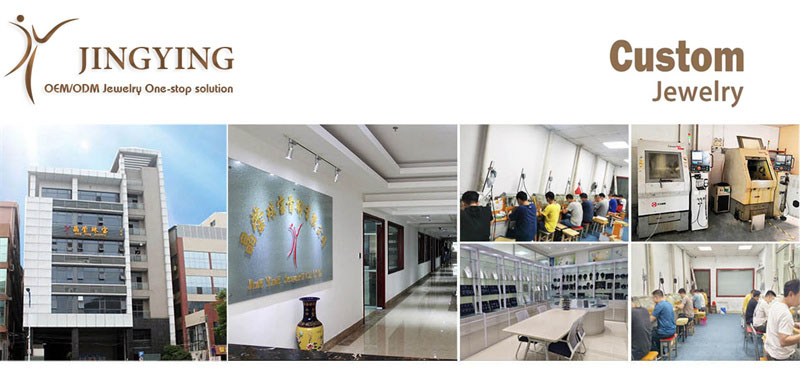
For customers requiring custom-designed bolt rings, JINGYING offers comprehensive OEM/ODM services, from initial design consultation through manufacturing and delivery. The company’s experienced engineering team collaborates with customers to optimize designs for manufacturability, performance, and cost-effectiveness .
As the fastener industry continues to evolve, JINGYING remains dedicated to advancing its manufacturing capabilities and maintaining its position as a leading manufacturer of precision fastening components. Through continued investment in technology, quality systems, and human capital, the company ensures that its bolt rings meet the highest standards of quality, reliability, and performance.