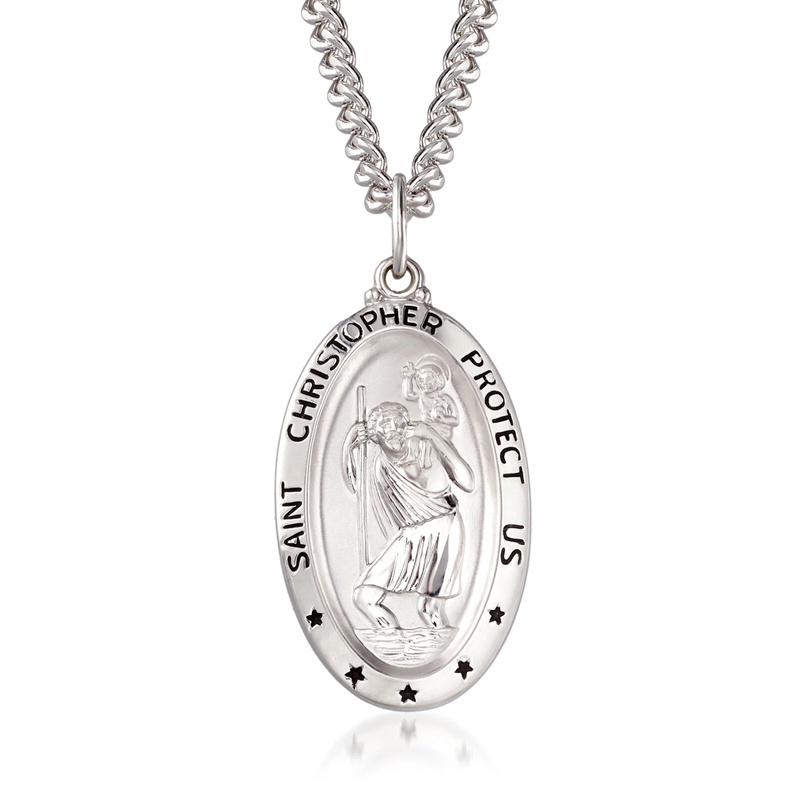
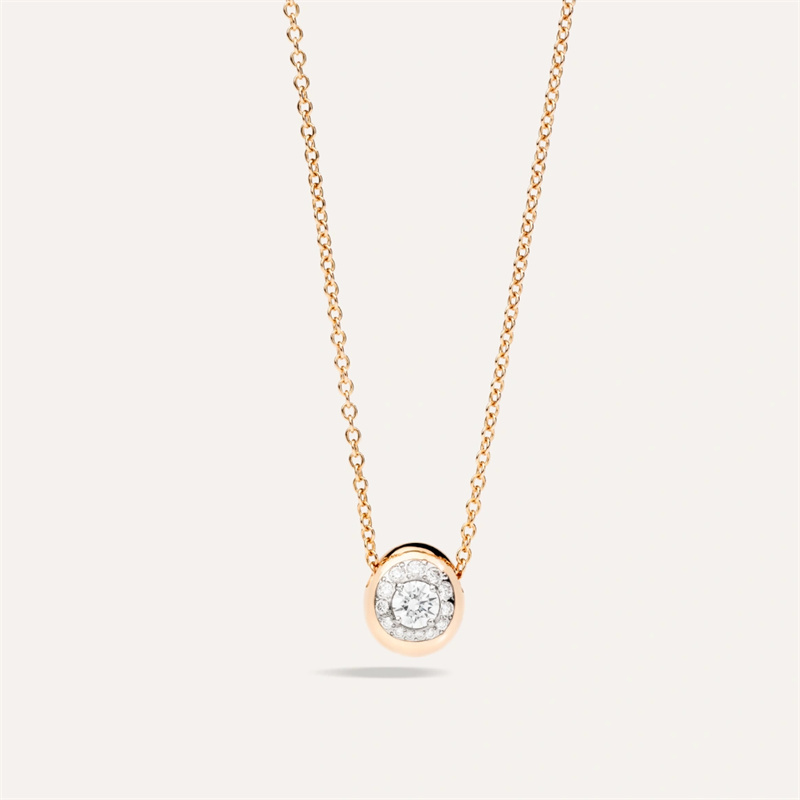
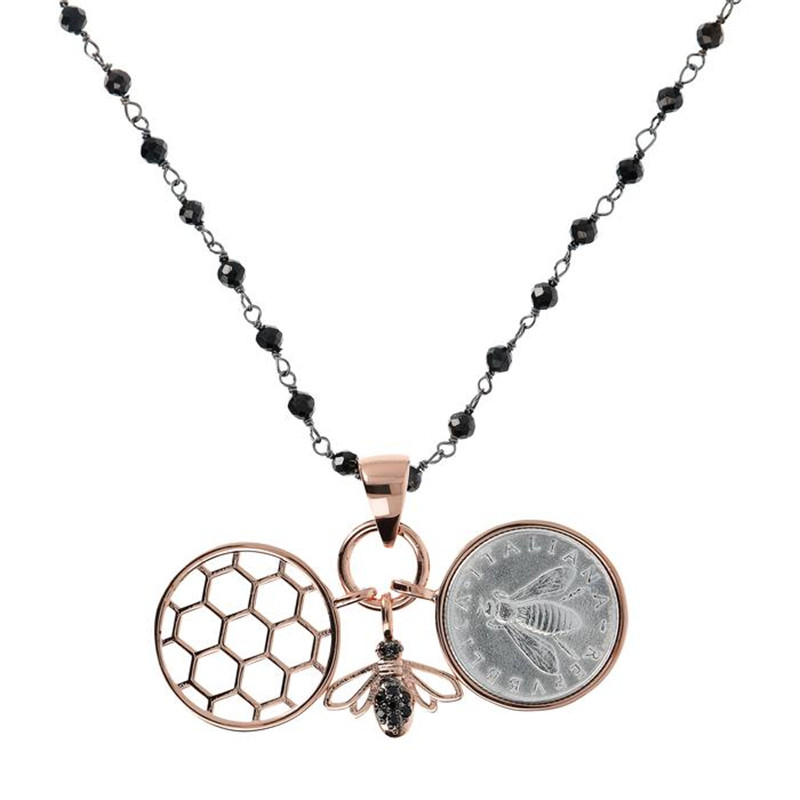
Custom Made Italian Man Silver Necklace at JINGYING
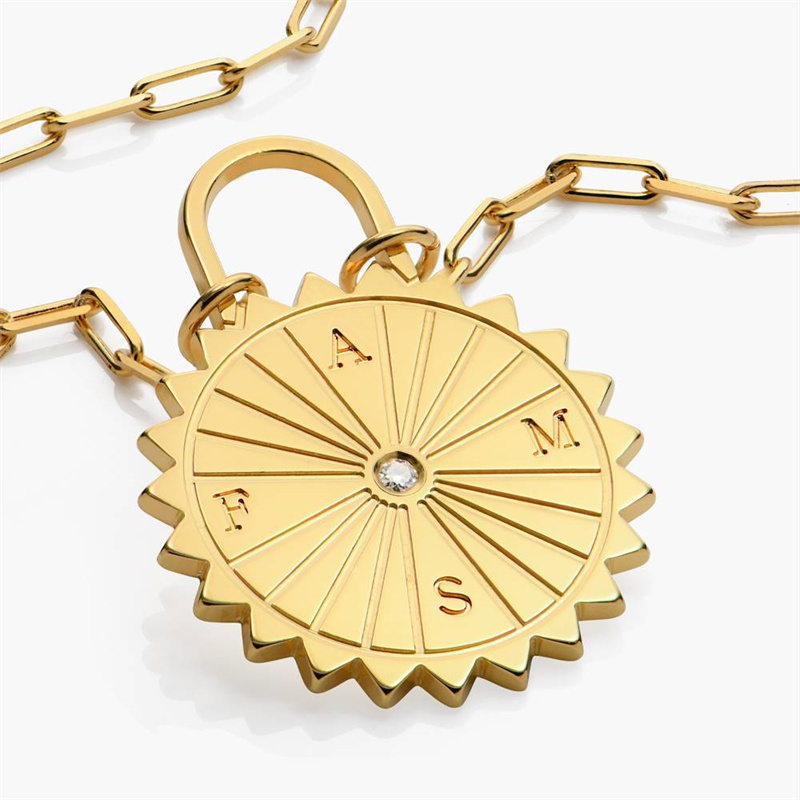
 Custom Made Italian Man Silver Necklace at JINGYING
LET’S GET STARTED : mo@kingjy.com
Wearing la Bella Figura: The Art of the Custom-Made Italian Man Silver Necklace at JINGYING
Introduction: A Necklace Tells a Story
In the lexicon of Italian style, few accessories speak as eloquently as the silver necklace worn by a man. It is not merely an ornament but a declaration—a subtle nod to heritage, an embrace of la bella figura (the beautiful impression), and a testament to personal taste. From the sun-bathed workshops of Tuscany to the global stage, the Italian silver necklace has evolved from a regional craft into an international archetype of masculine elegance.
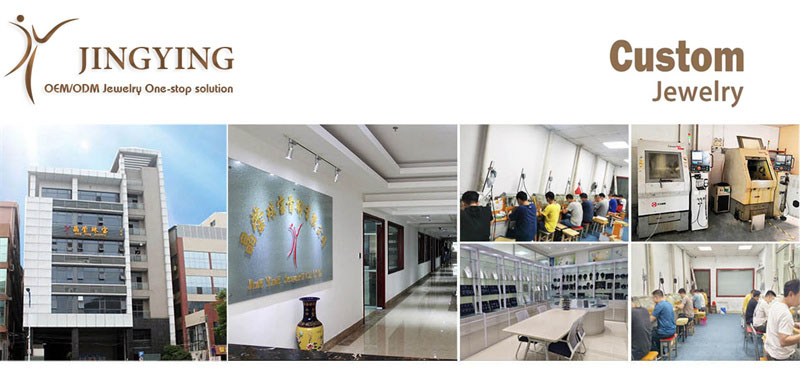
Yet, in the complex machinery of the modern luxury market, a quiet revolution is taking place. While the soul of the design remains undeniably Italian—rooted in Renaissance artistry and operatic drama—the physical manifestation of that vision is increasingly being perfected in the hands of specialized manufacturers who have mastered the alchemy of tradition and technology. At the forefront of this movement stands Guangzhou JINGYING Jewelry, a Chinese manufacturer that has spent over two decades becoming the trusted foundry for discerning Italian brands .
This article explores the intricate world of custom-made Italian men’s silver necklaces at JINGYING. It is a story of cross-cultural collaboration, where Mediterranean aesthetics meet Eastern precision, resulting in jewelry that honors the Italian legacy while setting new standards for quality and scalability.
Part I: The Italian Man’s Necklace – A Cultural Signature
More Than an Accessory
To understand the craftsmanship behind a JINGYING production run, one must first understand the cultural weight of the object being created. For the Italian man, a silver necklace is an extension of his personality. It is not reserved for special occasions; it is worn daily, layered over linen shirts in summer and under cashmere sweaters in winter.
Contemporary Italian brands like Giovanni Raspini, a Tuscan maison known for redefining masculine elegance, exemplify this philosophy. Their collections, such as the Chains line, feature small and large structures in multiple styles—seed, cube, hawser, wheat, box, and Byzantine chains—demonstrating that variety and heritage are paramount . These are not mass-produced commodities; they are wearable art.
Key Characteristics of Italian Men’s Necklaces
Italian design for men prioritizes three specific elements:
- Bold yet Refined Geometry: Unlike delicate women’s chains, Italian men’s necklaces have presence. Whether it is a thick Figaro chain or a tightly woven wheat chain, the links are substantial and visually distinct.
- Textural Contrast: The interplay of finishes is crucial. A single necklace might feature polished links that catch the light next to matte-finished links that absorb it, creating depth and movement.
- Material Integrity: Authenticity is non-negotiable. The base metal must be premium 925 sterling silver, and any gold plating (vermeil) must be thick enough to endure the rigors of daily wear against skin and clothing .
JINGYING has built its reputation on understanding these demands implicitly. As one Italian client noted, “The pieces are unique and special and the variety is huge. The service is beyond excellent, not only the friendliness and attentiveness but also the amazing advice and personal treatment received” .
Part II: The Iconic Link – Why the Figaro Chain Defines the Category
No discussion of Italian men’s silver necklaces is complete without addressing the Figaro chain. Originating in Italy, this chain design is immediately recognizable by its rhythmic pattern: typically three small circular links followed by one longer oval link . The name itself is a tribute to the operas The Barber of Seville and The Marriage of Figaro, characters who embodied the wit, charm, and sophistication that the chain represents .
The Anatomy of a Figaro Chain
Italian silversmiths first developed the Figaro chain in the early 20th century, seeking a design that balanced aesthetic rhythm with structural precision . Today, it remains a staple in every modern man’s jewelry collection because of its versatility.
- Alternating Pattern: The sequence of links (short-short-short-long, or variations thereof) creates a visual rhythm that is neither chaotic nor monotonous.
- Durability: The solid links make the Figaro chain strong enough for everyday wear.
- Styling Flexibility: A Figaro chain can be worn alone for a minimalist look or layered with other chains for a bolder statement .
At JINGYING, the production of Figaro chains is a specialized art. The company offers a full range of chain styles, including Figaro, rope, box, snake, and cable chains, allowing Italian brands to select the exact link architecture that defines their collection . Whether a client desires a delicate 2mm chain for subtle daily wear or a statement 8mm chain that commands attention, JINGYING’s tooling capabilities can accommodate the request .
Part III: The JINGYING Ecosystem – From Concept to CAD
The journey of a custom Italian man’s silver necklace begins not on the factory floor, but in the mind of a designer sketching in a Milanese studio. JINGYING acts as the essential bridge, transforming artistic concepts into tangible, high-quality products through a meticulous process.
1. Consultation and Design Translation
The partnership begins when an Italian brand brings a concept—perhaps a vintage piece to replicate, a sketch on paper, or a digital rendering. JINGYING’s team of in-house designers and engineers works closely with the client to interpret the specific requirements. For a necklace, this involves critical decisions: What is the desired length (ranging from 18 inches for a choker to 26+ inches for a statement piece)? What is the preferred width? Should the clasp be a lobster clasp for security or a magnetic clasp for ease?
2. 3D Modeling and Prototyping
Gone are the days of relying solely on hand-carved wax. JINGYING employs advanced CAD (Computer-Aided Design) software, including Rhino and JewelCAD, to create detailed 3D models of the necklace design . For a men’s necklace, precision is critical—every link must interlock perfectly. This digital prototyping allows the Italian client to review images and videos of the model, examining every angle and curve, before any metal is cut . This process saves weeks of back-and-forth and eliminates costly errors.
3. The Metal Master
Once the digital file is approved, JINGYING utilizes CNC (Computer Numerical Control) machining to carve a “Metal Master”—the standard against which every other necklace link will be measured . CNC machining ensures that the necklace’s geometry is mathematically perfect. For chain designs like the Cuban or Figaro, where the links must fit together seamlessly, this level of precision is non-negotiable.
Part IV: The Lost Wax Casting & The Human Touch
While technology drives the design phase, the soul of the Italian silver necklace comes from the casting floor. JINGYING utilizes investment casting (lost wax casting) to produce complex chain links and pendants in bulk or as single custom units.
Step-by-Step Manufacturing:
- Wax Injection: The 3D-printed mold is used to inject wax replicas of the necklace links or pendant components.
- Assembly: These wax pieces are attached to a wax “tree” to allow for mass casting.
- Investment: The wax tree is encased in a heat-resistant plaster.
- Burnout: The plaster is heated to extreme temperatures. The wax melts away, leaving a perfect negative cavity of the jewelry.
- Casting: Molten 925 sterling silver is injected into the cavity, filling the space left by the wax .
This method allows JINGYING to produce intricate, hollow, or textured designs that would be impossible to achieve with stamping machines. It is the same technique used by Italian artisans for centuries, scaled and refined for modern efficiency.
Molding and Polishing
After casting, the raw silver links are rough. JINGYING’s artisans then enter the picture. The “Molding & Polish” stage involves modeling the jewelry to make it more beautiful and ensuring the surface is smooth to the touch . For men’s necklaces, where the metal rests directly against the chest and neck, this smoothness is a critical factor in comfort. Each link is meticulously finished to remove any burrs or rough edges.
Part V: Plating – The Vermeil Elevation
For many Italian men’s silver necklaces, the final aesthetic is not raw silver but the warm glow of gold. JINGYING specializes in Vermeil (pronounced ver-may), a specific type of gold plating that elevates sterling silver to a luxury status.
What is Vermeil?
Unlike standard gold plating, which can be thin and wear quickly, Vermeil requires a thick layer of gold—typically 2.5 to 3 microns—over a sterling silver base. For their Vermeil products, JINGYING uses 18K gold (75% pure gold), which provides a deep, rich color that does not look brassy .
The Double Plating Process
JINGYING employs a rigorous double plating process for all their vermeil jewelry:
- Base Silver Plating: A thick layer of silver is applied to ensure a perfectly smooth, flawless surface.
- Gold Plating: This is followed by the real gold plating, which achieves the desired thickness of up to 3 microns.
To guarantee quality, JINGYING subjects their plated items to rigorous testing. They use a machine to test the plating thickness and provide a report to the customer. Additionally, technicians manually rub the metal surface for five minutes with professional tools to ensure the coat quality is durable and will not flake . This commitment ensures that an Italian man’s silver necklace from JINGYING can last for years without significant fading.
Part VI: Quality Control – The 10-Engineer Standard
Perhaps the most critical differentiator between a standard jewelry manufacturer and a premium partner like JINGYING is the quality control (QC) process. JINGYING operates a 10-engineer QC team that inspects every product at each stage of production .
For a custom Italian man’s silver necklace, the QC checks include:
- Visual Inspection: Checking for scratches, dents, or porosity in the casting.
- Clasp Testing: Ensuring that the lobster clasp or spring ring opens and closes smoothly and securely. A failed clasp on a heavy silver necklace is a disaster for the end customer.
- Link Integrity: For chain necklaces, each link is inspected to ensure it is fully closed and soldered correctly.
- Plating Adhesion: As mentioned, the “rub test” ensures the gold plating will not peel.
- Drop Test: JINGYING famously drops jewelry items from a height of 3 meters to check that no stones fall out and the structure remains intact .
If a product has a quality issue within a non-human reason timeframe, JINGYING guarantees 3-6 months for repair . This warranty provides peace of mind for Italian brands who are staking their reputation on these products.
Part VII: The Italian-JINGYING Partnership – A Case Study in Collaboration
The relationship between Italian jewelry companies and JINGYING is not merely transactional; it is a strategic partnership built over years of mutual respect. While Italy brings centuries of design heritage, emotional branding, and a deep understanding of luxury consumers, JINGYING brings scalability, precision engineering, and cost-efficiency .
Batch Processing Excellence
One of the primary reasons Italian brands partner with JINGYING is for batch processing. Producing 500 or 5,000 units of a complex silver chain requires an infrastructure that many boutique Italian ateliers lack. JINGYING’s monthly production capacity for necklaces and other jewelry is up to 100,000 pieces .
Customization Capabilities
Italian brands demand uniqueness. JINGYING supports this through extensive customization options:
- Laser Engraving: Logos, brand names, or other text can be engraved onto clasps or pendants .
- Gemstone Setting: For pieces like the Tango or Beat collections (which feature hard stones or faceted mini stones), JINGYING uses micro-inlaid machines imported from Japan for 5A CZ stones, achieving 99% no lost stone results .
- Oxidized Finishes: Beyond traditional plating, JINGYING can create oxidized (blackened) silver finishes that give the necklace an antique, rugged look favored by many contemporary Italian designers .
Part VIII: Design Trends – What Italian Men Want Now
Working closely with the Italian market, JINGYING has observed several key trends shaping men’s silver necklaces in 2025 and beyond.
1. The Return of the Cuban Link
While the Figaro remains a classic, the Cuban link chain—with its thick, rounded, interlocking links—is surging in popularity . It offers a bolder, more powerful aesthetic compared to the refined Figaro. Many Italian men are layering a Cuban chain with a longer Figaro chain for a textured, modern look.
2. Bead and Stone Accents
Following the lead of high-end brands, there is a growing demand for silver necklaces that incorporate hard stones. Whether it is the smooth spheres of Lapis Lazuli or the faceted shimmer of black spinel, mixing materials adds a tactile and visual richness to the silver .
3. Personalization
The ability to add a custom pendant—whether a signet-style disc with engraved initials or a geometric shape representing a brand logo—is a significant value-add. JINGYING’s laser engraving capabilities make this level of personalization efficient and precise .
Conclusion: The Future of Italian Silver Craftsmanship
The “Made in Italy” label will always carry an emotional weight that cannot be replicated by a machine. It represents a way of seeing the world—one that prioritizes beauty, passion, and heritage. However, the physical creation of the objects that bear that label is evolving.
JINGYING Jewelry has positioned itself not as a competitor to Italy, but as a collaborator. By combining the soulful, sculptural vision of Italian design with the relentless precision, advanced technology, and scalable craftsmanship of a 23-year-old Chinese manufacturer, JINGYING ensures that the Italian man’s silver necklace is not a relic of the past, but a vibrant accessory for the future .
Whether it is a classic 5mm Figaro chain destined for a boutique in Florence, or a custom 18K vermeil necklace with a unique pendant for a brand launching in Milan, the journey often passes through the expert hands of the artisans at JINGYING. They are the silent partners in elegance, ensuring that every link closes perfectly, every clasp holds securely, and every surface shines with the luster that Italian style demands.
For brands looking to enter the Italian men’s jewelry market or expand their existing lines, the question is no longer “Should we manufacture in China?” but “Have we found the right Chinese partner?” JINGYING has demonstrated that the answer to that question is a confident “Yes.”