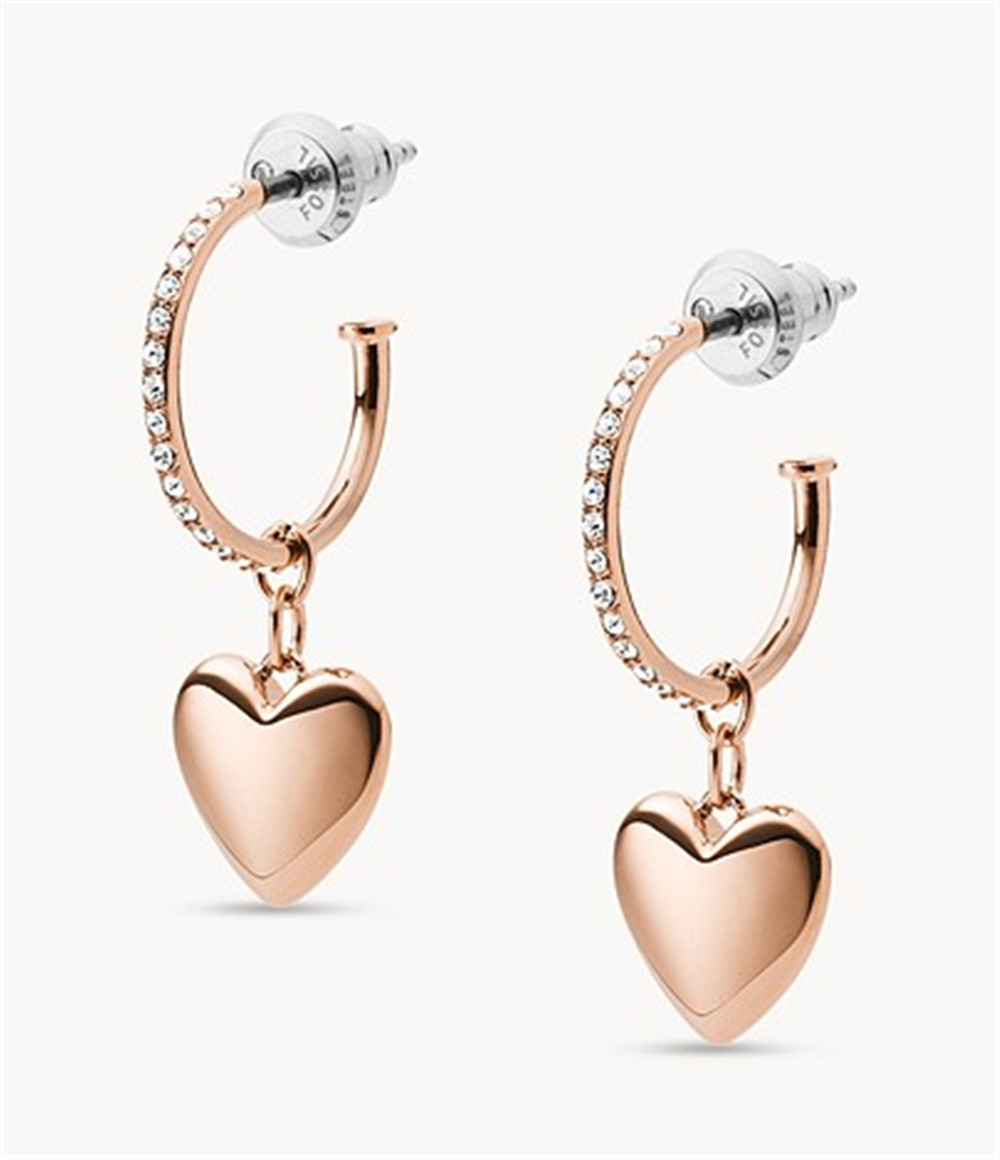
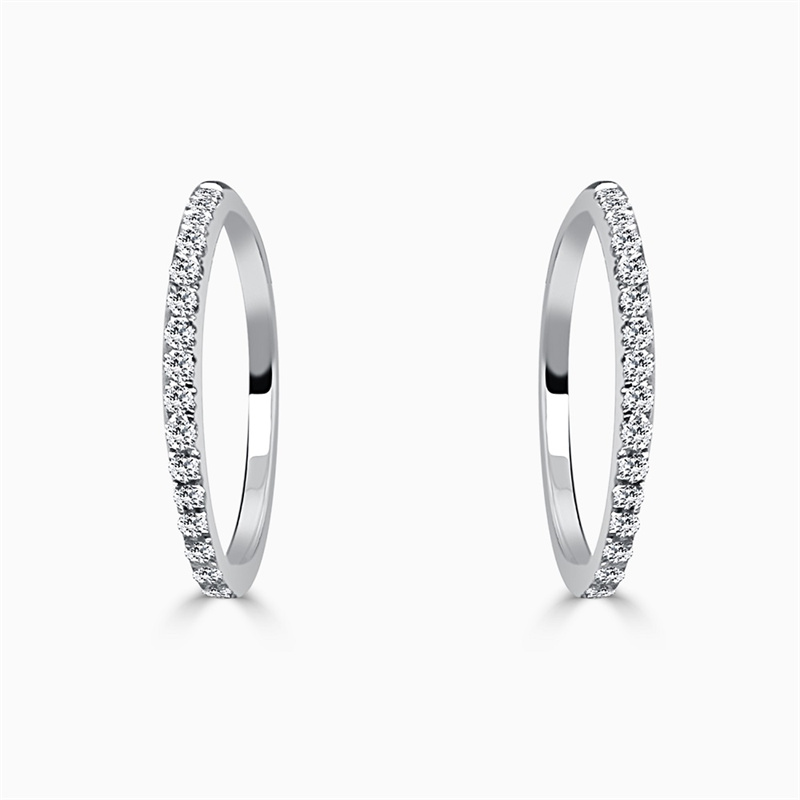
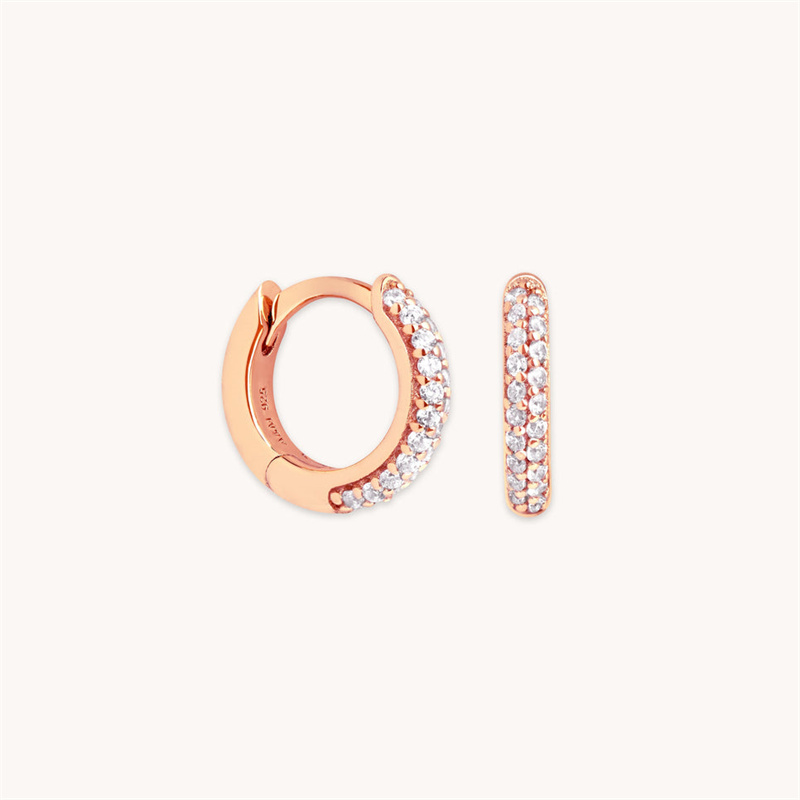
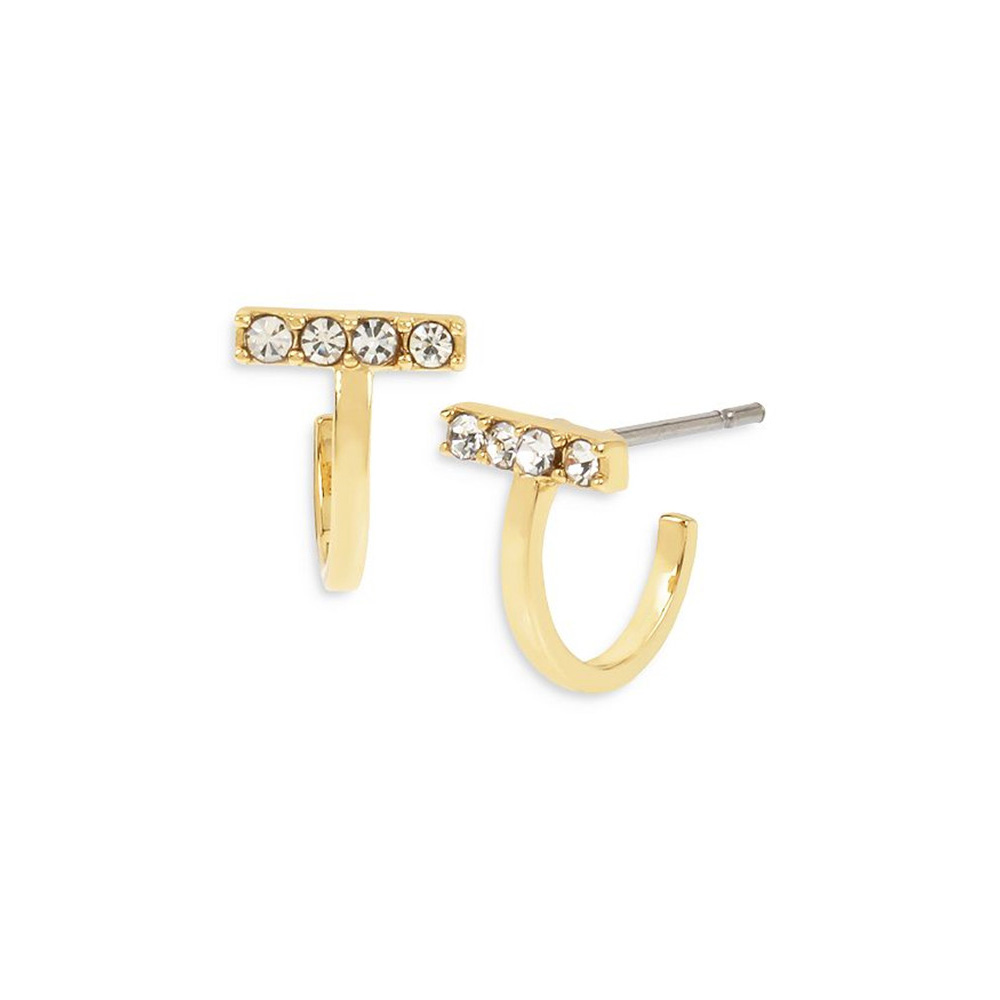
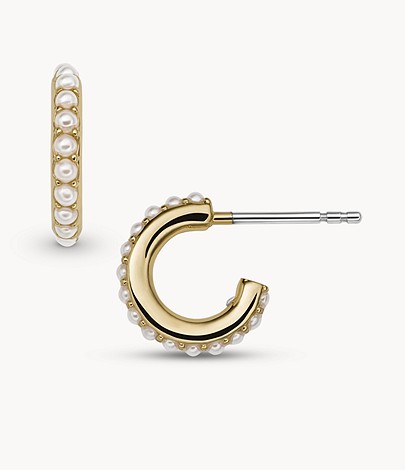
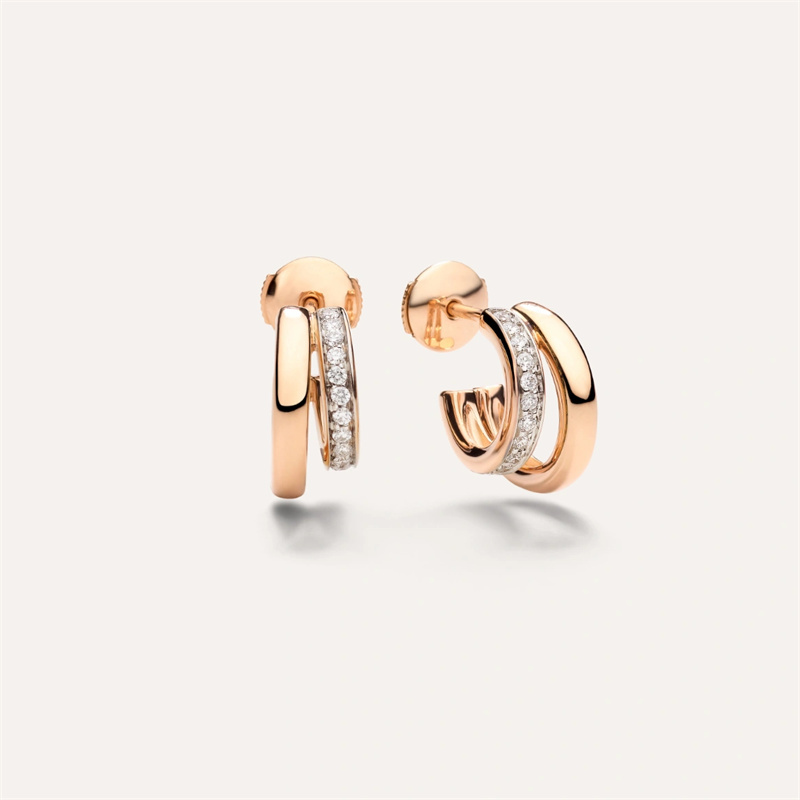
Custom Made Factory Open Cartilage Earring with CZ Bar Vermeil 14k Solid Gold
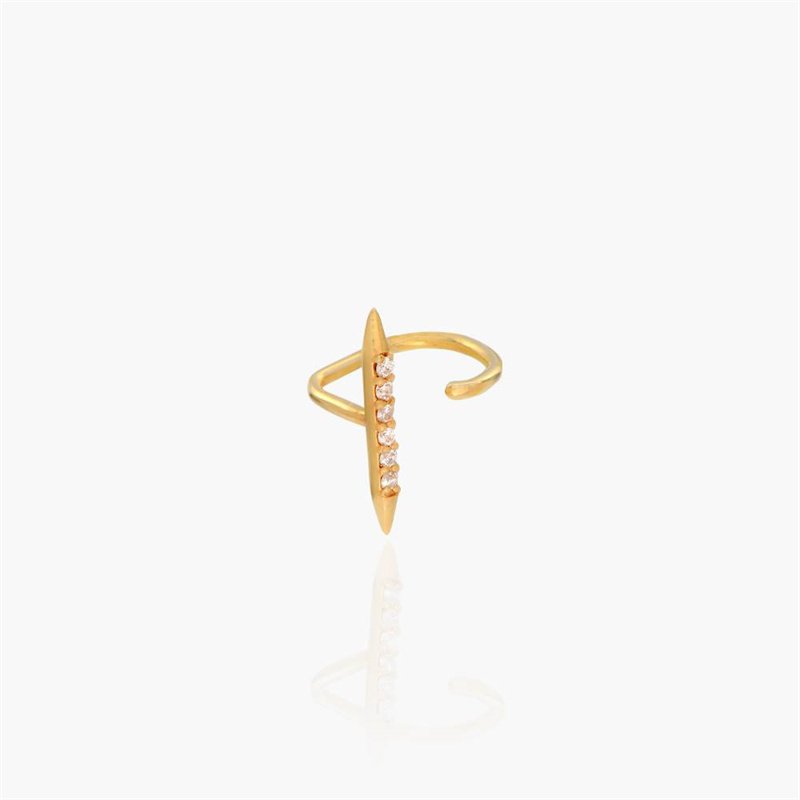
Custom Made Factory Open Cartilage Earring with CZ Bar Vermeil 14k Solid Gold
LET’S GET STARTED : mo@kingjy.com
Engineering Elegance: The Production of Open Cartilage Earrings with CZ Bar Vermeil 14k Solid Gold at JINGYING
Introduction
In the contemporary landscape of fashion jewelry, the cartilage earring has transcended from a niche subculture staple to a mainstream must-have. Among the myriad of styles, the “Open Cartilage Earring” (often referred to as a cuff or helix climber) presents a unique engineering challenge: it must combine the aesthetics of fine jewelry with the functional requirement of staying securely on the ear without a traditional piercing backing. When this design is coupled with a precision-set Cubic Zirconia (CZ) bar and finished in 14k Vermeil, the complexity increases exponentially.
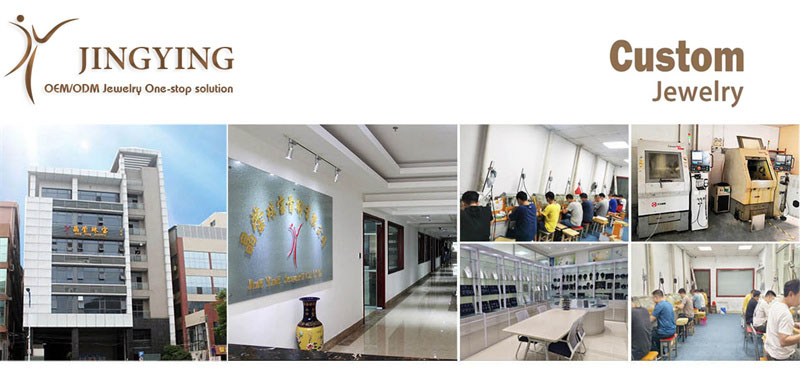
JINGYING, a premier OEM partner headquartered in Guangzhou with over two decades of industry experience, has mastered the alchemy of this process. Serving over 200 brands across 35 countries, JINGYING handles a monthly production capacity of up to 200,000 pieces. This report provides a technical deep dive into the manufacturing lifecycle of the Open Cartilage Earring with CZ Bar in 14k Vermeil, exploring the material science, engineering workflows, and rigorous quality control that define the JINGYING standard.
Chapter 1: Material Selection and the “Vermeil” Definition
The foundation of any high-end jewelry piece is the material. For this specific product, JINGYING utilizes a “Vermeil” construction. Legally and technically, Vermeil (pronounced ver-may) is not merely gold-plated jewelry. It requires a base of sterling silver (92.5% pure silver) coated with a substantial layer of gold.
1.1 The Base Metal: 925 Sterling Silver
Unlike standard fashion jewelry that uses copper or brass, the open cartilage earring begins its life as 925 Sterling Silver. JINGYING sources this metal for two specific reasons:
- Hypoallergenic Properties: Cartilage piercings are prone to infection and irritation. Sterling silver provides a safe, skin-friendly core.
- Workability: Silver offers the perfect balance between hardness for structural integrity and malleability for intricate detailing.
1.2 The Gold Layer: 14k Solid Gold Plating
The “Vermeil” distinction lies in the thickness and purity of the gold layer. At JINGYING, standard plating (often 0.5 to 1 micron) is rejected in favor of a heavy deposit.
- Thickness: Vermeil requires gold thickness to reach at least 2.5 microns. JINGYING frequently plates to 3 microns to exceed international durability standards.
- Purity: The use of 14k gold strikes a balance between the rich color of higher karats (like 18k or 24k) and the structural hardness required for wear. 14k is more resistant to scratching than 24k, making it ideal for earrings that may brush against hair or clothing.
1.3 The Accent: Cubic Zirconia (CZ)
While diamonds are an option for higher-tier lines, JINGYING has perfected the setting of high-grade CZ. The company uses 5A premium grade CZ, cut to simulate the fire and brilliance of genuine diamonds, ensuring the “Cubic Zirconia Bar” reflects light accurately even under close inspection.
Chapter 2: The Design & Pre-Production Phase (CAD to Prototype)
Before any metal is cast, the design must be validated. JINGYING employs a design-led manufacturing process that bridges the gap between artistic vision and physical reality.
2.1 3D Modeling (CAD)
The process begins with a Computer-Aided Design (CAD) file. The “Open” design of the earring is the critical feature here. Unlike a closed hoop, an open cartilage earring relies on tension to stay in place.
- The Mechanics: The CAD engineer must calculate the exact “gap” distance and the spring tension of the metal. If the gap is too wide, the earring falls out; if too narrow, it pinches the cartilage.
- Software: JINGYING utilizes Rhino and JewelCAD to map the geometry of the CZ bar channel onto the curve of the earring.
2.2 3D Printing (SLA/DLP)
Once the CAD is finalized, JINGYING utilizes Stereolithography (SLA) 3D printers to produce a high-resolution resin model.
- Purpose: This resin model acts as the master pattern.
- Detail Check: The 3D print allows the engineering team to physically test the tension of the opening and verify the fit of the CZ stones before expensive metal molds are cut.
2.3 Mold Making & Casting Preparation
For mass production of the Open Cartilage Earring, precision is non-negotiable.
- Injection: The resin master is used to create a silicone mold. Liquid wax is injected into this mold to create dozens of identical wax models of the earring.
- Tree Assembly: These wax models are attached to a central wax “sprue” (like branches on a tree) to prepare for the “Lost Wax” casting process.
Chapter 3: The Production Workflow (From Wax to Metal)
This stage transforms the wax model into a solid 925 silver earring.
3.1 Investment Casting
The wax tree is placed into a flask and covered with a heat-resistant plaster (investment).
- Burnout: The flask is placed in a kiln. The wax melts and vaporizes (“lost wax”), leaving a perfect negative cavity of the earring design inside the plaster.
- Casting: Molten 925 Sterling Silver is injected into the cavity using a vacuum casting machine. The vacuum ensures that the silver fills every tiny crevice of the earring, especially the undercuts where the CZ bar will sit.
3.2 Quenching and Cutting
The flask is quenched in water, shattering the plaster and revealing the silver “tree” covered in rough earrings. Technicians clip the individual earring castings from the tree.
- The Open Gap: At this stage, the “open” ends of the cartilage earring are often connected by a thin sprue of silver to maintain shape during casting. This will be cut and polished later.
Chapter 4: Polishing and Surface Preparation
Raw silver castings look dull and grey. The metal must be brought to a mirror shine before gold plating, as the plating will magnify any existing scratches.
4.1 Mechanical Polishing
JINGYING utilizes a multi-stage polishing process.
- Filing: Removal of the casting seam (the flashing line).
- Grinding: Coarse abrasives remove tool marks.
- Radial Wheel Polishing: Using specialized compound wheels to polish the inner curve of the earring—a notoriously difficult area for open designs.
- Barrel Tumbling: For the delicate CZ setting area, small steel shots are used in a rotary tumbler to smooth micro-surfaces without damaging the geometry of the stone seats (pavilions).
4.2 Ultrasonic Cleaning
Before plating, the earrings undergo rigorous ultrasonic cleaning to remove polishing compound residue and oils from human hands. Any contamination at this stage will cause the gold plating to bubble or peel.
- Multi-Stage Baths: The pieces pass through hot chemical degreasers, cold rinses, and deionized water baths to ensure absolute purity.
Chapter 5: The “Vermeil” Plating Process
This is the definitive step where JINGYING differentiates its product from standard gold-plated jewelry.
5.1 The Electroplating Line
The clean silver earrings are racked onto metal hangers and submerged into a series of chemical tanks.
- Base Coat: A flash layer of copper or nickel is sometimes applied first to improve adhesion between the silver and the gold (though for pure Vermeil, direct gold on silver is preferred for hypoallergenic results).
- Gold Bath: The earrings enter the tank containing a solution of dissolved 14k gold. An electric current is passed through the solution.
- The Reaction: The gold ions migrate and deposit onto the negatively charged silver earring.
- Control: JINGYING technicians precisely control the amperage and time to achieve the 2.5–3.0 micron thickness.
5.2 Color Matching
JINGYING offers three variations of 14k gold:
- Yellow Gold: Classic warm tone.
- Rose Gold: Alloyed with copper for a pink hue.
- White Gold: Alloyed with palladium or nickel, often finished with a rhodium flash for brightness.
The “Open Cartilage Earring” described in this production guide often utilizes 14k Yellow or White gold to contrast with the brilliance of the CZ bar.
Chapter 6: The Art of Stone Setting (The CZ Bar)
The defining feature of this earring is the “CZ Bar.” Because the earring is an “open” shape, setting stones on a curved bar requires specialized micro-mechanical skill.
6.1 Micro-Inlaid Technology
JINGYING utilizes micro-inlay machines imported from Japan for this task.
- Pavé Setting: The CZ bar is pre-drilled with tiny holes. The CZ stones are placed into these seats.
- Beading: Using the pneumatic micro-inlay machine, the technician pushes tiny beads of silver over the edge of the CZ to lock it in place.
- The “99% No Lost Stone” Guarantee: This technology ensures that the stones are set so tightly that the risk of them falling out during wear is reduced to nearly zero.
6.2 Wax Setting Technique
For high-end variants, JINGYING employs a specialized wax setting technique before the final plating. The stones are set into the raw silver, and a hard wax is used to hold them in place during the initial polish. This protects the delicate edges of the CZ from being scratched by polishing wheels.
Chapter 7: Quality Control (QC) and Assurance
No product leaves the JINGYING facility in Guangzhou without passing a gauntlet of quality checks. Given the delicate nature of an open cartilage earring, the QC protocol is specific.
7.1 The “3-Meter Drop” Test
To ensure the CZs do not fall out, JINGYING employs a destructive (and non-destructive) testing method.
- Protocol: Finished earrings are dropped from a height of 3 meters onto a hard surface.
- Inspection: Technicians check if any stones have dislodged. For the open cartilage earring, they also check if the impact has warped the “open” gap out of tolerance.
7.2 Plating Thickness Test
Clients receive a report from a X-Ray Fluorescence (XRF) machine.
- Function: This machine shoots X-rays at the gold surface and measures the energy reflected.
- Result: It provides a precise reading of the gold micron thickness (confirming the 3-micron Vermeil standard) without destroying the piece.
7.3 Tension and Wearability Test
Specific to the cartilage earring:
- The Torque Test: A calibrated gauge measures the resistance of the metal when the open ends are pulled apart. It must fall within a strict range (e.g., 20-30 Newtons) to ensure it grips the ear perfectly without breaking.
- Manual Rub Test: A QC engineer uses a professional tool to rub the metal surface for five minutes to ensure the gold coat does not flake.
Chapter 8: The OEM Advantage at JINGYING
Why do brands choose JINGYING for this specific product?
8.1 Low Minimum Order Quantity (MOQ)
Traditional factories require orders of thousands of units. JINGYING operates a flexible, made-to-order model. A small business can launch a high-end 14k Vermeil Open Cartilage Earring with a lower MOQ, allowing for brand agility.
8.2 The “One-Stop” Service
JINGYING handles the logistical burden often associated with Chinese manufacturing.
- Intellectual Property (IP) Protection: Before a single CAD file is shared, JINGYING signs a Non-Disclosure Agreement (NDA) to protect the brand’s unique design.
- Packaging: The earrings can be shipped directly to consumers or retailers in branded boxes, ready for sale.
8.3 Sustainability
Modern consumers demand ethical production. JINGYING holds ISO 9001:2015 certification and adheres to Responsible Jewellery Council standards. The electroplating lines feature wastewater treatment systems to neutralize heavy metals before disposal, aligning with global environmental standards.
Conclusion
The production of an Open Cartilage Earring with a CZ Bar in 14k Vermeil at JINGYING is a symphony of modern engineering and traditional craftsmanship. It is a process defined by contradictions: metal must be both strong enough to hold tension yet soft enough for micro-setting; the gold layer must be thick enough to last a lifetime yet thin enough to preserve intricate details.
Through rigorous multi-stage plating, Japanese micro-inlay technology, and destructive 3-meter drop tests, JINGYING ensures that a product which looks delicate is, in fact, structurally robust.
For a fashion brand, launching this piece is not merely about adding an earring to a catalog. It is a statement of technical capability. By partnering with JINGYING, brands leverage 23 years of metallurgical expertise to deliver a product that respects the sensitivity of the cartilage piercing, the luxury of the gold, and the brilliance of the cubic zirconia.
The result is a piece of jewelry that is not just worn, but trusted—a small metal sculpture that turns the curve of the human ear into a canvas for lasting elegance.