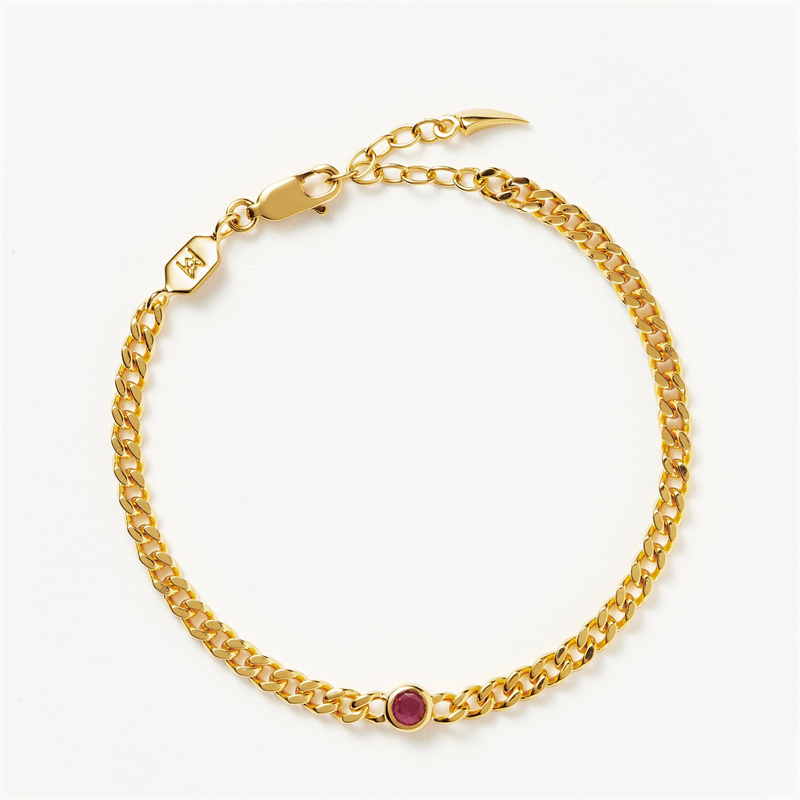
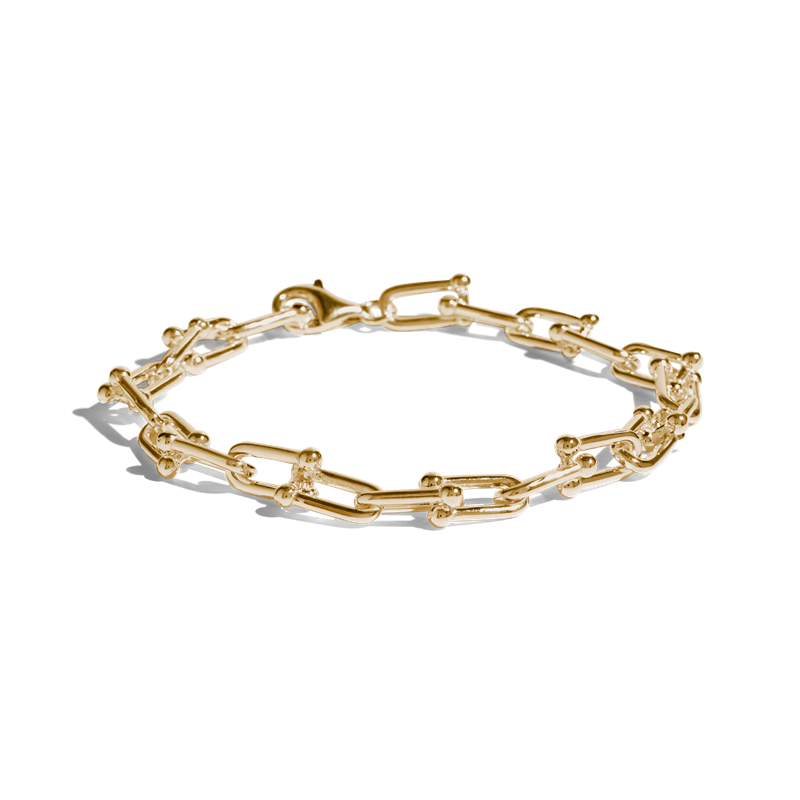
Custom Gold Vermeil Jewelry Manufacturer OEM ODM Paper Clip Link Bracelet
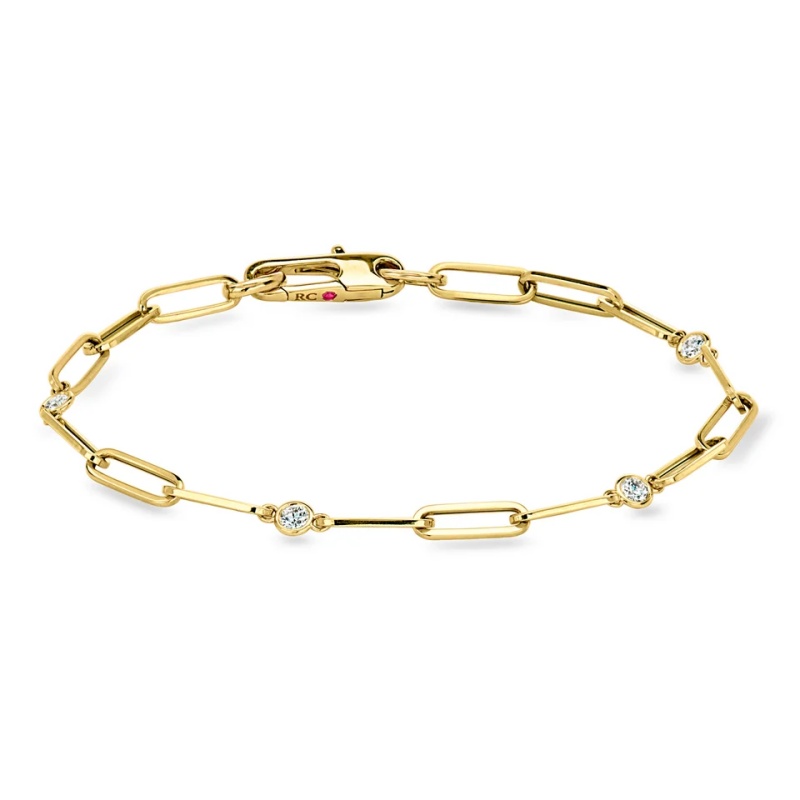
Custom Gold Vermeil Jewelry Manufacturer OEM ODM Paper Clip Link Bracelet
LET’S GET STARTED : mo@kingjy.com
How to Custom Gold Vermeil Jewelry Paper Clip Link Bracelet
Introduction
The paper clip link bracelet has emerged as one of the defining jewelry silhouettes of the mid-2020s, transforming a humble office supply reference into a sophisticated statement of modern minimalism. When that architectural silhouette is executed in gold vermeil—sterling silver with a thick electroplated gold layer—the result is a piece that balances accessibility, durability, and genuine material quality in ways that neither solid gold nor cheap plated costume jewelry can match. Customizing such a bracelet, however, requires understanding a chain of decisions that runs from metallurgical standards through design specification to daily maintenance. This article provides a complete framework for anyone seeking to commission a custom gold vermeil paper clip link bracelet, whether for personal wear, as a gift, or as part of a small jewelry brand’s product line.
Part One: Understanding Gold Vermeil as a Material
What Legally Qualifies as Gold Vermeil
Gold vermeil is not a marketing term. In the United States, it is a federally regulated category of gold-plated jewelry defined by the Federal Trade Commission. To be legally labeled “gold vermeil,” a piece must satisfy three conditions: the base metal must be sterling silver (92.5 percent pure silver), the gold layer must be at least 10 karat in purity, and the gold plating must be at least 2.5 microns thick. In the United Kingdom, gold vermeil jewelry is additionally stamped with the “925″ mark to verify sterling silver purity. This regulatory framework matters because it separates vermeil from the vast gray area of “gold plated” goods, where a brass or copper base might carry a gold layer thinner than 0.5 microns and begin wearing through within weeks of regular wear.
How Vermeil Compares to Gold-Filled and Gold-Plated Jewelry
The distinction between vermeil, gold-filled, and gold-plated is not merely semantic; it determines how the bracelet will look and perform after months or years of use. Standard gold plating involves a base metal—often brass or copper—coated with a very thin gold layer, typically under 0.5 microns. Gold-filled jewelry, by contrast, is created by mechanically bonding a layer of at least 10-karat gold to a base metal, with gold constituting at least 5 percent of the total weight. Gold vermeil occupies a middle position: it uses a sterling silver base, which is itself a precious metal, and applies a gold layer that is substantially thicker than standard plating. The practical consequence is that vermeil is more hypoallergenic than brass-based plating (sterling silver contains no nickel in its standard alloy) and more resistant to the green-skin discoloration associated with copper-rich base metals.
It is important to be clear-eyed about vermeil’s limitations. Because the gold exists only as a surface treatment, even a 2.5-micron layer will eventually show wear at high-contact points if the bracelet is worn daily for years. Blue Nile, a retailer that does not sell vermeil, notes that the material is “best suited for occasional wear” and that solid 14k or 18k gold remains “the most durable choice for jewelry designed to last”. For a custom paper clip bracelet, this means the vermeil construction is an excellent choice for a fashion-forward everyday piece, a layering component, or a gift, but it is not a substitute for solid gold in a heritage investment context.
Part Two: The Paper Clip Link Aesthetic
What Makes a Paper Clip Chain Distinctive
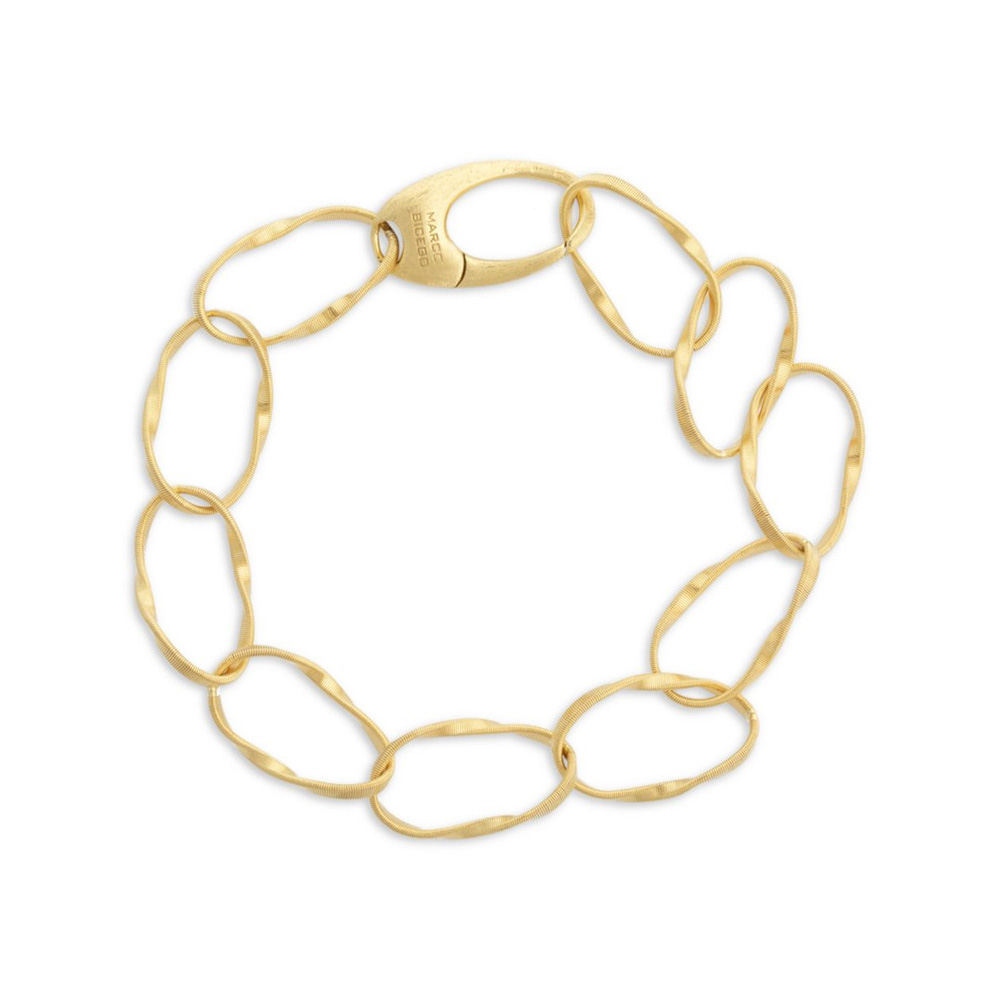
A paper clip chain is defined by its link geometry rather than its metal. Each link is an elongated, flattened oval—longer and flatter than a standard round or oval cable link—connected end to end so that the chain reads as almost geometric rather than curved. The name derives from the visual resemblance of each individual link to the wire loop of an actual office paper clip. Unlike a Cuban link chain, which is dense, heavy, and uniformly rounded, the paper clip chain is airy, open, and architectural. Its negative space—the hollow center of each elongated link—creates a rhythmic, almost sculptural pattern on the wrist.
This geometric quality gives the paper clip bracelet a remarkable versatility. It can function as a standalone minimalist piece, reading as clean and modern against bare skin. But it is also an exceptional layering component. Because the flat links sit slightly wider than a rounded chain, a paper clip bracelet layers well next to a thinner cable or box chain, creating texture without visual confusion. The trend has been reinforced at the highest levels of the industry: at the 2026 Las Vegas Jewelry Week Couture Show, designers showcased chains “inspired by early paperclip, trombone and rounded curb chains,” reinterpreted with contemporary proportions and diamond accents.
Link Size, Weight, and Wearability
For a custom project, the most consequential aesthetic decision is link scale. A fine “dainty” paper clip chain uses small links close to the scale of an actual office clip, producing a delicate, almost bracelet-like effect. A chunky statement version uses much larger, more elongated links for a bolder, more architectural presence. The choice affects not only appearance but also physical behavior: larger, flatter links have more surface area in contact with the skin and with surrounding objects, which means they are more prone to visible scratching and dulling than rounded links of equivalent weight. For a vermeil bracelet, this consideration argues in favor of a moderate link size—substantial enough to read as a paper clip chain, but not so large that the flat surfaces become scratch magnets in daily wear.
Part Three: The Customization Process from Concept to Finished Bracelet
Step One: Design Consultation and 3D Modeling
A professional custom gold vermeil project begins not with metal but with design specification. Reputable manufacturers use CAD (computer-aided design) software to produce a 3D model of the bracelet, allowing the client to visualize link proportions, clasp integration, and overall length before any physical production begins. At this stage, the key decisions include the precise dimensions of each link (length, width, and wire thickness), the spacing between links, the total chain length, and the clasp mechanism. For a paper clip bracelet, the clasp deserves particular attention: because the flat links are heavier and more rigid than a fine cable chain, a standard small lobster clasp can feel undersized and may fail under repeated stress. A larger lobster clasp or a toggle clasp designed for flat-link chains is the more robust choice.
Step Two: Base Metal Preparation and Link Formation
Once the design is finalized, production begins with the sterling silver base. The silver is formed into wire, cut to length, and shaped into the elongated oval links. These links are then assembled and, depending on the construction method, either soldered closed or left with an opening for a clasp. After assembly, the bracelet undergoes ultrasonic cleaning to remove dirt, oils, and oxidation from the surface. This step is critical: any contamination on the silver surface will interfere with the adhesion of the gold layer during electroplating. Some manufacturers also use a rotary tumbler with stainless steel shot and a burnishing compound for four to eight hours, which work-hardens the silver, smooths surface imperfections, and prepares the metal for plating.
Step Three: Electroplating to Vermeil Standard
The electroplating stage is where the piece becomes gold vermeil in the legal sense. The cleaned sterling silver bracelet is immersed in an electrolyte solution containing gold ions. An electrical current is passed through the solution, causing gold ions to bond to the silver surface. The thickness of the gold layer is controlled by regulating the concentration of gold ions and the duration of the electroplating process. To achieve the required 2.5-micron minimum, manufacturers typically leave the bracelet in the plating tank for approximately 60 to 90 minutes. Many production processes use a two-stage plating approach: first, a thin “flash” layer of gold is applied to promote adhesion between the silver and the subsequent gold layer; then, the heavy layer—often 14k, 18k, or even 22k gold—is bonded to achieve the final thickness and color depth.
Step Four: Finishing, Polishing, and Quality Inspection
After plating, the bracelet is removed from the solution and subjected to finishing processes including polishing and buffing to enhance its shine and brilliance. The final step is quality inspection, which assesses the adherence of the gold layer to the base metal and verifies that the plating meets the specified thickness. A well-manufactured vermeil bracelet will show no bubbles, blisters, or uneven coloration in the gold layer, and the surface should be uniformly reflective across all links, including the interior surfaces of the oval links.
Part Four: Personalization Options for a Custom Paper Clip Bracelet
Engraving and Charm Integration
The flat, elongated surface of a paper clip link offers a surprising amount of usable area for personalization. Some paper clip bracelet designs incorporate a larger “connect link” at the center—an oval link that opens to allow the attachment of looped charms or charms with lobster clasps. This feature transforms the bracelet from a fixed chain into a modular system: the wearer can add or remove charms depending on the occasion, shifting the piece from minimalist to personal with a single gesture. For engraving, the most practical locations are the clasp itself or a dedicated flat tag or charm integrated into the chain. Engraving on the links themselves is possible but limited by the narrow width of the wire; initials, a date, or a short word are more realistic than a full sentence.
Length, Sizing, and Layering Configuration
Most paper clip bracelets are produced in lengths between 6.5 and 8 inches to accommodate average wrist sizes with a natural drape. The critical sizing principle for a paper clip bracelet is to allow 1 to 2 inches of slack beyond the exact wrist measurement, so that the flat links sit comfortably rather than pulling tight when the wrist flexes. For a custom piece intended for layering, it is worth specifying the length in relation to the other bracelets the wearer plans to stack. A slightly longer paper clip bracelet paired with a shorter, finer chain creates a layered look with clear visual hierarchy; two paper clip bracelets of similar scale can look visually busy when stacked together.
Clasp Selection and Functional Customization
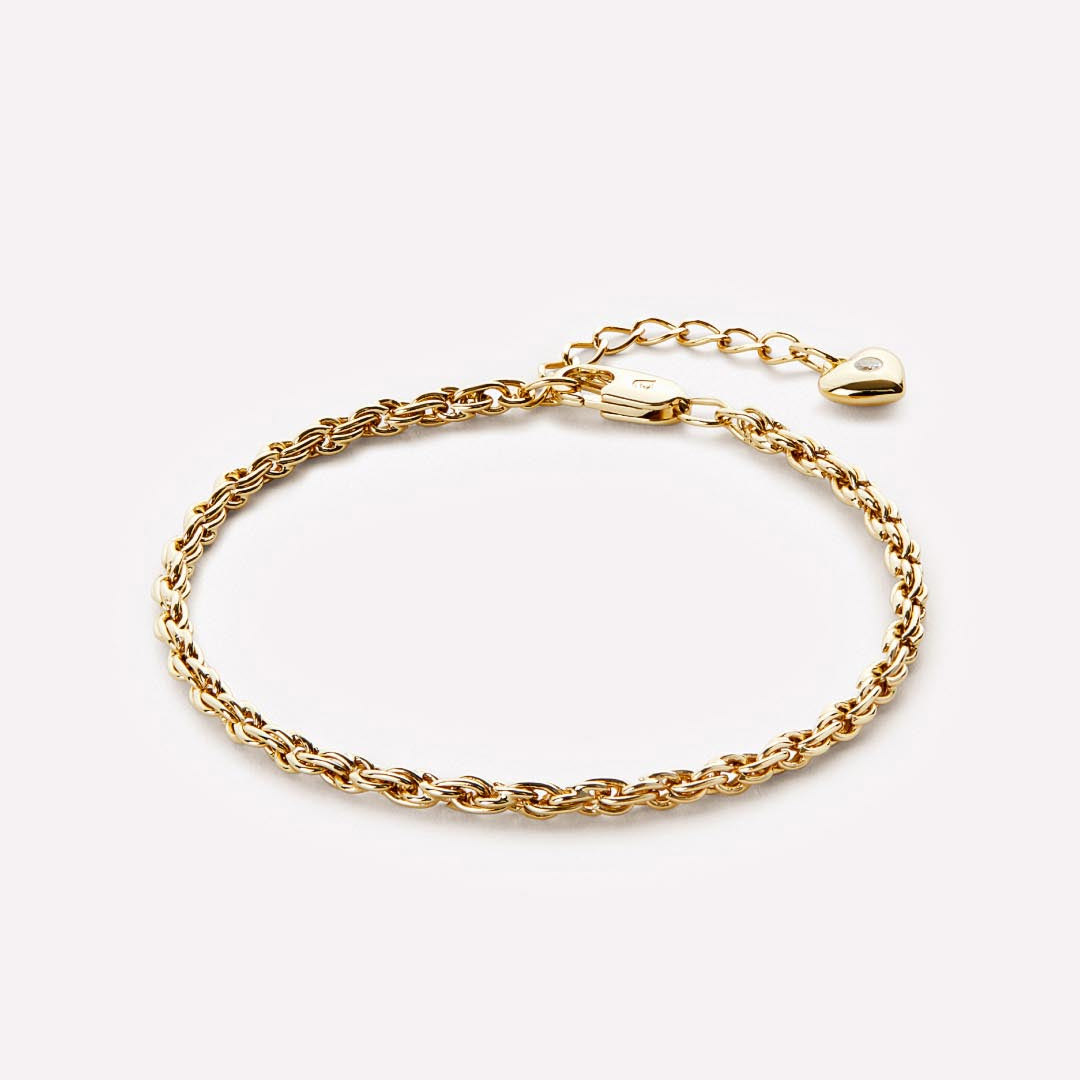
The clasp is the most mechanically stressed component of any bracelet, and for a flat-link paper clip chain, it deserves more attention than it typically receives. A lobster clasp is the most common and secure option, but it should be sized appropriately for the weight of the links. A toggle clasp, which pairs a ring with a T-shaped bar, offers a more decorative alternative and can be engraved more easily than a lobster clasp. For a bracelet that will be put on and taken off frequently, an extension chain with a small jump ring provides adjustability without complicating the primary clasp mechanism.
Part Five: Caring for a Gold Vermeil Paper Clip Bracelet
Daily Wear Guidelines
Gold vermeil is designed to be worn, but it rewards mindful habits. The single most important care practice is to remove the bracelet before showering, swimming, exercising, or applying lotions and perfumes. Moisture, sweat, and cosmetic chemicals accelerate the wear of the gold layer and can promote tarnishing of the sterling silver beneath. Because the flat links of a paper clip chain have more exposed surface area than a rounded chain, they also pick up scratches and dulling more visibly; removing the bracelet during activities that involve abrasive contact—gardening, lifting weights, or working with rough materials—will significantly extend its appearance.
Cleaning and Storage
Routine cleaning should be minimal. After each wear, a gentle wipe with a soft, non-abrasive, lint-free cloth is sufficient to remove skin oils and maintain the gold’s luster. If deeper cleaning is needed, a mild liquid soap diluted in lukewarm water, applied with a soft toothbrush, can be used sparingly, followed by a thorough rinse and pat-dry. Abrasive jewelry cleaners, dip polishes, and ultrasonic cleaning machines should be avoided, as they can strip or damage the thin gold layer. For storage, each vermeil piece should be kept separately in an airtight bag or a soft-lined compartment to prevent scratching and to limit exposure to moisture and air, which can cause tarnishing of the underlying sterling silver. Storing vermeil jewelry in a bathroom should be avoided entirely, as the humidity accelerates tarnish.
Conclusion
A custom gold vermeil paper clip link bracelet sits at a practical intersection of material integrity, design clarity, and personal expression. The vermeil standard—sterling silver base, at least 2.5 microns of real gold—provides a genuinely durable and skin-friendly foundation that is a meaningful step above costume plating. The paper clip chain’s architectural geometry gives the bracelet a modern, wearable presence that works equally well as a standalone piece and as a layering element. The customization process, from 3D modeling through electroplating to final inspection, is transparent and controllable, allowing the client to specify link scale, length, clasp type, and personalization details with precision. With appropriate care—removing the bracelet before water and chemical exposure, cleaning gently, and storing it properly—a custom vermeil paper clip bracelet will remain a wearable and visually distinctive piece for years, carrying both the material honesty of fine jewelry and the personal specificity of something made to order.