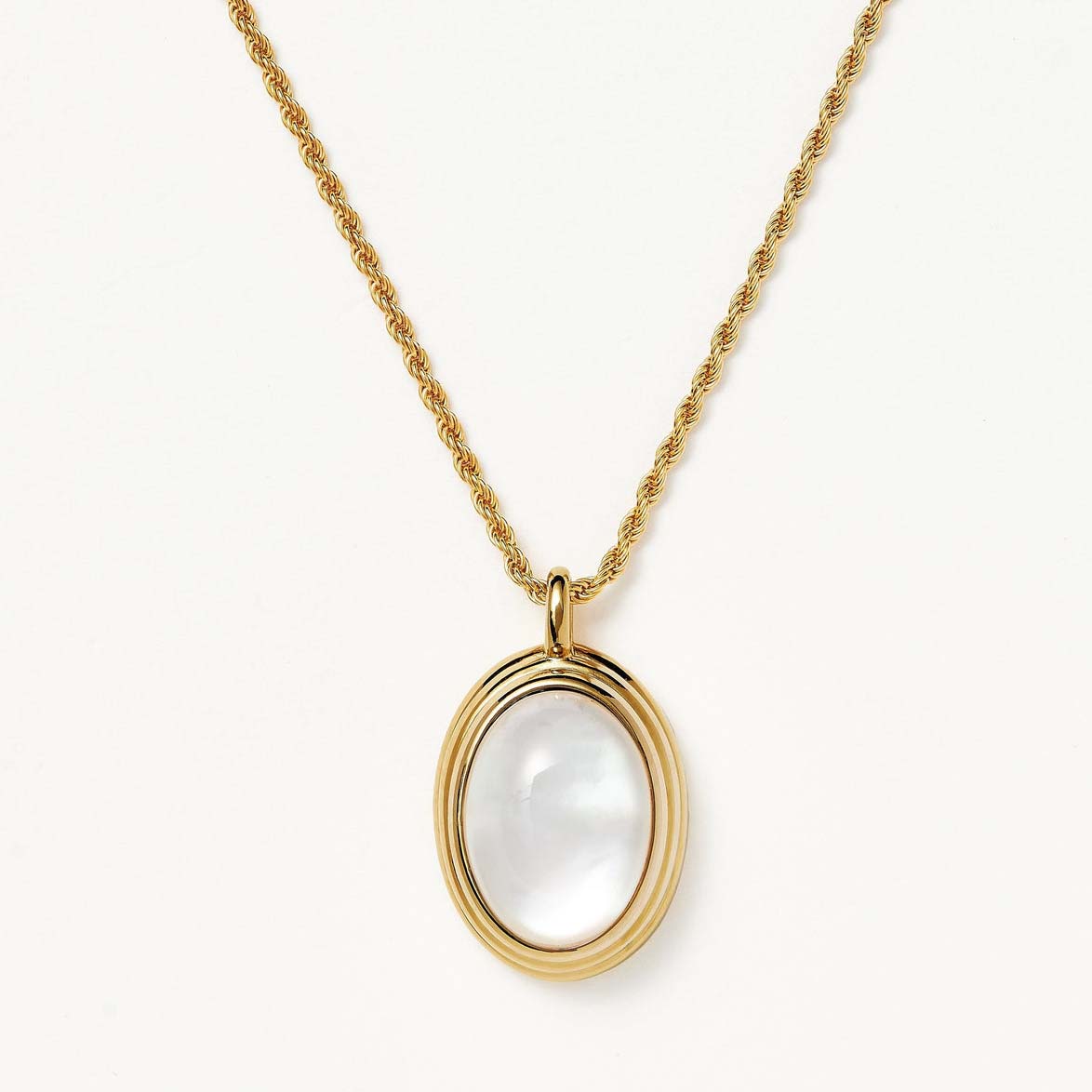
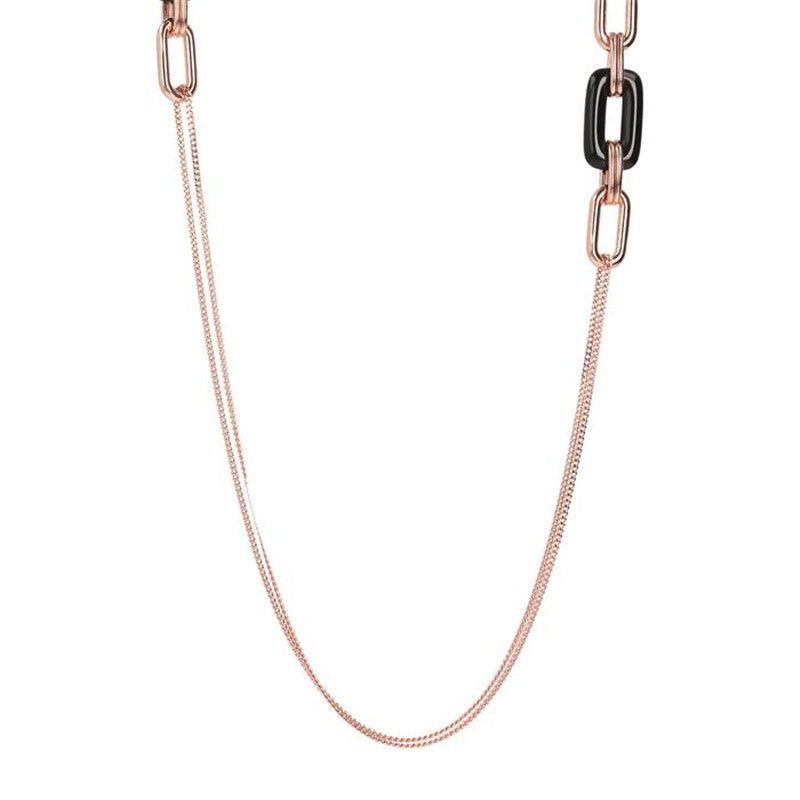
18kt Gold Over Sterling Cable and Paper Clip Link Necklace Custom Gold Jewelry Manufacturer USA
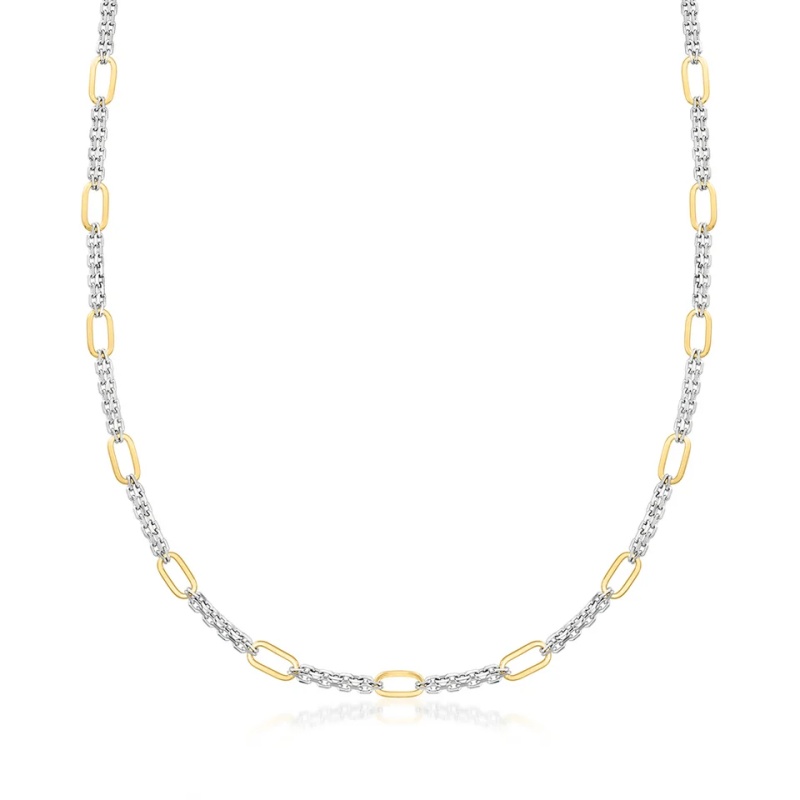
18kt Gold Over Sterling Cable and Paper Clip Link Necklace Custom Gold Jewelry Manufacturer USA
LET’S GET STARTED : mo@kingjy.com
How to Custom an 18kt Gold Over Sterling Cable and Paper Clip Link Necklace at JINGYING
Introduction: Why This Necklace Deserves Your Attention
A necklace that combines cable and paper clip links in 18kt gold over sterling silver sits at a fascinating intersection of jewelry design—it bridges the classic and the contemporary, the delicate and the architectural. The cable link, with its rounded interlocking ovals, has been the backbone of fine jewelry for centuries. The paper clip link, with its flat, elongated rectangular form, is a distinctly modern innovation that has surged in popularity over the past decade. When you fuse these two link styles into a single necklace, you create a piece that reads as both timeless and trend-aware.
But here is the critical question: how do you actually go about customizing such a necklace? Not just selecting a color or a length from a dropdown menu, but genuinely commissioning a piece that reflects your specifications—your preferred link dimensions, your ideal necklace length, your clasp preference, your finishing standard. This is where JINGYING enters the conversation.
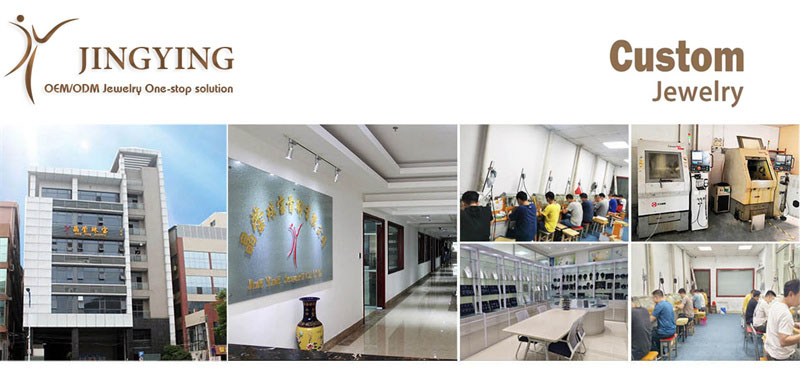
JINGYING is not a retail jewelry brand in the conventional sense. It is a Guangzhou-based OEM/ODM manufacturer that has been operating since 1998, producing custom jewelry for brand jewelers, wholesalers, and private-label clients worldwide. When you commission a piece from JINGYING, you are not paying for a brand name stamped on a velvet box. You are paying for materials, craftsmanship, design services, and the production infrastructure that transforms a concept into a finished piece. Understanding this fundamental identity is the first step toward approaching customization at JINGYING with the right expectations.
This guide will walk you through every stage of the process—from understanding what “18kt gold over sterling silver” actually means, to selecting between cable and paper clip links, to navigating JINGYING’s manufacturing workflow, to wearing and caring for the finished necklace.
Understanding the Material: 18kt Gold Over Sterling Silver
Before diving into the customization process, it is essential to understand exactly what you are commissioning. The phrase “18kt gold over sterling silver” refers to a specific material construction known as gold vermeil—a designation that carries regulated standards in many jurisdictions.
Gold vermeil requires a base of solid 925 sterling silver, plated with a layer of gold that is at least 2.5 microns thick and at least 10 karats in purity. This is not a marketing claim; it is a defined standard. JINGYING’s vermeil production follows this specification, applying gold plating over a sterling silver base with a thickness that can reach up to 3 microns.
The choice of 18kt gold specifically—rather than 14kt or 10kt—matters for several reasons. 18kt gold is 75% pure gold, which gives it a richer, warmer color that sits closer to what you would see in a luxury jewelry boutique. It is slightly softer than 14kt gold, which makes it more malleable and better suited to intricate link formations. For a necklace that combines two distinct link styles, the additional softness of 18kt gold can actually be an advantage, allowing the links to interlock with a smoother, more fluid drape.
However, this softness also means that 18kt gold vermeil benefits from mindful wear. With proper care, 18kt gold plating over 925 sterling silver typically looks its best for about 6 to 24 months before showing signs of wear. The sterling silver base is structurally stable, hypoallergenic, and—critically—a precious metal in its own right. So even as the gold layer ages gracefully with wear, the piece underneath remains something worth owning.
Why not choose solid 18kt gold instead? The answer is primarily economic. Solid gold would multiply the material cost by a factor of ten or more, while the visual difference between a well-executed vermeil piece and a solid gold piece is negligible at arm’s length. For a necklace intended for regular wear rather than heirloom preservation, vermeil offers the optimal balance of appearance, durability, and value.
Cable vs. Paper Clip Links: Understanding the Difference
The necklace you are commissioning combines two link styles. Understanding how they differ—and how they complement each other—is essential to making informed customization decisions.
A cable chain is the most basic and most common chain in fine jewelry: a series of identical oval or round links, each one connected in the same direction as the last. Thin cable chains are the standard base for pendant necklaces, while thicker cable links are used as standalone statement chains. Cable chains are durable for everyday light-to-medium pendants, easy to repair, and the easiest chain type to clean because there is nowhere for buildup to hide.
A paper clip chain, by contrast, is defined by its oblong, pill-shaped links that closely resemble the humble office supply. The magic of a paper clip chain lies in its negative space. Each link is elongated and hollow in the center, creating a rhythmic pattern that feels modern, sculptural, and surprisingly lightweight for its size. Because the links are uniform and flat, this chain drapes beautifully, almost like liquid metal, without twisting.
The visual difference between the two is immediately apparent. A paper clip link has straight sides and flat ends, like a tiny, luxurious rectangle with rounded corners. It has presence. You notice each link. An elongated cable chain, however, has curved sides. Even though it is stretched out, the link maintains the curvature of a circle, just squished into an oval. It shimmers with a softer, more traditional sparkle because the rounded edges catch the light differently than the flat surfaces of a paper clip.
When combined into a single necklace, these two link styles create a visual rhythm that neither achieves alone. The cable sections provide continuity and a classic foundation, while the paper clip sections introduce architectural interest and a contemporary edge. The transition between the two link types becomes a design feature in itself—a deliberate juxtaposition rather than an accidental mix.
From a durability perspective, the cable chain is generally stronger than the paper clip chain of the same gauge. The trade-off is link gauge—a thin paper clip chain can flatten or distort out of shape faster than a rounder link style, so thickness matters more here than on most chains. For a combined necklace, this means you should consider slightly thicker paper clip links than you would use in a standalone paper clip chain, or accept that the paper clip sections will have a different wear profile than the cable sections.
Step-by-Step: The Customization Process at JINGYING
Step 1: Initial Communication and Design Brief
The customization process at JINGYING begins with communication. You bring a design idea, a sample, or even just a reference image, and the design team starts working on an original design by sketch according to your request. JINGYING’s designers are described not as salespeople but as artists and engineers who translate abstract concepts—memories, emotions, organic forms—into structurally sound and aesthetically refined designs.
For a cable and paper clip link necklace, your design brief should specify several key parameters:
- The ratio of cable to paper clip sections. Do you want alternating links throughout the entire necklace? Or a section of cable chain that transitions into a section of paper clip chain at a specific point?
- The dimensions of each link type. Cable links might range from 1.1mm to 3mm in width, while paper clip links could range from 5mm to 15mm in length. The proportion between the two link sizes will dramatically affect the necklace’s visual weight.
- The overall aesthetic direction. A necklace with delicate, closely spaced cable links transitioning into bold, widely spaced paper clip links will read very differently from one where both link types are similar in scale.
- Your budget range and preferred style. JINGYING’s designers will work within these parameters to propose solutions that meet your expectations.
Step 2: Deposit and Material Selection
Once the design direction is agreed upon, JINGYING requires a 30% deposit to begin work. This deposit covers the initial design and material sourcing phase. At this stage, you will also finalize your material selections.
For an 18kt gold over sterling silver necklace, the key decisions are:
- Gold color. 18kt yellow gold is the classic choice, offering a warm, rich tone. 18kt rose gold, achieved by alloying gold with copper, provides a softer, more romantic hue. White 18kt gold, plated with rhodium for brightness, offers a cool, contemporary look.
- Plating thickness. While the vermeil standard requires a minimum of 2.5 microns, JINGYING can apply thicker plating—up to 3 microns or more—for clients who prioritize durability over cost.
- Base metal quality. All vermeil pieces at JINGYING use 925 sterling silver as the base, never brass or copper. This is a non-negotiable quality standard that separates vermeil from ordinary gold-plated jewelry.
Step 3: 3D Modeling and Mold Creation
With the design and materials confirmed, JINGYING’s design team creates a 3D model of your necklace. This is where the technical specifications of your cable and paper clip links are translated into a precise digital representation. The 3D model allows you to visualize the necklace’s proportions, link dimensions, and overall drape before any physical materials are used.
Once the 3D model is approved, JINGYING uses CNC machining to carve the jewelry model, ensuring a smooth surface and precise link geometry. The mold-making stage is critical for a combined-link necklace because the two link types must interlock seamlessly despite their different shapes.
Step 4: Casting and Polishing
The casting process transforms the wax mold into a plaster mold, which is then heated at high temperature to produce the metal base of your necklace. After casting, the necklace undergoes meticulous polishing to achieve a smooth, reflective surface.
For a combined cable and paper clip necklace, polishing requires particular attention to the transition points between the two link styles. The flat surfaces of the paper clip links and the rounded surfaces of the cable links require different polishing techniques, and the craftspeople at JINGYING are experienced in handling these variations.
Step 5: Plating
Plating is where the 18kt gold over sterling silver construction comes to life. JINGYING performs two-time plating for all vermeil jewelry: first a thick silver plating by base to ensure a smooth surface, then the real gold plating. This two-stage process is essential for achieving a uniform, durable gold layer that adheres properly to the sterling silver base.
The plating thickness for JINGYING’s vermeil products can reach up to 3 microns, which exceeds the minimum vermeil standard and ensures a longer-lasting finish. For a necklace that will be worn regularly, this additional thickness is a worthwhile investment.
Step 6: Quality Control
Quality control at JINGYING is not a single checkpoint but a continuous process. A ten-engineer team conducts quality checking at each stage of production. For a cable and paper clip link necklace, the quality checks focus on several critical areas:
- Link integrity. Each link must be properly closed and soldered, with no gaps that could cause the necklace to catch on clothing or hair.
- Plating thickness. Customers can receive a report from machine testing that confirms the plating thickness meets their specified standard.
- Surface finish. Professional tools are used to manually rub the metal surface for five minutes, ensuring the coat quality is good and the finish is uniform.
Step 7: Packaging and Shipping
Once your necklace passes all quality checks, it is packaged according to your specifications—either in independent packaging or as per customer request—and shipped via express delivery services including DHL, UPS, or TNT.
Key Design Decisions for Your Custom Necklace
Link Proportions and Visual Balance
The most important design decision for a combined cable and paper clip necklace is the proportion between the two link types. A necklace with a 1.5mm cable chain transitioning into 10mm paper clip links will have a dramatic, almost aggressive visual contrast. A necklace with a 2mm cable chain and 6mm paper clip links will have a more subtle, sophisticated transition.
Consider how the necklace will be worn. If it will be the primary focal point of an outfit, a bolder contrast between link types can work well. If it will be layered with other necklaces, a more restrained contrast will integrate more smoothly.
Necklace Length
Necklace length is measured in inches and follows standardized categories that determine where the necklace falls on the body. The most popular everyday length is 18 inches (Princess length), which sits 1-2 inches below the collarbone and works with nearly any neckline.
For a cable and paper clip link necklace, the length affects how the two link types are distributed. A shorter necklace (16-18 inches) may have room for only a single transition point between cable and paper clip sections. A longer necklace (24-30 inches) can accommodate multiple transitions, creating a more complex visual rhythm.
When layering, use the 2-inch rule: each chain should be at least 2 inches longer than the one above it to avoid tangling and visual crowding. A paper clip chain pairs naturally with cable, rolo, and figaro chains in a layered set.
Clasp Selection
The clasp is a small but significant detail that affects both the aesthetic and the practical experience of wearing your necklace. The most common clasp for vermeil necklaces is the lobster clasp, which offers security and ease of use. For a necklace with heavier paper clip links, a larger lobster clasp or a box clasp may be more appropriate to ensure the necklace stays secure.
Consider whether you want a simple clasp or a decorative one. A decorative clasp can become a design feature, especially on shorter necklaces where the clasp is visible at the back of the neck.
Finishing Options
JINGYING offers a variety of finishes for vermeil jewelry, from high-polish mirror finishes to brushed or matte textures. For a combined cable and paper clip necklace, you might consider:
- Uniform high polish. Both link types receive the same mirror finish, creating a cohesive, luxurious appearance.
- Contrasting finishes. The cable links receive a high polish while the paper clip links receive a brushed finish, or vice versa. This adds another layer of visual interest to the already contrasting link styles.
- Textured accents. JINGYING’s experts can add a brand’s distinctive matte or texture to a piece, creating a surface that catches light differently from standard polished links.
Pricing and Minimum Order Considerations
JINGYING’s pricing for custom jewelry follows a transparent formula: the actual gold weight multiplied by the day’s gold price, plus the stone’s carat size multiplied by unit price, plus labor cost, plus design fee. For a vermeil necklace without gemstones, the stone-related costs are eliminated, simplifying the calculation to materials, labor, and design.
JINGYING remains remarkably accessible for smaller-scale custom orders. The company has offered small-batch customization starting at just 50 pieces per design since 2018, with some product categories accepting minimum orders as low as 30 pieces. This is significantly lower than the minimum order quantities typical of many fine jewelry manufacturers, making JINGYING a viable option for emerging brands, independent designers, and even individual clients commissioning a personal piece.
For context, JINGYING’s OEM pricing for a vermeil gold tennis bracelet ranges from $120 per bracelet at 50 pieces to approximately $78 per bracelet at very high volumes. A comparable retail tennis bracelet from a traditional jewelry brand might sell for $500 or more. The gap is not because JINGYING’s product is inferior; it is because the retail price includes brand markup, merchandising costs, packaging, and channel strategy.
Care and Maintenance for Your Vermeil Necklace
An 18kt gold over sterling silver necklace is not indestructible, but with proper care, it can maintain its appearance for years. Here are the essential maintenance practices:
Storage. Store your necklace in a dry, cool place, ideally in an airtight bag or a lined jewelry box. Exposure to air and moisture accelerates tarnishing of the sterling silver base and dulls the gold plating.
Wearing. Put your necklace on after applying lotions, perfumes, and cosmetics, not before. These products can leave residue on the gold surface and accelerate wear. Remove the necklace before swimming, showering, or exercising.
Cleaning. Use a soft silver polishing cloth to gently rub the surface of your vermeil jewelry to remove any built-up tarnish or dullness. Avoid harsh chemical cleaners, ultrasonic cleaners, and abrasive materials, which can damage the gold plating.
Professional maintenance. If the gold plating begins to show signs of wear after extended use, JINGYING offers a 3-6 month repair guarantee for product quality issues related to non-human causes. In many cases, the necklace can be re-plated to restore its original appearance.
Conclusion: Why Custom Matters
The difference between buying a pre-made necklace and commissioning a custom piece from JINGYING is the difference between accepting someone else’s design decisions and making your own. When you customize an 18kt gold over sterling cable and paper clip link necklace, you control the link proportions, the length, the clasp, the finish, and the overall aesthetic character of the piece. You are not selecting from a catalog; you are creating a necklace that exists because you specified it.
JINGYING’s role in this process is to translate your specifications into a finished piece with the precision and quality that twenty-three years of manufacturing experience can provide. From the initial sketch to the final quality check, every stage of the process is designed to ensure that the necklace you receive matches the necklace you envisioned. The result is a piece that is not just worn but owned—in the fullest sense of the word.