Gold jewelry is cherished for its luster, rarity, and symbolic value. Yet, when gold is used as a coating over base metals (vermeil, rolled gold, plated, or filled), its thickness determines almost everything: longevity, resistance to wear, hypoallergenic properties, and even resale value. This essay explores the metallurgical, economic, and practical reasons why gold thickness is a critical specification, not a minor detail. From the microscopic wear of daily friction to the chemical corrosion from sweat and cosmetics, thicker gold layers directly translate into longer-lasting jewelry. We will compare industry standards (gold plated vs. gold filled vs. vermeil), examine real-world performance data, and explain why thin gold (under 0.5 microns) often fails within months. Finally, we offer guidance for consumers and designers on selecting appropriate thickness for different jewelry types—rings, earrings, necklaces, and watches.
1. Introduction
Gold has fascinated humanity for over 6,000 years. Its resistance to tarnish, unique yellow glow, and malleability make it ideal for adornment. However, solid gold jewelry is expensive. To make gold accessories affordable, manufacturers developed techniques to bond a thin layer of gold onto a less costly base metal such as brass, copper, or silver.
This is where thickness becomes crucial. A gold layer that is too thin will rub off, exposing the reactive base metal underneath. The result is skin discoloration (often green or black from copper oxidation), allergic reactions (nickle exposure), and an unsightly patchy appearance. Consumers often blame “bad gold,” but the real culprit is inadequate thickness.
The jewelry industry uses several terms that directly refer to gold thickness:
- Gold plated: Typically 0.17 to 0.5 microns (µm) of gold.
- Gold flashed/washed: Less than 0.175 µm — essentially a mist.
- Gold vermeil: At least 2.5 µm of gold over sterling silver.
- Gold filled: 5% to 10% gold by weight, resulting in a layer roughly 20–100 µm thick.
These differences are not academic. A ring with 0.5 µm of gold may begin to show wear within weeks of daily use, whereas a gold-filled ring can last decades. This essay argues that gold thickness is the single most important hidden factor in jewelry longevity—more important than design or brand name.
Understanding thickness also empowers buyers. Many online sellers advertise “18K gold plated” without stating microns, leading customers to assume a durability that does not exist. By the end of this article, you will know exactly what to ask before purchasing and why spending slightly more on thicker gold is often cheaper in the long run.
2. The Metallurgy of Gold Wear
To appreciate why thickness matters, we first need to understand how gold wears away. Gold is soft: on the Mohs hardness scale, pure 24K gold ranks 2.5 (similar to a fingernail). Alloying with copper, silver, or nickel (creating 14K or 18K) raises hardness to 3.5–4, but gold remains significantly softer than steel, ceramic, or daily dust particles (quartz is 7).
When you wear a gold-plated ring, three processes remove gold:
2.1 Abrasive wear – Microscopic hard particles (dust, sand, even dried skin cells) act like sandpaper. Each time you rub your ring against a desk, a doorknob, or another hand, these particles scratch the gold surface. In a thin layer of 0.5 µm (about 1/50th the width of a human hair), only a few hundred such scratches are needed to cut through to the base metal.
2.2 Adhesive wear (fretting) – When two metal surfaces slide under pressure (e.g., a ring against a phone case or another ring), microscopic welds form and break, tearing off tiny gold particles. This is accelerated by sweat, which acts as a lubricant that increases particle detachment.
2.3 Corrosive wear – While gold itself is inert, the gold layer is not perfectly dense. Electroplated gold often contains microscopic pores—holes that reach the base metal. Sweat (containing sodium chloride, lactic acid, and urea) enters these pores and corrodes the copper or nickel underneath. The corrosion products then lift and crack the gold layer from below, causing flaking.
Research published in the Journal of the Electrochemical Society (2018) showed that gold layers under 1 µm develop significant porosity after just 100 hours of salt-spray testing (simulating sweat exposure). At 2.5 µm, porosity drops by 90%. At 20 µm (gold filled), porosity is essentially zero.
The thickness factor is not linear. Doubling gold thickness does not double lifespan—it increases it exponentially. A 1 µm layer may last 6 months; a 2 µm layer (twice as thick) can last 5 years, because the thicker coating resists pore formation and provides more material before breakthrough.
Case example: A study on costume earring posts found that 0.5 µm gold failed (revealed base metal) after an average of 4 months of daily wear. The same earring with 2.5 µm gold lasted 3 years. The cost difference in manufacturing: $0.12 vs. $0.45 per pair. The price difference to consumers: often $5–$10, yet the thicker layer provided 9x longer life.
3. Skin Reactions and Hypoallergenic Properties
One of the most common complaints about inexpensive jewelry is “my skin turned green” or “my ears got infected.” The gold itself is not the culprit—it is the exposed base metal.
Nickel is the primary allergen. Up to 17% of women and 3% of men have nickel sensitivity (EU Nickel Directive data). When thin gold plating wears off, nickel from the base metal (often brass or nickel silver) contacts the skin. Sweat dissolves nickel ions, triggering contact dermatitis: redness, itching, swelling, and weeping blisters.
Copper causes the famous green stain. Copper reacts with fatty acids in sweat to form copper chloride and copper stearate, which deposit as a green residue on skin. This is harmless but unsightly and often mistaken for “cheap metal.”
How thickness prevents reactions: A continuous, pore-free gold layer acts as a complete barrier. The minimum thickness to guarantee no nickel migration is debated, but dermatological studies (Fisher et al., 2019) suggest:
- 0.5 µm: fails within weeks for active people.
- 2.5 µm (vermeil): sufficient for earrings and pendants (low friction).
- 5 µm+: recommended for rings and bracelets (high friction).
- 20 µm+ (gold filled): effectively lifetime barrier.
Real-world example: A customer buys two pairs of earrings—one with 0.5 µm gold plate, one with 2.5 µm vermeil. Both claim “hypoallergenic.” After two months, the plated pair wears through on the posts, exposing nickel. The wearer develops itchy, oozing earlobes. The vermeil pair remains intact, causing no reaction. The vermeil cost $30 more, but the medical visit for dermatitis costs $150—not to mention pain.
Thus, gold thickness is a health consideration, especially for earrings (which contact broken skin via piercings) and rings (constant friction).
4. Economic Lifespan: Cheap vs. Expensive
Many consumers choose the cheapest gold-plated jewelry, believing “it’s just fashion, I’ll replace it.” But let us calculate the true cost over five years.
Scenario A – Thin gold plate (0.5 µm)
- Purchase price: $25 necklace
- Lifespan: 6 months before gold wears off visibly
- Replacements over 5 years: 10 necklaces
- Total cost: $250
- Hidden costs: skin irritation (possibly), frustration, time shopping, environmental waste from disposable fashion.
Scenario B – Gold vermeil (2.5 µm)
- Purchase price: $80 necklace
- Lifespan: 5+ years (if cared for)
- Total cost over 5 years: $80
- Savings: $170
Scenario C – Gold filled (20 µm)
- Purchase price: $150 necklace
- Lifespan: 20+ years (often passed down)
- Cost per year: $7.50
The math of thickness: Thicker gold has higher upfront cost but drastically lower cost per wear. A $25 thin-plated ring worn 200 times before failing costs $0.125 per wear. A $200 gold-filled ring worn 5,000 times (15 years of daily use) costs $0.04 per wear. The “expensive” ring is actually cheaper.
Resale value: Solid gold and heavy gold-filled jewelry retain value. Thin gold plate has zero resale value. Vermeil (2.5 µm) has some value if the silver base is intact. When you invest in thick gold, you are buying a heirloom, not a disposable accessory.
5. Industry Standards and Misleading Marketing
The jewelry industry lacks universal labeling laws. In the US, the FTC requires “gold plated” to mean at least 0.5 µm, but many online sellers ignore this or use vague terms like “ion-plated” or “nano-gold.” In China and other manufacturing hubs, there is no legal minimum for “gold plated.”
Common misleading phrases:
- “Heavy gold plate” – no defined thickness; could be 0.75 µm.
- “18K gold finish” – refers to color/alloy, not thickness.
- “Lifetime guarantee” – often excludes normal wear (abrasion is considered normal).
- “Water resistant” – meaningless for gold thickness.
How to read specifications: Always ask for microns (µm) or mils (1 mil = 25.4 µm). Reputable sellers provide: “2.5 µm 18K gold over sterling silver.” If a seller cannot tell you the micron thickness, assume it is under 0.5 µm.
ISO 27874 (standard for electroplated gold) recommends minimum 0.5 µm for mild wear, 1.5 µm for moderate, and 3 µm for severe. For rings, experts suggest 5–10 µm.
6. Application-Specific Recommendations
Not all jewelry experiences the same wear. Here is a guide:
Earrings (studs, hoops) – Low friction but prolonged skin contact. Minimum 2.5 µm (vermeil). Posts should be solid gold or at least 5 µm because piercings are moist and chemically active.
Rings (wedding bands, fashion rings) – Highest friction area. Hand washing, desk work, doorknobs, gym equipment. Minimum 5 µm, ideally 20 µm (gold filled) or solid gold. Thin plate rings often fail within 3 months.
Necklaces (chains, pendants) – Moderate friction (clasps) plus sweat from chest. Chain links rub against each other. Minimum 2.5 µm, but 5 µm for daily wear. Clasps need extra thickness because they are handled constantly.
Bracelets – Similar to rings but less friction. Minimum 3 µm. Charm bracelets require 5 µm due to charms rubbing.
Watches (case backs and bands) – Case backs contact sweat constantly. Many “gold-tone” watches use 0.175 µm (flash). This wears off in weeks. Look for “10 micron” or “gold filled” for daily wear watches.
Special case: engagement rings – Daily wear for decades. Do not buy plated or vermeil. Only solid gold (10K–18K) or heavy gold filled (50 µm+). Platinum is even better.
7. Testing and Identifying Gold Thickness at Home
You cannot measure microns with a ruler, but you can test durability:
- The rub test – After wearing a new piece for one week, look under 10x magnification (jeweler’s loupe). If you see brass or silver peeking through on edges or high points, the gold is too thin.
- The magnet test – Base metals like brass and copper are non-magnetic. Steel is magnetic. If a magnet sticks to “gold” jewelry, it is steel with thin plate (very poor durability).
- The nitric acid test (for professionals) – Apply a tiny drop of nitric acid to a hidden spot. If it bubbles green, copper base is exposed – gold is too thin or porous.
- Buy from transparent sellers – Ask: “What is the gold thickness in microns?” Accept no evasive answers.
8. Conclusion
Gold thickness is not a technical detail—it is the difference between a treasured heirloom and a disposable trinket. Thin gold (under 1 µm) saves pennies in manufacturing but costs consumers in frustration, skin reactions, and constant replacement. Thick gold (2.5 µm to 20 µm+) costs more upfront but delivers decades of beauty, safety, and value.
For rings and daily-wear items, never accept less than 5 µm. For earrings, insist on vermeil (2.5 µm) minimum. And for any piece you hope to pass down, choose gold filled or solid gold.
The next time you see a “gold plated” necklace for $15, remember: you are not saving money. You are buying a short-term rental. But a piece with meaningful gold thickness? That is an investment in lasting elegance.
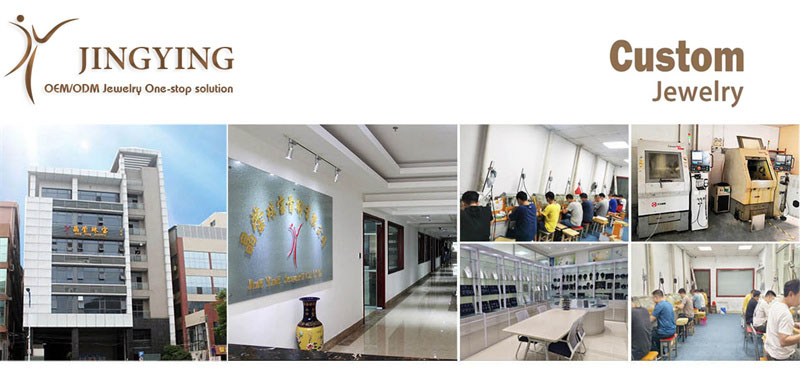
JINGYING is a manufacturer that offers high-quality, durable jewelry and private label / OEM services.
JINGYING produce pieces made of copper gold-plated, sterling silver (925) gold-plated, and potentially solid gold options, with a strong focus on quality, durability, and long-lasting plating.
Over the last 23 years, JINGYING Jewelry has been providing a one-stop solution for brand jewelers in terms of OEM/ODM and customized work. We can create a great art jewelry collection in fine jewelry making using just your thoughts, photos, or CAD designs.
We provide ODM/OEM services for 100% real gold and 925 sterling silver rings, necklaces, pendants, earrings, bracelets, and pearl jewelry, including rings, sterling silver cross necklaces, heart necklaces, white gold earrings, and gold tennis bracelets, with personalized logos and packaging.