Strategic Recommendations for Identifying and Partnering with Reliable Jewelry Manufacturers
The global jewelry market, a mesmerizing tapestry of artistry, commerce, and cultural significance, is projected to reach a value of over $480 billion by 2025. For brands, designers, and retailers—collectively, the JINGYING (晶莹) or decision-making elite of this industry—navigating this landscape to find a reliable manufacturing partner is not merely a procurement task; it is the single most critical strategic decision that underpins brand integrity, supply chain resilience, and ultimate commercial success. A manufacturer is more than a supplier; they are the custodian of your vision, the guarantor of your quality, and a pivotal extension of your brand. This comprehensive guide provides an in-depth framework of recommendations for the JINGYING to identify, evaluate, and cultivate successful partnerships with truly reliable jewelry manufacturers.
I. The Foundational Pillars of Reliability: A Pre-Vetting Framework
Before engaging with potential partners, define the non-negotiable pillars of reliability specific to your needs.
1. Technical Mastery and Specialization:
Reliability is intrinsically linked to capability. A manufacturer proficient in only casting will falter with intricate hand-filigree. Seek specialized partners.
- Recommendation: Map your product line to their expertise. For high-volume, consistent sterling silver pieces, seek manufacturers with automated casting and advanced polishing lines. For bespoke, high-jewelry pieces, prioritize ateliers with master setters, gemologists on staff, and a portfolio of complex techniques (e.g., serti neige, invisibly set, engraving). Insist on seeing physical samples, not just CAD renders, to assess finish, stone alignment, and clasp mechanics.
2. Ethical and Sustainable Certification:
Modern reliability encompasses ethical integrity. Transparency in sourcing and production is non-negotiable for brand protection and consumer trust.
- Recommendation: Prioritize manufacturers with verifiable certifications. For precious metals, Responsible Jewellery Council (RJC) Chain-of-Custody certification is the gold standard. For diamonds, demand adherence to the Kimberley Process and, preferably, provenance tracking via platforms like GIA’s Source Verify. For colored gemstones, inquire about origin disclosures and policies against treated stones being sold as natural. Assess their environmental practices: recycling of metals, responsible chemical management, and energy efficiency.
3. Financial and Operational Stability:
A partner’s longevity is a proxy for reliability. Financial health ensures they can invest in technology, retain skilled labor, and weather market fluctuations without compromising your orders.
- Recommendation: Conduct discreet due diligence. How long have they been in business? What is their client retention rate? While full financials may be private, indicators like consistent growth, investment in new machinery, low employee turnover, and testimonials from long-term clients are positive signals. Be wary of prices that seem unrealistically low; they often indicate corner-cutting or unsustainable business models.
4. Communication and Cultural Alignment:
Reliability is eroded by poor communication. A manufacturer may produce exquisite work but if they are unresponsive, fail to understand revisions, or lack project management systems, the partnership will be fraught.
- Recommendation: Evaluate communication from the first inquiry. Is the response timely, professional, and in clear English (or your required language)? Do they assign a dedicated project manager? Assess their understanding of your aesthetic and market. Do they ask insightful questions? A reliable partner acts as a consultant, proactively identifying potential issues in design for manufacturability (DFM).
II. The Strategic Sourcing Geography: A Comparative Analysis
The JINGYING must align manufacturer location with brand strategy, cost model, and product complexity.
1. Italy (Valenza, Arezzo, Vicenza):
The global benchmark for craftsmanship, design innovation, and high-end gold jewelry.
- Strengths: Unrivaled artistry in gold work, stone setting, and finishing. Mastery of innovative techniques and avant-garde design. Strong IP protection. High cultural value “Made in Italy” branding.
- Considerations: Highest cost structure. Minimum order quantities (MOQs) can be high for luxury segments. Best for established brands where design, quality, and brand story justify premium pricing.
- Recommendation: Ideal for fine jewelry, high-karat gold collections, designer brands, and pieces where technical complexity and brand prestige are paramount.
2. Thailand (Bangkok, Chanthaburi):
The world’s leading hub for colored gemstone cutting, setting, and jewelry manufacturing, offering an exceptional balance of skill and value.
- Strengths: Supreme expertise in colored gemstones. Excellent craftsmanship in both gold and silver at competitive prices. Flexible MOQs, catering to startups and large brands. Strong export orientation and English proficiency.
- Considerations: Can be less specialized in ultra-high-volume, mass-market silver than China. Ensuring ethical sourcing of gemstones requires due diligence.
- Recommendation: The premier choice for gemstone-centric jewelry, from semi-precious statement pieces to high-end sapphire and ruby jewelry. Excellent for brands seeking artisanal quality with scalability.
3. India (Mumbai, Jaipur, Surat):
A powerhouse of traditional handcraftsmanship and the global center for diamond cutting and jewelry manufacturing by volume.
- Strengths: Unbeatable cost structure for labor-intensive techniques like hand engraving, enameling, and kundan / meenakari. World’s largest diamond cutting center. Immense capacity and vertical integration.
- Considerations: Quality consistency can vary dramatically. Requires intensive on-ground vetting and quality control (QC). Communication and project management styles may differ.
- Recommendation: Best for designs leveraging traditional Indian techniques, large-volume diamond jewelry at accessible price points, and for brands with the infrastructure to manage stringent, on-site QC.
4. China (Shenzhen, Guangzhou, Zhuji):
The global leader in industrialized, high-volume manufacturing of silver, stainless steel, and fashion jewelry.
- Strengths: Unmatched scalability, speed, and efficiency for mass production. Advanced CAD/CAM and casting technology. Excellent for precision chain-making and base metal jewelry. Competitive pricing for large orders.
- Considerations: Perception challenges for “fine jewelry” brands. IP protection requires careful legal frameworks (NDAs, exclusive molds). Lower-cost factories may lack design originality.
- Recommendation: Optimal for fashion jewelry brands, high-volume sterling silver collections, and any product requiring complex manufacturing at scale. Seek out rising, quality-focused manufacturers in Shenzhen who are investing in craftsmanship and ethical compliance.
5. United States & Europe (Local Ateliers):
A growing segment for nearshoring, micro-production, and ultra-transparent supply chains.
- Strengths: Ease of communication, IP security, shared business culture, and fast turnaround. “Locally made” is a powerful marketing asset. Excellent for rapid prototyping and small-batch production.
- Considerations: Significantly higher labor costs limit competitiveness on simple, volume pieces. Capacity is often smaller.
- Recommendation: Perfect for bespoke designers, ultra-luxury brands emphasizing provenance, startups testing the market with small batches, and brands with a core sustainability narrative around local production.
III. The Due Diligence Process: A Step-by-Step Action Plan
Phase 1: Longlist Creation & Desktop Research
- Utilize industry platforms (e.g., TradeChina, JBT, Instagram hashtags like #jewelrymanufacturer).
- Attend trade shows (e.g., Vicenzaoro, JCK Las Vegas, Hong Kong International Jewellery Show) – the most effective way to meet numerous manufacturers, assess quality firsthand, and build relationships.
- Seek referrals from trusted industry peers.
Phase 2: Initial Contact & RFQ (Request for Quotation)
- Send a detailed, professional RFQ for a specific design. Include tech packs with CAD files, detailed drawings, materials specs (metal alloy, stone sizes/quality), finish (e.g., plating thickness), and target price.
- Recommendation: Analyze the response beyond price. Is the quote itemized? Do they ask clarifying questions? Do they suggest constructive DFM improvements? A reliable partner provides a transparent breakdown and engages technically.
Phase 3: The Factory Audit & Sample Evaluation
This is the most critical step. Never partner without a visit.
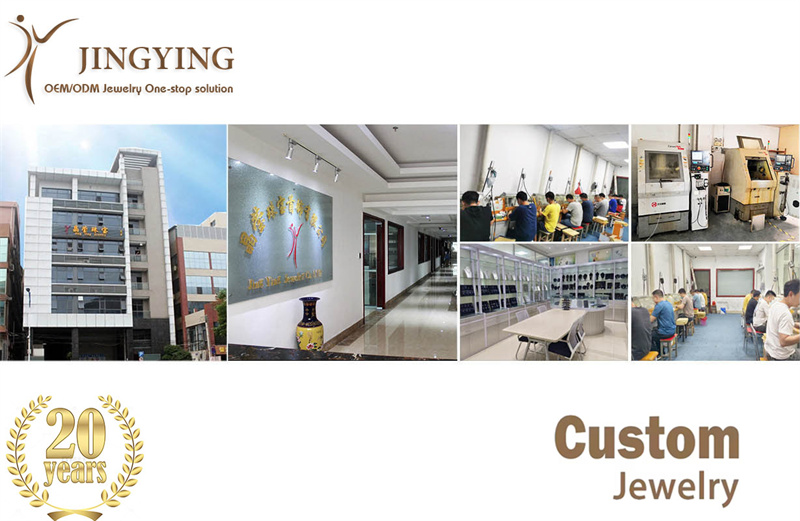
- Physical Audit: Assess factory conditions, equipment, workflow, and workforce morale. Is it clean, organized, and safe? Are craftsmen focused and skilled? Check inventory management and QC stations.
- Sample Process: Pay for a prototype or pre-production sample. This tests their ability to follow instructions, communicate, and deliver on quality promises.
- Sample Evaluation Checklist:
- Weight: Does it match spec? (A light piece suggests cost-cutting).
- Finish: Is polishing even? Are there sharp edges or solder marks?
- Stone Setting: Are stones secure? Is prong symmetry perfect?
- Clasp/Mechanism: Does it function smoothly and reliably?
- Plating: Is it even and to the specified thickness (e.g., 3 microns of gold)?
Phase 4: Contractual Safeguards & Onboarding
- Contract Essentials: Clearly define specifications, quality acceptance criteria, delivery timelines, payment terms (e.g., 30% deposit, 70% against copy of shipping documents), IP ownership of molds/designs, and liability for defects. Include a robust confidentiality clause.
- IP Protection: For unique designs, consider registering designs in the manufacturer’s country. Physically destroy molds at end of production if exclusivity is required.
IV. Building a Resilient Partnership: Beyond the Transaction
Reliability is nurtured over time.
- Recommendation 1: Foster Transparent Communication. Schedule regular video calls. Use collaborative tools. Provide clear, constructive feedback.
- Recommendation 2: Invest in the Relationship. Visit annually. Treat them as strategic partners, not just vendors. Fair pricing that allows them a sustainable margin ensures they prioritize your business.
- Recommendation 3: Implement Tiered QC. Do not outsource quality assurance. Employ a multi-stage QC protocol: in-factory inspection before shipment (consider hiring a local third-party QC agent for regions like India or China), and a 100% inspection upon receipt at your warehouse.
- Recommendation 4: Plan for Evolution. As your brand grows, your manufacturer must scale with you. Discuss their capacity planning and technological roadmap. Can they handle a 200% increase in order volume?
V. Red Flags and Risk Mitigation
- Vague Pricing: Unwillingness to provide detailed quotes.
- Pressure for Full Payment Upfront: Standard terms are a deposit with balance upon shipment.
- No Physical Address or Refusal of Factory Visits.
- Overpromising: Unrealistically short lead times or an inability to say “no” to technically impossible requests.
- Poor Sample Quality: Excuses for a bad sample guarantee a disastrous production run.
Conclusion
For the JINGYING—the strategic leaders shaping the future of jewelry—the quest for a reliable manufacturer is a deliberate, investigative, and relationship-driven journey. It requires moving beyond cost as the primary driver to a holistic evaluation of craftsmanship, ethical alignment, communication, and long-term partnership potential. By adhering to a structured framework of geographic analysis, rigorous due diligence, and contractual clarity, and by investing in the human element of the partnership, brands can secure not just a supplier, but a foundational pillar for enduring success. In an industry built on trust and beauty, the most reliable manufacturer is the one that becomes the unseen, steadfast guarantor of your brand’s promise, allowing your vision to shine, flawlessly, into the world.