Outsourcing the Earrings Jewelry Process: A Strategic Approach to Modern Manufacturing
Introduction
The jewelry industry is undergoing a fundamental transformation. What was once a sector dominated by in-house artisans and vertically integrated workshops has increasingly embraced global supply chains and specialized outsourcing. For earrings—among the most universally worn and stylistically diverse jewelry categories—outsourcing production processes has become a strategic imperative for brands ranging from luxury houses to fast-fashion retailers. This essay examines the rationale, methodology, and practical considerations of outsourcing earrings jewelry production, offering a comprehensive overview for industry professionals and entrepreneurs alike.
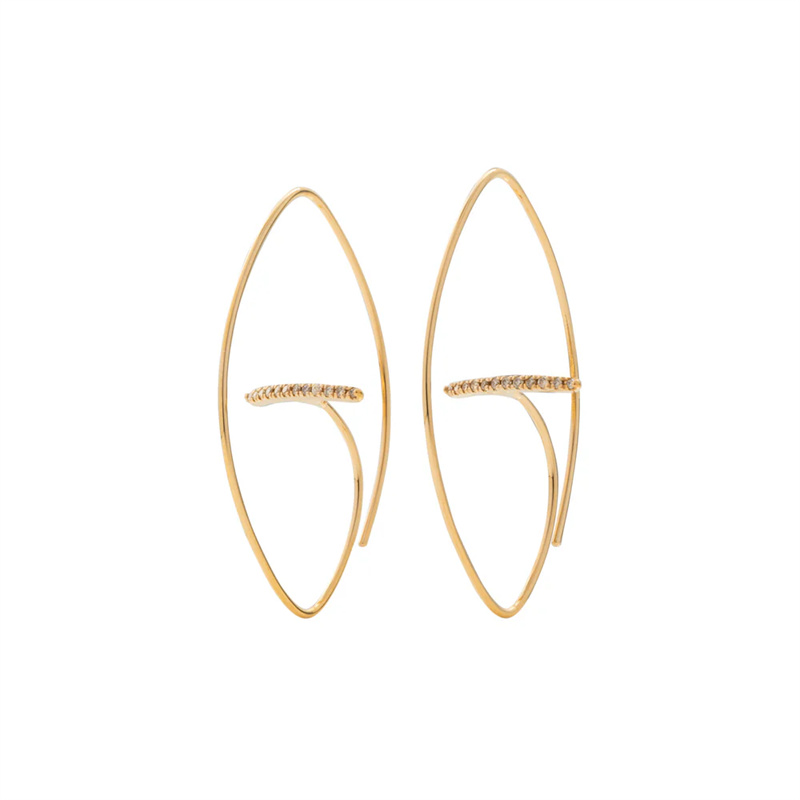
The Strategic Rationale for Outsourcing
Outsourcing earrings production is not merely a cost-cutting exercise; it is a strategic decision that enables brands to focus on their core competencies. According to industry competency frameworks, practitioners responsible for formulating outsourcing plans must assess core organizational competencies, evaluate the reputation of outsourcing partners, and identify which operating procedures are suitable for externalization . This strategic approach recognizes that a jewelry brand’s true value often lies in design, marketing, and customer relationships rather than in the operational complexities of casting, polishing, and stone-setting.
The economic advantages are significant. Countries such as Thailand and China have emerged as jewelry manufacturing hubs due to their skilled artisans and lower labor costs . For example, Pandora operates two modern crafting facilities in Thailand, employing over 11,000 craftspeople, leveraging the country’s infrastructure and access to raw materials . This geographic specialization allows brands to access expertise and capacity that would be prohibitively expensive to develop in-house.
Understanding the Earrings Manufacturing Process
To effectively outsource earrings production, one must understand the intricate manufacturing sequence that transforms a design into a finished product. The process typically follows the lost-wax casting method, which is the most common approach for producing earrings and other jewelry items .
Design and Prototyping
The journey begins with design development. Designers create sketches, which are then translated into 2D drawings and subsequently into 3D CAD models . These digital models allow for precise visualization and modification before any physical production begins. Some manufacturers offer these CAD services as part of their outsourcing package, streamlining the transition from concept to reality .
Once the design is finalized, a master model is created—either through traditional hand-carving or via 3D printing. This master serves as the template for all subsequent production. In some cases, brands may request a physical prototype or sample at this stage to verify the design before committing to full production .
Mould Making
The master model is used to create rubber molds, typically through a vulcanization process that hardens rubber around the master, leaving an identical hollow impression. These rubber molds are remarkably efficient and can be reused up to 2,000 times , making them ideal for production runs.
Wax Injection and Treeing
Molten wax is injected into the rubber mold, producing exact wax copies of the earring design. These wax models are then carefully cleaned and attached to a central wax rod, forming a “tree” structure—a visual metaphor that aptly describes the branching arrangement . This tree can hold multiple wax models, enabling batch production. As one observer wryly noted, the process is like hoping to “plant a gold ring and harvest countless gold rings” .
Investment Casting
The wax tree is placed in a metal cylinder and surrounded with liquid gypsum (investment material). Once the gypsum hardens, the cylinder is heated in a burnout oven. This high-temperature process bakes the gypsum into hard plaster while melting and vaporizing the wax, leaving behind hollow chambers shaped exactly like the original wax models . Molten precious metal alloy is then poured into these chambers, creating metal replicas of the wax models .
Post-Casting Processing
After the metal has cooled and hardened, the plaster is broken away, revealing a metal tree. The individual earring pieces are cut from the tree, and any remaining metal nubs are ground off . The pieces then undergo a series of finishing steps: filing, polishing, tumbling, and potentially surface texturing, oxidation, or plating to achieve the desired finish .
Quality Control and Assembly
Quality control checkpoints exist throughout the process. Manufacturers typically inspect wax models for imperfections before casting, test metal purity using XRF technology, and perform final visual inspections . For earrings requiring stone setting, skilled artisans set stones either in the wax model (for smaller stones) or in the metal piece after casting (for larger stones where heat damage is a concern) . Final assembly includes attaching clasps, hinges, and other findings, with particular attention to the durability of mechanisms that will see daily wear .
Key Considerations When Selecting an Outsourcing Partner
Technical Capability and Quality Assurance
The outsourcing partner’s technical expertise is paramount. A case study of successful OEM/ODM gold hoop earrings production demonstrates that leading manufacturers employ advanced techniques including laser calibration for weight consistency, German-made mechanical joints for hinge durability, and REACH and nickel-free certifications for international compliance . These capabilities directly impact product quality and market acceptance.
Communication and Cultural Compatibility
Language barriers and geographical distance can pose challenges when outsourcing overseas. Experienced buyers recommend using visuals extensively: “Photos, sketches, and mood boards speak louder than words” . Being precise about specifications—materials, dimensions, stone types, finishes—is essential, as is requesting the manufacturer to summarize requirements before proceeding .
Compliance and Risk Management
Outsourcing arrangements must navigate complex regulatory environments. Hong Kong-listed jewelry companies have faced challenges with customs compliance when subcontracting certain processes, underscoring the importance of understanding local regulations . Effective outsourcing contracts should address delivery timelines, quality inspection protocols, and compensation mechanisms for defects .
The Spectrum of Outsourcing Arrangements
Outsourcing in earrings production exists on a spectrum. At one end, Original Equipment Manufacturing (OEM) involves the manufacturer producing earrings based on the brand’s designs and specifications. At the other end, Original Design Manufacturing (ODM) allows the manufacturer to contribute to the design process, offering semi-custom options that can reduce costs and speed up production . Some brands outsource only specific processes—such as plating or electroplating—while retaining other production steps in-house . A Hong Kong-based jewelry group, for example, outsourced plating processes to independent third parties due to lack of in-house capacity, generating approximately HK$1.1 million in subcontracting fees in a single fiscal year .
Challenges and Risk Mitigation
Despite its advantages, outsourcing carries risks. Quality inconsistency remains a primary concern, as does the potential for intellectual property infringement when designs are shared with external parties. Budget-conscious buyers must be wary of “lowball pricing traps” that compromise workmanship or use inferior materials . To mitigate these risks, industry experts recommend:
- Requesting sample proofs before committing to full production
- Using secure payment platforms or escrow services that release funds upon customer satisfaction
- Building contingency plans including backup jewelry options and clear return policies
- Maintaining a professional attitude when monitoring contractor performance and preventing corrupt practices
Conclusion
Outsourcing earrings production represents a sophisticated approach to jewelry manufacturing that leverages global expertise, cost advantages, and specialized capabilities. The process, from design through final quality control, requires meticulous attention to detail and a deep understanding of both manufacturing techniques and business considerations. Successful outsourcing demands more than simply finding a lower-cost manufacturer; it requires strategic partner selection, clear communication, robust quality control mechanisms, and careful contract management.
For brands, the rewards can be substantial: access to skilled craftsmanship, scalable production capacity, and the freedom to focus on the creative and commercial aspects of the business. As the jewelry industry continues to globalize, outsourcing earrings production will likely remain an essential strategy for brands seeking to balance quality, cost, and innovation in an increasingly competitive marketplace. The key to success lies not in avoiding outsourcing altogether, but in doing it thoughtfully, with the right partner and the right safeguards in place.