In the dynamic and ever-evolving world of fashion and accessories, silver jewelry holds a timeless appeal. Its brilliant luster, affordability compared to precious metals like gold and platinum, and versatile aesthetic make it a perennial favorite for consumers and brands alike. However, for entrepreneurs, established brands, and startups looking to capitalize on this demand, the path from a brilliant idea to a polished product on the shelf is fraught with challenges. This is where the concept of ODM—Original Design Manufacturing—becomes not just a service, but a strategic partnership.
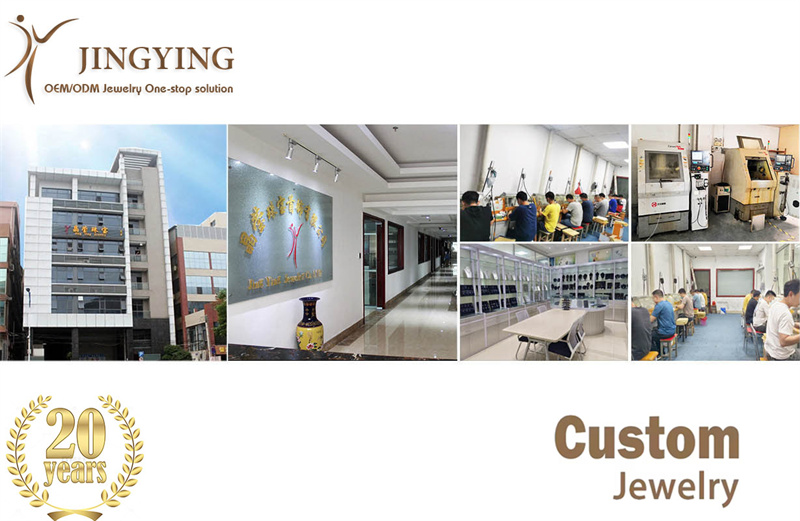
This article is a deep dive into the world of ODM silver jewelry, written from the perspective of a dedicated manufacturer. It is a detailed guide on how a professional ODM partner works for you, transforming your vision, however nascent, into a commercially viable, beautifully crafted collection. We will walk you through every step of the journey, demystifying the process and highlighting the value we bring to the table at each critical juncture.
Part 1: Understanding the ODM Partnership
Before we delve into the “how,” it is crucial to establish the “what” and the “why.”
What is ODM?
Original Design Manufacturing (ODM) is a model where a manufacturer designs and produces a product that is eventually branded and sold by another company. In the context of silver jewelry, this means we, as your ODM partner, provide end-to-end services that encompass:
- Market Research and Trend Forecasting: Identifying what styles, motifs, and pieces are gaining traction.
- Creative Design and Conceptualization: Creating original jewelry designs from scratch.
- Technical Engineering and Prototyping: Translating designs into technical drawings and physical samples.
- Material Sourcing and Quality Assurance: Procuring high-grade sterling silver and gemstones.
- Mass Production and Manufacturing: Executing large-scale production with consistent quality.
- Quality Control and Final Inspection: Ensuring every piece meets stringent standards.
- Packaging and Branding Support: Providing options for presentation that align with your brand.
- Logistics and Shipping: Getting the finished goods to your doorstep.
This is distinct from OEM (Original Equipment Manufacturing), where you provide the complete design and the manufacturer simply builds it. With ODM, you are leveraging our expertise, infrastructure, and creative capital. You come to us with a concept, a target market, or a brand identity, and we provide the designs and the manufacturing muscle to bring it to life.
Why Choose an ODM Partner?
- Speed to Market: The fashion cycle is relentless. We have dedicated teams monitoring trends and advanced production lines, allowing us to develop and produce collections much faster than you could independently.
- Cost-Efficiency: Establishing a jewelry manufacturing operation requires massive capital investment in equipment, skilled labor, and material sourcing networks. By partnering with us, you avoid these overheads, paying only for the products you order.
- Design Expertise and Innovation: Our designers live and breathe jewelry. They understand the nuances of working with silver, the limitations of casting, and the possibilities of new techniques. This expertise ensures your designs are not only beautiful but also manufacturable and durable.
- Reduced Risk: Venturing into a new product category is risky. Our proven design process, starting with concepts and prototypes, allows you to test and validate products before committing to a large production run.
- Focus on Your Core Business: While we manage the complex, time-consuming tasks of product development and manufacturing, you can focus on what you do best: marketing, sales, building customer relationships, and growing your brand.
Part 2: The ODM Journey: A Step-by-Step Guide to Our Collaboration
Our working relationship is a structured yet flexible journey, designed for clarity, collaboration, and success. Here is a detailed breakdown of each phase.
Phase 1: The Discovery and Strategic Foundation
Every successful collection begins with a clear strategy. This initial phase is all about alignment.
- Step 1: The Initial Consultation. This is a deep-dive conversation. We need to understand your world. Key discussion points include:
- Your Brand Identity: Who are you? Is your brand minimalist, bohemian, luxury, edgy, or classic? Sharing your brand book, mood boards, or examples of designs you admire is invaluable.
- Target Audience: Who are you selling to? (e.g., Gen-Z, professional women, gift-givers). Understanding their preferences, lifestyle, and spending habits is critical.
- Project Scope and Objectives: Are you launching a full collection or a few signature pieces? What is your target price point (MSRP)? What is your timeline for launch?
- Budgetary Framework: Having a clear understanding of your budget helps us guide the project towards feasible material choices and production methods.
- Step 2: Market and Trend Analysis. Based on your input, our design team overlays its own research. We analyze:
- Global Fashion Trends: From runway shows to street-style blogs.
- Consumer Behavior Data: What is selling and why?
- Material and Technique Innovations: New finishes, stone cuts, or chain styles that are emerging.
- Competitive Landscape: What are similar brands offering?
The output of this phase is a shared Creative Brief, a document that serves as our North Star throughout the project. It clearly outlines the collection’s theme, aesthetic direction, target price points, and key deliverables.
Phase 2: The Creative Engine: Design and Development
This is where ideas take visual form.
- Step 3: Conceptualization and Sketching. Our designers begin creating. Using the Creative Brief, they produce a series of hand-sketched or digital (CAD) illustrations. This is not about presenting one perfect idea, but a curated range of options that fit your theme. We typically present 3 distinct design directions, each containing 10-15 pieces that form a cohesive collection (e.g., rings, necklaces, earrings, bracelets).
- Step 4: Design Presentation and Selection. We present these design boards to you, explaining the inspiration and unique features of each direction. This is a collaborative review meeting. You provide feedback, mix and match elements you like, and ultimately, select the direction to move forward with. We refine the selected designs based on your input until you give your final approval on the design set.
- Step 5: Technical Design and Engineering. Once the aesthetics are locked, our engineering team takes over. They create detailed CAD (Computer-Aided Design) models of each approved piece. This is a critical technical step where:
- Precise dimensions are set.
- Structural integrity is ensured (e.g., is the prong holding the stone strong enough? Will the clasp function properly?).
- Weight is calculated to estimate material cost accurately.
- The model is prepared for the creation of molds.
We provide you with renders from these CAD models, giving you a photorealistic preview of the jewelry from all angles.
Phase 3: The Physical Manifestation: Prototyping and Sampling
This phase bridges the digital and physical worlds.
- Step 6: Prototype Creation (The First Sample). Using the approved CAD models, we create a physical prototype. The primary method for this is 3D Printing (using resin or wax). This prototype, often called a “3D print” or “rapid prototype,” allows you to assess the form, size, proportion, and overall look and feel of the design. It’s usually in a raw, unfinished material.
- Step 7: Casting and the Master Sample. After you approve the 3D prototype, we use it to create a master mold. The process is as follows:
- A tree of wax models is created from the master mold.
- This tree is placed in a flask and surrounded by a heat-resistant investment plaster.
- The plaster is hardened, and the wax is melted away in a kiln, leaving a hollow cavity in the shape of the jewelry.
- Molten sterling silver is poured into this cavity through a process called Casting.
- Once cooled, the plaster is broken away, revealing a “tree” of rough silver pieces, which are then cut off.
This raw silver piece is then handed over to our master craftsmen for finishing. This involves:
- Filing and Polishing: Removing the rough “sprue” (where the metal was poured) and smoothing all surfaces.
- Assembly: Soldering on posts for earrings, attaching clasps to necklaces, etc.
- Setting: If the design includes gemstones (e.g., cubic zirconia, lab-grown gems, natural stones), they are carefully set by skilled setters.
- Plating and Finishing: Applying the final surface treatment. This could be a high-polish shine, a matte (satin) finish, an antique oxidized finish to highlight details, or plating with gold (vermeil) or rhodium for a bright, tarnish-resistant white surface.
The result is the Master Sample—a perfect, hand-finished representation of the final product.
- Step 8: Sample Approval. We ship the master samples to you for final inspection. You can feel the weight, test the clasp, see the stone sparkle, and verify the quality. This is your last checkpoint before mass production. Any final adjustments are noted and implemented.
Phase 4: The Manufacturing Powerhouse: Mass Production and Quality Control
With the approved master sample, we move into full-scale production.
- Step 9: Production Planning. We plan the production schedule, allocate machine time, and procure the raw materials in bulk—sterling silver (925), gemstones, clasps, chains, etc. All materials are certified for quality.
- Step 10: The Assembly Line in Action. The mass production process mirrors the sampling process but on a much larger, optimized scale.
- Casting: Hundreds of wax trees are created and cast simultaneously.
- Pre-Finishing: Cast pieces are tumbled in large machines with abrasive media for initial smoothing.
- Quality Checkpoint 1: Rough cast pieces are inspected for casting defects like porosity or breaks.
- Assembly and Soldering: Components are assembled by specialized workers.
- Polishing: Pieces are polished on motorized wheels with different polishing compounds to achieve the desired luster.
- Stone Setting: Skilled setters place each stone securely.
- Final Plating/Finishing: The final surface treatment is applied in controlled electroplating baths.
- Quality Checkpoint 2 (Final Inspection): This is the most rigorous stage. Every single piece is individually inspected against the master sample for:
- Surface Imperfections: Scratches, pits, or uneven plating.
- Stone Security: Ensuring all stones are tight and undamaged.
- Functionality: Clasps open and close smoothly, jump rings are soldered shut, earring backs are secure.
- Dimensions and Weight: Consistency with the approved specifications.
- Overall Aesthetic: Does it meet the visual standard?
Any piece that fails this inspection is rejected and recycled.
Phase 5: The Final Mile: Packaging and Delivery
The unboxing experience is part of your brand promise.
- Step 11: Packaging and Branding. We offer a range of packaging solutions. You can choose from our existing catalog of boxes, pouches, and presentation cards, or we can work with you to create custom packaging. We can efficiently apply your branding—logo, tags, etc.—to the packaging.
- Step 12: Final Logistics. Once packaged, the order is counted, inventoried, and prepared for shipment. We handle all the export documentation and can ship to your designated warehouse, fulfillment center, or retail location via your preferred courier (DHL, FedEx, sea freight, etc.). We ensure the shipment is secure, insured, and trackable.
Part 6: Beyond the First Order: The Ongoing Partnership
Our relationship does not end with a single shipment. A true ODM partner grows with you.
- Replenishment and Repeat Orders: We maintain the molds and technical files for your collection, making reordering seamless and fast.
- Collection Expansion: Based on the sales data from your first collection, we can work together to design follow-up collections that build on your successes.
- Continuous Improvement: We provide feedback on design tweaks that could improve durability or reduce cost based on our production experience.
Conclusion: Your Vision, Our Craftsmanship
The journey of creating a silver jewelry collection is a complex symphony of art, science, and logistics. As your ODM partner, our role is to be the conductor, the orchestra, and the stage crew, all rolled into one. We provide the structure, expertise, and infrastructure to turn your entrepreneurial dream into a tangible, beautiful, and profitable reality.
We work for you by being more than a supplier; we are an extension of your team, a guardian of your quality, and a catalyst for your brand’s growth. From the first spark of an idea in a discovery meeting to the moment you unbox the first production sample, our commitment is to transparency, collaboration, and excellence. In the world of ODM silver jewelry, your success is the ultimate measure of our work.