In the ever-evolving world of fashion and personal adornment, jewelry stands as a timeless testament to individuality, culture, and artistry. Among the myriad of options available to consumers and brands alike, custom jewelry has emerged as a powerful means of expressing unique identities and narratives. At the forefront of this bespoke revolution is Jingying, a specialized factory dedicated to crafting exquisite customized jewelry from 925 sterling silver and gold vermeil. With a commitment to quality, innovation, and client-centric service, Jingying has carved a niche as a trusted partner for designers, retailers, and individuals seeking to transform their visions into wearable art. This article delves into the intricacies of Jingying’s operations, exploring its craftsmanship, materials, design processes, market positioning, and the broader implications of customized jewelry in today’s global market.
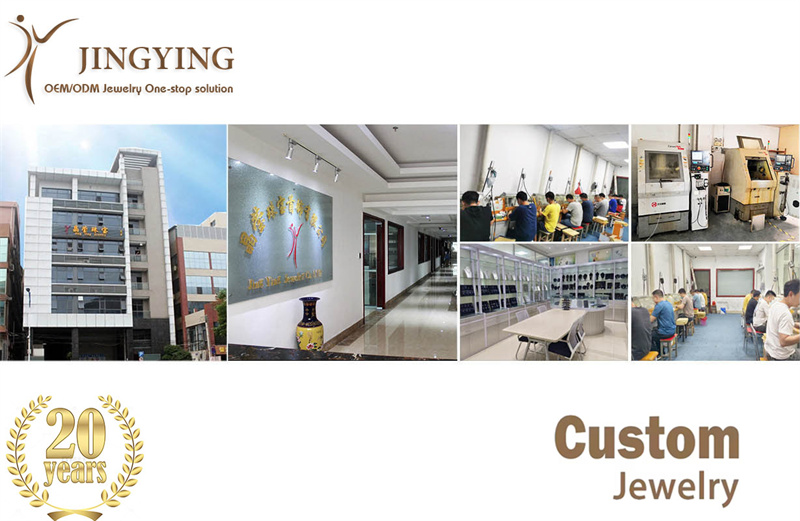
1. Introduction to Jingying: A Legacy of Craftsmanship
Jingying, whose name evokes “essence” and “excellence” in Chinese, was founded with a singular mission: to bridge the gap between artistic imagination and tangible jewelry. Established over a decade ago, the factory is located in a region renowned for its jewelry-making heritage, combining traditional techniques with modern technology. Jingying’s focus on 925 sterling silver and gold vermeil sets it apart, offering a perfect blend of durability, affordability, and luxury. Sterling silver, an alloy of 92.5% silver and 7.5% other metals (typically copper), provides strength and a brilliant luster, while gold vermeil—a thick layer of gold electroplated over sterling silver—offers the opulence of gold at a fraction of the cost. This material choice caters to a growing demand for high-quality yet accessible jewelry, particularly in the fashion, boutique, and e-commerce sectors.
The factory’s ethos revolves around customization. Unlike mass-produced pieces, each Jingying creation is tailored to client specifications, whether for a small batch of personalized pendants or a large-scale collection for a fashion brand. This flexibility has made Jingying a go-to destination for entrepreneurs, influencers, and established companies looking to differentiate their offerings. By prioritizing direct collaboration, Jingying ensures that every piece reflects the client’s vision, from initial sketch to final polish.
2. The Art and Science of Materials: 925 Sterling Silver and Gold Vermeil
Understanding the materials is key to appreciating Jingying’s expertise. 925 sterling silver is the global standard for silver jewelry, prized for its balance of purity and resilience. The 7.5% alloying element prevents tarnishing and enhances hardness, making it ideal for intricate designs that require durability. Jingying sources its silver from certified suppliers, ensuring compliance with international standards such as those set by the International Organization for Standardization (ISO). Each batch undergoes rigorous testing for composition and hypoallergenic properties, appealing to sensitive skin—a crucial consideration in today’s health-conscious market.
Gold vermeil (pronounced ver-may), on the other hand, represents a sustainable luxury. Unlike gold-filled or gold-plated jewelry, vermeil must meet strict criteria: a base of sterling silver and a gold layer of at least 2.5 microns thick, typically using 14K, 18K, or 24K gold. This results in a piece that retains the richness of solid gold while being more affordable and less prone to corrosion. Jingying’s vermeil process involves advanced electroplating technology, which ensures an even, long-lasting coating resistant to fading and scratching. Clients can choose from various gold hues—yellow, white, or rose—adding versatility to their designs.
The factory also emphasizes ethical sourcing, aligning with global trends toward sustainability. By using recycled silver and conflict-free gold, Jingying reduces its environmental footprint and appeals to eco-conscious consumers. This commitment extends to packaging, with options for biodegradable materials, further enhancing brand appeal for clients targeting niche markets.
3. The Customization Process: From Concept to Creation
Jingying’s core strength lies in its seamless customization workflow, designed to accommodate clients of all scales. The process typically involves five stages:
- Consultation and Design: Clients present their ideas via sketches, images, or verbal descriptions. Jingying’s in-house design team, comprising experienced artisans and CAD (Computer-Aided Design) experts, collaborates to refine the concept. Using software like Rhino 3D or Matrix, they create detailed digital renderings, allowing clients to visualize the piece in 3D and make adjustments before production. This stage is iterative, ensuring alignment with aesthetic and functional goals.
- Prototyping: Once the design is finalized, Jingying produces a prototype, often using wax or resin models. This tangible sample allows clients to assess proportions, weight, and wearability. Feedback is incorporated, and revisions are made until the prototype meets exact specifications. For complex designs, multiple prototypes may be created, underscoring Jingying’s dedication to precision.
- Production: With approval granted, production begins. For sterling silver pieces, craftsmen employ techniques such as casting, stamping, forging, or laser cutting, depending on the design. Gold vermeil items undergo silver fabrication followed by meticulous plating in controlled environments. Jingying’s factory floor is equipped with state-of-the-art machinery, including CNC machines and automated polishing systems, but human touch remains integral—skilled artisans hand-set stones, engrave details, and perform quality checks at every step.
- Quality Assurance: Each piece undergoes stringent inspection for defects, finish consistency, and structural integrity. Jingying adheres to quality benchmarks like the European Union’s REACH regulations, ensuring safety and durability. A certificate of authenticity is provided, detailing materials and care instructions.
- Logistics and Support: Jingying offers global shipping, with options for branding and custom packaging. Post-sale support includes guidance on inventory management and reordering, fostering long-term partnerships.
This end-to-end service minimizes client effort, making Jingying a one-stop solution for custom jewelry needs.
4. Market Positioning and Client Portfolio
Jingying’s business model targets a diverse clientele across B2B and B2C segments. Primary clients include:
- Fashion Brands and Designers: Emerging and established labels leverage Jingying’s capabilities to create signature collections. The factory’s ability to produce small minimum order quantities (MOQs) lowers entry barriers for startups.
- E-commerce Retailers: Dropshipping businesses and online stores benefit from Jingying’s white-label services, which allow them to sell custom jewelry under their own brand names without investing in manufacturing infrastructure.
- Corporate and Event Clients: Companies order customized pieces for promotions, employee rewards, or events like weddings and conferences. Jingying’s engraving services add a personal touch, enhancing sentimental value.
- Individual Consumers: Through partnerships with designers or direct outreach, individuals can commission unique heirlooms or fashion statements.
Geographically, Jingying serves markets in North America, Europe, and Asia, capitalizing on the global appetite for personalized accessories. Its competitive pricing—enabled by efficient production and economies of scale—does not compromise quality, positioning it favorably against both high-end boutiques and mass-market producers. Marketing efforts focus on digital platforms, with showcases on social media, trade shows, and industry publications highlighting successful case studies.
5. Trends and Innovations in Custom Jewelry
The rise of customization is driven by several trends that Jingying adeptly navigates:
- Personalization: Consumers seek jewelry that tells their stories, from birthstone rings to coordinates bracelets. Jingying’s flexible design system accommodates such requests, even for single-piece orders.
- Sustainability: As noted, eco-friendly materials and processes are a priority. Jingying also explores zero-waste techniques, like recycling scrap metal from production runs.
- Technology Integration: Adoption of CAD/CAM and 3D printing accelerates design cycles and reduces errors. Jingying invests in R&D to stay abreast of advancements like augmented reality (AR) tools for virtual try-ons.
- Minimalist and Stackable Designs: Contemporary tastes lean toward versatile, everyday pieces. Jingying excels in creating delicate sterling silver and gold vermeil items that can be layered or worn solo.
- Cultural Fusion: Clients often blend traditional motifs with modern aesthetics—for instance, incorporating Chinese symbolism into Western-style pendants. Jingying’s designers are well-versed in cross-cultural trends, offering creative input.
By anticipating these shifts, Jingying remains relevant and innovative, continuously expanding its portfolio.
6. Challenges and Future Outlook
Despite its success, Jingying faces challenges common to the industry. Fluctuating precious metal prices impact cost stability, necessitating agile pricing strategies. Intense competition, especially from low-cost manufacturers, requires constant emphasis on quality and service differentiation. Additionally, global supply chain disruptions, as seen during the COVID-19 pandemic, highlight the need for robust logistics networks.
To address these, Jingying plans to:
- Diversify Material Offerings: Introduce alternatives like stainless steel or brass with gold plating to cater to broader price points.
- Enhance Digital Engagement: Develop an online configurator for clients to design pieces in real-time, streamlining the quotation process.
- Expand Sustainability Initiatives: Pursue certifications like the Responsible Jewellery Council (RJC) to bolster credibility.
- Strengthen Collaborations: Partner with fashion institutes and influencers to co-create limited editions, boosting brand visibility.
Looking ahead, the demand for customized jewelry is projected to grow, fueled by digitalization and a cultural shift toward self-expression. Jingying is poised to capitalize on this, with plans to scale production while maintaining artisanal integrity. By fostering a culture of innovation and client partnership, it aims to set new standards in the bespoke jewelry sector.
7. Conclusion: The Essence of Customized Excellence
Jingying embodies the convergence of tradition and modernity, art and commerce. As a specialized factory for 925 sterling silver and gold vermeil jewelry, it offers more than products—it delivers experiences, enabling clients to materialize their creativity. Through meticulous craftsmanship, ethical practices, and a client-first approach, Jingying has not only survived but thrived in a competitive landscape. Its story reflects broader narratives in manufacturing: the value of customization, the importance of sustainability, and the endless possibilities when technology meets human ingenuity.
For anyone seeking to own or offer jewelry that resonates with personal or brand identity, Jingying stands as a beacon of reliability and inspiration. In a world where mass production often overshadows individuality, Jingying’s commitment to bespoke beauty ensures that every piece is not just an accessory, but a legacy.