JINGYING: Weaving Your Mood into Reality – The Art of Customization from Vision to Creation
In an era of mass production and algorithmically-driven consumerism, the human desire for individuality, expression, and personal connection often feels underserved. We scroll through endless digital catalogs, our tastes subtly shaped by trending data, yet a profound longing remains: for objects that don’t just fill a space or serve a function, but that resonate with our unique identity, tell our story, and embody our shifting inner landscapes. It is within this context that the art of true customization re-emerges not as a luxury, but as a vital dialogue between creator and consumer, between internal vision and tangible form. JINGYING stands at the forefront of this renaissance, operating on a foundational principle: to provide meticulous, soulful customization services that begin not with a product menu, but with your most personal raw materials—your moodboards and sketches. This is not mere manufacturing; it is a collaborative journey of translation, where ephemeral feelings and half-formed ideas are carefully woven into the fabric of reality.
The process begins with the client’s imagination, often captured in its most instinctual and evocative state. A moodboard—whether a carefully curated digital collage on Pinterest or a physical tapestry of textures, torn magazine pages, color swatches, and fabric samples—is a visual lexicon of desire. It speaks in the language of ambiance, emotion, and aesthetic affinity rather than specific dimensions or materials. A board dominated by weathered wood, sea-worn glass, and misty grays whispers of tranquil, coastal nostalgia. Another, bursting with vibrant geometric patterns, metallic accents, and slick surfaces, shouts dynamic, urban energy. JINGYING’s first and most critical skill is that of interpretation. Their designers act as visual psychologists and aesthetic translators, learning to read between the pixels and pin-tacks. They discern the recurring motifs, the emotional temperature, the silent narrative. Is the client drawn to organic imperfection or precise minimalism? To warmth or coolness? To heritage or futurism? The moodboard provides the “why,” the essential spirit that must animate the eventual creation.
Complementing this emotional map is the sketch—the client’s own attempt to give structure to the spirit. These drawings, whether expert drafts or humble napkin doodles, are precious artifacts of intent. They provide the “what” and the nascent “how.” A rough outline of a chair, a floor plan with arrows indicating flow, a garment silhouette with notes on a neckline—each line, however tentative, is a clue. JINGYING’s team approaches these sketches with reverence and forensic attention. They look for proportion priorities, functional needs hinted at in the layout, and stylistic touches the client has instinctively included. The sketch is the bridge between the abstract mood and the concrete object, and JINGYING’s role is to fortify that bridge with engineering, ergonomics, and material science.
Upon receiving these intimate starting points, JINGYING initiates a structured yet deeply collaborative process designed to honor the client’s vision while injecting professional expertise. This Phase 1, the Consultation and Deep Dive, involves multiple conversations. It’s a dialogue where designers ask probing questions: “What feeling do you want this room to evoke when you enter?” “Is this garment for a specific event or for daily empowerment?” “When you touch this object, what sensation are you hoping for?” They clarify ambiguities in the sketches, measure existing spaces from photos, and discuss practicalities like budget, timeline, and usage. This phase transforms a monologue of images into a rich, shared language.
Phase 2 is Conceptualization and Materialization. Here, JINGYING’s technical team takes the helm. Using insights from the moodboard and sketch, they begin the material selection—a pivotal step. A moodboard calling for “organic luxury” might lead to explorations of hand-finished oak, raw silk, or hand-blown glass. One suggesting “industrial chic” could direct them to polished concrete, powder-coated steel, or reclaimed leather. Samples are sourced, touched, compared against the client’s visual cues. Simultaneously, technical drawings are born. Initial sketches are transformed into precise CAD (Computer-Aided Design) models, ensuring structural integrity and functional perfection. For fashion, this means pattern drafting; for furniture, joinery and load plans; for interiors, detailed elevation drawings and 3D renderings. These technical blueprints are then presented back to the client alongside material palettes in a Review and Refinement loop. This is not a mere approval step; it’s another collaborative iteration. The client sees their vision professionally interpreted, often in stunningly realistic renders, and has the chance to say, “The shape is perfect, but could the wood be darker?” or “The silhouette is right, but what about this fabric instead?” JINGYING iterates until the virtual prototype perfectly aligns with the client’s internal picture.
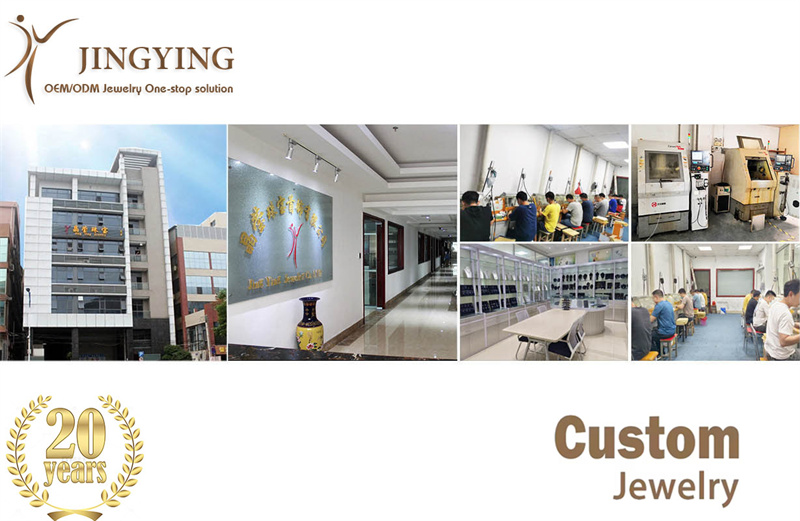
Only after this alignment does the project move to Phase 3: Artisanal Fabrication. This is where JINGYING’s philosophy truly separates it from generic “customizable” options. Rejecting purely assembly-line methods, they partner with or house master artisans—carpenters, tailors, metalsmiths, upholsterers, weavers. These craftspeople bring the technical drawings to life with a human touch no machine can replicate. A cabinetmaker selects the specific grain of a wood slab to match the “rustic elegance” of a moodboard. A seamstress hand-fits a garment toile, ensuring it flows and flatters in motion as the client imagined. This stage is slow, deliberate, and full of pride. It embraces the minor, beautiful inconsistencies that testify to handmade origin: the subtle variation in a hand-dyed fabric, the unique patina of a hand-forged metal bracket, the imperfect groove of a hand-planed surface. Quality control is obsessive, but it is a quality that balances precision with soul.
The final phase is the Revelation and Integration. The finished piece is not simply shipped in a box. Whenever possible, JINGYING orchestrates a thoughtful unveiling—installing a piece of furniture in its intended room, fitting a final garment, staging a completed interior space. This moment is the culmination of the journey, where the client sees the emotions from their moodboard and the lines from their sketch embodied in a physical form they can touch, use, and inhabit. The service often extends to aftercare—guidance on maintenance for a delicate fabric, advice on caring for a solid wood table. The relationship, built on trust and creative partnership, endures.
The value proposition of JINGYING’s model is multifaceted. For the client, it delivers Ultimate Personalization and Emotional Investment. The final product is a co-creation, imbued with personal meaning and narrative. It fits not just physical dimensions, but psychic and aesthetic ones perfectly. It fosters a deeper connection to our possessions, moving away from disposable culture towards cherishing what we own. Secondly, it guarantees Uncompromised Quality and Uniqueness. By controlling the process from interpretation to fabrication with skilled hands, JINGYING ensures durability, material integrity, and a one-of-a-kind result. Your piece will have no identical sibling; it is an original. For designers and artisans within JINGYING, this model provides Creative Fulfillment and Challenge. Each project is a new puzzle, a new story to help tell, pushing their skills and creativity beyond repetitive production work. It re-centers the artisan as a crucial cultural producer.
This approach also carries significant broader cultural and economic implications. It represents a sustainable counter-narrative to fast fashion and disposable furniture. When items are made to last and to be loved, they are replaced less often, reducing waste. It supports local craftsmanship and niche material producers, strengthening a more ethical and resilient supply chain. Furthermore, it democratizes high design. While undoubtedly a premium service, it makes the principles of bespoke creation—traditionally reserved for the ultra-wealthy—accessible to a broader audience who values individuality and quality over brand logos. In a world saturated with sameness, JINGYING cultivates a landscape of intentional difference.
Of course, the path of deep customization is not without its challenges. It requires immense patience from clients accustomed to next-day delivery. The timeline, from initial consultation to final reveal, can span weeks or months. It demands active participation and a degree of self-knowledge from the client, who must be able to articulate desires through their provided materials. The cost is inherently higher than that of mass-produced goods, reflecting true material worth and skilled labor. For JINGYING, the operational complexity is high—managing countless unique projects simultaneously, maintaining a network of artisan partners, and ensuring consistent excellence across entirely different outputs requires exceptional project management and a cohesive, client-centered culture.
Yet, in facing these challenges, JINGYING’s model proves its profound relevance. In our digital age, we are paradoxically starved for tangible, authentic experiences and objects with provenance. A moodboard is often a refuge—a digital or physical corner where we collect what truly speaks to us, away from algorithmic noise. A sketch is an act of courage—an attempt to manifest an inner vision. By treating these not as casual references but as sacred source material, JINGYING validates and empowers the individual’s creative voice. They become not just a service provider, but a creative midwife, facilitating the birth of something that existed first as a feeling, then an image, and finally, as a lasting, functional piece of art.
In conclusion, JINGYING’s provision of customization services based on moodboards and sketches represents far more than a business niche. It is a holistic philosophy for consumption and creation in the 21st century. It champions slowness over speed, collaboration over imposition, narrative over novelty, and soul over scale. It acknowledges that our deepest desires for our environments and adornments cannot be fully satisfied by selecting options from a dropdown menu. They require a conversation, a translation, a skilled hand. By starting with the client’s most personal visual poetry, JINGYING weaves a thread of intention through every subsequent step, ensuring that the final product is not just customized, but truly belongs. It is a testament to the power of bringing the inside out, of making the intangible tangible, and in doing so, creating not just objects, but embodied pieces of self. In a world of copies, JINGYING helps you author your own original.