JINGYING: The Strategic Manufacturing Partner Redefining Custom Jewelry for Brands, Designers, and Businesses
The global jewelry industry is undergoing a structural realignment. The traditional model—dominated by mass production and prohibitive barriers to entry—is giving way to an ecosystem driven by individuality, rapid trend cycles, and the demand for exclusive, brand-defining pieces. In this landscape, the distance between a designer’s sketch and a retail-ready collection is fraught with complexity: navigating supply chains, controlling costs, protecting intellectual property, and maintaining consistent quality at scale. For brands, independent designers, and entrepreneurs, the choice of manufacturing partner is no longer a back-office decision; it is a strategic imperative.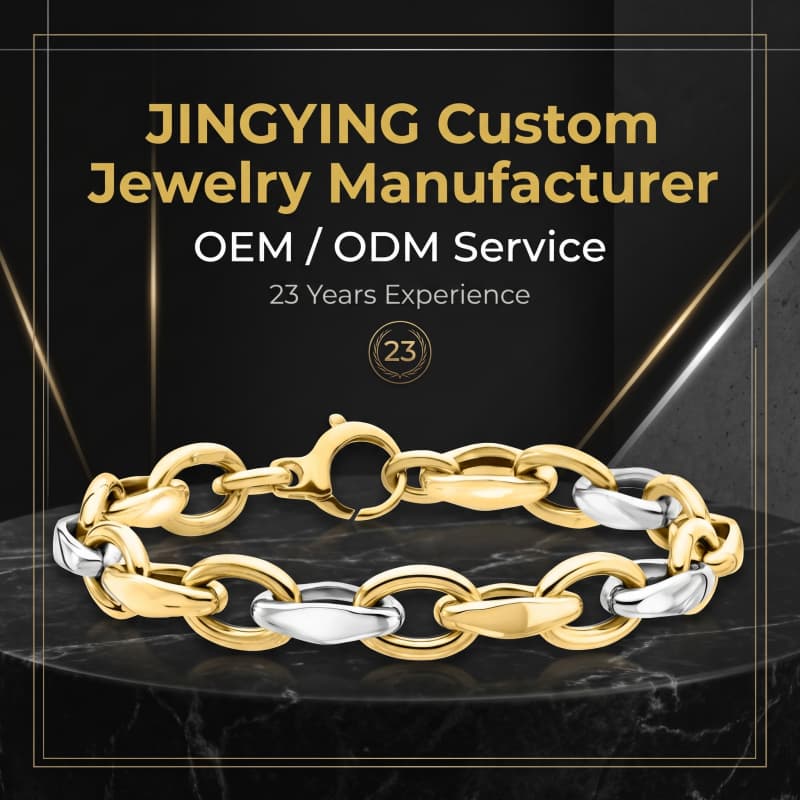
JINGYING has positioned itself at the center of this transformation. Founded in 1998 in Guangzhou, China—a city long renowned as a hub for jewelry manufacturing and trade—the company has evolved from a modest workshop into a vertically integrated original equipment manufacturer (OEM) and original design manufacturer (ODM) serving over 300 brands across 45 countries. Its proposition is distinct: industrial-scale capacity without the loss of craft-level control, and a low-minimum-order-quantity (MOQ) model that democratizes access to high-quality custom production. This article examines how JINGYING’s capabilities, philosophy, and operational framework make it a preferred partner for those seeking to build or expand a jewelry brand in an increasingly competitive global market.
A Foundation Built on Material Mastery and Vertical Integration
JINGYING’s origin story is rooted in a deliberate focus on 925 sterling silver. From its inception, the company recognized the metal’s unique balance of beauty, durability, and affordability—a combination that has since proven prescient. Market data underscores the wisdom of this specialization. According to a 2025 resale report from The RealReal, silver jewelry prices rose 18% year-over-year, signaling a robust resurgence in consumer demand for the white metal. Major fashion houses and retailers have expanded their silver assortments, and Mintel research indicates that over a third of consumers who purchased precious metal jewelry in the past five years now prefer sterling silver, with that share projected to grow.
Yet JINGYING’s expertise extends well beyond a single material. The company operates as a vertically integrated manufacturer, managing design, prototyping, casting, finishing, quality control, and private-label packaging under one organizational roof. Its production portfolio spans 925 sterling silver, copper with genuine gold plating, and 9K, 10K, 14K, and 18K gold, with capabilities in rhodium plating, vermeil, and filled gold finishes. This material breadth allows a single manufacturing partner to serve multiple price points and emotional registers—from accessible fashion jewelry to fine, heirloom-quality pieces—without forcing a brand to fragment its supply chain.
The physical infrastructure supporting this operation is substantial. JINGYING operates multiple facilities, including grinding and plating factories in Guangzhou and a sub-factory in Wuzhou, Guangxi. Its monthly production capacity for silver jewelry reaches 50,000 pieces, with the flexibility to scale to 150,000 to 200,000 pieces when required. More importantly, this capacity is paired with a dedicated in-house CAD team, proprietary casting equipment, and a multi-stage quality management system—elements that transform raw scale into reliable, repeatable output.
OEM and ODM: Two Pathways to a Custom Collection
The distinction between OEM and ODM is central to understanding JINGYING’s value proposition. In the OEM model, the client provides a complete design—whether a detailed CAD file, a technical drawing, or a reference sample—and JINGYING executes production to exact specifications. This pathway demands uncompromising technical fidelity. The company’s engineering team translates the client’s vision into a precise three-dimensional prototype using industry-standard software such as RhinoGold and MatrixGold, maintaining tolerances within ±0.1 millimeters—a level of precision that becomes critical when a design must remain consistent across thousands of units. Before mass production begins, the team also conducts a manufacturability review, identifying potential structural or material issues and refining the design to ensure it is not only beautiful but also durable and comfortable to wear.
The ODM model, by contrast, positions JINGYING as a creative collaborator. Brands can draw upon the company’s in-house design team, trend forecasting expertise, and catalog of original designs to develop collections that are exclusive to their label. A client might arrive with a broad concept—”a celestial-inspired collection,” for instance—and JINGYING’s designers will develop sketches, renderings, and prototypes, iterating through CAD revisions and sample approvals until the final product aligns with the brand’s identity. This service is particularly valuable for emerging designers and startups that lack extensive internal research and development resources but still require a distinctive, market-ready product line.
For both pathways, the production workflow is structured yet adaptable. Sample development typically requires seven to ten days, while mass production takes approximately twenty to thirty days. From design confirmation and deposit payment, a client can generally expect finished goods within four to six weeks, excluding shipping time. The company acknowledges, however, that the full journey—from initial design agreement to shipping-ready jewelry—often spans eight to twelve weeks, reflecting the iterative nature of design refinement, CAD adjustments, and sample approvals that are essential to a truly polished final product.
The Low-MOQ Advantage: Empowering Emerging Brands and Independent Designers
Perhaps the most consequential element of JINGYING’s service model is its commitment to low minimum order quantities. Traditionally, jewelry factories have required MOQs of 500 to 5,000 pieces per design, a threshold that effectively excludes independent designers, boutique retailers, and early-stage brands from accessing professional manufacturing. JINGYING has dismantled this barrier, allowing clients to order as few as 50, 100, or 200 units per design. The implications are profound.
First, low MOQs dramatically reduce the capital expenditure required to launch a collection. Instead of tying up tens of thousands of dollars in inventory for a single design, a brand can validate its concepts in the real market with a modest initial investment, preserving cash flow for branding, marketing, and customer acquisition. This “test-and-learn” approach enables designers to gauge market reception—whether a pendant’s proportions resonate, whether a particular finish attracts repeat customers—before committing to larger production runs.
Second, low MOQs foster creative freedom. When the financial risk of experimentation is lowered, brands can pursue bolder, more niche designs without the fear of being left with unsold inventory. A designer can release a limited capsule collection, test a new material or silhouette, and iterate quickly based on customer feedback—a level of agility that was previously available only to brands with substantial resources.
Third, this model allows brands to scale strategically rather than speculatively. A successful design can be reordered in larger volumes once demand is proven, while underperforming pieces can be phased out without incurring significant losses. In an industry where trend cycles accelerate and consumer preferences shift rapidly, this flexibility is not merely convenient—it is a competitive necessity.
Craftsmanship, Quality Assurance, and Intellectual Property Protection
Scale and accessibility mean little without an unwavering commitment to quality. JINGYING’s production process is distinguished by a deliberate integration of machine precision and human artisanship. The casting stage relies on lost-wax casting, a technique refined over centuries but enhanced by modern tolerances; molten 925 sterling silver is poured into precision molds that capture every curve, filigree detail, and surface texture of the original design. Raw castings are not simply tumbled and shipped. Each piece undergoes meticulous hand-filing, where artisans refine edges and surfaces, verifying that the form is true and that no casting defects escape detection. Polishing progresses through multiple stages—from coarse abrasive wheels to fine cotton cloth wheels—to achieve a mirror finish, while sanding and sandblasting techniques create controlled matte or satin textures for designs that call for a more subdued sheen.
The company’s quality management system is comprehensive and independently verified. JINGYING holds ISO 9001 certification and adheres to the standards of SGS and the Responsible Jewellery Council (RJC). Its testing center is equipped to verify product purity and safety, including RHOS testing of silver alloys to confirm nickel content below 0.05%—a critical requirement for compliance with U.S. market standards and CPSIA traceability labeling. Products are manufactured to meet international benchmarks, using nickel- and lead-free components, which is essential for brands exporting to markets with stringent consumer safety regulations. For clients requiring formal proof of authenticity, JINGYING issues a Certificate of Authenticity (COA) confirming that the entire structure of a piece (excluding non-metal components) meets the 925 sterling silver standard, supported by certified assay certificates from reputable precious metal suppliers.
Equally important for brands and designers is the protection of intellectual property. JINGYING treats confidentiality not as an afterthought but as a foundational operational principle. Client designs, CAD files, and brand identities are handled with strict confidentiality protocols, ensuring that the creative capital invested in a collection remains exclusively the client’s. For independent designers and emerging brands, whose designs are often their most valuable asset, this commitment is non-negotiable—and it is a factor that has earned JINGYING the trust of over 5,000 brands across its two-decade history.
A Global Partner with a Local Soul
JINGYING’s client base reflects the diversity of the modern jewelry market. The company serves brand jewelers, retailers, wholesalers, and independent designers, with production distributed across North America (42%), the European Union (38%), the Asia-Pacific region (12%), and other emerging markets (8%). Its partners range from startups requiring flexible, low-MOQ solutions to established luxury brands seeking reliable, high-volume production. This breadth of experience has endowed JINGYING with a nuanced understanding of regional market preferences—from the minimalist sensibilities of Scandinavian design to the bold, sculptural forms gaining traction in North America and the intricate detailing appreciated in Asian markets.
Yet despite its global reach, JINGYING retains the operational agility of a craft-focused manufacturer. The company’s Chinese name, “JINGYING,” means “excellence,” and this principle is reflected in its approach to partnership: a refusal to compromise on quality, a willingness to customize manufacturing processes for specific client needs—whether that involves creating unique mechanical components, utilizing novel materials, or applying a brand’s distinctive matte finish—and a recognition that every iconic brand began with a single idea and a small, perfect batch of products.
Conclusion: Manufacturing as a Strategic Enabler
The jewelry brands that will define the next decade are not necessarily those with the largest marketing budgets or the most heritage. They are the ones that can move quickly, experiment intelligently, and translate creative vision into tangible products without sacrificing quality or control. JINGYING’s model—vertically integrated, low-MOQ, OEM- and ODM-capable, and uncompromising on craftsmanship—is designed precisely for this reality. By removing the traditional barriers between designers and production, the company enables brands, designers, and businesses to focus on what they do best: creating jewelry that resonates with their audiences. In an industry where the distance between a sketch and a showroom-ready collection can determine a brand’s fate, JINGYING offers something increasingly rare: a manufacturing partnership that functions as a strategic enabler, turning creative ambition into market-ready reality, one batch at a time.