Beyond the Mark: The Pillars of Quality Assurance in Premium 925 Sterling Silver Jewelry
In the world of fine jewelry, the term “quality” is often thrown around as a marketing buzzword. However, for discerning brands like JINGYING, quality is not an abstract concept; it is a rigorous, measurable, and non-negotiable framework. It is the silent promise made to the customer the moment they clasp a necklace or fasten a bracelet.
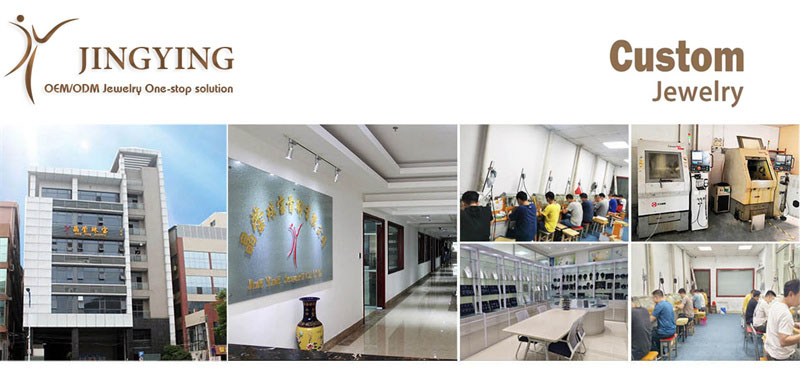
For JINGYING, quality assurance (QA) is the backbone of the manufacturing process. It is a systematic, end-to-end protocol that ensures every piece that leaves the workshop meets the highest standards of durability, safety, and aesthetic perfection. This commitment is particularly critical when working with 925 sterling silver—a material prized for its brilliance but vulnerable to environmental factors.
This article delves deep into the three foundational pillars of JINGYING’s quality assurance framework: the uncompromising guarantee of 925 sterling silver purity, the sophisticated science of anti-tarnish treatments (with a focus on rhodium plating), and the meticulous art of stone setting quality. These are not merely steps in a production line; they are the philosophies that define the brand’s integrity.
Part 1: The Foundation – The 925 Sterling Silver Guarantee
The journey of quality assurance begins long before the wax is carved or the metal is cast. It begins with raw material procurement. For a piece to be worthy of the JINGYING name, its very essence must be pure. The “925″ stamp is often taken for granted, but in the jewelry industry, it represents a specific metallurgical standard: 92.5% pure silver and 7.5% alloy metals, typically copper.
1.1 The Metallurgical Rationale
Pure silver (99.9%) is too soft for use in durable jewelry. It scratches easily, bends under pressure, and cannot securely hold gemstones. The addition of copper (or other alloys) creates sterling silver, which retains the metal’s luster while providing the tensile strength required for daily wear. However, the margin for error in this alloy is zero. An incorrect ratio—say, 91% silver and 9% copper—compromises the metal’s integrity, leading to brittleness, increased tarnishing speed, or a duller finish.
1.2 Incoming Material Inspection
JINGYING’s QA process begins at the loading dock. Raw silver granules and alloy metals are subjected to Spectrometry Analysis. Using X-ray Fluorescence (XRF) analyzers, the QA team tests every batch of incoming metal. This non-destructive testing method provides a precise breakdown of the metal composition.
- Acceptance Criteria: The material must fall within a strict tolerance of 92.5% ± 0.3% silver content.
- Traceability: Each batch is assigned a unique lot number. If a piece of jewelry is manufactured in 2024, JINGYING can trace the metal used back to the specific supplier lot purchased months or even years prior.
1.3 Process Control in Casting
Even with pure raw materials, the casting process introduces risk. Contamination can occur if crucibles are not properly cleaned or if scrap metal (recycled sprues and runners) is reintroduced without proper control. While JINGYING prioritizes sustainability through metal recycling, strict protocols govern this process.
- Segregation: Scrap metal from rhodium-plated pieces is kept entirely separate from non-plated scrap to prevent cross-contamination of metals.
- Casting Verification: After casting, random samples from each production batch are subjected to destructive testing. A sample piece is dissolved in acid, and the silver content is titrated to confirm it still meets the 925 standard. This ensures that the high heat of casting did not alter the alloy ratio through oxidation or contamination.
1.4 The Hallmarking Integrity
The “925″ stamp on a JINGYING piece is not merely a die impression; it is a legal and ethical declaration. Stamping is performed only after the metal has passed all purity tests. The QA team conducts random audits to verify stamp depth and legibility, ensuring the mark remains intact through polishing and plating, serving as a permanent guarantee of authenticity for the end consumer.
Part 2: The Science of Preservation – Anti-Tarnish Treatments and Rhodium Plating
Sterling silver has one inherent adversary: sulfur. When silver reacts with sulfur-containing gases in the air (from pollution, eggs, onions, or even sweat), it forms silver sulfide, commonly known as tarnish. While some consumers appreciate the patina of aged silver, the modern luxury market demands lasting brilliance. This is where JINGYING’s advanced surface engineering comes into play.
2.1 The Philosophy of Protection
The goal of JINGYING’s anti-tarnish strategy is to create a barrier between the silver alloy and the atmosphere. However, this barrier must be invisible to the eye and imperceptible to the touch. It must preserve the “hand feel” of fine jewelry—the weight, the coolness, and the mirror-like reflectivity—while drastically slowing the oxidation process.
2.2 Electroplating: The Multi-Layer Process
JINGYING utilizes a sophisticated electroplating line that applies multiple layers of metal to the base 925 silver. The process is controlled by computer-monitored rectifiers that ensure consistent current density across complex geometries (chains, filigree, and deep settings).
The standard process involves three critical layers:
- The Base Layer (Copper/Nickel-Free Strike): A thin layer is applied to the raw silver to ensure adhesion. For hypoallergenic lines, JINGYING utilizes a palladium or copper strike that is nickel-free, catering to sensitive skin.
- The Barrier Layer (Nickel or Palladium): Historically, nickel was used as a hard barrier layer. However, due to EU Nickel Directive regulations and rising allergy concerns, JINGYING has shifted primarily to Palladium or Rhodium strikes. Palladium (a platinum group metal) provides exceptional hardness and corrosion resistance without allergenic properties.
- The Finish Layer (Rhodium): This is the signature of premium silver jewelry.
2.3 Deep Dive: Rhodium Plating
Rhodium is a member of the platinum family. It is one of the most expensive precious metals in the world, currently trading at multiples of gold. It is also the hardest and most reflective of the platinum group metals. JINGYING’s use of rhodium is the primary differentiator between standard silver jewelry and heirloom-quality pieces.
Benefits of Rhodium Plating:
- Tarnish Proof: Rhodium is chemically inert. It will not react with sulfur or oxygen. While the base metal remains silver, a thick rhodium layer ensures the surface of the jewelry will never tarnish.
- Hardness: Rhodium has a Mohs hardness of approximately 6.0, significantly harder than silver (2.5) or gold (2.5-3). This provides a scratch-resistant surface that maintains its high polish for years.
- Reflectivity: Rhodium has a brilliant, white, mirror-like finish. It enhances the brilliance of diamonds and white gemstones, preventing the yellowing or dulling that can sometimes occur with silver or white gold.
The QA Protocol for Rhodium Plating:
Plating is a science, not an art. JINGYING employs strict QA checkpoints to ensure the rhodium layer performs as intended.
- Thickness Testing: Using X-ray fluorescence (XRF) coating thickness gauges, the QA team measures the micron thickness of the rhodium layer. While industry standards often dip below 0.1 microns, JINGYING mandates a minimum thickness of 0.25 to 0.5 microns for high-wear items (rings, bracelets) and 0.125 to 0.25 microns for earrings and pendants. This thickness ensures durability through normal wear and cleaning.
- Adhesion Testing: If the plating does not adhere to the base metal, it will peel. JINGYING conducts tape tests and bend tests on sample wires. A plated wire is bent 180 degrees. Under magnification, the bend radius is inspected for cracking or delamination. Zero flaking is the standard.
- Porosity Control: Pores in the plating allow air to reach the silver, causing localized tarnish (pitting) under the rhodium. JINGYING utilizes pulse plating technology, which alternates current to create a denser, more uniform grain structure, eliminating porosity.
- Salt Spray Testing: To simulate years of wear and exposure to sweat, samples are placed in a salt spray chamber for 24 to 48 hours. After this accelerated aging test, the pieces must show zero signs of corrosion, pitting, or tarnish emergence.
2.4 Alternative Finishes and E-coating
For designs that require a matte finish or black rhodium detailing, JINGYING employs specialized QA protocols. For matte finishes, consistency is key; the QA team uses profilometers to measure surface roughness (Ra value) to ensure the satin finish is uniform across an entire collection.
For customers seeking extreme hypoallergenic and anti-tarnish properties without rhodium’s bright white look, JINGYING offers Electrophoretic Coating (E-coating) . This involves applying a clear, organic polymer layer via electrical current. QA for E-coating involves cross-hatch adhesion tests (using a blade to score a grid and applying tape to ensure no coating lifts) and humidity testing to ensure the polymer does not yellow or peel over time.
Part 3: The Art of Precision – Stone Setting Quality
A poorly set stone ruins a piece of jewelry. It is a safety hazard (a loose stone can fall out and be swallowed or lost), an aesthetic failure, and a direct reflection of the maker’s skill. For JINGYING, stone setting is not merely a production step; it is the culmination of the entire manufacturing process. The quality of the metal (925 silver) and the durability of the plating (rhodium) mean nothing if the stones are not secure.
3.1 Pre-Setting Verification: The Foundation
Stone setting quality is determined before the first stone is ever picked up. The QA team inspects the “mounting” (the metal frame) with extreme rigor.
- Porosity Inspection: Casting porosity (tiny air bubbles in the metal) is the enemy of setting. If a prong or bezel has micro-porosity, it will be weak and likely break under the pressure of setting or during wear. JINGYING utilizes microscopic inspection (10x to 40x magnification) on all high-value mountings. Any porosity in structural areas results in immediate rejection for remelting.
- Structural Integrity: Prongs are measured for height, thickness, and alignment. If prongs are misaligned, the stone will sit crooked. If they are too thin, they lack retention strength; too thick, they overpower the gemstone’s aesthetics.
3.2 Gemstone Sorting and Grading
Quality assurance extends to the gemstones themselves. JINGYING sources cubic zirconia (CZ), lab-grown gemstones, and natural diamonds. Before setting, stones undergo a rigorous sorting process.
- Dimensional Consistency: For pave or micro-pave settings, stones must be calibrated to within 0.1mm of the specified size. A variation of 0.2mm in a 1.5mm pave stone will result in gaps or uneven spacing.
- Optical Quality: Stones are inspected for inclusions, scratches, and color consistency. For CZ, the “fire” (dispersion) must be consistent. For diamonds, the QA team uses grading filters to ensure color and clarity meet the specified range (e.g., G-H color, SI clarity).
- Hardness Confirmation: For colored stones, JINGYING performs spot checks using a refractometer and hardness picks to ensure synthetic stones are not being substituted with lower-quality glass or plastic.
3.3 The Setting Process and In-Process Inspection
JINGYING employs master setters who specialize in various techniques: prong, bezel, channel, pave, and micro-pave. QA is interwoven into this process through a system of “First Article Inspection” (FAI).
First Article Inspection: When a new style is introduced or a new batch is started, the first piece completed by the setter is taken to the QA lab. It is placed under a digital microscope connected to a high-resolution monitor. The QA manager reviews:
- Stone Level: All stones must sit at the same height. A single stone protruding higher than its neighbor is a snagging hazard and an aesthetic defect.
- Prong Integrity: Prongs must be evenly split (if split prongs), centered on the stone’s girdle, and firmly pushed over the crown. The QA team checks for “lift”—the gap between the prong and the stone. Zero gap is required.
- Bezel Integrity: For bezel settings, the metal rim must be burnished flush against the stone’s girdle with no gaps. The bezel must be uniform in width and free of tool marks or scratches.
Micro-Pave Excellence:
Micro-pave setting is the most demanding skill. It involves setting tiny stones (often <1mm) into a field of beads, with minimal metal visible. JINGYING’s QA for micro-pave includes:
- Bead Uniformity: The tiny beads of metal holding the stones must be uniform in size and shape.
- Stone Spacing: Gaps between stones are measured. Ideally, stones should be flush against each other with no visible metal line (a “tight pave”).
- Security: Each stone is probed with a fine needle tip. If a stone spins, shifts, or lifts, it fails the retention test and the entire section is re-set.
3.4 Post-Setting Durability Testing
Setting stones is the final major manufacturing step before final polish and cleaning. However, the QA process concludes with rigorous simulation testing to ensure the settings can survive the rigors of shipping, handling, and daily wear.
Thermal Shock Testing:
Silver and gemstones have different coefficients of thermal expansion. A sudden change in temperature (e.g., wearing a ring from a cold winter day into a hot shower) can cause stones to loosen if the setting tension is incorrect. JINGYING conducts thermal shock tests by immersing finished pieces in hot water (80°C) and immediately transferring them to cold water (0°C). This cycle is repeated three times. Pieces are inspected for loose stones after each cycle.
Tumble Testing:
To simulate years of wear in a matter of hours, finished pieces are placed in a tumbler with leather strips, rubber balls, and metal shot. The tumbler rotates for 2-4 hours, creating thousands of impacts. After tumbling, pieces are inspected under magnification. Any stone that has shifted, chipped, or fallen out triggers a root cause analysis to adjust the setting technique or metal structure.
Pull and Torque Testing (for Prongs):
For rings and pendants with larger center stones, a calibrated force gauge is used. The stone is subjected to a specific pull force (simulating catching on clothing) and torque (simulating twisting motion). The gauge measures the force required to dislodge the stone. This data ensures the prongs exert sufficient retention force without risking fracture of the gemstone.
3.5 Final Visual and Tactile Inspection
Before a piece is packaged, it undergoes a final “human touch” QA audit. This is a multi-sensory check that automated machines cannot replicate.
- Visual (10x Loupe): Inspectors check for remaining polishing compound in hard-to-reach settings, microscopic scratches on the rhodium surface, and the overall symmetry of the piece.
- Tactile (Glove Test): Inspectors run a nylon glove or silk cloth over the piece. The glove will snag on a sharp prong tip, a rough bead, or a poorly finished edge. The piece must glide smoothly, indicating a comfortable, skin-safe finish.
- Ultrasonic and Steam Cleaning: The final step involves high-frequency ultrasonic cleaning to remove debris, followed by steam cleaning to ensure the piece is pristine. The QA team performs a final inspection after cleaning to ensure that no stones were loosened by the ultrasonic vibrations.
Part 4: The JINGYING QA Ecosystem – Documentation and Continuous Improvement
Quality assurance at JINGYING is not a checklist; it is a culture. This culture is sustained through rigorous documentation and a feedback loop that connects the QA lab to the production floor.
4.1 Standard Operating Procedures (SOPs)
Every process, from the mixing of alloys to the final polish, is governed by a detailed SOP. These documents are not static; they are living files updated quarterly based on QA findings. If a specific casting tree consistently produces porosity in a certain area of a design, the SOP for gate placement is revised.
4.2 Traceability and Batch Records
Every piece of JINGYING jewelry carries a traceable history. The manufacturing batch number links to:
- Metal lot ID (source and purity verification)
- Plating batch ID (date of plating, thickness readings)
- Setter ID (who set the stones)
- Final QA Inspector ID
If a customer ever has an issue (even years later), JINGYING can pull the batch record to identify exactly how and when the piece was made, allowing for precise root cause analysis and continuous process improvement.
4.3 Supplier Quality Management
QA extends to JINGYING’s supply chain. Suppliers of gemstones, chains, and findings are subjected to rigorous annual audits. JINGYING utilizes a Vendor Rating System, scoring suppliers on:
- On-time delivery
- Quality acceptance rate (first-pass yield)
- Compliance with conflict-free mineral sourcing standards (Kimberley Process, etc.)
Suppliers who consistently score below 98% quality acceptance are placed on a corrective action plan or removed from the supply chain.
4.4 Employee Training and Certification
The human element is critical. JINGYING invests heavily in continuous training. Setters and polishers are required to pass annual practical certification exams. A setter must produce a micro-pave sample with 50 stones under timed conditions; this sample is then tested for retention, aesthetic quality, and symmetry. Only those who pass are certified to work on premium collections.
Conclusion: Quality as a Promise
In the competitive landscape of luxury jewelry, the difference between a commodity and an heirloom is quality. For JINGYING, the rigorous processes outlined above—the metallurgical verification of 925 silver, the scientific application of rhodium plating for anti-tarnish protection, and the precision craftsmanship of stone setting—are not merely operational expenses. They are investments in trust.
When a customer purchases a JINGYING piece, they are not just buying silver and stones. They are buying the assurance that the metal will remain pure, the finish will endure, and the gemstones will stay secure for a lifetime. The 925 stamp is verified, the rhodium layer is measured, and every prong is probed and tested.
This commitment to Quality Assurance is what allows JINGYING to stand behind its products with confidence. In an industry where trends come and go, the integrity of the craftsmanship remains the only constant. It is the silent signature of the maker, ensuring that the beauty of the jewelry is matched only by the security and satisfaction of the wearer. Through meticulous attention to these three pillars—Metal Guarantee, Surface Protection, and Setting Security—JINGYING defines what modern luxury in sterling silver should truly be.