The Precision Architecture of Luxury: A Technical Guide to Producing the Crystal Collar Necklace in JINGYING
Introduction: The Renaissance of the Collar
In the ebb and flow of fashion cycles, few pieces possess the enduring authority of the collar necklace. Unlike the casual drape of a chain or the delicate whisper of a pendant, the collar makes a structural declaration. It sits high against the neck, framing the jawline and acting as a conduit between haute couture architecture and the human form. In 2024 and beyond, the “Crystal Collar” has emerged as the definitive statement piece—a rigid or semi-rigid band encrusted with geometric clarity, demanding both high precision and artistic vision.
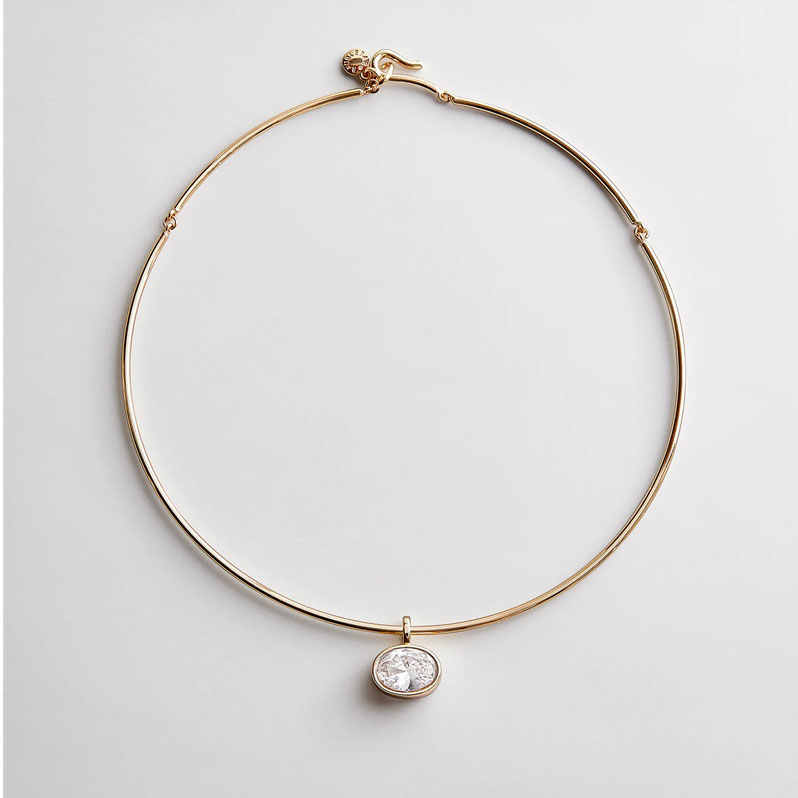
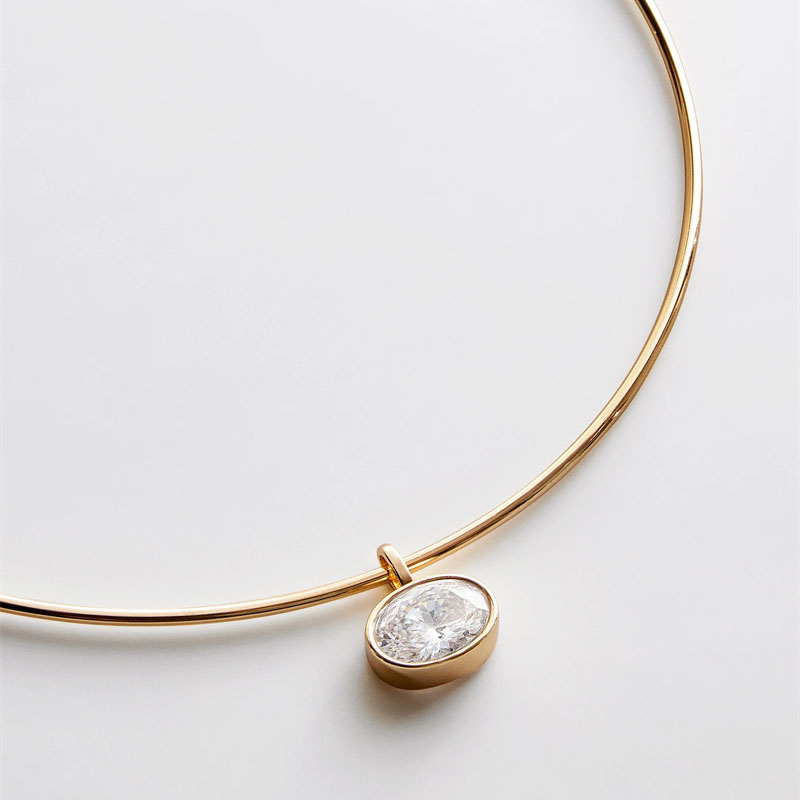
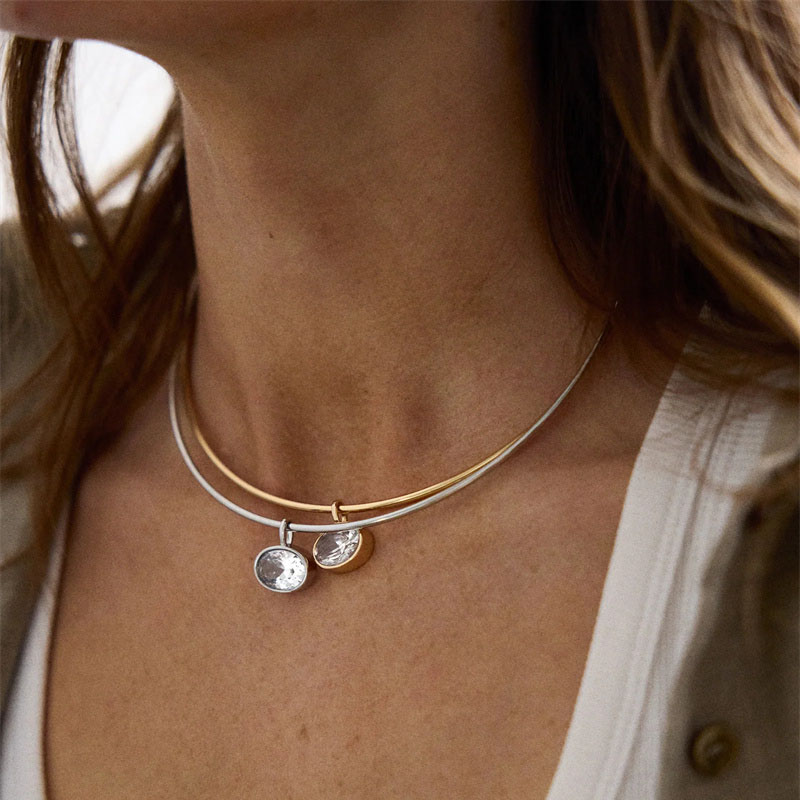
Producing such a piece requires more than a standard jewelry manufacturer; it requires an engineering partner. This is where JINGYING enters the narrative. Established as a powerhouse in the OEM/ODM landscape, JINGYING has moved beyond traditional lost-wax casting to embrace CNC precision and vertical integration .
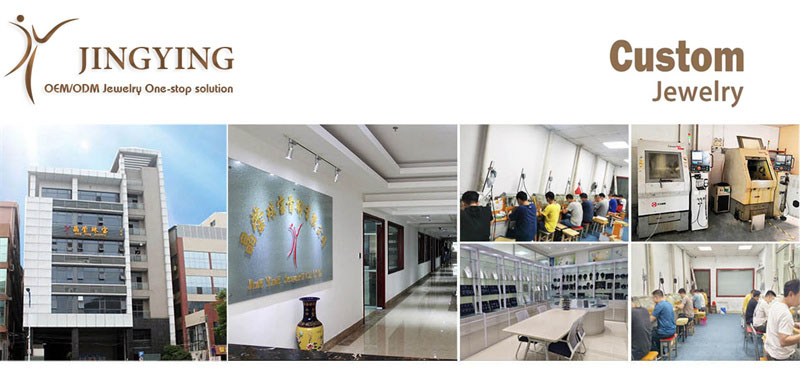
This guide serves as a comprehensive roadmap for designers, brand owners, and entrepreneurs looking to manufacture a Crystal Collar Necklace at JINGYING. We will dissect the process from the first sketch to the final polish, exploring the specific technologies—from 5-axis CNC milling to micro-pavé setting—that transform raw crystals and metal into a wearable artifact.
Chapter 1: The JINGYING Ecosystem – Why Precision Manufacturing Matters for Collars
Before diving into the technical workflow, one must understand the infrastructural advantage of JINGYING. A Crystal Collar is not a forgiving piece of jewelry. A chain has flexibility; a ring can be resized. A collar, however, must maintain absolute structural rigidity while conforming to the organic curve of the neck. It has zero tolerance for error.
JINGYING operates across 25,000 square meters of specialized facilities, housing over 450 skilled professionals . Unlike small workshops that outsource plating or casting, JINGYING is a one-stop manufacturer. This vertical integration is critical for the collar because it ensures that the metal composition, the plating thickness, and the stone setting tension are controlled under one roof .
The facility boasts a technological arsenal specifically suited for the collar’s rigid geometry:
- 25 CNC Milling Machines (0.01mm precision) for creating the perfect structural base .
- 12 SLA/DLP 3D printers for high-resolution prototyping .
- Micro-inlay machines imported from Japan for precision stone setting .
For a Crystal Collar, we will leverage two primary manufacturing paths: CNC machining for the rigid underframe and lost-wax casting for intricate, organic embellishments .
Chapter 2: Phase I – The Digital Atelier (CAD Design & Engineering)
The journey of your collar begins not at the bench, but on the screen. At JINGYING, the Computer-Aided Design (CAD) phase is the most critical determinant of success. Because a collar must fit the human neck precisely (typically an oval circumference of 38cm to 42cm), the digital model must account for ergonomics.
2.1 Translating Vision to Vectors
You arrive with a sketch or a mood board. Perhaps you envision a rigid silver base with a flat top surface, channel-set with baguette-cut crystals. The JINGYING design team imports this vision into software like RhinoGold or Matrix .
Here, the design is “deconstructed.” The collar is rarely cast as one solid piece of metal, as that would lead to warping and material waste. Instead, the designer breaks it into segments:
- The Inner Spine: The part that touches the neck. It must be smooth and slightly concave.
- The Outer Rail: The structural walls holding the crystals.
- The Hinge/Clasp System: The engineering mechanism allowing the rigid collar to open and close.
2.2 Engineering for Stone Setting
This is where the “Crystal” aspect is defined. You must decide on the setting style. For a high-impact collar, Channel Setting or Micro-Pavé is preferred.
- Channel Setting: The CAD model must include precise parallel walls with a bottom lip to hold the rectangular crystals in place .
- Taper Calibration: If the collar tapers at the back, the stone slots must adjust in width accordingly. JINGYING’s CAD engineers use “parametric modeling” to ensure that if you change the size of the neck from 38cm to 42cm, the stone counts and spacing scale mathematically without manual recalculation .
2.3 The Photorealistic Render
Before cutting metal, JINGYING produces photorealistic renders. You will see the light play off the facets of the crystals, the reflection of the yellow gold plating, and the shadow lines of the setting. This is your first quality control checkpoint. Approve the render, and the physical journey begins .
Chapter 3: Phase II – Structural Integrity (CNC vs. Casting)
The Crystal Collar is unique because it demands two opposing qualities: rigidity (to hold its shape) and lightness (to be wearable). JINGYING typically employs a hybrid approach for this specific product.
3.1 CNC Machining the Core (The High-Tech Route)
For geometric, angular collars (Art Deco styles or sharp V-shapes), JINGYING utilizes CNC Machining.
- The Process: A solid block of brass or sterling silver is placed into a 5-axis CNC mill. The machine carves the collar base directly from the solid block .
- The Advantage: CNC offers ±0.01mm tolerance. This is essential for channel settings where a 0.05mm error would make the crystal fall out or crack under pressure. Furthermore, CNC creates perfectly flat surfaces, unlike casting which can suffer from “warping” during cooling .
- Material Efficiency: For high-value metals like 14k gold, JINGYING uses CNC to “nest” multiple parts on a single plate to minimize waste .
3.2 Lost-Wax Casting the Core (The Organic Route)
If your collar has intricate filigree, twisting vines, or organic asymmetry, CNC is inefficient. Here, JINGYING switches to Lost-Wax Casting .
- 3D Printing the Tree: The CAD file is 3D printed in a wax-like resin using SLA printers.
- Investment: The resin tree is encased in plaster (investment).
- Burnout: The plaster is heated to 800°C. The resin burns away, leaving a perfect negative cavity.
- Pouring: Molten silver or gold is forced into the cavity via vacuum or centrifugal force .
The JINGYING Difference: Post-casting, the raw metal undergoes “tumbling” with steel shot to work-harden the surface. Many collars fail because cast metal is too soft. JINGYING’s tumbling process compresses the molecular structure of the metal, giving the collar its necessary “spring” and snap resistance .
Chapter 4: Phase III – The Crystal Setting (The Art of the Inlay)
This is the soul of the operation. A Crystal Collar lives or dies by the quality of its setting. JINGYING employs specialized setters who work under microscopes, utilizing micro-inlay machines imported from Japan .
4.1 Preparing the Bed
The metal collar, now cleaned and polished, arrives at the setting bench.
- For Channel Setting: The setter uses a specialized “hart burr” to cut the internal rail of the channel to the exact depth of the crystals. If the channel is too deep, the stones will sink and look dark; too shallow, they will protrude and snag clothing.
- For Pavé Setting: Using a carbide drill, the setter creates a grid of tiny holes and beads (grains) where each crystal will sit.
4.2 Stone Sourcing and Sorting
JINGYING acts as a gemstone concierge . For a crystal collar, you might use:
- Lab-Grown Crystals: Perfect clarity, consistent sizing, and ethical sourcing .
- Natural Quartz/Cubic Zirconia (CZ): High refractive index for maximum sparkle at a lower price point.
The stones are sorted by size using optical sorting machines to ensure that the 50 crystals on the left side match the 50 on the right side within 0.1mm.
4.3 The Setting Execution
- Channel: The crystals are dropped into the track. Using a pneumatic hammer, the setter pushes the top wall of the metal down over the edge of the stone, locking it in place.
- Pavé: A tiny grain of metal is lifted and pushed over the crown of the stone, then polished flush .
Critical QC: Every single stone is tested for “rocking.” A loose crystal in a collar is a disaster waiting to happen. JINGYING’s setters ensure a “zero rock” tolerance .
Chapter 5: Phase IV – Surface Alchemy (Plating & Finishing)
The base metal (usually brass or sterling silver) is now a stunning piece of art, but it may not have the final color you desire. Enter the electroplating department.
5.1 The Preparation Ritual
Plating is 90% cleaning. JINGYING utilizes ultrasonic cleaning, electrocleaning, and a water-break test to ensure the metal is pristine. Any oil from a fingerprint at this stage will cause the gold plating to peel .
5.2 The Plating Line
If you ordered a Gold Crystal Collar:
- Base Coat: Nickel or palladium (to prevent tarnish and add strength).
- Gold Layer: The collars are submerged in a tank containing a gold cyanide solution. An electric current is passed through. The positively charged gold ions dissolve and attach to the negatively charged jewelry.
- Thickness Matters: JINGYING specializes in “Heavy Gold Plating” (Vermeil if over silver). For a collar, a thickness of 3-5 microns is standard for durability .
- Rhodium Finish: For a White Gold or Platinum look, the collar is plated with Rhodium (a metal from the platinum family), giving it a bright, mirror-like finish that is harder than gold .
Chapter 6: Phase V – The Final Assault (Quality Control)
Before the Crystal Collar reaches your hands, it runs the gauntlet of the JINGYING 7-Point Inspection System .
- Dimension Check: Does the 40cm collar actually measure 40cm? Is the circumference oval or has it twisted?
- Stone Security: Every crystal is probed with a tool to ensure it will not fall out.
- Clasp Tension: The box clasp or magnetic clasp is opened and closed 500 times in a machine to simulate years of wear .
- Plating Adhesion: A tape test is performed on a random sample. If the gold comes off, the whole batch is rejected.
- Wearability Test: The collar is placed on a “neck form” to check for sharp edges. A common issue with CNC collars is a sharp inner edge; JINGYING tumblers and hand-finishers break these edges for comfort.
- Visual Polish: Inspected under 10x magnification for micro-scratches.
- Final Clean: An ultrasonic bath and steam blast remove all dust and fingerprints.
Chapter 7: Lead Times, Logistics, and Scalability
Understanding the timeline is crucial for your brand launch.
- Prototyping: 7–10 days. This includes the CAD render, 3D print, and first physical sample in silver.
- Production: 20–30 business days for standard orders. For large quantities (over 500 units), JINGYING can scale capacity by 40% within 30 days .
- Rush Orders: Available in 15–18 days (surcharge applies) .
Shipping: JINGYING offers DDP (Delivered Duty Paid) services, meaning they handle the customs clearance and taxes, delivering directly to your warehouse door worldwide .
Conclusion: Wearable Architecture
Producing a Crystal Collar Necklace at JINGYING is an exercise in controlled tension—the tension between the hardness of the crystal and the malleability of the metal, between the rigidity of the collar and the comfort of the wearer.
By utilizing JINGYING’s integrated ecosystem—from CNC precision for flawless geometry to micro-inlay setting for stone security, and heavy electroplating for lasting color—you are not just making a necklace. You are engineering an experience. In the competitive landscape of modern jewelry, where consumers demand both Instagram-worthy sparkle and heirloom durability, the JINGYING manufacturing process provides the blueprint for success.
Your vision, combined with this technical rigor, ensures that when the lights hit the red carpet, your Crystal Collar doesn’t just sit on the neck—it commands the room.