The global jewelry market is a glittering expanse of opportunity, projected to reach nearly $450 billion in the coming years . Within this vast industry, a powerful shift is underway. Consumers are no longer satisfied with mass-produced accessories; they crave stories, individuality, and authenticity. This has propelled the custom jewelry market to new heights, valued at over $38 billion and growing rapidly . For entrepreneurs, boutique owners, and e-commerce brands, this presents a golden opportunity. However, the bridge between a unique design concept and a best-selling product is a reliable partner: a custom wholesaler jewelry designer.
Finding the perfect manufacturer is more than a transaction; it is a strategic partnership that defines your brand’s quality, identity, and scalability. A single misstep can lead to delayed shipments, subpar materials, and a damaged reputation . This comprehensive guide will walk you through the intricate process of finding, vetting, and partnering with an ideal custom jewelry manufacturer, ensuring your vision is brought to life with precision, integrity, and profit.
Part 1: Laying the Groundwork – Defining Your Brand and Needs
Before you begin typing queries into Google or browsing Alibaba, you must look inward. The first and most crucial step in finding the perfect manufacturer is understanding exactly what you need. Approaching a supplier without clarity is like navigating a maze blindfolded.
1.1 Know Your Niche and Customer
Your brand identity dictates everything. Are you a purveyor of minimalist, hypoallergenic pieces for sensitive skin, or a creator of bold, statement-making fashion jewelry? Your niche will determine the type of manufacturer you need. A factory specializing in high-volume costume jewelry will not be the right fit for a brand focused on bespoke engagement rings .
Start by creating a detailed profile of your target audience. What are their buying habits? How frequently do they purchase jewelry, and what is their budget? Do they value sustainable materials, or are they driven by the latest trends from TikTok and Instagram? Understanding your customer’s demographics and psychographics will guide your design choices and, consequently, your manufacturing requirements .
1.2 Define Your Product Specifications
Once you have your customer in focus, get specific about your product. Create a “product requirement document” for yourself. This should outline:
- Product Category: Fine jewelry, fashion jewelry, bridal, personalized gifts?
- Materials: Do you require 925 sterling silver, 14k gold, brass, or stainless steel? Are you looking for natural gemstones, lab-created diamonds, or cubic zirconia ?
- Customization Level: Do you need OEM (Original Equipment Manufacturing), where you provide the exact design and the factory produces it? Or do you need ODM (Original Design Manufacturing), where the manufacturer helps you design from scratch based on your concepts ?
- Budget: What is your target cost per piece? This must include materials, labor, plating, packaging, and shipping.
- Scale: Are you launching a capsule collection with a low minimum order quantity (MOQ), or are you ready for mass production ?
By defining these parameters, you create a filter. You will only approach manufacturers whose capabilities align perfectly with your vision, saving countless hours of back-and-forth with mismatched partners.
Part 2: The Art of the Hunt – Where to Find Potential Manufacturers
With your blueprint in hand, the search begins. Finding a top-tier jewelry manufacturer is not always straightforward, as they often operate behind the scenes . You must become a detective, using a mix of online and offline channels to build your shortlist.
2.1 Online B2B Platforms and Directories
The internet is your primary hunting ground, but you must know where to look.
- Alibaba and Global Sources: These are the giants of B2B sourcing. They host thousands of manufacturers, primarily from China, India, and other Asian countries. Use advanced search filters to find suppliers specializing in your materials. Be diligent: check years in business, transaction history, and customer reviews . Fulcol, for example, is a China-based manufacturer with over 20 years of experience specializing in sterling silver and brass, often found through such channels .
- Specialized Platforms: For Western-focused sourcing, platforms like Spocket connect you with vetted suppliers in the US and EU, offering faster shipping and white-label packaging options. This can be ideal for small businesses wanting to test the market with lower risk .
- Niche Directories: Websites like ThomasNet can help you find manufacturers based in North America, which can be crucial for brands prioritizing domestic production and stricter compliance standards .
2.2 The Power of Trade Shows
While online research is efficient, nothing replaces face-to-face interaction. Trade shows are the epicenters of the jewelry industry and offer unparalleled access to manufacturers, designers, and wholesalers .
- Major Events: Plan to attend major industry events like JCK Las Vegas, Couture, or the Hong Kong International Jewelry Show . These shows gather thousands of exhibitors from around the globe.
- How to Work a Trade Show: Go prepared. Bring business cards, a notebook, and a list of questions. Don’t just walk the floor; engage with exhibitors. Ask about their manufacturing capabilities, MOQs, and material expertise. Feeling a piece in your hand and looking a potential partner in the eye builds a level of trust impossible to achieve online. As one boutique founder noted after finding her partner at the NY NOW show, “Face-to-face communication—even virtual—builds trust” .
2.3 Referrals and Professional Networks
Word-of-mouth remains one of the most powerful tools. Tap into your professional network.
- Industry Connections: Talk to other jewelry brand owners (who are not direct competitors). Ask them about their manufacturing partners, their experiences, and who they would recommend.
- LinkedIn: Use LinkedIn to search for jewelry manufacturers and connect with industry insiders. You can find company pages, read reviews, and even connect with production managers or CEOs . It is also a great place to ask for referrals in industry-specific groups.
Part 3: The Vetting Process – Separating Professionals from Amateurs
You have a shortlist of 5-10 potential manufacturers. Now begins the critical work of due diligence. This phase is about verifying claims and assessing capability.
3.1 The Initial Inquiry and Communication
Your first interaction with a manufacturer is a massive indicator of their professionalism. Send a detailed inquiry that includes your requirements but is not so specific that it reveals your entire business plan. Evaluate them on:
- Response Time: Do they reply within 24-48 hours?
- Quality of Answers: Do they answer your specific questions, or do they send generic, copy-pasted responses?
- Willingness to Engage: Are they open to video calls? Are they patient with your questions? A partner who communicates clearly and promptly in the beginning is likely to do so throughout production . Red flags include pressure to make quick decisions, refusal to answer detailed questions, or poor language skills that lead to misunderstandings .
3.2 The Non-Negotiable Sample Order
This is the single most important rule in sourcing: never place a bulk order without first approving a physical sample. .
- What to Request: Ask for a sample of your proposed custom design. Be prepared to pay for this service (often $50-$150), as it covers the cost of mold creation or 3D printing .
- What to Assess: When you receive the sample, become a quality control inspector.
- Craftsmanship: Examine the piece under good light or a loupe. Is the polishing smooth? Are stone settings secure? Is the finish even ?
- Accuracy: Compare it to your design specifications. Are the dimensions correct? Is the weight as expected?
- Durability: Test the clasp. If it’s plated, ask for the micron thickness (e.g., 3-micron gold) to ensure it won’t tarnish quickly .
- Packaging: Note how it arrives. Is it protected? This reflects their care in handling.
A manufacturer who hesitates or refuses to send a sample is an immediate disqualification.
3.3 Evaluating Capacity and Specialization
Not all manufacturers are created equal. You need one that is the right fit for your specific project.
- Material Specialization: A manufacturer experienced with gold-filled and vermeil will have different processes than one focused on costume jewelry. Ensure their expertise aligns with your needs .
- Technical Capability: Do they use modern software like Rhino or MatrixGold for 3D modeling? Do they have in-house capabilities for laser engraving, stone cutting, and various plating options? A fully integrated factory, like Nendine with its multiple specialized workshops, can ensure better quality control and faster turnaround .
- Scalability: Can they handle a small test batch of 50 units and scale up to 500 or 5000 as your business grows? Discuss their production capacity to ensure they can grow with you .
3.4 Understanding MOQs, Pricing, and Compliance
Before signing any agreement, get every detail in writing.
- Minimum Order Quantities (MOQs): Many factories have MOQs, sometimes as high as 500 pieces per design. However, many modern manufacturers catering to startups offer flexible MOQs, starting as low as 50 pieces . This is vital for testing the market.
- Pricing Transparency: A trustworthy partner will provide a clear, itemized breakdown of costs. This should include per-unit pricing, tooling/mold fees, CAD design fees, plating costs, and packaging . Be wary of vague quotes that hide potential fees.
- Certifications and Compliance: For fine jewelry, ask for certifications like SGS or ISO 9001 to verify quality management systems . If you are selling in the US or EU, ensure the materials are lead- and nickel-free and meet safety regulations . For ethically-minded brands, inquire about sourcing practices and certifications like the Responsible Jewellery Council .
Part 4: The Customization Journey – From Sketch to Sample
Once you’ve chosen a partner, the real magic begins. The journey from a concept to a tangible product is a structured, collaborative process.
4.1 Design Conceptualization and Technical Drawing
This is where your idea starts to take shape. You will provide your concept, whether it is a hand-drawn sketch, a mood board, or a photo of an inspirational piece.
- The Designer’s Role: The manufacturer’s in-house design team will translate your concept into a technical drawing using professional CAD (Computer-Aided Design) software . This is a crucial step to visualize the piece’s proportions, dimensions, and structural integrity before any metal is cast.
- Collaboration: Be open to their suggestions. An experienced manufacturer, like those at Fulcol or Nendine, can advise on practical modifications, such as thickening a delicate connector to prevent breakage or adjusting a stone setting for better security . Their expertise can save you from costly production errors.
4.2 Prototyping and Refinement
With the CAD design approved, the next step is creating a prototype.
- 3D Printing & Wax Models: Many manufacturers use 3D wax printing to create a physical model of the piece. This allows you to see and hold the exact shape and size before committing to metal .
- The Working Sample: The final pre-production sample is made in your chosen materials. This is your last chance to make adjustments. Assess the look, feel, weight, and drape of the piece. If the polish isn’t as shiny as you hoped or the chain feels too flimsy, now is the time to request a change . Sophie Lin, founder of Aura & Line, used this stage to request a “mirror finish” on her prototypes, a crucial step that led to her best-selling collection .
Part 5: Sealing the Deal – Negotiation, Logistics, and Legalities
With a perfect sample in hand, you are ready to move to production. However, the business side of the partnership requires as much attention as the creative side.
5.1 Negotiating Terms
Negotiation is a standard part of the B2B manufacturing process.
- Payment Terms: Standard terms often require a 30-50% deposit to begin production, with the balance paid before shipment . For large orders or new relationships, you might negotiate using an escrow service to protect both parties .
- Pricing and Volume: Once you have proven the relationship with a test order, you can negotiate better per-unit pricing based on projected higher volumes in the future .
- Lead Times: Always confirm the production lead time. This can range from 4-8 weeks depending on complexity . Factor in additional shipping time (2-4 weeks for air freight, 6-8 weeks for sea) and potential customs delays.
5.2 Quality Control and Inspection
Don’t assume that because the sample was perfect, the bulk order will be.
- In-House Inspections: Reputable manufacturers have multi-point inspection protocols, checking for surface smoothness, plating thickness, and stone setting security at various stages .
- Third-Party Inspections: For large orders, consider hiring an independent third-party inspection service in the manufacturer’s country. They can randomly sample units from your batch to verify quality before the goods are shipped, protecting you from receiving a subpar shipment .
5.3 Legal and Business Setup
While your manufacturer handles production, you must ensure your own business is legally sound. This is crucial for establishing yourself as a legitimate wholesaler or retailer.
- Business Structure: Register your business as an LLC, sole proprietorship, or corporation. This choice impacts your legal liability and taxes .
- Licenses and Permits: Obtain an Employer Identification Number (EIN) from the IRS and a resale certificate or seller’s permit from your state. This allows you to buy goods wholesale without paying sales tax and to collect tax from your customers legally .
- Protecting Your Designs: Be aware of your intellectual property. In the US, original jewelry designs are protected by copyright from the moment of creation, but formally registering them with the U.S. Copyright Office gives you stronger legal standing to sue for infringement. For truly unique, non-functional aspects of your design, you might also consider a design patent .
Part 6: Building a Lasting Partnership for Growth
Finding the perfect manufacturer is not the finish line; it is the starting point of a long-term relationship that can fuel your brand’s growth for years.
6.1 The Strategic Partnership Mindset
The most successful jewelry brands view their manufacturers as strategic allies, not just vendors.
- Shared Goals: Treat them with respect, pay on time, and communicate your growth plans. When you share your upcoming launch schedule, they can prepare their capacity to meet your needs .
- Consistent Communication: Don’t just disappear between orders. Maintain contact, share feedback from your customers, and discuss market trends. This keeps you top-of-mind and fosters a collaborative spirit .
6.2 Co-Development and Innovation
A trusted manufacturer can become a source of innovation for your brand.
- Trend Insights: Many manufacturers, like Fulcol, have market-savvy consultants who track fashion trends, Pantone colors, and e-commerce data. They can provide valuable suggestions for new styles or materials that are gaining traction .
- Exclusive Collections: As your relationship deepens, you can co-develop exclusive collections. They may offer you priority access to new techniques or materials, helping you stay ahead of the competition. For example, partnering with a manufacturer like Nendine, which integrates multiple workshops, can lead to unique designs that are difficult for competitors to replicate .
6.3 Scaling Smartly
With a reliable partner, scaling your business becomes a manageable challenge.
- Incremental Growth: Start with a few core designs, as recommended by experts. Master those, gather customer feedback, and then gradually expand your line .
- Reordering and Optimization: As you place repeat orders, you can optimize the process. You may be able to streamline packaging, negotiate better shipping rates, or even reduce lead times. The 40% reorder rate seen by Fulcol’s client is a testament to the power of getting this relationship right .
Conclusion: Your Vision, Their Craftsmanship
The journey to find the perfect custom wholesaler jewelry designer is a challenging but immensely rewarding endeavor. It requires a blend of artistic vision, business acumen, and detective-like diligence. By following this guide—from defining your niche and mastering the art of the hunt, to rigorous vetting and fostering long-term partnerships—you equip yourself to navigate the complexities of the global jewelry supply chain.
Remember, the goal is not just to find a factory that can make jewelry. The goal is to find a partner who can translate your story into a physical form, who values quality as much as you do, and who is invested in your success. The right manufacturer will help you navigate material sourcing, advise on design for durability, and scale production as your brand grows from a startup into a sensation .
In a market driven by personal expression, your unique designs are your greatest asset. Protecting that uniqueness and bringing it to life with integrity requires a partner you can trust. So, take the first step today. Refine your concept, start your research, and reach out to a potential partner. The perfect piece—and the perfect partnership—is waiting to be forged.
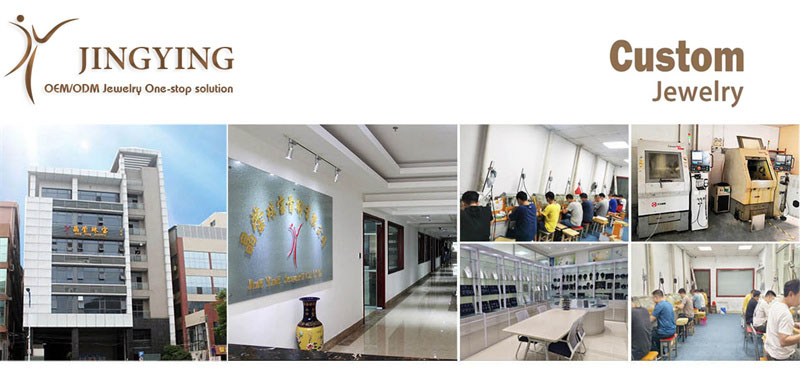
About Guangzhou JingYing Jewelry