How to Custom Sterling Silver Jewelry Design: A Beginner’s Guide
Part 1: Introduction – Why Custom Sterling Silver?
The world of jewelry design can feel exclusive and intimidating, dominated by luxury brands and inaccessible price points. Yet, there exists a beautiful intersection of accessibility, durability, and artistic potential: custom sterling silver jewelry design. For the beginner, embarking on the journey to create your own silver piece is not merely about acquiring an ornament; it is a deeply personal process of creation, storytelling, and skill-building. Sterling silver, an alloy of 92.5% pure silver and 7.5% other metals (usually copper), offers the perfect canvas. It is precious enough to feel special and hold value, yet affordable and workable enough for experimentation. Unlike mass-produced items, a custom-designed piece carries your intentionality in every curve, texture, and clasp. It can commemorate a milestone, express your unique aesthetic, or solve the eternal search for the “perfect” piece that simply doesn’t exist in stores. This guide is your comprehensive roadmap, taking you from the first spark of inspiration to the final polished heirloom, demystifying each step in the process of custom sterling silver jewelry design.
Part 2: Foundations – Understanding Your Medium
Before sketching a single line, you must understand your material. Sterling silver’s character, limitations, and possibilities will fundamentally shape your design.
1. The Nature of Sterling Silver:
- Composition & Tarnish: The 92.5/7.5 ratio (hallmarked as 925) provides the ideal balance. Pure silver is too soft for most jewelry; the copper adds necessary strength and durability. However, copper is also responsible for tarnish—that gradual darkening to a yellow, then brown, and finally black patina when exposed to sulfur in the air. This isn’t a flaw, but a characteristic. Many designs incorporate intentional oxidation to highlight texture or create an antique look.
- Properties: Silver is malleable (can be hammered or pressed into shape) and ductile (can be drawn into wire). It melts at a relatively low temperature (around 890°C/1634°F) for casting, takes a superb polish, and is an excellent conductor of heat and electricity—a critical point for soldering.
2. Common Forms of Silver for Jewelry Making:
- Sheet: Comes in various thicknesses (gauges). 20-22 gauge is common for pendants and structural elements; 24-26 gauge is for lighter, more delicate forms.
- Wire: Available in round, half-round, square, and more, in hard, half-hard, and dead-soft tempers. Dead-soft is pliable for weaving and coiling; half-hard holds shape well for rings and findings.
- Pre-fabricated Findings: Jump rings, clasps, ear wires, and chain can be purchased, but designing your own elevates a piece to fully custom.
- Grain & Shot: Small pellets used for casting or soldering as join filler.
3. Essential Complementary Materials:
- Gemstones: From durable diamonds and sapphires to more delicate opals and pearls. Consider hardness (Mohs scale), cleavage (how it splits), and porosity.
- Other Metals: Combining silver with yellow or rose gold (vermeil), or copper and brass for contrast, is popular.
- Organic Materials: Wood, resin, or ethically sourced materials can be inlaid or accented.
Part 3: The Design Process – From Mind to Paper
This is the generative, exciting phase where your idea takes form.
1. Seeking Inspiration: Don’t start at a blank page. Build an inspiration library.
- Look Beyond Jewelry: Nature (leaves, shells, geological formations), architecture (Gothic arches, Art Deco lines), textiles (lace patterns, weaving), and even machinery can offer stunning forms.
- Historical & Cultural Research: Explore ancient Etruscan granulation, Victorian symbolism, or the clean lines of Mid-Century Modern design.
- Sketch Freely: Carry a small notebook. Doodle shapes, connections, and textures without judgment. Quantity over quality at this stage.
2. Defining Parameters & Constraints: Ground your inspiration with practical considerations.
- Piece Type: Ring, pendant, bracelet, earrings? Each has functional needs (a ring must be round and withstand force; earrings must be lightweight and secure).
- Wearability & Comfort: Edges should be smoothed, profiles considered (will a tall ring catch on things?). Weight distribution matters for earrings and pendants.
- Budget: This directly influences size, complexity, and stone choices. Sterling silver itself is affordable, but labor-intensive techniques (hand-carving, intricate stone setting) increase cost.
3. Creating Your Design: Move from abstract to specific.
- Concept Sketches: Refine your doodles into 3-5 distinct concepts. Draw from multiple angles.
- Technical Drawing: This is a precise, scaled drawing with front, top, and side views. It notes critical dimensions (ring shank width, stone size, pendant length). This drawing becomes the blueprint for you or a jeweler to follow.
- Considering Construction: How will it be made? This is where design meets craft. Will it be:
- Fabricated: Built from sheet and wire, cut, shaped, and soldered together.
- Cast: A wax model is created and then melted away in the lost-wax casting process, perfect for organic, complex, or highly textured forms.
- A Combination: A cast central element with fabricated findings.
Part 4: The Pathways to Creation – DIY vs. Collaborative
As a beginner, you have two main avenues to realize your design.
Pathway A: The DIY Route (Learning the Craft)
This is hands-on, immensely rewarding, and requires an investment in tools and education.
- Core Techniques to Learn:
- Sawing: Using a jeweler’s saw to cut shapes from sheet metal.
- Filing & Sanding: Shaping and smoothing edges through progressively finer grits.
- Soldering: The art of joining metal using a torch, solder (a lower-melting-point alloy), and flux. This is a fundamental and challenging skill.
- Forming: Using hammers, mandrels, and dapping blocks to bend and dome metal.
- Finishing: Polishing with a rotary tool (like a Dremel) or polishing cloths to achieve a mirror shine, satin matte, or brushed finish.
- Stone Setting (Beginner): Starting with simple bezel settings, where a strip of metal is folded over a stone’s girdle.
- Basic Starter Toolkit:
- Jeweler’s Saw Frame & Blades (#2/0 blades are a good start)
- Bench Pin & V-Block
- Set of Needle Files (flat, half-round, round, barrette)
- Sandpaper & Emery Paper (grits 400 to 2000)
- Soldering Setup: Butane torch, soldering pick, third hand, heat-proof surface, hard & medium silver solder, flux.
- Basic Forming Tools: Rawhide mallet, steel hammer, ring mandrel.
- Polishing: Polishing cloths (like Sunshine Cloths) or a rotary tool with polishing wheels and compounds (tripoli, rouge).
- Getting Started: Take a local class, follow structured online tutorials, and practice fundamental skills on copper sheet (a cheaper alternative) before moving to silver.
Pathway B: The Collaborative Route (Working with a Jeweler)
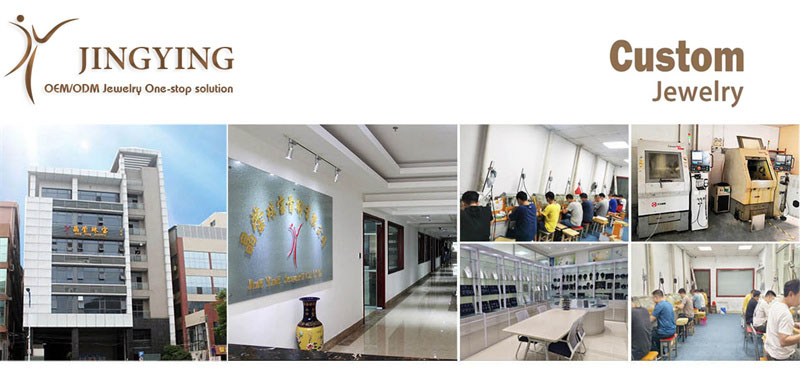
You act as the creative director, partnering with a skilled artisan (like those at JINGYING) to execute your vision.
- How to Find the Right Jeweler: Look for studios specializing in custom work. Review their portfolio—does their style align with your aesthetic? Read client testimonials.
- The Collaborative Process:
- Initial Consultation: Present your sketches, inspiration, and budget. A good jeweler will ask probing questions and suggest feasible improvements.
- Quotation & Timeline: You’ll receive a detailed quote covering materials, labor, and stones, plus a production schedule.
- Design Refinement & Modeling: The jeweler will create technical drawings or a 3D CAD model. This digital model allows you to see the piece in precise detail, rotated on screen, and make adjustments before any metal is used.
- Approval & Production: Once you approve the model, production begins via fabrication, casting, or a hybrid method in their workshop.
- Stone Selection: You’ll often be presented with options for gemstones, viewing them in person or via high-quality videos.
- Final Fitting & Delivery: For items like rings, a wax or resin prototype might be made for a physical try-on. Upon completion, you receive the finished piece, often with care instructions.
- Advantages for Beginners: Access to professional tools and expertise, guaranteed structural integrity, higher complexity potential, and learning through the process without the steep initial skill curve.
Part 5: Key Design Elements & Considerations
Let’s delve into specific aspects that define your piece.
1. Texture & Finish: This gives silver its tactile and visual personality.
- High Polish: Classic, reflective, and luminous. Shows scratches more but is easily re-polished.
- Satin/Matte Finish: A soft, brushed look created with an abrasive wheel or sandpaper. Hides fingerprints and scratches well.
- Hammered Texture: A dimpled, organic surface that catches light beautifully. Adds visual weight and strength.
- Oxidation (Intentional Tarnish): Applied with a solution like liver of sulfur, it darkens recessed areas, making textures and engraving “pop.” A final polish highlights the raised surfaces.
2. Stone Integration: Gemstones add color, meaning, and focus.
- Choosing Stones: Consider durability for its purpose. A ring’s stone needs higher hardness (e.g., sapphire, 9 Mohs) than a pendant’s (e.g., turquoise, 5-6 Mohs).
- Setting Styles for Beginners/Silver:
- Bezel Setting: A metal collar surrounds the stone. Secure, modern, and excellent for protecting softer stones. Perfect for cabochons (smooth, domed stones).
- Prong Setting: Claws hold the stone. Allows more light entry for faceted stones, creating more brilliance. Requires more precision.
- Flush/Gypsy Setting: The stone is set into a drilled hole, its top flush with the metal surface. Very secure and sleek.
- Channel Setting: Stones are set in a row between two metal walls. Creates a smooth, continuous line.
3. Findings & Mechanics: The functional artistry.
- Clasps: Should be secure, proportionate, and preferably complement the design. A well-designed custom clasp is a signature detail.
- Earring Posts/ Wires: Must be hypoallergenic (sterling silver or higher) and comfortable. Consider leverbacks for security on heavier pieces.
- Bails & Links: Ensure the pendant hangs correctly and the chain is appropriately weighted.
Part 6: The Professional Workflow – From Model to Masterpiece
Whether DIY or collaborative, understanding the standard professional workflow illuminates the journey your piece undertakes.
1. Model/Master Creation:
- Hand-carved Wax: Using special sculpting waxes, the model is carved with fine tools. This is a direct, artistic process.
- 3D Printing (Resin/Wax): The CAD file is sent to a high-resolution printer that builds the model layer by layer. This allows for incredible complexity, precision, and easy replication.
2. Casting (The Lost-Wax Process):
- The model is attached to a “tree” with other models.
- It’s placed inside a steel flask, and a plaster-like investment is poured around it and hardened.
- The flask is heated in a kiln. The wax melts and burns out completely, leaving a perfect cavity.
- Molten sterling silver is forced into the cavity via centrifugal force or vacuum.
- Once cool, the investment is broken away, revealing the rough “tree” of silver pieces, which are cut off.
3. Benchwork (Where the Magic Happens):
- Cleanup: Removing casting sprues (the attachment points) with a saw.
- Filing & Sanding: Meticulously removing all roughness, beginning with coarse files and moving to micron-grade sanding papers.
- Assembly & Soldering: Adding any fabricated elements, like bails or custom findings.
- Stone Setting: The meticulous process of placing and securing each gemstone.
- Final Finishing: Applying the chosen texture (hammering, brushing) and the final polish through multiple stages of polishing compounds.
4. Hallmarking & Quality Control:
- A legitimate piece of sterling silver jewelry should bear the 925 hallmark, certifying its purity.
- The jeweler or maker may also add their own maker’s mark.
- A final, rigorous check ensures stones are tight, clasps function, and the finish is flawless.
Part 7: Care & Preservation of Your Custom Silver Jewelry
Your custom piece is an heirloom in the making. Proper care ensures it lasts generations.
- Preventing Tarnish: Store in an airtight container, like a ziplock bag with anti-tarnish strips. Keep away from humidity, chemicals (cleaning products, pool chlorine), and pollutants.
- Cleaning: For light dirt, use a dedicated silver polishing cloth. For heavier tarnish, use a gentle silver dip (sparingly) or create a paste with baking soda and water. Always rinse thoroughly and dry completely. Ultrasonic cleaners are safe for simple silver pieces but can damage porous stones or fragile settings.
- Wearing: Put your jewelry on last when getting ready, after perfumes, lotions, and hairspray.
- Maintenance: Periodically check prongs and settings for security. Over decades, even the hardest wear can be restored by a professional jeweler through re-polishing, re-tipping prongs, or re-shanking a ring band.
Part 8: Conclusion – Beginning Your Creative Journey
Designing custom sterling silver jewelry is a voyage of discovery. It teaches you to see the world as a collection of potential forms, to appreciate the profound link between design and function, and to understand the material poetry of metal and stone. For the beginner, the path is rich with learning, whether you choose to get solder on your hands at a workbench or to guide the process through collaborative dialogue with an artisan.
Remember, your first design need not be perfect. It should be meaningful. Start with a simple idea—a pendant based on a favorite leaf, a ring with a single bezel-set stone, a pair of textured studs. Embrace the constraints of the material and your skill level; they often breed the most creative solutions.
In the end, you will hold more than a piece of jewelry. You will hold a tangible fragment of your creativity, a conversation between your mind and the physical world. In that polished surface of sterling silver, you will see not just your reflection, but the proof that you can imagine, design, and bring beauty into being. That is the true power and promise of beginning your journey in custom sterling silver jewelry design.