How to Custom Jewelry: The First Love Engraved Tennis Bracelet – Silver
Introduction: Why a “First Love” Bracelet?
There is a particular magic attached to the word “first.” The first laugh, the first kiss, the first promise. In the world of fine jewelry, capturing that ephemeral feeling of a “first love” requires more than just a precious metal; it requires narrative, personalization, and craftsmanship. The Silver Tennis Bracelet with a “First Love” engraving has emerged as one of the most sought-after custom jewelry pieces of the decade. It is not merely an accessory; it is a time capsule worn on the wrist.
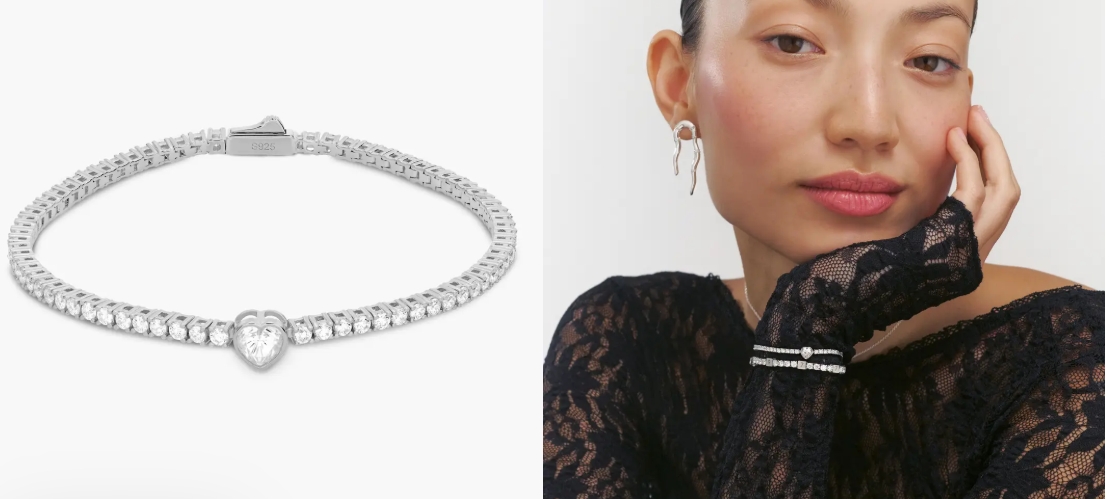
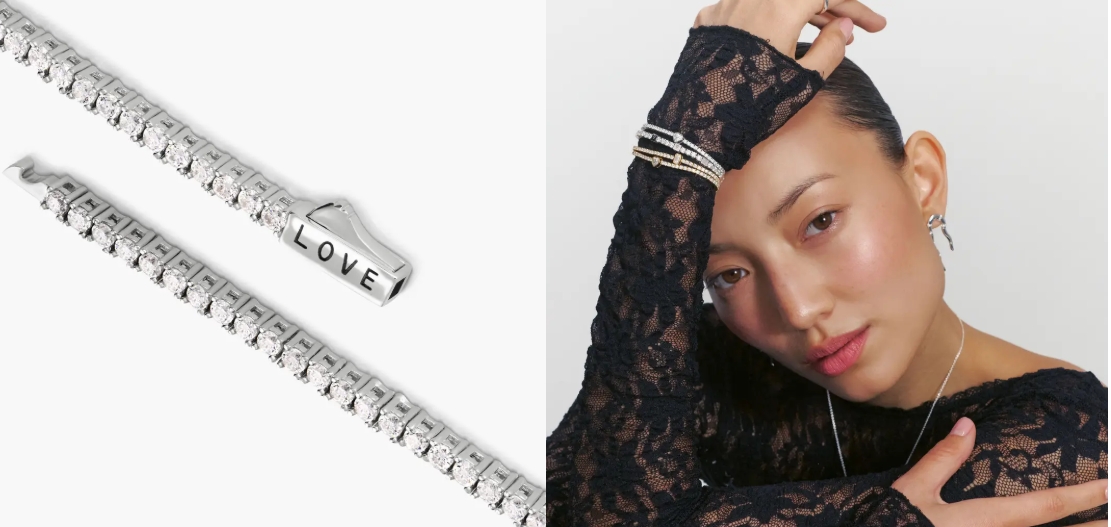
But why silver? While platinum and gold are timeless, sterling silver offers a unique luminosity that mirrors the clarity and freshness of a new relationship. It is bright, reflective, and honest. When you customize a tennis bracelet to commemorate a first love—whether for a significant other, a child leaving home, or a personal milestone—you are creating an heirloom that captures a specific frequency of emotion.
This guide will walk you through every micron of the process. From understanding the anatomy of a tennis bracelet to choosing the font of the engraving, and from sourcing ethical materials to the final polish, you will learn how to create a piece that speaks louder than words.
Chapter 1: Understanding the Canvas – The Silver Tennis Bracelet
Before you engrave a single letter, you must understand the substrate. A “tennis bracelet” has a specific definition: a flexible line of identically cut gemstones (or in this case, metal links) set in a symmetrical pattern. For a custom silver version, you are typically working with Argentium Silver or Sterling Silver (92.5% pure) .
The Anatomy of a Tennis Bracelet
- The Links (Stations): In a traditional diamond tennis bracelet, the stones are the focus. In a custom engraved silver version, the silver links themselves are the canvas.
- The Clasp: Usually a box clasp with a figure-eight safety latch. The clasp is often the heaviest part and is a prime location for engraving.
- The Gallery: The underside of the bracelet. Some designers engrave here for a “secret message” effect.
Why Silver for “First Love”?
- Affordability: Allows for bold customization without a gold budget.
- Hypoallergenic properties: High-quality silver (Argentium) contains germanium, which resists tarnish and is safe for sensitive skin.
- The “Sound” of Silver: It has a bright, high-frequency ring when the links clink together—metaphorically perfect for the sound of a first love.
Chapter 2: The Design Philosophy – Interpreting “First Love”
You cannot engrave “First Love” without deciding what that phrase means in this context. A literal engraving of the words “My First Love” is common, but true customization goes deeper.
2.1 The Language of Engraving
- The Date: *06.18.2023* (The day you met/ the first date).
- The Coordinates: The lat/long of the location where you first said “I love you.”
- The Silhouette: Instead of words, a negative-space engraving of a shared memory (e.g., two birds, a specific flower, a skyline).
- The Handwriting: The most intimate option. Scan a handwritten note or a signature and convert it into a vector file for laser engraving.
2.2 Layout Strategies
| Location | Best For | Visibility |
|---|---|---|
| Outside of Clasp | Short words (e.g., “First Love”) | High (Always visible) |
| Inside of Clasp | Secret dates or initials | Low (Only wearer knows) |
| Across 3 Links | Long phrases or names | Medium (Flows with movement) |
| The Safety Chain | Tiny coordinates | Low (Hidden detail) |
2.3 Font Psychology
- Serif Fonts (e.g., Times New Roman): Traditional, serious, timeless. Good for parent-child “first love” pieces.
- Script Fonts (e.g., Alex Brush): Romantic, flowing, feminine. Ideal for couples.
- Sans Serif (e.g., Helvetica): Modern, minimalist, bold. For a contemporary “self-love” first love bracelet.
- Monogram (Interlocking): Classic preppy style.
Pro Tip: For silver, avoid ultra-thin serifs. Silver is softer than steel, and micro-thin serifs can wear down over 20 years. Use a font weight of at least 1.2mm stroke.
Chapter 3: The Customization Process – Step by Step
This is the technical core. You will either do this via a CAD (Computer-Aided Design) program for casting or via a hand-engraving process on a pre-made bracelet.
Phase 1: The Prototype (The “Mock-up”)
You cannot cut metal without a map.
- 3D Modeling (Rhino or MatrixGold): You model a 7-inch bracelet with 4mm wide links.
- Placement: You create a “text path” along a curve. The curvature of the wrist means text on the top of the bracelet will stretch; text on the side will compress.
- Render: Print a 1:1 resin model. Wear it. Does the text wrap around your wrist bone? Does it sit on the inside or outside?
Phase 2: Manufacturing Methods
There are three ways to get the engraving onto the silver.
Method A: Laser Engraving (Best for detail)
- How it works: A fiber laser vaporizes the silver surface.
- Depth: 0.05mm – 0.3mm.
- Pros: Extremely precise. Can replicate handwriting perfectly. No metal distortion.
- Cons: The engraved area may oxidize black (which looks great for contrast) but can be polished out over time.
- Cost: Moderate ($30-$80 for setup).
Method B: Hand Engraving (Best for heirlooms)
- How it works: A graver (a sharp steel tool) cuts a V-shaped channel into the silver.
- Depth: 0.5mm – 1mm.
- Pros: Creates a “bright cut” that sparkles. The metal is physically displaced, creating a tactile ridge. Very durable.
- Cons: Expensive ($150-$400). Requires a master engraver. You cannot do complex digital fonts.
- Metaphor: Hand engraving is like a first love—imperfect, human, deep, and permanent.
Method C: Cast-in-Place (For mass production or complex 3D text)
- How it works: The text is modeled in wax, and the silver is cast around it.
- Pros: The text is raised (relief) rather than cut. It feels like Braille.
- Cons: Expensive mold fees. Not good for single pieces.
Phase 3: The Silver Preparation
If you are hand-engraving a pre-made bracelet:
- Annealing: You heat the silver to red-hot (about 1110°F) and quench it. This softens the metal. Engraving hard silver breaks tools.
- Leveling: You clamp the bracelet link flat. A curved surface causes the graver to slip.
- Transferring the design: You apply a thin layer of Chinese white (zinc white paint) to the link. When dry, you scribe your design through the paint.
Chapter 4: Technical Specifications for the “First Love” Bracelet
To ensure this bracelet lasts as long as the memory, you must adhere to strict engineering standards.
4.1 The Silver Alloy
- Do not use: Fine silver (99.9%). It is too soft; the engraving will rub away in 5 years.
- Use: Sterling Silver (92.5% Ag, 7.5% Cu) . The copper adds hardness.
- Best use: Argentium Silver (93.5% Ag, 5.5% Ge, 1.0% Cu). The germanium creates a protective oxide layer. It is tarnish-resistant and harder than standard sterling.
4.2 Link Thickness
- Minimum thickness: 1.2mm.
- Optimal for engraving: 1.5mm – 1.8mm.
- Why: A standard engraving goes 0.3mm deep. If your link is only 0.8mm thick, you have structurally compromised the bracelet. It will snap at the engraved letter.
4.3 The Clasp Engineering
The clasp takes 90% of the stress.
- Box clasp: Ensure the box has a gold spring (or steel spring) not silver. Silver springs fatigue.
- Safety catch: A figure-eight or double-locking clasp. A “First Love” bracelet lost on the subway is a tragedy.
4.4 Chain Type
Do not use a cable chain. Use a S-link or Figaro chain that is soldered closed at every link. Tennis bracelets rely on the rigidity of the stone setting; for silver links, every joint must be welded.
Chapter 5: The Emotional Engineering – Designing for Sentiment
A custom jewelry piece is 50% metal and 50% psychology. You are engineering an emotional response.
5.1 The “Hidden” Engraving
Consider the inside of the bracelet. Many jewelers leave the inside blank. This is a waste.
- The Pulse Point: Engrave the word “Breathe” or “Home” on the link that rests directly over the radial artery. Every time the wearer checks their pulse, they see the word.
- The Clasp Interior: Engrave “To infinity, but slower” or “Sixteen forever.”
5.2 The Sound Profile
This is advanced. Silver tennis bracelets make noise. The links clink.
- Loose links: A high-pitched, chaotic sound (represents new love?).
- Tight links (with nylon washers): A muted, soft sound (represents mature love).
- Customization: You can request the jeweler to insert tiny 0.5mm silicone o-rings between the links to silence the bracelet. Why? So the only sound is the clasp clicking shut.
5.3 The Patina Timeline
Silver oxidizes. This is not a flaw; it is a feature.
- Day 1: Mirror polish. The engraving is bright white.
- Month 6: The high points of the bracelet are tarnished yellow-brown. The low points (the engraving) remain dark black. The text becomes more legible.
- Year 10: The bracelet has a matte, vintage patina. The “First Love” engraving looks like ancient runes.
- Customization choice: Do you want a pre-oxidized engraving? The jeweler paints liver of sulfur into the cuts and polishes the surface. This creates immediate contrast.
5.4 Sizing for Growth
If this is a gift for a teenager (their “first love” bracelet), size it for their 30-year-old wrist. A tennis bracelet can be shortened, but lengthening requires adding links (which breaks the engraving sequence). Add 0.5 inches to the measurement.
Chapter 6: The Making – A Walkthrough from Silver Grain to Gift Box
Let us simulate a real-world build. You are a custom jeweler. The client (Sarah) wants a bracelet for her daughter (Maya) who just got her first boyfriend. The engraving: “First love isn’t who you love, it’s that you loved.”
Step 1: Sourcing the Silver
You order 20 grams of Argentium sterling silver casting grain. Purity: 93.5%. You also order a pre-made box clasp from Italy because handmade clasps are less reliable.
Step 2: Casting the Links
You design a continuous strip in CAD with 28 links. Each link is 5mm wide, 2mm thick. You 3D print the strip in castable resin. You invest it (plaster), burn out the resin (1350°F), and centrifuge cast the silver.
Step 3: Assembly
You remove the casting tree. You cut the strip into individual links. You file each link’s connection points. You assemble them using steel pins (not silver wire) and solder the pin heads flush.
Step 4: The Rough Polish
You tumble the bracelet in stainless steel shot for 4 hours. It comes out semi-bright.
Step 5: THE ENGRAVING (The critical moment)
- Setup: You mount the clasp onto a lead block.
- Tool: You use a 110-degree square graver, sharpened on a diamond wheel to a mirror finish.
- The Cut: You push the graver through the silver. The metal curls away like a ribbon. For a script font, you never lift the graver; you “roll” the curve.
- Time: 4 hours for 12 words.
Step 6: The Finish
- Matte: You use a 3M radial bristle disc to give the bracelet a satin brush.
- High polish: You use rouge compound on a muslin wheel for the edges only.
- Result: The engraving is bright cut (sparkling), the background is matte.
Step 7: The Final Test
You flex the bracelet 100 times. You pull the clasp with 15 lbs of force. You dip it in liver of sulfur to check for porosity (bubbles in the silver). No bubbles.
Step 8: Packaging
You place it in a leather pouch with an anti-tarnish strip. You include a note: “To Maya – This silver will tarnish, but the memory will not. Buff with a cloth, never a dip.”
Chapter 7: Troubleshooting – What Can Go Wrong (And How to Fix It)
Custom jewelry is risky. Here are the disasters and their remedies.
Problem 1: The “Ghosting” Effect
- Symptom: After 1 month, the engraving looks faint.
- Cause: You engraved only 0.05mm deep, and the wearer uses hand sanitizer (chemical erosion).
- Fix: Re-engrave to 0.2mm depth. Tell the client to remove the bracelet before using alcohol-based products.
Problem 2: The Links Are Twisting
- Symptom: The engraved text faces the palm, then the back of the hand, randomly.
- Cause: You didn’t use anti-twist links. Standard round links rotate.
- Fix: You must use navette (boat-shaped) or square links. Flat links cannot twist.
Problem 3: The Black Letter Syndrome
- Symptom: The engraved letters are black and dirty looking.
- Cause: You used laser engraving without a post-polish. The laser creates a “recast layer” of oxidized silver.
- Fix: After laser engraving, you must use a fiber brush to clean the crater. Or, embrace the black as a design feature (called “foreground engraving”).
Problem 4: The Allergic Reaction
- Symptom: Red rash under the bracelet.
- Cause: The client has a nickel allergy, and your “silver” contained 2% nickel (common in cheap sterling).
- Fix: Re-make the bracelet in Copper-free Argentium. Or, plate the inside of the bracelet with rhodium (cost: $50).
Chapter 8: The Business of “First Love” – Selling the Bracelet
If you are a jeweler reading this, here is how to market this specific piece.
8.1 The Price Breakdown (Estimates)
- Silver material (20g): $30
- Clasp & Findings: $25
- CAD & Casting (labor): $60
- Hand Engraving (4 hours): $200
- Polishing & Finishing: $40
- Total Cost: $355
- Retail Price: $850 – $1,200
- Why the markup? Because emotional customization demands a premium. You are not selling silver; you are selling permanence.
8.2 Marketing Copy That Works
Do not say “Custom Tennis Bracelet.” Say:
“The First Love Bracelet. We engrave the date, the place, or the whisper. Worn on the wrist that held theirs. Sterling silver. Impervious to time, vulnerable to memory.”
8.3 The “Test Drive” Program
Offer a cheap brass prototype. For $50, the client wears a brass version of the bracelet for 1 week. They check if the text placement feels right. When they approve, you make the silver version. This eliminates returns.
Chapter 9: Care and Longevity – A Letter to the Owner
You have made the bracelet. Now the owner must keep it alive.
The 3 Golden Rules for Silver “First Love” Bracelets
- No showers. Silver reacts with sulfur in shampoo. It will turn black in 3 days.
- The last on, first off rule. Put the bracelet on after perfume and lotion. Take it off before sleeping.
- The travel trick. When flying, put the bracelet in a ziplock bag. The ozone in airplane cabins accelerates tarnish.
How to Clean the Engraving
- Do NOT use: Liquid dip cleaners. They will pit the silver and blur the sharp edges of the engraving.
- Do use: A Sunshine cloth (impregnated with mild abrasive). Rub gently across the text, not along it.
- For deep tarnish inside the letters: Use a soft toothbrush with baking soda and water paste. Scrub gently.
When to Re-engrave
After 20-30 years, the raised edges of the engraving will have worn down. A jeweler can re-cut the original lines deeper. This is called “re-engraving.” It costs about $100 and makes the bracelet look brand new.
Chapter 10: Variations on the Theme – Beyond “First Love”
The technique is the same, but the emotion changes. Here are three variations of the same silver tennis bracelet concept.
10.1 The “Self-Love” Bracelet
- Engraving: “I was my first love.”
- Design: A single, larger central link with a mirror-polished surface. The rest is matte.
- Meaning: The polished link reflects the wearer’s face. The text reminds them they were the original love.
10.2 The “Long Distance” Bracelet
- Engraving: A continuous sine wave (representing a radio signal) with a single dot at the 12 o’clock position.
- Hidden detail: Under the clasp: “The signal is weak, but the frequency is true.”
- Silver choice: Oxidized black finish so the wave looks like a path on a map.
10.3 The “Lost Love” Bracelet (Memorial)
- Engraving: “Born [Date] – Loved always.”
- Design: The bracelet is 0.5 inches shorter than standard. The missing link represents the absence.
- Clasp: A magnetic clasp, not a mechanical one. Because some connections don’t need a latch.
Conclusion: The Weight of Words in Silver
A custom silver tennis bracelet is, at its core, a piece of metal. But the moment you engrave the words “First Love” into its surface, you perform an act of alchemy. You transform a commodity into a narrative.
The process is technical—requiring knowledge of grain structure, laser frequencies, graver angles, and clasp mechanics. But the intention is purely emotional. Every time the wearer moves their hand, the light catches the bright-cut letters. Every time they shake someone’s hand, the recipient feels the texture of a memory under their fingers.
As you embark on your own customization journey—whether as a jeweler, a designer, or a lover—remember this: Silver tarnishes. The engraving fades. But the story of a first love is the only thing that gets brighter with age.
Go now. Design the bracelet. Cut the metal. And give someone a reason to look at their wrist and smile for the next fifty years.
Appendix: Quick Reference Card
| Element | Specification |
|---|---|
| Metal | Argentium Sterling (93.5% Ag) |
| Link Shape | Navette (boat) or square (anti-twist) |
| Link Thickness | 1.8mm minimum |
| Engraving Depth | 0.2mm – 0.5mm |
| Best Font | Sans serif or Bold Script (≥1.2mm stroke) |
| Clasp | Box clasp with figure-eight safety |
| Engraving Method | Hand engraving (heirloom) or Fiber Laser (precision) |
| Finish | Satin body with bright-cut engraving |
| Retail Price (2025) | $800 – $1,500 USD |
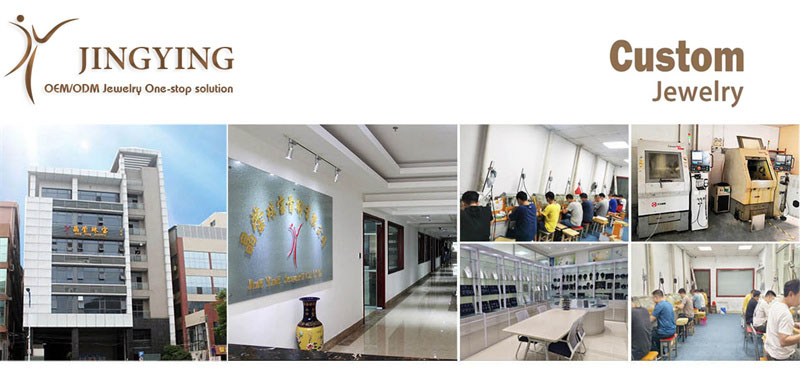
JINGYING is a manufacturer that offers high-quality, durable jewelry and private label / OEM services.
JINGYING produce pieces made of copper gold-plated, sterling silver (925) gold-plated, and potentially solid gold options, with a strong focus on quality, durability, and long-lasting plating.
Over the last 23 years, JINGYING Jewelry has been providing a one-stop solution for brand jewelers in terms of OEM/ODM and customized work. We can create a great art jewelry collection in fine jewelry making using just your thoughts, photos, or CAD designs.
We provide ODM/OEM services for 100% real gold and 925 sterling silver rings, necklaces, pendants, earrings, bracelets, and pearl jewelry, including rings, sterling silver cross necklaces, heart necklaces, white gold earrings, and gold tennis bracelets, with personalized logos and packaging.