How to Advise on Customized Gold-Plated Jewelry Tarnish
Customized gold-plated jewelry occupies a peculiar position in the market: it carries the emotional weight of personalization and the aesthetic appeal of gold, yet it is built on a material reality that makes tarnish an eventual certainty rather than a remote possibility. For jewelers, boutique owners, and custom-design sellers, the question is not whether a gold-plated piece will tarnish, but how to prepare customers for that eventuality without undermining the value of the purchase. The advice a seller gives—and the way it is framed—can mean the difference between a customer who feels informed and cared for and one who feels misled. This article provides a practical, science-grounded framework for advising on tarnish in customized gold-plated jewelry, from point-of-sale expectation-setting through aftercare and complaint resolution.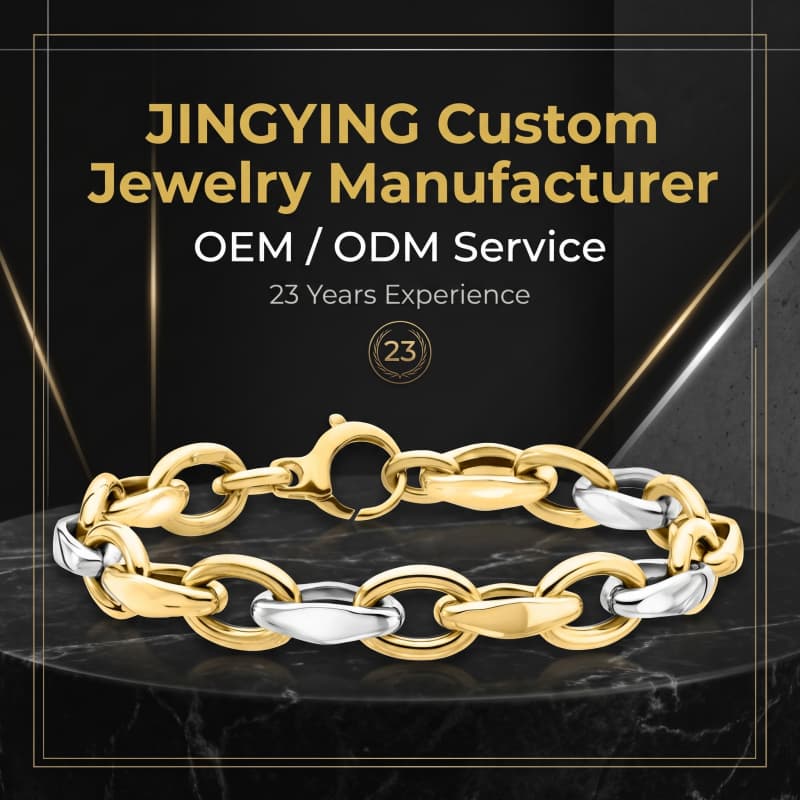
The Science of Tarnish: What Customers Need to Understand
The first step in advising customers is to establish a clear, non-technical explanation of why gold-plated jewelry tarnishes. Pure gold does not tarnish; it is chemically inert and resistant to oxidation. The tarnish customers observe on plated pieces originates elsewhere. Gold-plated jewelry consists of a thin layer of gold applied over a base metal—typically brass, copper, nickel, or silver—through electroplating. When that gold layer remains intact, the piece retains its golden appearance. Tarnish occurs when the gold layer wears thin, develops micro-abrasions, or is breached, allowing the underlying base metal to react with oxygen, moisture, and sulfur compounds in the environment. The base metal oxidizes, and the discoloration shows through the gold layer, giving the piece a dull, darkened, or greenish appearance depending on the base metal composition.
The thickness of the gold layer is the single most consequential variable in determining how quickly this process unfolds. Plating thickness is measured in microns, and the range in commercial jewelry is wide. Budget fashion jewelry may carry plating as thin as 0.1 to 0.3 microns, with an expected lifespan of just two to six months under regular wear; premium plated jewelry typically ranges from 0.5 to 2.5 microns, with a realistic lifespan of one to three years; and vermeil, which requires a minimum of 2.5 microns over sterling silver, can last five to ten years with careful use. For context, a sheet of plain paper is approximately seventy microns thick, so even relatively robust plating is remarkably thin. This is not a defect in the product; it is the nature of the category. A customer who understands that plating is a surface finish—not a solid material—is far better equipped to accept the changes that occur over time.
Setting Expectations at the Point of Sale
The most effective tarnish advice is the advice given before the piece is worn for the first time. Customers who learn about tarnish only after discoloration appears are far more likely to interpret the change as a quality failure. Jewelers and sellers should therefore treat expectation-setting as a core part of the sale, not an afterthought.
Transparency is the foundation. A simple, direct explanation works best: the piece has a thin layer of real gold over a base metal, and that layer will gradually wear with exposure to water, sweat, cosmetics, and friction. This is not a reason to avoid the purchase—it is the reason the piece is affordable and customizable. The value proposition should be framed around design, personalization, and accessibility rather than durability equivalent to solid gold. Customers should be explicitly told what not to expect: a plated piece is not waterproof, will not remain pristine indefinitely, and is not a substitute for solid gold in terms of longevity.
This conversation can be supported with tangible materials. A small care card included with the purchase, a brief care section on the product page for online sales, or a printed insert in the packaging reinforces the verbal message and gives the customer a reference to return to. Staff should know which pieces are gold-plated brass, which are plated stainless steel, and which are vermeil, because the care recommendations and realistic lifespans differ. When a customer is choosing between a customized plated piece and a more durable alternative, that knowledge allows the seller to make an honest recommendation rather than an oversell.
Prevention in Daily Wear
The practical advice for extending the life of gold-plated jewelry revolves around minimizing exposure to the agents that accelerate plating wear and base-metal oxidation. Water is the most consistent enemy. Chlorinated pool water, salt water, and even prolonged contact with hot water and soap in the shower can degrade the gold layer and accelerate corrosion of the base metal. Customers should be advised to remove plated pieces before showering, bathing, swimming, and washing dishes.
Cosmetics and personal care products present a second major category of risk. Perfumes, lotions, sunscreens, hairspray, and makeup contain alcohols, oils, and chemical compounds that can strip or discolor the gold plating and leave residue that traps moisture against the surface. The practical rule is “last on, first off”: jewelry should be put on after cosmetics and perfume have dried, and removed before they are applied. Exercise and heavy perspiration also warrant removal, not because sweat is uniquely corrosive, but because prolonged moisture and salt exposure accelerate the breakdown of the plating. Sleep is another overlooked risk; the friction and micro-scratches caused by tossing and turning gradually thin the gold layer.
Cleaning habits matter as much as wearing habits. The safest routine is a brief, gentle wash with lukewarm water and a single drop of mild dish soap, applied with a soft cloth or a soft-bristled brush, followed by immediate rinsing and thorough drying with a lint-free cloth. Abrasive materials should be avoided entirely: toothpaste, baking soda, rough fabrics, and silver polishing cloths can all scratch or chemically attack the plating. Silver polishing cloths are particularly counterproductive, because they are designed to remove tarnish from silver and will remove the gold plating along with it. Ultrasonic cleaners and ammonia-based jewelry cleaners are too aggressive for plated surfaces and should not be used.
Storage is the final pillar of prevention. Plated pieces should be stored individually in soft pouches or lined compartments to prevent scratching, and kept in a cool, dry place away from humidity. Anti-tarnish pouches, strips, or acid-free tissue can help absorb moisture and sulfur compounds from the air, slowing oxidation when the piece is not being worn. A bathroom is a poor storage location precisely because of the humidity generated by showers and baths. Rotation of pieces—avoiding daily wear of the same item—also extends lifespan by allowing the plating to recover from cumulative friction and moisture exposure.
When Tarnish Appears: Restoration and Replating
Even with excellent care, tarnish will eventually appear on gold-plated jewelry. The appropriate response depends on the severity. Light surface dullness or early discoloration can sometimes be improved by gentle cleaning with mild soap and a soft cloth, followed by thorough drying. However, customers should be cautioned against over-polishing; repeated aggressive polishing removes additional gold and accelerates the underlying problem. For more significant tarnish or visible plating wear, the only true restoration is professional replating. A jeweler can strip the remaining plating, prepare the base metal, and apply a fresh gold layer, restoring the piece to its original appearance.
This is an important point of advice because it reframes tarnish not as a terminal failure but as a maintenance event. Customers who understand that replating is possible are more likely to view the piece as a long-term object rather than a disposable one. Sellers can offer replating as a service or refer customers to a trusted jeweler, and they should be honest about the economics: replating a low-cost plated piece may approach or exceed the original purchase price, whereas replating a meaningful customized piece with sentimental value may be entirely worthwhile. Matching the recommendation to the customer’s relationship with the object is part of good advice.
Quality as Prevention: Specification Advice for Customized Pieces
For sellers who commission or specify customized gold-plated jewelry, tarnish advice begins at the product-development stage. The most effective way to reduce tarnish complaints is to reduce the rate at which tarnish occurs. This means prioritizing plating thickness. A specification of 0.5 microns or less will produce a piece that tarnishes within months under normal wear; a specification of 2 to 3 microns, or vermeil-grade plating at 2.5 microns or above over sterling silver, will produce a piece with a multi-year lifespan and a far lower likelihood of early customer dissatisfaction. The cost difference is real, but so is the difference in customer experience.
Protective coatings are another useful specification tool. An electrocoat or e-coating—a clear, thin polymer layer applied over the gold plating—creates a barrier against moisture, oxygen, and cosmetics, and can meaningfully delay the onset of tarnish. Base metal selection also matters. Brass and copper are more prone to oxidation than silver or stainless steel, and the color of the tarnish will differ accordingly—copper tends toward green or brown, silver toward gray or black. Stainless steel base metal offers better corrosion resistance and is a strong choice for customized pieces intended for everyday wear. For customers who prioritize durability above all, solid gold or gold-filled alternatives should be presented honestly as options, even if they sit at a higher price point.
Handling Complaints with Empathy and Solutions
No amount of preventive advice eliminates every complaint. When a customer returns with a tarnished customized piece, the seller’s response determines whether the relationship is damaged or strengthened. The first principle is empathy without defensiveness. Acknowledging the disappointment—“I understand; it is frustrating when a favorite piece changes appearance”—costs nothing and sets a constructive tone. The second principle is clear explanation without blame. The customer should be reminded, gently, that plated jewelry has a thin gold layer over a base metal and that tarnish is the natural result of that layer wearing with exposure to water, cosmetics, and daily friction. Avoid language that implies the customer “wore it wrong” or failed to care for it properly; the goal is education, not recrimination.
The third principle is offering a path forward. Depending on the severity and the seller’s policy, this may include a one-time replacement, a discount on a future purchase, a referral for replating, or a recommendation for a more durable material if the customer’s lifestyle is incompatible with plated jewelry. A clear, consistently applied return policy prevents ad hoc decision-making and signals professionalism. Finally, every complaint is data. If tarnish complaints cluster around a particular product line or plating specification, that is a signal to revisit sourcing or to adjust the care information provided at the point of sale.
Conclusion
Advising on tarnish in customized gold-plated jewelry is ultimately an exercise in honest expectation management. The pieces are not solid gold, and they will not behave like solid gold; pretending otherwise guarantees disappointment. But when customers understand the material reality—a thin gold layer over a base metal, vulnerable to wear but capable of years of enjoyment with proper care—they can make informed choices and take practical steps to protect their purchase. Sellers who combine transparency at the point of sale with clear care guidance, realistic specifications, and empathetic complaint handling transform tarnish from a source of conflict into a demonstration of expertise. In a category where the surface is thin, the advice around it is what gives the relationship depth.