Introduction: The Value Beyond the Price Tag
The decision to commission a custom piece of jewelry, especially from a distinguished atelier like JINGYING, is an investment in narrative, artistry, and personal identity. Unlike purchasing a mass-produced item from a catalog, you are not buying a product; you are funding a creative process that transforms your vision into a tangible, wearable heirloom. Consequently, the question of budgeting is not one of finding the cheapest option, but of understanding the value proposition and the multifaceted factors that contribute to the final cost. This guide will demystify the pricing structure of custom jewelry at JINGYING, providing you with the knowledge to plan a realistic budget, make informed choices, and ultimately, partner effectively with master jewelers to create a piece whose emotional and aesthetic worth far exceeds its monetary price.
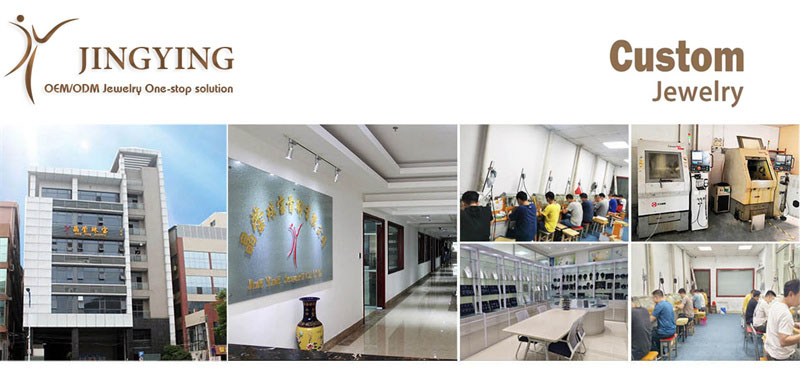
At its core, a custom jewelry budget at JINGYING is built upon four fundamental pillars: Design & Craftsmanship, Materials, Complexity, and Brand Value. We will explore each in detail, providing real-world price ranges and illustrative case studies to guide your planning.
Part 1: The Foundational Cost Pillars of Custom Jewelry
1. Design and Artisanal Craftsmanship: The Irreplaceable Core
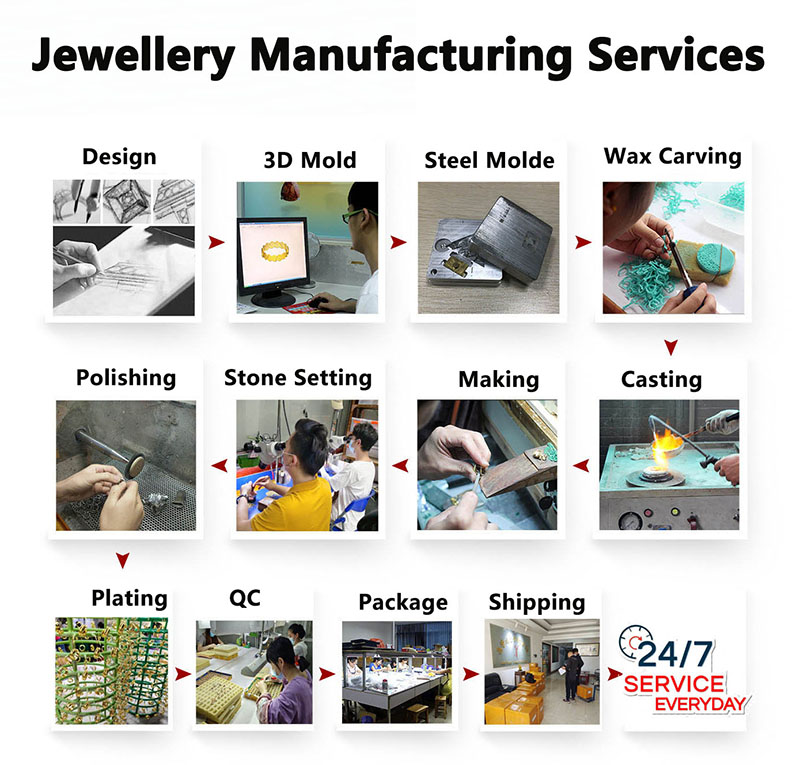
This is the single most significant and justifiable portion of your budget at a house like JINGYING. It encompasses the intellectual property, skilled labor, and time-intensive processes that distinguish custom work.
- The Creative Fee & Consultative Process: Your journey begins with a consultation, where ideas are translated into actionable designs. JINGYING’s designers are not salespeople; they are artists and engineers. Their expertise in translating abstract concepts—a memory, a feeling, an organic form—into a structurally sound and beautiful design commands a fee. This covers:
- Multiple design iterations and sketches.
- Technical drawing to ensure structural integrity.
- 3D Modeling & CAD (Computer-Aided Design): The creation of a precise digital blueprint. This stage is crucial for visualizing proportions, balance, and wearability. Revisions at this stage are standard and part of the value.
- Expert Guidance: Their advice on stone selection, metal behavior, and wearability prevents costly mistakes.
- The Mastery of the Bench Jeweler: After design approval, the piece moves to the workshop. Here, master jewelers and setters, often with decades of experience, bring the design to life. Their labor is measured in meticulous hours:
- Hand-Fabrication: Sawing, filing, soldering, and forming metal by hand. This is where the “handmade” quality becomes evident, with subtle imperfections that give the piece soul.
- Stone Setting: A high-risk, precision task. Setting a diamond requires a different skill set than setting a fragile opal or a cluster of pavé stones. Poor setting can damage stones; exemplary setting secures and enhances them for a lifetime.
- Finishing & Polishing: The final surfacing—achieving a mirror polish, a satin matte finish, or a textured hammered effect—is an art in itself. JINGYING’s signature finishes are a hallmark of their quality.
- Quality Control: Every millimeter is inspected under magnification.
Budget Implication: The craftsmanship fee is typically a combination of a fixed design/modeling cost and an hourly bench rate. For a JINGYING-caliber studio, expect the baseline labor and design cost to start between $800 and $3,000, even for a relatively simple piece in sterling silver. For complex gold pieces with intricate details, this can easily reach $5,000-$15,000 or more.
2. Material Costs: The Tangible Foundation
Materials are the variable cost most people anticipate, but their pricing is nuanced.
- Precious Metals:
- Sterling Silver (925): The most accessible entry point. As a commodity, its price fluctuates but remains relatively low. However, at JINGYING, you pay not just for the raw metal weight, but for the skilled labor to transform it. A custom silver ring might have $50-$150 in metal, but the craftsmanship elevates its final value.
- Gold: The dominant cost driver for many pieces. You pay by weight and purity.
-
- 14K Gold (58.5% pure): The most popular choice for its balance of rich color, durability, and value. Less expensive than 18K.
- 18K Gold (75% pure): Has a deeper, richer hue and is more precious, but is also softer. Commands a 20-30% premium over 14K.
- Platinum: Denser, heavier, rarer, and hypoallergenic. It is almost always significantly more expensive than gold (often 1.5 to 2 times the cost), and its high melting point makes it more labor-intensive to work with.
- Vermeil & Gold Plating: JINGYING may offer heavy gold plating over sterling silver as a more accessible option for achieving a gold look. The cost is primarily in the labor and thick plating process, not the minimal gold used.
- Gemstones: The Realm of Infinite Variation
This is where budgets can scale dramatically. Key factors are the Four Cs for diamonds (Cut, Color, Clarity, Carat) and analogous qualities for colored stones (Color, Clarity, Cut, Carat weight, and Origin).- Diamonds: A well-cut 0.50ct center diamond can range from $1,000 to $4,000+ wholesale, depending on its other qualities. JINGYING will source stones based on your parameters, adding a markup for their expertise in selecting superior stones.
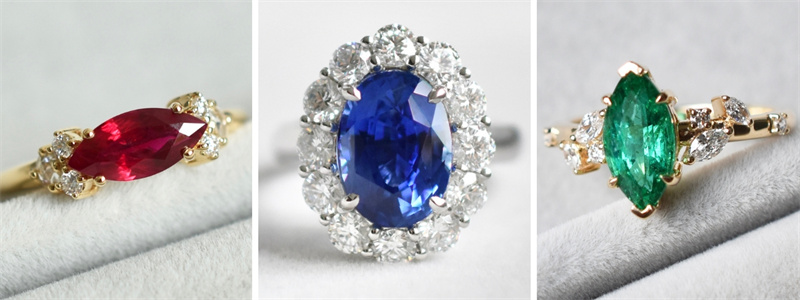
- Colored Gemstones (Sapphires, Rubies, Emeralds): Prices vary wildly. A 1ct heated sapphire from a common origin may be a few hundred dollars, while an unheated, vivid “cornflower blue” sapphire from Kashmir can cost tens of thousands per carat. Emeralds almost always have inclusions; the price reflects the balance of color and clarity.
- Semi-Precious & Alternative Stones: Amethyst, topaz, aquamarine, and tourmaline offer stunning colors at a lower price point. Organic materials like pearls or opals require special setting considerations.
Material Budgeting Tip: Always discuss the “center of gravity” for your budget with your designer. Is it a larger, simpler stone? Or a smaller, exceptional stone surrounded by intricate metalwork? JINGYING can optimize your design to highlight your priority.
3. Complexity and Technique: The Exponential Factor
Complexity is the multiplier on both craftsmanship and material costs. Simple, elegant designs are often the most challenging to execute flawlessly, but additional elements skyrocket time and difficulty.
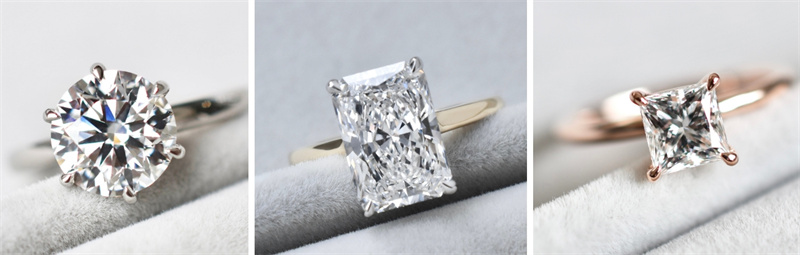
- Low Complexity: A plain band, a simple solitaire pendant, a sleek bezel-set ring. High craftsmanship, but minimal technical challenges.
- Medium Complexity: Multi-stone arrangements (three-stone rings, halo settings), incorporating two metal colors, hand-engraved patterns or milgrain, a custom-designed clasp.
- High Complexity:
- Full Pavé or Micropavé: Setting dozens or hundreds of tiny diamonds is incredibly time-consuming and requires a master setter.
- Invisible Settings, Tension Settings, or Complex Stone Channels.
- Integral Structural Designs: Where the form is unconventional and requires engineering.
- Hand-Carved Wax or Original Model Making for a unique, organic shape destined for casting.
- Incorporating Advanced Techniques: Such as mokume-gane (metal laminates) or plique-à-jour (vitreous enamel).
Budget Implication: A medium-complexity piece can be 2-3 times the labor cost of a low-complexity one. High-complexity work can be 5-10 times more, with commensurate increases in the material used (e.g., the gold weight of an intricate band, the dozens of pavé diamonds).
4. Brand Value and Guarantee
When you commission from JINGYING, you are also paying for peace of mind and a legacy of quality. This includes:
- Expertise and Taste: Access to top-tier designers who curate and refine your idea.
- Quality Assurance: Guarantees on stone security, metal purity, and craftsmanship.
- Ethical Sourcing: Confidence that materials are sourced from reputable, responsible suppliers.
- Aftercare Service: Policies for resizing, polishing, repairs, and sometimes even complimentary annual check-ups.
- The Intangible: The experience of the process, the presentation, and the pride of ownership from a respected name.
Part 2: Practical Budget Ranges for JINGYING Custom Pieces
These are estimated starting points for a complete piece from a studio like JINGYING. Remember, these are minimum thresholds; your specific design choices will determine the final cost.
Category 1: Entry-Point & Signature Silver (Starting Budget: $1,500 – $4,000)
- Focus: Exceptional design and craftsmanship applied to sterling silver, often with a minimalist or sculptural aesthetic.
- What You Get: A fully custom-designed ring, pendant, or pair of earrings in sterling silver. May feature a small accent diamond or a beautiful semi-precious stone (e.g., a cabochon moonstone, a faceted amethyst). The value is overwhelmingly in the design and handmade quality.
- Example: A sculptural sterling silver ring with a hand-textured surface and a flush-set 2mm diamond accent. Budget: ~$2,200.
Category 2: Fine Gold & Gemstone Essentials (Starting Budget: $4,000 – $10,000)
- Focus: Timeless designs in solid gold with genuine gemstones.
- What You Get:
- A solid 14K or 18K gold engagement ring with a lab-grown diamond (0.30-0.50ct) or a natural diamond in this size range.
- A custom gold necklace with a meaningful colored gemstone (e.g., a sapphire or tourmaline under 1ct).
- A pair of significant gold hoop or stud earrings with diamond accents.
- Example: A 14K yellow gold bypass ring with two 0.25ct lab-grown diamonds. Budget: ~$5,500.
Category 3: Statement & Heirloom Pieces (Starting Budget: $10,000 – $30,000+)
- Focus: Significant center stones, higher karat gold (18K, 22K), or platinum, and more complex designs.
- What You Get:
- An engagement ring with a 1ct+ natural diamond or a high-quality colored gemstone (e.g., a padparadscha sapphire).
- A ring or bracelet with intricate pavé work or elaborate metalwork.
- A cocktail ring with a large, dramatic semi-precious stone in a complex setting.
- Example: An 18K rose gold ring with a 1.2ct oval unheated Montana sapphire and a micropavé diamond halo. Budget: ~$18,000.
Category 4: High Jewelry & One-of-a-Kind Creations (Budget: $30,000 – Unlimited)
- Focus: Rare gemstones, exceptional craftsmanship, museum-quality design, and often, platinum.
- What You Get: A true legacy piece. This could involve a rare natural fancy-color diamond, a suite of perfectly matched Burmese rubies, or a revolutionary architectural design requiring hundreds of hours of labor. This is where JINGYING’s master jewelers create wearable art.
Part 3: The Collaborative Budgeting Process: A Step-by-Step Guide with JINGYING
A transparent atelier like JINGYING will guide you through this process without pressure.
- The Initial Inquiry & Self-Assessment:
- Define Your “Why”: Is this an engagement, a milestone gift, or a personal trophy? This sets the emotional budget.
- Set a Preliminary Financial Range: Be honest with yourself about a comfortable total investment. Communicate a range (e.g., $5,000-$7,000) rather than a single tight number.
- Gather Inspiration: Bring images, however vague. This helps the designer understand your taste.
- The Design Consultation: The Budget Conversation:
- Open Dialogue: A good designer will ask, “What is your ideal investment range for this project?” This is not rude; it’s essential for them to be a responsible partner.
- Trade-off Education: They will explain cost drivers. “A larger stone will increase the cost by X, but simplifying the band design could save Y.” “We can achieve a two-tone look with gold accents instead of a full two-metal construction.”
- Preliminary Quotation: Based on the conversation, they should provide a rough estimated range (e.g., $4,500 – $6,500). This is not a final quote but a feasibility check.
- Design Development & Formal Quotation:
- Once a design direction is chosen and a 3D model is approved, JINGYING will provide a formal, itemized quotation. This should clearly list:
- Design & CAD Fee
- Material Costs (metal weight/price, exact gemstone specifications and price)
- Labor Cost (estimated hours for fabrication, setting, finishing)
- Any applicable taxes
- A deposit (usually 50%) is required to begin production, with the balance due upon completion.
- Once a design direction is chosen and a 3D model is approved, JINGYING will provide a formal, itemized quotation. This should clearly list:
- Managing Your Budget: Smart Strategies
- Prioritize: Choose one “splurge” element (e.g., a perfect center stone) and be flexible elsewhere (e.g., a simpler band, 14K instead of 18K gold).
- Consider Lab-Grown Diamonds: They offer identical physical and chemical properties to mined diamonds at a significantly lower cost, allowing for a larger or higher-quality stone within your budget.
- Explore Alternative Gemstones: A stunning spinel, sapphire, or tourmaline can offer incredible color and brilliance for less than the “big three” (ruby, sapphire, emerald).
- Embrace Creative Metalwork: Sometimes, an ingenious and beautiful design in gold can be more impactful than a simple setting with a mediocre stone.
Part 4: Case Studies: Real-World Budget Scenarios at JINGYING
Case Study 1: The Modern Heirloom Engagement Ring
- Client Brief: ”A unique, non-traditional engagement ring that feels both modern and timeless. I love the idea of an oval stone and want it to be ethically sourced.”
- Design: An 18K recycled yellow gold band with a gently twisted shank. It features a 1.01ct lab-grown oval diamond (excellent cut, F color, VS1 clarity) set in a low-profile bezel with milgrain detail. Two small, trapeze-cut sapphires are flush-set on the shoulders.
- Budget Breakdown:
- Design & CAD: $1,200
- Materials: 18K Gold ($850) + Lab Diamond ($3,800) + Sapphires ($300) = $4,950
- Labor (Complex fabrication, bezel setting, flush setting): $2,400
- Total Estimated Cost: $8,550
Case Study 2: The Signature Statement Cuff Bracelet
- Client Brief: ”A bold cuff bracelet for myself. I love organic, sculptural forms and texture. I don’t want any gemstones.”
- Design: A wide, asymmetrical sterling silver cuff, hand-forged and hammered to create a organic, rocky texture. The interior is perfectly smoothed for comfort. The piece has a slight taper and a hidden magnetic clasp.
- Budget Breakdown:
- Design & Modeling: $900 (for the original sculpting)
- Materials: Sterling Silver ($280)
- Labor (Extensive hand-forging, texturing, finishing): $3,500
- Total Estimated Cost: $4,680
Case Study 3: The Delicate Personalized Necklace
- Client Brief: ”A delicate everyday necklace with my children’s initials. Something I’ll never take off.”
- Design: A fine 14K rose gold rope chain (18″). Three tiny, hand-script initial charms (each 4mm high) in 14K yellow gold, soldered onto a subtle jump ring so they dangle gracefully.
- Budget Breakdown:
- Design & CAD (for custom font charms): $600
- Materials: 14K Rose Gold Chain ($420) + 14K Yellow Gold for charms ($180) = $600
- Labor (Precise charm fabrication, soldering, polishing): $950
- Total Estimated Cost: $2,150
Conclusion: Budgeting as an Act of Co-Creation
Determining your budget for a custom piece at JINGYING is the first and most important act of co-creation. It establishes the framework within which creativity and craftsmanship can flourish. By understanding the pillars of cost—Design, Materials, Complexity, and Value—you move from being a passive consumer to an informed patron.
A well-planned budget is not a constraint; it is a catalyst for clear communication and brilliant problem-solving. It allows the artists at JINGYING to apply their expertise to maximize beauty, meaning, and quality within your parameters. The final number is an investment in an object that carries a story no one else can tell, forged by skills few possess, and realized through a collaborative journey that is, in itself, a rare luxury. Begin with introspection, proceed with open dialogue, and prepare to invest not just in jewelry, but in the enduring pleasure of wearing a piece of your own story, masterfully told in metal and stone.