
Deconstructing the Cost: A Comprehensive Guide to Producing 30 Sets of Sterling Silver Chain Necklaces
The question, “How much does it cost to make 30 sets of chain necklaces over sterling silver?” appears deceptively simple. In reality, the answer is a complex equation with variables spanning materials, labor, design, scale, and business philosophy. Producing 30 sets is a unique endeavor—it’s beyond a one-off custom piece but not yet at the economies of scale of mass production. This article will meticulously deconstruct every cost component, providing both a tangible framework for estimation and a deeper understanding of the jewelry production ecosystem.
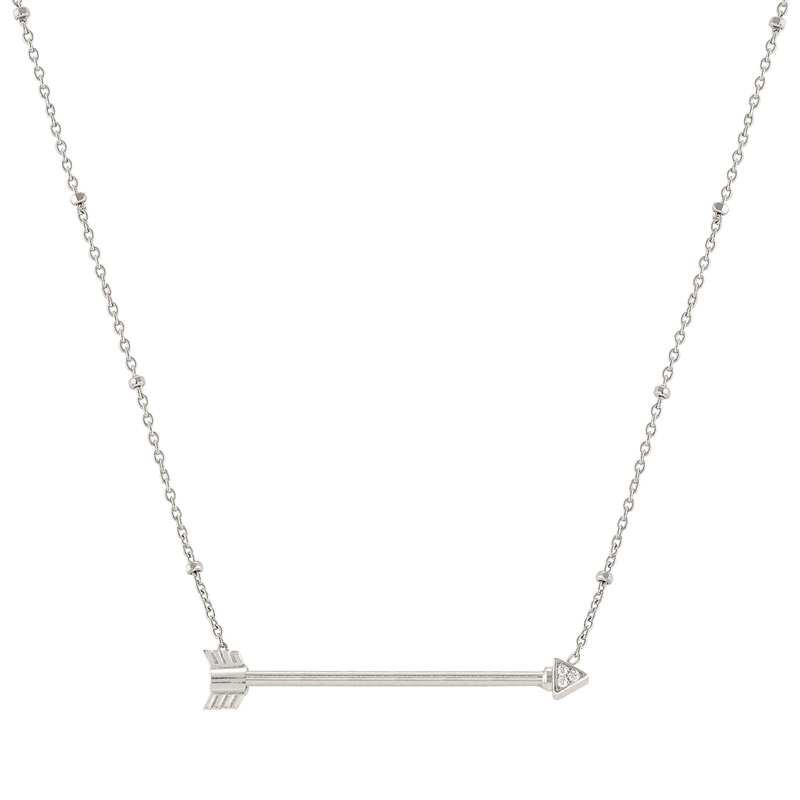
We will define a “set” as a matching necklace and bracelet pair, a common and marketable combination. The “chain necklace” specifies the style, but even within that category, dramatic cost differences exist.
Part 1: The Foundational Cost Variables
Before calculating a single number, four core variables must be defined, as they influence every subsequent cost.
- Design Complexity:
- Simple Chain (e.g., Cable, Rope, Figaro): Uses standard, often machine-made chain. Cost is driven primarily by silver weight and finishing.
- Intermediate Chain (e.g., Singapore, Byzantine, Serpentine): May involve hand-weaving or more complex machine links. Labor costs increase.
- Complex/Statement Chain (e.g., Hand-woven Maille, Intricate Link Patterns): Highly labor-intensive, potentially requiring custom tooling or jigs. Labor dominates the cost.
- Production Method:
- Fully Handmade: From wire drawing to link forming, assembly, and soldering. Highest labor cost, unique artistry.
- Hand-Assembled from Pre-made Chain: Purchasing bulk chain by the foot and hand-finishing clasps. The most common method for small batches.
- Fully Machine-Made & Finished: Requires sourcing from a specialized manufacturer. Lower per-unit labor but involves tooling fees and minimum order quantities (MOQs).
- Sterling Silver Specifications:
- Silver Weight (Grammage): The single largest material cost driver. A delicate 2mm cable chain versus a substantial 6mm curb chain can have a 5x difference in silver weight per foot.
- Silver Purity & Form: .925 Sterling Silver is standard. Cost varies if buying sheet, wire, pre-formed links, or bulk chain.
- Geographic Location of Production:
- Labor rates, studio overhead, and even silver premiums differ globally. Production in North America/Western Europe, Southeast Asia, or India carries vastly different cost structures.
For this analysis, we will model a mid-range scenario: A 18-inch necklace and 7-inch bracelet set in a medium-complexity chain (like a Singapore or Omega style), hand-assembled from quality pre-made chain in a small studio in the United States or Western Europe. We will then provide adjustments for other scenarios.
Part 2: The Detailed Cost Breakdown (The 30-Set Model)
Here, we move from abstract variables to concrete line items.
A. Direct Material Costs (DMC)
This is the cost of physical components that end up in the final product.
- Sterling Silver Chain (Bulk):
- Calculation: Determine total feet needed. 30 necklaces x 1.5 ft (18″) = 45 ft. 30 bracelets x 0.58 ft (7″) = 17.5 ft. Total: 62.5 feet.
- Waste allowance (for cutting, end finishes): 10% = ~69 feet needed.
- Cost: Singapore chain (3mm wide) weighs ~8 grams per foot. 69 ft x 8g = 552 grams.
- Silver Price: Assume a spot price of $0.80 per gram for pure silver. Sterling (92.5% pure) silver value = 552g * 0.925 * $0.80 = $408.
- Manufacturing Premium: You’re not buying raw silver; you’re buying fabricated chain. This premium covers the mill’s labor, profit, and distribution. For decent quality chain, this can double the metal cost. Premium: +$408.
- Subtotal Silver Chain: $816.
- Note: Buying from a reputable bullion dealer or jewelry supplier is crucial for guaranteed purity.
- Findings (Clasps, Jump Rings, End Caps):
- For 30 sets, you need 60 clasps (lobster claw or spring ring), 120 jump rings (for clasp attachment), and potentially 60 end caps/crimps if using pre-made chain.
- Cost: Sterling silver findings vary. Estimate:
- Clasps: $2.50/ea x 60 = $150
- Jump Rings: $0.25/ea x 120 = $30
- End Caps: $0.75/set x 60 = $45
- Subtotal Findings: $225.
- Packaging & Branding:
- For 30 sets, professional presentation is key.
- Individual Jewelry Boxes (or pouches): $1.50 – $3.00 per unit. ($2.25 avg x 30 = $67.50)
- Branded Tags/Labels: $0.50 per set x 30 = $15
- Shipping Boxes & Fill for final customer: $1.00 per set x 30 = $30
- Subtotal Packaging: $112.50.
- For 30 sets, professional presentation is key.
Total Direct Material Cost (DMC): $816 + $225 + $112.50 = $1,153.50
B. Direct Labor Costs (DLC)
The cost of hands-on work to transform materials into finished goods.
- Labor Time & Rate:
- Process for Hand-Assembly: 1) Cut chain to length, 2) Solder/attach end caps/crimps, 3) Attach jump rings and clasp, 4) Initial polish, 5) Quality check.
- Time Estimate: For an experienced artisan, this process may take 20-25 minutes per set. We’ll use 22 minutes (0.367 hours).
- Labor Rate: A fair studio wage in the US/Europe for skilled work is $25-$45/hour. We’ll use $35/hour.
- Calculation: 30 sets x 0.367 hours x $35/hour = $385.35.
- Labor Burden: This includes employer-paid taxes, benefits, and insurance. A standard burden rate is 15-30% of wages. At 20%: $385.35 * 0.20 = $77.07.
Total Direct Labor Cost (DLC): $385.35 + $77.07 = $462.42
C. Overhead Costs (OH)
The ongoing costs of running a business, allocated to this production run.
- Studio/Rent & Utilities: Proportionate cost for the time spent. If monthly studio cost is $600, and this project takes one full week (25% of a month), allocated cost = $150.
- Equipment & Tool Depreciation: Polishing motors, tweezers, soldering stations, etc. Allocate ~$50 for a batch of 30.
- Consumables: Not direct materials, but used in production. Polishing compounds, soldering flux and pick, sandpaper, ultrasonic cleaning solution. ~$40.
- Administrative & Software: Time spent on ordering, design, correspondence, using design software. ~$60.
Total Allocated Overhead (OH): $150 + $50 + $40 + $60 = $300
D. One-Time & Development Costs (Amortized)
Costs incurred once, spread across the batch.
- Design & Prototyping: Time spent sourcing, sampling, and creating the first perfect set. 5 hours at $35/hour = $175. Amortized over 30 sets = $5.83/set.
- Tooling/Jigs: If a custom jig was made for consistency, cost $100. Amortized = $3.33/set.
Total Amortized Development Cost: ($175 + $100) / 30 = $9.16 per set, or $274.80 for the batch.
Part 3: The Total Cost Calculation & The “Cost Per Set”
Now, we sum the categories to find our Total Cost of Production (TCP).
- Total Direct Materials (DMC): $1,153.50
- Total Direct Labor (DLC): $462.42
- Total Overhead (OH): $300.00
- Total Development (Amortized): $274.80
- Total Cost of Production (TCP) for 30 Sets: $2,190.72
Cost Per Set (Necklace + Bracelet): $2,190.72 / 30 = $73.02
This is the bare cost to produce one set in our model scenario. It is not the price.
Part 4: From Cost to Price: The Business Reality
A business must make a profit and cover unforeseen expenses. This is achieved through markup.
- Wholesale Price: This is what a retailer would pay. Standard markup is 2.2x to 2.8x TCP (Keystone, or 2x, is a minimum).
- Using a 2.5x markup: $73.02 x 2.5 = $182.55 per set wholesale.
- Total Wholesale Order Value: 30 x $182.55 = $5,476.50.
- Retail Price: This is the final consumer price. Retailers typically markup wholesale by 2x to 2.5x.
- Using a 2.2x retail markup: $182.55 x 2.2 = $401.61 per set retail.
- Your 30 sets, if sold through a boutique, could have a total retail value of $12,048.30.
- Direct-to-Consumer (DTC) Price: Selling yourself online or at markets, you might price between wholesale and retail, capturing more margin. A common formula is 3.5x to 4x your TCP.
- Using a 3.8x multiplier: $73.02 x 3.8 = $277.48 per set DTC.
The Critical Insight: The “cost to make” ($73.02) is a fraction of the final value. The gap covers business survival, growth, marketing, and profit.
Part 5: Scenario Analysis – How Costs Can Swing Dramatically
Our $73.02 model is just one point on a spectrum.
- Scenario A: The “Budget” Minimalist Set.
- Design: Delicate 1.5mm Cable chain.
- Method: Pre-made chain, basic clasp, simple pouch.
- Silver Weight: ~3g/foot. Total silver cost drops to ~$300.
- Labor: 15 min/set due to simplicity.
- Estimated TCP/Set: $28 – $35.
- Scenario B: The “Luxury” Artisan Set.
- Design: Hand-forged, heavy 6mm curb chain with custom clasp.
- Method: Fully handmade from silver wire.
- Silver Weight: ~15g/foot. Silver cost soars to ~$1,500.
- Labor: 90+ min/set for forging, filing, soldering.
- Estimated TCP/Set: $250 – $400+.
- Scenario C: The “Offshore Manufacturing” Option.
- Sourcing 30 sets from a manufacturer in Thailand or India.
- TCP might drop to $20-$40 per set due to lower labor and overhead.
- But: You must factor in high MOQs (may need to order 100+ sets), import duties (5-10%), shipping, quality control risks, and less flexibility. The development/sampling process can also be costly and lengthy.
Part 6: Hidden Costs & Risk Mitigation
Novice producers often underestimate these:
- The Cost of Mistakes: Silver scrap can be recycled, but you lose the manufacturing premium and labor. Allocate 5-10% of material cost for error.
- Shipping & Insurance: For raw materials and, if applicable, finished goods. Can add 3-5% to material costs.
- Payment Processing Fees: If selling DTC, platforms like Shopify/PayPal take 2.9% + $0.30 per transaction.
- Photography & Marketing: Essential for sales. A professional photoshoot for 30 sets could cost $300-$800.
- Cash Flow Timing: You must pay for materials and labor months before you see revenue from sales.
Part 7: Practical Steps for Your Accurate Estimate
- Finalize Your Design: Sketch it. Specify chain type, width, length, and clasp.
- Source and Get Quotes: Contact suppliers (Rio Grande, Stuller, local dealers, Alibaba for manufacturers) for exact prices on the chain and findings for 30 units.
- Time Yourself: Create a prototype and time each step meticulously. Be realistic.
- List All Overheads: Calculate your true monthly running costs.
- Use the Formula: TCP = (Materials + Labor + Overhead) + Development. Then apply your desired markup.
Conclusion
So, how much does it cost to make 30 sets of chain necklaces over sterling silver?
For a small studio producing a mid-range design, the Total Cost of Production will likely range from $1,800 to $2,500 for the entire batch, translating to $60 to $85 per set. This cost is the foundation. The final price tag—whether $150 wholesale or $400 retail—reflects not just silver and labor, but expertise, brand value, business sustainability, and the intrinsic desire for adornment.
The journey from raw silver to a finished necklace is a alchemy of economics and artistry. Understanding this cost matrix is the first, and most crucial, step in transforming a creative idea into a viable, beautiful product. Whether you are an aspiring jeweler, a boutique owner, or a curious consumer, this knowledge demystifies the value that hangs around the neck and wrist, revealing that the true cost encompasses far more than the weight of precious metal alone.