The allure of custom jewelry is undeniable. It is the antithesis of off-the-shelf mass production; it is a collaborative alchemy that transforms a fleeting thought, a cherished memory, or a profound emotion into a tangible, sparkling reality. To own a piece of custom-designed jewelry is to possess a unique artifact of personal history, a wearable story that no one else in the world can claim . However, the journey from a client’s initial vision to the final polished piece is neither instant nor simple. It is a meticulous, multi-stage process that demands time, expertise, and a close partnership between the client and the artisan.
For those embarking on this exciting journey, the most pressing question is often: “How long will it take?” The answer, while variable, generally spans from as little as two weeks to over six months . This wide range is not a sign of ambiguity but a reflection of the countless variables at play—from the complexity of the design and the availability of materials to the specific work processes of the jeweler and the client’s own responsiveness. This essay provides a comprehensive exploration of the custom jewelry timeline, dissecting each phase of the process and analyzing the key factors that influence how long it takes to bring a dream to life.
Defining the Landscape: Bespoke vs. Made-to-Order
Before delving into the timeline, it is crucial to distinguish between “custom-made” (or “bespoke”) jewelry and “made-to-order” jewelry, as the time commitment for each differs significantly .
Made-to-order jewelry begins with an existing, in-house design from a jeweler’s collection. The design is fixed, but the piece is not mass-produced and kept in inventory. Instead, it is crafted specifically for the customer after the order is placed . This process allows for minor adjustments, such as resizing a ring or swapping a gemstone for a different standard option. Because the foundational design work is complete, the production timeline is relatively swift. For instance, a brand like Poppy Finch cites a production timeline of 3-7 business days for their made-to-order pieces . Similarly, Valquère notes that their standard collection designs typically have a lead time of 10-15 working days within the EU .
In contrast, custom-made or bespoke jewelry is created from a blank slate. It begins with a conversation, an idea, or even just a feeling . Every element—from the initial sketch and material sourcing to the final fabrication—is thoughtfully tailored to the individual. There is no pre-existing template. Consequently, this process requires a significantly longer timeline, often starting at 4-6 weeks and extending outward based on the project’s unique demands .
The Foundational Phase: Consultation, Design, and Approval (1-5 Weeks)
The creation of a custom piece is a linear process where each step builds upon the last. The initial phase, focused on ideation and planning, is the bedrock upon which the entire project rests. Rushing this stage can lead to misunderstandings, dissatisfaction, and costly delays later on.
1. The Initial Consultation and Ideation (Several Days to 1 Week)
The journey begins with an in-depth conversation between the client and the jeweler or designer . This is arguably the most important step. The jeweler’s role is to act as a listener, an interpreter, and a guide. They must extract not just the superficial details but the essence of what the client envisions. Key discussion points include:
- The Vision: Does the client have a rough sketch, a photo of a style they admire, or just a collection of abstract ideas? Inspiration can come from anywhere—architecture, nature, a piece of fabric, or a Pinterest board [citation:11].
- Practicality and Budget: The jeweler will advise on what is technically possible and durable, especially for rings that will be worn daily. They will discuss the budget, which dictates the choice of materials, the quality of gemstones, and the intricacy of the design .
- Timeline Expectations: The client should communicate any hard deadlines, such as a proposal date or an anniversary. This allows the jeweler to assess feasibility and prioritize the work if possible .
This stage can take anywhere from a few days, if the client has a very clear idea, to over a week, if they need time to explore options and digest information.
2. Design and Technical Rendering (1 to 3 Weeks)
With a clear understanding of the client’s desires, the jeweler translates words and feelings into visual concepts. Traditionally, this began with hand-drawn sketches. Today, the industry standard is Computer-Aided Design (CAD) . A CAD designer uses specialized software to create a detailed, three-dimensional model of the piece. This digital rendering can be rotated, zoomed, and viewed from every angle, providing a hyper-realistic preview of the final product .
The creation of the initial CAD model is a skilled task that can take a few days to a week . For example, Whiteflash, a prominent online jeweler, allocates approximately 7 business days for the entire design phase . Upon completion, the client receives the CAD images for review. This is where the collaborative process intensifies.
3. Review, Revisions, and Final Approval (Several Days to 1+ Weeks)
The client reviews the CAD design, often with a critical eye. They might request changes to the band’s thickness, the height of the setting, the placement of accent stones, or the profile of the shank. These revisions are a normal and vital part of the process. The designer makes the adjustments and sends a new version for approval .
The number of revision rounds directly impacts the timeline. A client who knows exactly what they want might approve the design after one or two tweaks. Others may go through four or five rounds of revisions to achieve perfection. Some jewelers also offer a physical wax model at this stage. Using a 3D printer, they can create a wax replica of the ring, allowing the client to feel the size and weight of the piece before any metal is cast . This adds another layer of time—often a few days for printing and shipping—but provides invaluable peace of mind. This entire design and approval process can last anywhere from 2 to 5 weeks, depending on the project’s complexity and the client’s decision-making speed [citation:11].
The Material Hunt: Sourcing and Procurement (Simultaneous, 1-4 Weeks)
While the design is being finalized, or immediately after its approval, the jeweler begins sourcing the necessary materials. This is a parallel process that can sometimes run concurrently with the design phase but often dictates the overall project pace.
Gemstone Sourcing
If the project involves a specific, rare gemstone, this can be the most time-consuming variable . While a jeweler may have a stock of common diamonds and sapphires, sourcing a perfectly matched pair of Colombian emeralds, a Paraiba tourmaline with a specific neon hue, or a large, flawless diamond with a particular certification can take time.
- Common Stones: If the required stone is readily available from the jeweler’s network of suppliers, this step might take only a few days .
- Rare or Specific Stones: Sourcing a stone with precise cut, color, clarity, and carat weight specifications can take 1 to 3 weeks or even longer [citation:11]. The jeweler may need to contact multiple suppliers, review certificates, and examine stones before making a purchase. For ethical or certified stones, ensuring all Kimberley Process documentation is in order is a necessary step that cannot be rushed .
Precious Metals
Sourcing precious metals like gold, platinum, or silver is generally faster than sourcing gemstones. Most jewelers keep a supply of common alloys in stock. However, if a client requests a less common metal, such as a specific shade of palladium white gold or a particular grain of recycled metal, it may need to be ordered, adding a few days to the timeline. A common question is whether a jeweler can melt down old family jewelry to create a new piece. While possible for sentimental reasons, experts often advise against it, as recycled metal can be porous or brittle, making it inferior to new, refined alloys for structural integrity. Instead, jewelers typically offer a trade-in credit for the old gold .
The Crucible: Production and Manufacturing (2-6 Weeks)
With an approved design and all materials in hand, the actual construction of the jewelry begins. This is where the digital design becomes a physical object, a process that blends ancient techniques with modern technology.
1. Casting or Fabrication
For most custom pieces, the first step is creating the metal foundation.
- Casting: The approved CAD design is used to create a mold. This is often done through the “lost wax” method, where a wax model of the piece is made (sometimes directly 3D-printed), encased in a plaster-like investment, and then burned out in a kiln, leaving a perfect cavity. Molten metal is then poured into this cavity, creating the rough form of the jewelry .
- Hand Fabrication: For some designs, particularly those with a heavy, hand-wrought aesthetic, the jeweler may choose to fabricate the piece entirely by hand, cutting, shaping, and soldering sheets and wires of metal. This technique is extremely labor-intensive and time-consuming but results in a piece that is truly one-of-a-kind.
2. The Bench Work: Setting, Assembly, and Finishing
This is the heart of the process, where the piece truly comes to life. Once the main metal form (the “casting”) is ready, it undergoes a series of intricate steps performed by skilled artisans :
- Pre-polishing and Fitting: The piece is smoothed and prepared for stone setting. Prongs are checked and trimmed.
- Stone Setting: This is a highly skilled and delicate operation. A master setter carefully places each diamond or gemstone into its pre-cut seat, securing it with precision. A simple solitaire setting might take a few hours, while a complex pave setting with dozens of tiny stones can take several days.
- Soldering and Assembly: If the piece has multiple components, such as a pendant bale or a complex shank, they are meticulously soldered together.
- Final Polish and Finishing: After the stones are set and all components are joined, the piece receives its final polish. This can include creating a high-shine mirror finish, a brushed matte finish, or a textured hammered effect.
- Hand Engraving: If the client has requested personalization, such as a handwritten message or intricate scrollwork on the inside or outside of the band, this is often done by a specialist engraver at the end of the process . Hand engraving is an art form in itself and can add significant time—often several extra days—compared to machine engraving .
The manufacturing time is directly tied to design complexity. A simple, classic solitaire ring with a pre-sourced diamond can be completed in as little as two weeks . However, a complex piece with intricate filigree, a multi-stone halo, and hand engraving will require the full 4 to 6 weeks (or more) that many jewelers quote for this phase .
The Final Gate: Quality Control, Inspection, and Delivery (1-2 Weeks)
Before a custom piece can be handed over to its overjoyed owner, it must pass through a rigorous final inspection. This is the jeweler’s last opportunity to ensure that the piece meets their exacting standards and the client’s expectations.
Quality Control and Certification
The finished piece is scrutinized under magnification. Jewelers check for:
- Structural Integrity: Are all prongs securely holding the stones? Are all solder joints strong and invisible?
- Cosmetic Perfection: Is the polish even and free of scratches? Is the hallmarks stamping clear?
- Accuracy: Does the final piece match the approved CAD design in every dimension and detail? Is the ring the correct size?
This quality control phase can take several days . If the piece requires official appraisal documents for insurance purposes, or if the diamond’s certification needs to be updated with the final setting information, this can add another few days to the process .
Shipping and Delivery
Once the piece is approved, it is carefully packaged and shipped. Domestic insured shipping with tracking typically takes 2 to 5 business days . International orders can take significantly longer, often 1 to 2 weeks, due to customs clearance procedures, which are unpredictable and beyond the jeweler’s control [citation:11]. Reputable jewelers insure the package for its full value up until the moment of delivery .
Key Factors Influencing the Overall Timeline
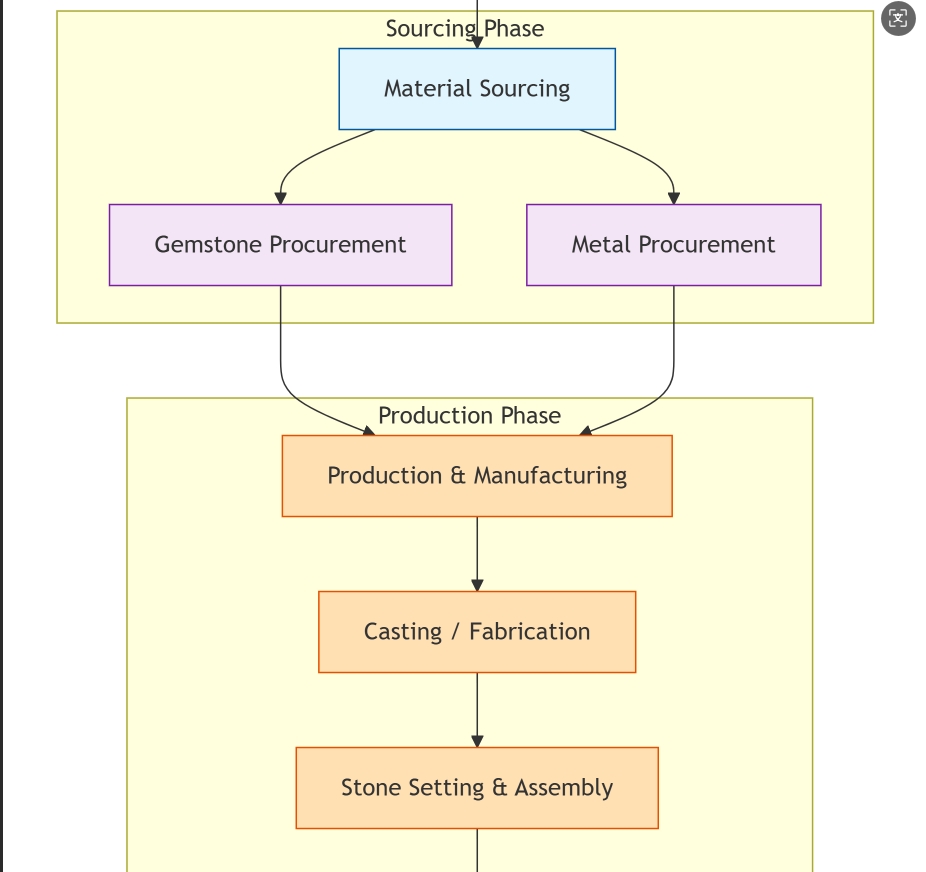
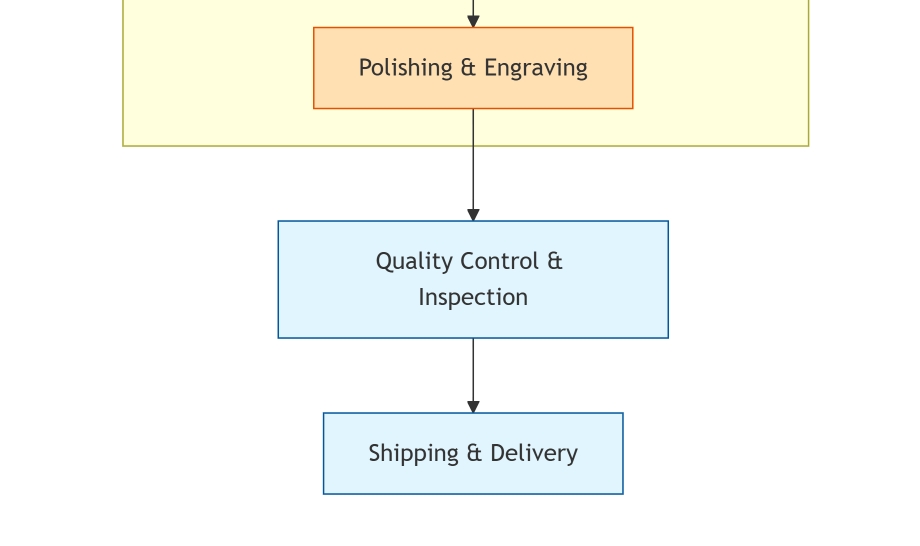
To synthesize the information above, the total time for a custom jewelry order—from first consultation to delivery—is a function of several interacting variables. The following chart visualizes the approximate duration and sequence of these key stages.

1. Design Complexity
This is the single most significant factor. Minimalist designs with clean lines and few stones are inherently faster to model, cast, and set than ornate pieces featuring intricate milgrain, filigree, multiple gemstones, or complex geometric patterns . A massive, sculptural piece will also take longer to cast and finish than a delicate, lightweight band .
2. Material Availability and Characteristics
As discussed, sourcing a rare gemstone is a major wildcard in the timeline . Furthermore, the type of metal can influence production speed. Platinum, for instance, is denser and harder than gold, making it more difficult to work with and polish, which can add time to the manufacturing process .
3. The Jeweler’s Workflow and Queue
Reputable jewelers are often busy. A custom piece is not the only project on their bench. The jeweler’s current workload will affect when they can start on a new design. A solo artisan might have a waiting list of several weeks, while a larger workshop with multiple jewelers may be able to begin sooner. Always ask about their current lead times during the initial consultation.
4. Client Responsiveness and Decision-Making
This is a frequently underestimated factor. The timeline is a partnership. Delays in responding to emails, approving CAD designs, or making decisions about stones can stall a project indefinitely [citation:11]. A project that requires only one round of CAD revisions will move to production weeks faster than one that requires four rounds, with the client taking several days to respond each time.
5. Seasonal Demand
The jewelry industry experiences predictable peaks in demand. The period leading up to Christmas, Valentine’s Day, and the summer wedding season sees a surge in orders . During these times, jewelers and their suppliers are working at maximum capacity, which can extend every phase of the timeline by two to four weeks .
Realistic Timeline Scenarios
Given these variables, what does a realistic timeline look like?
- A Simple Custom Piece: A client wants a custom pendant: a simple, polished 18k gold disc with a single diamond and a short, personalized message engraved on the back. The design is straightforward, the gold is in stock, and the diamond is a common size. Total estimated timeline: 3-5 weeks. (Design: 1 week, Sourcing: <1 week, Production: 2 weeks, QC/Shipping: 1 week).
- A Moderately Complex Engagement Ring: A client wants a ring with a specific, GIA-certified oval diamond they have already selected, set in a platinum band with two tapered baguette diamonds on the sides. The design requires a custom CAD model. Total estimated timeline: 6-9 weeks. (Design & Revisions: 2-3 weeks, Sourcing (baguettes): 1-2 weeks, Production: 3-4 weeks, QC/Shipping: 1 week).
- An Heirloom Redesign and Complex Project: A client wants to use the diamonds from an old art deco brooch to create a new ring with a nature-inspired design featuring leaves and vines. The old piece must be assessed and the stones carefully removed. The new design is highly detailed. Total estimated timeline: 12-20+ weeks. (Consultation/Stone Assessment: 1 week, Complex CAD with multiple revisions: 3-4 weeks, Production with intricate casting and hand-finishing: 6-8 weeks, QC/Shipping: 1 week).
The Role of Technology in Streamlining Production
Modern technology has significantly tightened timelines that would have been unthinkable a generation ago. CAD software allows for instant revisions and provides photorealistic imagery, reducing misunderstandings . Once a design is approved, the CAD file can be used for 3D printing a wax model directly, bypassing the need for hand-carving a wax prototype [citation:11]. This automated precision reduces errors and speeds up the casting process. Jewelers experienced in CAD/CAM (Computer-Aided Design and Manufacturing) can often complete a custom piece in a total of 19 business days (e.g., 7 for design, 12 for production), a remarkably efficient timeline .
Conclusion: A Journey Worth the Wait
Ordering a custom piece of jewelry is an act of trust and a celebration of individuality. The question of “how long does it take?” is best answered with another question: “What is the piece worth to you?” The timeline for a custom jewelry order, typically ranging from one month to six, is not merely a period of waiting. It is a period of becoming. It is the time required for skilled hands to translate a client’s vision into a technical drawing, for that drawing to be refined into a perfect digital model, for rare materials to be sourced from across the globe, and for master artisans to breathe life into metal and stone .
While the process demands patience, it is a patience rewarded with a result that is incomparably personal. Unlike an off-the-shelf purchase, a custom piece carries with it the story of its own creation—the conversations, the choices, the revisions, and the final, breathtaking reveal. The time invested is not a delay; it is a fundamental ingredient in the creation of an heirloom. It transforms a commodity into a treasure, ensuring that the piece you finally hold in your hand is not just jewelry, but a tangible piece of your own story, crafted to endure for generations