The decision to commission a custom ring is a significant one. It is an act of profound personal expression, whether for an engagement, a wedding, a milestone anniversary, or simply a statement of individual style. Unlike purchasing a piece from a display case, a custom ring is a collaborative journey—a process of transforming a vision, however abstract, into a tangible, wearable work of art . One of the most common and crucial questions that arises at the outset of this journey is: “How long will it take?”
In an age of instant gratification, where two-day shipping has become the norm, the timeline of bespoke craftsmanship can seem mysterious and, at times, anxiety-inducing. The answer, much like the design process itself, is not one-size-fits-all. The timeline for creating a custom ring can range from a swift three weeks to a meticulous six months, or even longer . To understand this wide range, one must deconstruct the entire process, identifying every variable, every potential bottleneck, and every moment of creative deliberation that contributes to the final schedule.
This article will provide a detailed, phase-by-phase breakdown of the custom ring creation process, moving from the initial spark of an idea to the final moment you slip the ring onto your finger. By the end, you will be equipped with the knowledge to set realistic expectations, plan effectively, and ensure your custom ring is completed not just on time, but to absolute perfection.
Part 1: The Universal Stages of Creation – A Standard Timeline Framework
Regardless of who is making your ring or how complex the design, the process almost always follows a similar sequence of stages. Each stage requires a certain amount of time, and understanding this flow is key to understanding the overall timeline. A typical, well-executed custom ring project for a moderately complex design takes approximately 4 to 8 weeks from initial consultation to final delivery . Let’s break down where that time is spent.
Phase 1: The Consultation & Design Development (1-2 Weeks)
This is the foundational stage where abstract ideas are translated into a feasible plan. It is the most collaborative part of the process.
- Initial Meeting (1-2 hours): This is a deep conversation. The jeweler seeks to understand your vision, inspiration, lifestyle, and budget. You might bring sketches, photos, Pinterest boards, or even just a collection of adjectives . The jeweler will discuss practicalities—what types of stones and settings suit your daily life, and what is structurally possible .
- Deliberation and Quotation (2-3 days): The jeweler takes this information and contemplates the best way to execute it. They consider stone options, metal types, and the engineering required to ensure the ring’s durability. They then prepare a formal quote outlining the design, materials, and price .
- Client Consideration (Variable): This is the first major variable. The client may need a few days to review the quote, discuss it with a partner, or consider alternatives.
- Design Finalization (3-5 days): Once the quote is accepted, the design is formalized. For a simple ring, this might be a refined, detailed sketch . For anything more complex, the process moves to Computer-Aided Design (CAD) .
Phase 2: The CAD/CAM Process – Digital Prototyping (1-2 Weeks)
This is the bridge between an idea and a physical object. It allows for precise visualization before any metal is committed.
- CAD Modeling (3-5 days): A skilled CAD designer uses specialized software to create a precise 3D digital model of your ring. This model is not just aesthetic; it is engineering-focused, ensuring the prongs are strong enough to hold the stone, the shank is comfortable, and every proportion is mathematically perfect .
- Client Review of CAD (2-3 days): The client is sent high-resolution images, 360-degree videos, or even an interactive file of the 3D model. This is a critical checkpoint to approve the proportions, profile, and overall look before any manufacturing begins. It is much easier and cheaper to change a digital file than a cast piece of metal .
- Revisions (Variable): This is the second major variable. Most quotes include one or two rounds of minor revisions (e.g., making the band slightly thicker, adjusting the height of the setting). If the client requests significant structural changes after seeing the CAD, it effectively resets the clock for this phase, adding another 3-5 days .
- 3D Printing the Wax/Resin Model (1-2 days): Once the CAD is fully approved, the file is sent to a high-resolution 3D printer. This machine prints an exact, physical wax or resin model of the ring, which will be used in the next phase .
Phase 3: Casting, Stone Sourcing, and Pre-Setting (1-2 Weeks)
Now, the physical creation begins. These processes often happen in parallel to save time.
- Casting the Ring (2-3 days): Using the “lost-wax casting” technique, the wax model is used to create a plaster mold. This mold is heated to burn away the wax, leaving a perfect negative cavity. Molten precious metal—platinum, gold, or silver—is then poured into this cavity to create the rough, unfinished ring casting .
- Stone Sourcing (3-10 days): If your ring features a center stone, it must be sourced. A local jeweler might show you options from their regular suppliers, which can arrive in a few days. If you want a very specific, rare stone—such as a particular shade of Montana sapphire or a diamond with a precise, uncommon cut—the global search can take weeks. This is often the single biggest variable in the timeline .
- Devesting and Cleaning (1 day): The rough metal casting is removed from the broken plaster mold. The individual ring is then cut away from the “casting tree” (the network of metal that fed the mold), and the jeweler begins the initial clean-up of the rough metal surface .
Phase 4: Fabrication, Setting, and Finishing (1-2 Weeks)
This is where the ring is transformed from a rough metal casting into a polished jewel. It is the most labor-intensive and skill-dependent phase.
- Pre-Polishing and Assembly (2-3 days): A jeweler meticulously files, sands, and pre-polishes the ring, smoothing all surfaces and refining the shape. If the ring has multiple components (e.g., a setting soldered to a shank), they are carefully assembled and soldered together at this stage .
- Stone Setting (1-5 days): This is a highly skilled, painstaking process performed under magnification. Using specialized tools, a setter carefully places each diamond or gemstone into its seat, bending tiny prongs or raising grains of metal to secure them. A simple four-prong setting for a single stone can be done in a day. A complex pave setting, where dozens of tiny diamonds are set closely together, can take several days of intense focus .
- Final Polishing and Plating (1 day): The fully set ring undergoes a final polish to achieve its ultimate luster, working through a series of specialist compounds to achieve a flawless, mirror-like finish . If it’s white gold, it may now be rhodium plated to enhance its bright white color and provide additional scratch resistance .
- Final Quality Control (QC) (1 day): The ring is rigorously inspected under magnification for any flaws in the setting, polish, or structural integrity. The jeweler checks that every stone is secure and that the ring size is accurate. It is then ultrasonically cleaned to remove any remaining polishing compound or oils .
Phase 5: The Final Reveal (1 Day)
The finished ring is presented to you. You should try it on, inspect it in different lighting, and ensure it fits perfectly. A reputable jeweler will never rush this moment and will ensure you are completely thrilled with the result. This is also when final paperwork, such as appraisal and warranty documents, is reviewed .
Part 2: The Variables – What Can Speed Up or Slow Down Your Timeline?
The 4-8 week framework is a reliable guide, but it is highly malleable. Understanding these critical factors will help you understand exactly where your specific project falls on that spectrum.
1. The Maker: Who is Creating Your Ring?
The structure and scale of the business making your ring dramatically impact the timeline.
- The Large-Scale Manufacturer (3-5 weeks): A manufacturer with high-volume capabilities has a significant advantage: vertical integration. With in-house CAD designers, a 3D printing lab, casting facilities, and master setters all under one roof, they eliminate the delays of shipping and third-party scheduling. Their efficiency and dedicated project management can often streamline the process, making them a fast option for custom orders . Some streamlined studios can even complete a ring in as little as 6-7 business days after design approval .
- The Local Independent Jeweler (4-8 weeks): This is the standard timeline for a traditional, high-street jeweler. They often collaborate with external specialists: a CAD designer might be freelance, and casting is frequently outsourced to a regional casting house. This adds shipping time and the scheduling availability of third parties to the equation, which is why they often quote 6-8 weeks .
- The Master Artisan/Craftsman (8 weeks – 6+ months): If you are commissioning a piece from a renowned artist who hand-fabricates everything from raw metal—rolling out their own wire, hand-forging the shank, and hand-engraving every detail—the timeline will be exponentially longer. Their process is slow, deliberate, and meticulous. Furthermore, their books are often booked months, or even over a year, in advance. The result, however, is a truly unique piece of art .
2. Design Complexity
This is one of the most straightforward predictors of time.
- Simple Band or Solitaire (3-4 weeks): A plain metal band or a simple solitaire setting (a single stone held by 4 or 6 prongs) with a readily available stone is the fastest project. There are fewer steps and less hands-on labor .
- Complex Design (6-10 weeks): A ring with intricate details like milgrain (tiny beads on the edge), hand engraving, filigree, multiple types of stone settings (e.g., a pave-set shank with a halo around the center), or unusual architectural elements requires significantly more bench time. Each tiny diamond in a pave setting must be placed and secured by hand, a process that can take days . A ring set with 103 diamonds, as detailed in one master craftsman’s process, represents dozens of hours of precision work .
3. Stone Sourcing and Availability
The center stone is the star of the show, and finding the right one can be a journey in itself.
- Stock Stone (0 days): If you fall in love with a stone the jeweler already has in their inventory, the process can begin immediately.
- Standard Order (3-7 days): Sourcing a common round brilliant diamond or a standard blue sapphire from a regular supplier is usually a quick process.
- Custom Cut or Rare Gem (2-8 weeks): This is where timelines extend. Requesting a specific gem to be cut to order (e.g., a custom Portuguese cut) or searching the global market for a rare gemstone like a Padparadscha sapphire or a Paraiba tourmaline can pause the entire project. The search takes time, and if the stone needs to be custom-cut, that itself is a weeks-long process .
4. The Human Element: The Revision and Approval Pace
This is the single most controllable variable. The speed of the entire project is often dictated by the client’s responsiveness. Prompt feedback and decisive approval at each stage—the quote, the CAD, the stone selection—are the greatest accelerants. Conversely, indecision, going silent for a week, requesting significant changes after the CAD is approved, or changing your mind on fundamental elements after casting has begun can add weeks of delay .
5. Time of Year: Seasonal Demand
The jewelry industry, like fashion, has peak seasons.
- Peak Seasons (Longer wait times): The period from November through Valentine’s Day is the busiest time for jewelers, driven by holiday and Valentine’s Day proposals. Production schedules lengthen simply because workshops are flooded with orders. It is not uncommon for lead times to stretch by 2-4 weeks during this period .
- Off-Peak Seasons (Faster turnaround): Commissioning a ring in the late spring, summer, or early fall often results in a quicker, more relaxed process as jewelers have more bandwidth.
Part 3: Real-World Timelines – Three Case Studies
To see how these variables interact, let’s look at three different hypothetical scenarios.
Case Study 1: The Simple Solitaire (Total Time: ~3.5 Weeks)
The Client: Proposes a classic 6-prong solitaire engagement ring in platinum. They already have an heirloom diamond that they want to use.
- Week 1: Initial consultation is brief and focused. The design is a standard, classic solitaire, so a simple sketch is drawn and approved. No CAD is needed as it’s a stock design.
- Week 2: The jeweler casts the platinum setting. The client’s inherited diamond is sent to the workshop to be professionally cleaned and checked for any damage.
- Week 3: The setting is pre-polished. The diamond is expertly set into the prongs. The ring undergoes its final polish and rigorous quality control.
- Week 4: The ring is ready for pickup early in the week.
Case Study 2: The Modern Semi-Custom Ring (Total Time: ~6 Weeks)
The Client: Wants a specific designer setting (e.g., Tacori or Verragio) but with a custom-sized center diamond that has very specific cut and clarity grades.
- Week 1: Consultation at an authorized retailer. The designer setting is chosen from a catalog. The client specifies the exact diamond characteristics they want.
- Week 2-3: The retailer sources the perfect diamond from their network of suppliers, a process that takes about a week. The designer setting is ordered from the manufacturer, which has a standard production queue of 3-4 weeks .
- Week 4-5: The setting arrives at the retailer. It is sent to the in-house or affiliated jeweler.
- Week 6: The jeweler sets the custom-sourced diamond into the setting. The ring is final-polished, inspected, and appraised. The client is called for pickup .
Case Study 3: The Complex Heirloom Redesign (Total Time: ~10 Weeks)
The Client: Wants to melt down two old gold rings from a parent and use the material, plus several small diamonds from a third piece, to create a new Art Deco-style ring with a custom-cut center sapphire.
- Weeks 1-2: Extensive consultation to develop the complex Art Deco design. The old metal is sent to a refiner to be assayed and processed into new, usable 18k gold alloy. The client reviews images of rough sapphires and selects one to be custom-cut.
- Weeks 3-4: A custom oval sapphire is ordered from a cutter. The detailed CAD model is created, featuring intricate milgrain and geometric details. It undergoes two rounds of revisions with the client.
- Weeks 5-6: The CAD is approved. The wax model is printed. The ring is cast from the client’s own refined gold. The custom-cut sapphire arrives and is inspected for approval.
- Weeks 7-8: The casting is cleaned up. The complex milgrain detail is carefully hand-applied to the ring.
- Weeks 9-10: The numerous small diamonds from the heirloom pieces are meticulously set into the band and halo. The center sapphire is set. The ring receives its final polish and inspection. It is now a unique heirloom, reborn .
Part 4: Planning Your Proposal and Managing Expectations
Understanding the timeline is only half the battle; the other half is planning around it.
When to Order: The Recommended Buffer
For a stress-free experience, especially if you have a firm proposal date in mind, planning ahead is crucial.
- Best-Case Planning: For a fully custom ring, it is wise to begin the process about six months before your intended proposal date. This allows ample time for unhurried exploration of styles, multiple consultations, and thoughtful decision-making without pressure .
- Order Placement: As a general rule, you should aim to place your order and finalize your design at least three months in advance. This 12-week buffer comfortably covers the standard 4-8 week production time and leaves room for unexpected delays, resizing, or added services like engraving .
Last-Minute Solutions
If you are working with a much shorter timeline, all is not lost. There are pathways to getting a beautiful ring quickly.
- Ready-to-Ship and In-Stock: Many jewelers carry finished rings in inventory. If you find a setting you love and it is available in your size, or can be paired with an in-stock diamond, you could have the ring in hand in a matter of days .
- Semi-Custom Options: Choosing a designer or semi-custom setting from a known brand skips the entire design phase. These are made-to-order based on an existing template and typically arrive in 3 to 5 weeks .
- The Placeholder Solution: A growing trend is to propose with a simple placeholder—perhaps a simple band or even just a stand-in stone—and then design the permanent custom ring together as a couple after the proposal. This removes the pressure of secrecy and ensures the final ring is exactly what the wearer wants .
Conclusion: The Art of Patient Collaboration
Creating a custom ring is a dance between vision and craftsmanship, desire and patience. While the question “How long does it actually take?” has a standard answer of 4-8 weeks, the real answer is infinitely more nuanced. It takes as long as necessary to listen, to design, to source, to craft, and to perfect.
Rushing this process risks compromising the very qualities that make a custom ring special: the precision of the setting, the durability of the construction, and the realization of your unique vision. The timeline is not just a countdown to a delivery; it is the gestation period of a heirloom. By understanding the journey—from the first sketch to the final polish—you become an informed and appreciative participant in the art of creation. You move from being just a customer to a collaborator, and the ring you receive is not just a piece of jewelry, but a story, perfectly told in metal and stone
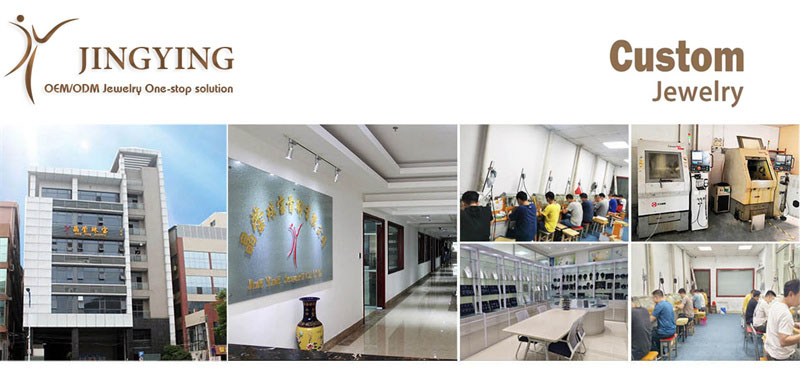
JINGYING is a manufacturer that offers high-quality, durable jewelry and private label / OEM services.
JINGYING produce pieces made of copper gold-plated, sterling silver (925) gold-plated, and potentially solid gold options, with a strong focus on quality, durability, and long-lasting plating.
Over the last 23 years, JINGYING Jewelry has been providing a one-stop solution for brand jewelers in terms of OEM/ODM and customized work. We can create a great art jewelry collection in fine jewelry making using just your thoughts, photos, or CAD designs.