Beyond the Benchmark: Understanding the Timeline of Custom Jewelry Design
The decision to commission a custom piece of jewelry is an act of profound intention. It is a move away from the impersonal nature of mass production and toward something deeply personal: a narrative cast in metal and stone, a love letter frozen in time, a heirloom built from scratch. Whether it is an engagement ring designed to encapsulate a unique partnership, a pendant that transforms a grandmother’s diamond into a modern treasure, or a pair of cufflinks that signify a career milestone, the destination is clear. However, for the uninitiated, the path to that destination—specifically, the time it takes to get there—can often feel like the most mysterious part of the journey.
The question is simple, yet its answer is complex: How long did your custom design jewelry process take?
There is no single, universal answer. Unlike purchasing an item off the shelf, a custom piece follows a gestational period that can range from the surprisingly swift to the patiently extensive. Speaking to industry standards and master jewelers, the timeline for a custom project typically spans anywhere from four weeks to four months, or even longer for exceptionally complex pieces . This broad range is not a sign of inefficiency, but rather a reflection of the many variables at play: design complexity, material availability, artisan skill, and perhaps most importantly, the client’s own decision-making rhythm.
This article seeks to demystify that timeline. We will walk through the lifecycle of a custom jewelry commission, from the initial spark of an idea to the triumphant moment of the reveal. By understanding the “why” behind each phase, you can embark on your own bespoke journey with confidence, patience, and a deep appreciation for the craftsmanship that turns your vision into a tangible reality.
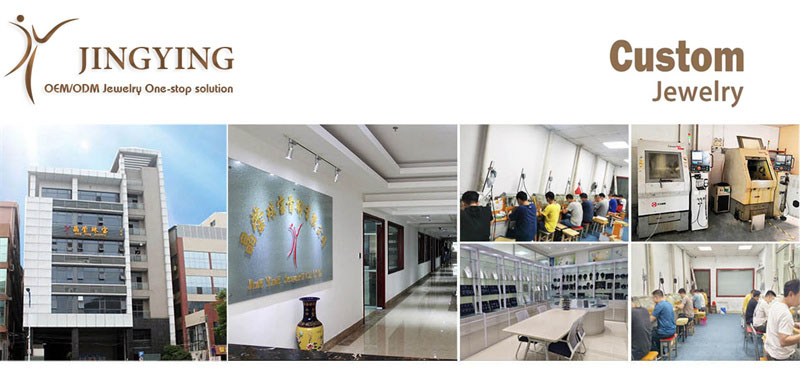
JINGYING is a manufacturer that offers high-quality, durable jewelry and private label / OEM services.
JINGYING produce pieces made of copper gold-plated, sterling silver (925) gold-plated, and potentially solid gold options, with a strong focus on quality, durability, and long-lasting plating.
Part I: The Philosophy of Time in Bespoke Creation
Before dissecting the calendar, it is crucial to shift our mindset from “shopping” to “creating.” When you purchase a mass-produced ring, you are buying an item that already exists. The time between payment and possession is simply logistics—shipping and handling.
Custom jewelry is the antithesis of this model. Here, time is not a hurdle; it is a raw material. It is the medium in which the artist works. To rush a custom piece is to compromise the very essence of what makes it special: the meticulous attention to detail, the problem-solving of unique design challenges, and the soulful handwork that no machine can replicate.
As one jeweler eloquently states, “Quality cannot be rushed” . The timeline is not just about waiting; it is about the journey of co-creation. It is a collaborative dance between your vision and the jeweler’s expertise, and every step requires its own tempo.
Part II: The Foundational Phase – Consultation and Conceptualization (1 – 4 Weeks)
Every masterpiece begins with a conversation. This initial stage is about translation—turning ethereal ideas, torn-out magazine photos, scattered Pinterest pins, and heartfelt stories into a concrete design brief.
The Initial Spark
The process officially begins with an in-depth consultation, either in person or virtually. This is where you, the client, articulate your vision. What is the occasion? Who is the wearer? What are their lifestyle habits? (A high-profile setting might snag on a knitting needle; a soft gemstone might not survive a hands-on job). What metals speak to you? What is your budget? .
A skilled jeweler is part therapist, part designer during this meeting. They listen to your stories, decipher your preferences, and begin to form a mental picture of the piece. For some clients who arrive with a crystal-clear vision, this phase can be resolved in a single meeting. For others who are exploring ideas, it might involve several conversations over a week or two. This stage alone can take one to two weeks, depending on your clarity and the designer’s ability to translate your vision .
The Design Brief and Initial Sketches
Following the consultation, the designer retreats to the studio to synthesize your ideas. They will begin sketching initial concepts. These might be rough hand-drawn illustrations meant to capture the flow and proportion of the piece. This is a critical feedback loop. The jeweler may present two or three distinct directions based on your conversation, seeking your reaction. “Does this capture the essence of what you wanted? Is the balance right? Is it too modern, too classic?” .
This collaborative refinement is essential. It is far easier and faster to erase a line on a sketch than to recast a piece of metal. Rushing through this stage is the most common mistake clients make. The time invested here—often one to two weeks—pays dividends in satisfaction later .
Part III: The Blueprint for Reality – Design & CAD Refinement (2 – 4 Weeks)
Once the hand sketches are approved, the design enters the digital realm. This is where two-dimensional ideas are rendered into three-dimensional reality with breathtaking precision.
From Sketch to Screen
Today, most custom jewelry design relies on Computer-Aided Design (CAD) software. Using programs like Rhino or Matrix, a designer builds your jewelry piece pixel by pixel . This is not merely a “pretty picture”; it is a data-rich, highly accurate technical model. The CAD rendering shows the piece from every conceivable angle, allowing you to see exactly how the light will hit the center stone, how the pave diamonds will hug the band, and how thick the profile will be on the finger .
This stage is where your vision gets its first true reality check. You can see the exact proportions—the height of the basket, the width of the band in millimeters. For many clients, this is the most exciting part of the process, as the abstract concept finally takes on a tangible form.
The Iteration Loop
It is rare for a first-pass CAD to be perfect. The designer will send you renderings, and you will likely have feedback. “Can we make the band slightly thinner? Can we add milgrain detail to the edges? Can we raise the stone a little higher?” .
Each round of revisions takes time. The designer must go back into the software, manipulate the model, and re-render new images. This back-and-forth is a sign of a healthy, thorough process. Depending on the complexity of the design and the speed of your responses, this CAD design and approval phase typically consumes two to four weeks . Some jewelers may also offer a 3D wax print at this stage—a physical model you can hold—to confirm the fit and feel before any metal is committed .
Part IV: The Heart of the Matter – Material Sourcing (1 – 4 Weeks)
With the design finalized on screen, the next task is gathering the physical elements required to build it. This stage can be deceptively time-consuming.
The Quest for the Perfect Stone
If your piece features a gemstone, the search is paramount. While some jewelers have a vast inventory of diamonds and colored stones in-house, others may need to source them. If you have a very specific requirement—say, a 2.5-carat, cushion-cut, unheated Ceylon sapphire with a specific hue of cornflower blue—that stone might not be sitting in a local vault.
Your jeweler will tap into their global network of suppliers to find the perfect match. This involves reviewing stone databases, having stones shipped on memo (approval), and personally inspecting them for cut, clarity, color, and life. This is a meticulous process; a master jeweler will not settle for “close enough.” They are looking for the stone that meets the exact specifications of the approved design .
If you are repurposing an heirloom stone or using your own gold, this step is faster, though the jeweler will still need time to assess the stone’s condition and plan for its safe setting . Sourcing can take anywhere from one week for common stones to a month for rare or exceptionally high-quality gems.
Part V: The Alchemy of Creation – Manufacturing & Craftsmanship (4 – 8 Weeks)
This is the longest and most labor-intensive portion of the timeline. This is where the design leaves the computer screen and enters the hands of the artisans. The piece is no longer a concept; it is being born.
Casting and Fabrication
Depending on the design, the process begins with casting. A wax model (either machined from the CAD or 3D printed) is invested in a plaster-like material. The plaster is heated in a kiln, burning away the wax and leaving a perfect negative mold of the ring. Molten metal—gold, platinum, silver—is then forced into the cavity using centrifugal force or a vacuum .
For some designs, particularly those with a more organic or structural aesthetic, the jeweler may use fabrication. This involves skillfully cutting, shaping, and soldering pieces of metal sheet and wire by hand to build the piece from the ground up. This is a slower, more arduous process reserved for the most unique structures.
The Long Road of Setting and Finishing
Once the rough metal form is cast, the real work begins. The jeweler must meticulously file, sand, and polish the piece to prepare it for stone setting. This stage alone requires hours of concentration to ensure the surfaces are perfectly smooth and the edges are crisp.
Then, the stone setter takes over. Using tools that resemble tiny dental picks, they create the delicate seats and prongs that will hold your gemstone securely. If the piece features pavé (small diamonds set closely together), this is an incredibly painstaking process. Each tiny stone is placed individually, with the setter carefully cutting beads of metal to hold them in place. A complex setting job can take days or even weeks .
Finally, the piece receives its final polish, revealing the brilliant luster of the metal. It is then ultrasonically cleaned to remove any remaining residue from the workshop. This entire manufacturing phase typically spans four to eight weeks, depending on the intricacy of the design and the current workload of the artisans .
Part VI: The Final Bow – Quality, Inspection, and Delivery (1 Week)
Before you ever see the piece, it must pass the scrutiny of the master. The completed jewelry undergoes a rigorous quality control inspection. The jeweler checks the security of every stone, the smoothness of the polish, the structural integrity of the setting, and the comfort of the fit .
If any minor adjustments are needed—a prong that needs tightening, a slight asymmetry in a pave line—this is the time to fix it. Once the piece is deemed perfect, it is prepped for delivery.
This final stage is relatively quick, often taking only a few days to a week. However, it represents the culmination of weeks of effort. The final reveal, whether in person or via a curated unboxing video, is designed to be a moment of pure joy—the first time you see your dream, perfectly realized .
Part VII: The Variables That Control the Clock
To provide a clearer picture of why timelines fluctuate, let’s visualize the contributing factors. The following chart illustrates the relative impact of different variables on the overall duration of a custom jewelry project.

Summary of Key Variables:
- Design Complexity: A simple, classic band is a sprint. A ring with intricate filigree, a hidden halo, or custom engraving is a marathon .
- Material Availability: Locating the perfect gemstone can be quick, or it can require weeks of searching international markets .
- Client Decision-Making: This is the most variable factor. Prompt feedback and clear decisions keep the project moving. Delays in responding to CAD approvals or design questions are the number one cause of extended timelines .
- Artisan Workflow: Reputable jewelers are often booked weeks or months in advance. Their production schedule will impact your start date.
Part VIII: When Time is of the Essence – Can It Be Expedited?
Life doesn’t always wait for the perfect timeline. Proposals get planned around solar eclipses, anniversaries are immovable, and sometimes, inspiration strikes late.
If you are in a time crunch, honesty with your jeweler from the very first conversation is paramount. Many workshops can accommodate rush orders, but it comes with significant caveats.
The Reality of a Rush
Expediting a custom piece often means paying a “rush fee.” This premium covers the cost of disrupting the workshop’s carefully managed schedule, potentially paying artisans for overtime, and prioritizing your project over others .
Crucially, a rush job does not mean a lower quality job—a reputable jeweler will never compromise on the integrity of the piece. However, it does compress the timeline for design iterations. You must be decisive. There is little room for a week of “thinking about it” when the CAD is in your inbox.
Furthermore, some things simply cannot be rushed. If your desired center stone is rare and must be sourced from a dealer in another country, that time is fixed. If the design is extraordinarily complex, the hours of setting cannot be shortened without risking damage to the stones or the metal.
For those with a strict deadline, a good jeweler will be upfront about what is possible. They may suggest slight simplifications to the design to shave time off the manufacturing process, or they may advise you to choose a placeholder ring for the proposal and start the custom process afterward for the actual wedding band .
Part IX: A Tale of Two Timelines
To bring these timelines to life, let’s look at two hypothetical scenarios that bookend the spectrum of possibility.
The Accelerated Timeline: “The Refined Solitaire”
Client Profile: James proposes in six weeks. He wants a custom engagement ring featuring a classic round brilliant diamond in a platinum solitaire setting.
Process:
- Week 1: James visits the jeweler with a clear budget and a specific inspiration image. He approves the design concept immediately. The jeweler has a perfect GIA-certified diamond in stock that matches his criteria.
- Week 2: CAD is created and sent to James. He requests one minor adjustment to the prong style. The revision is made and approved within two days.
- Weeks 3-5: The ring goes straight into production. Because the design is classic, the casting and setting are straightforward.
- Week 6: The ring is finished, inspected, and delivered—just in time for the planned proposal.
Total Time: 6 Weeks
The Extended Journey: “The Family Heirloom Reimagined”
Client Profile: Sarah wants to redesign her grandmother’s vintage ring. The ring features an old European-cut diamond and several smaller side stones, but the setting is worn and outdated. She wants a completely new, nature-inspired design.
Process:
- Consultation (Week 1-2): Sarah meets with the designer to discuss her grandmother’s style and her own modern tastes. The jeweler assesses the heirloom stones to ensure they can be safely reset.
- Design & Sourcing (Weeks 3-6): The designer creates multiple hand-drawn concepts inspired by dogwood blossoms. Sarah takes two weeks to consider them with her family. Once a direction is chosen, a CAD is created. The jeweler realizes they need to source two specific tapered baguette diamonds to complement the design, a search that takes three weeks.
- Revisions & Approval (Weeks 7-9): The first CAD is good, but Sarah wants the band to taper more dramatically. A second CAD is produced. After a week of consideration, she gives the final approval.
- Manufacturing (Weeks 10-16): This is a complex piece with a custom-milled basket to securely hold the antique diamond. The fabrication and setting take a full six weeks.
- Delivery (Week 17): The final piece is revealed. It is a perfect blend of family history and new identity.
Total Time: 4+ Months
Conclusion: The Virtue of Patience and the Joy of Arrival
The journey of creating custom jewelry is a testament to the fact that the best things in life are indeed worth waiting for. In a world of instant gratification, the bespoke process stands as a deliberate counterpoint, demanding time, trust, and collaboration. The timeline, whether a swift six weeks or a contemplative six months, is not merely a countdown to possession, but a crucial ingredient in the piece’s story.
As you consider embarking on your own custom adventure, let the timeline be your guide, not your master. Communicate openly with your jeweler about your deadlines and your dreams. Trust their expertise when they advise on what is technically possible and how long it will take. And when you finally hold the finished piece in your hands, you will understand that the weeks of waiting were not a delay, but a necessary gestation for something truly born of you.
The process takes as long as it takes to get it right. And when it is right, it lasts forever.