JingYing Jewelry (often operating online as Chingying Jewelry or via kingjy.com) is a major, established B2B commercial manufacturing and wholesale custom jewelry service based out of Guangzhou China. Founded in 1998, they specialize heavily in mid-to-high-end 925 sterling silver and copper-based jewelry.
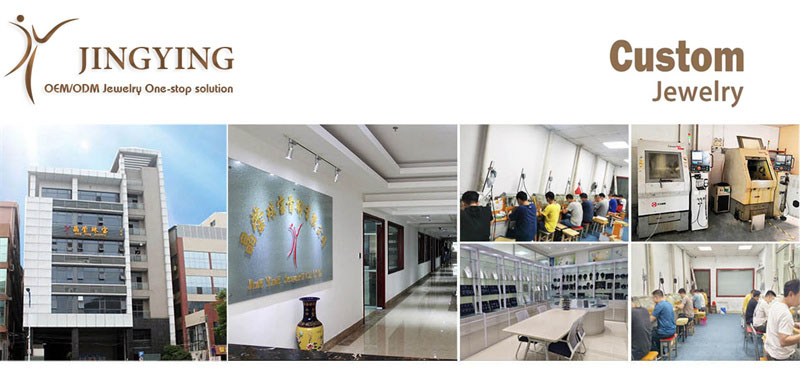
If you are looking at them for custom work, it helps to understand how their custom service operates, as it is primarily geared toward independent brands, jewelry businesses, and bulk buyers rather than individual single-piece retail customers.
Here is a breakdown of what their custom service offers and how it works:
1. Core Customization Capabilities
-
Materials & Metals: They specialize predominantly in 925 Sterling Silver and copper, though they also handle custom solid gold orders (10K/14K/18K).
-
Premium Plating: They are known for high-quality plating technology, offering gold vermeil (up to 3.0 microns thick), rhodium, yellow gold, rose gold, and black rhodium.
-
Stone Setting: They heavily utilize high-grade 5A Cubic Zirconia (CZ), moissanite, and various semi-precious stones. They use micro-inlaid machinery imported from Japan, boasting a 99% “no lost stone” security standard.
2. The Custom Production Process (OEM / ODM)
JingYing operates like a classic mass-manufacturing tech house for jewelry design:
-
Design & 3D Modeling: You provide a rough sketch, an idea, or a reference sample, and their design team turns it into a fully realized 3D CAD mold.
-
Molding & Casting: Once the 3D model is approved, they create a metal master mold to allow replication. They use vacuum and specialized investment casting.
-
Strict Quality Control: They employ a dedicated engineering team that physically checks pieces at every stage. For stone settings, they use a professional steel needle test to beat the stones manually, ensuring they won’t fall out during wear.
3. Service Turnaround & Assurances
-
Timeline: For a custom project, they average a 7-day turnaround for the prototype sample and about a 30-day window for mass production.
-
Guarantees: They take photos/videos of the order before shipment. They offer a 3-to-6-month repair guarantee for manufacturing flaws (like a dropped stone or color defects not caused by human wear) and offer refunds for verified quality issues.
The Verdict: Is it right for you?
Choose JingYing if: You are starting a jewelry brand, running an e-commerce store, or need a reliable OEM/ODM manufacturer to produce a private-label jewelry line in bulk at a mid-tier price point with solid quality control.
Skip them if: You are looking for a single bespoke piece (like a one-off custom engagement ring or personal nameplate). Because they are a high-capacity factory (capable of producing up to 100,000 pieces a month), their business model relies on bulk ordering and minimum order quantities (MOQs).
The Business Case for JingYing Jewelry
For a new jewelry startup, JingYing presents a few strong competitive advantages, balanced by some typical manufacturing constraints.
Pros for Your Business Cons & Constraints to Consider High-End Plating (Vermeil): They specialize in 3.0-micron thick gold plating over sterling silver. This allows you to market your brand as “luxury/premium demi-fine” rather than cheap fashion jewelry. Minimum Order Quantities (MOQs): Because they are a massive factory (50k–100k capacity/month), you cannot buy just 5 or 10 pieces. While they advertise “low MOQ” capabilities for silver, you should expect to commit to 50 to 100+ pieces per specific design/size. Protected IP & Custom CAD: Their 20-person engineering team creates exact 3D Rhino/JewelCAD models from your sketches. You sign off on the exact specifications before a single mold is poured. Upfront Mold Costs: You will need to pay a mold fee for every unique design you introduce. For a brand new line, this makes your initial startup capital layout higher. Built-in Quality Control Assurance: They physically test stone stability with steel needles and offer a 3-to-6-month repair/refund guarantee for non-human manufacturing defects. This helps protect you from customer returns. Strict Sourcing Rules: You generally cannot mix different plating colors (e.g., 50 yellow gold and 50 rose gold) or completely different ring sizes within a single small MOQ batch without costs scaling up. Step-by-Step: Launching Your Line with a Factory
If you decide to move forward with a high-capacity OEM/ODM manufacturer like JingYing, your production workflow will look like this:
1.Design & Tech Pack Submission:Step 1.You send them your concept sketches, reference images, dimensions, material preferences (e.g., 925 silver with 18k yellow gold vermeil), and stone specifications.2.CAD Modeling & Approval:Step 2.Their engineers build a 3D CAD model using software like Rhino. They will send you digital renderings and videos that mimic the real product. Do not approve this until measurements are perfect.3.Prototype Sampling:Step 3 (Approx. 7–10 Days).The factory carves a master mold using CNC machinery and produces a physical sample. They will ship this sample to you. You must test it for weight, wearability, and visual appeal.4.Deposit & Mass Production:Step 4 (Approx. 15–30 Days).Once you approve the sample, you place the bulk order. Standard factory terms usually require a 50% deposit before mass production (casting, polishing, stone-setting, and plating) begins.5.Quality Control & Fulfillment:Step 5.The factory completes internal quality checks (stone-beating and plating thickness verifications). They send you high-resolution photos/videos of the completed batch, you pay the remaining 50% balance, and the goods ship to your warehouse.
Critical Advice for a Jewelry Venture Startup
Sample Everything Personally: Never let a factory go straight from a 3D digital CAD render to bulk production. You need to hold the sample in your hand, check the weight, see how the gold tone looks against the skin, and test the durability of the clasp.
Negotiate the Sample Fee Credit: Factories charge a premium to make a single prototype sample. Always ask: “If I proceed with the bulk MOQ order for this design, will the sample fee be credited back toward my balance?” (Reputable factories often do this).
Clarify Packaging Early: JingYing focuses on the jewelry. If you want custom-branded luxury boxes, microfiber pouches, or specific tags, you usually need to source those from a dedicated packaging supplier and have them sent to the jewelry factory, or ask if they can sub-contract it for you.
What is the estimated breakdown of startup costs, mold fees, and inventory capital needed to launch a demi-fine sterling silver jewelry brand?
Launching a demi-fine sterling silver jewelry brand is a fantastic “sweet spot” venture. It allows you to position your brand as affordable luxury—commanding retail prices between $70 and $250+, while benefiting from much lower upfront raw material costs than solid gold.
To launch a tightly curated debut collection (e.g., 5 cohesive designs, spanning 3 ring sizes each = 11 total SKUs), you should budget for a realistic lean startup cost of $10,000 to $15,000.
1. Hard Manufacturing Costs (Molds & Samples)
Before a factory can mass-produce your inventory, they must build the digital blueprint and the physical master mold for each piece.
CAD / 3D Modeling Fee ($30 – $60 per design): A digital designer builds your sketch into a 3D file (Rhino/JewelCAD). Factories like JingYing often bundle this into the development phase.
Physical Master Mold Fee ($50 – $100 per unique design): This is a one-time fee to create the steel or rubber production mold.
Strategic note: If you make a ring, one mold can usually handle slight scaling for multiple sizes (e.g., sizes 6, 7, 8), but if you change the design drastically, you need a new mold.
Sample Prototype Cost ($80 – $150 per physical piece): To offset the labor of stopping a massive assembly line to cast just one piece for you, factories charge a premium for your first physical prototype.
Subtotal for 5 Custom Designs: ~$1,000 (Often partially credited back to you once you approve the prototype and place the bulk order).
2. Initial Inventory Capital (The Bulk Order)
This is where the majority of your capital goes. Your cost per piece (COGS) will depend heavily on the weight of the silver, the type of stones (like 5A Cubic Zirconia or Moissanite), and the thickness of the gold vermeil plating.
On average, a high-quality demi-fine silver piece costs $8 to $18 to manufacture at factory scale.
The Minimum Order Quantity (MOQ) Reality: Most major commercial factories require a minimum of 50 pieces per SKU.
The Math on 11 SKUs:
3 Ring Designs × 3 sizes each (Sizes 6, 7, 8) = 9 SKUs
1 Necklace Design = 1 SKU
1 Earring Set Design = 1 SKU
Total SKUs: 11
Production Cost: 11 SKUs × 50 pieces per SKU = 550 total pieces.
Subtotal for Inventory: 550 pieces × an average of $12/piece = ~$6,600.
3. Packaging & Unboxing Experience
In demi-fine jewelry, the packaging is 50% of the perceived luxury value. If your piece arrives in a cheap plastic baggie, you cannot charge a $150 retail price point.
Custom Branded Boxes & Microfiber Pouches: Sourced from a specialized packaging factory, these have their own MOQs (usually 500–1,000 units minimum). Expect to pay roughly $1.50 to $3.00 per complete unboxing set.
Subtotal for Packaging: ~$1,500 (You will have extra packaging left over for your next inventory run).
4. Brand Infrastructure & Marketing Buffer
A beautiful product sits invisible in a warehouse without a digital storefront and an audience.
E-Commerce Website ($300 – $500): A clean, premium Shopify setup using an optimized theme, custom domain, and basic apps.
High-End Photography ($500 – $1,200): You need sharp, ultra-focused macro product shots for your website lines, plus lifestyle/model imagery for social media.
Marketing & Ad Spend Buffer ($1,500 – $3,000): To drive initial traffic via micro-influencer gifting, social media ads, or community building.
The Capital Breakdown Summary
Expense Category Lean Budget (Tight Collection) Mid-Tier Budget (Broader Range) Molds & Prototyping $1,000 $2,500 Bulk Inventory Production $6,600 $12,000 Custom Luxury Packaging $1,500 $2,500 Website & Photography $1,000 $2,500 Marketing Launch Budget $1,500 $4,000 TOTAL ESTIMATED STARTUP $11,600 $23,500