Gold Vermeil Jewelry Manufacturing: 4 Main Steps
Introduction: The Noble Standard of Accessible Luxury
In the vast universe of jewelry manufacturing, few finishes command as much respect and desire as gold. However, solid gold pieces—whether 14k, 18k, or 24k—carry a price point that excludes the majority of consumers. This economic reality gave rise to a centuries-old alternative: gold vermeil (pronounced ver-may). Unlike standard gold-plated or gold-filled jewelry, vermeil occupies a unique middle ground, offering the luster and prestige of precious metal at a fraction of the cost, but with a durability and thickness that far surpasses conventional plating.
Gold vermeil is legally defined (particularly under US FTC guidelines and EU regulations) as a base metal of sterling silver (92.5% pure silver, 7.5% alloy, usually copper) that is electroplated with a layer of gold that is at least 2.5 microns thick, with a gold fineness of 10 karats or higher. In practice, most high-end manufacturers use 14k, 18k, or even 24k gold, with a thickness ranging from 2.5 to 5 microns.
Creating a piece of gold vermeil jewelry that is both beautiful and durable is not a simple matter of dipping silver into gold. It is a meticulous, multi-stage industrial art form that demands precision chemistry, mechanical skill, and rigorous quality control. This article deconstructs the manufacturing process into four main pillars: Thorough Cleaning, Detailed Polishing, Electroplating with Gold, and Quality Inspection. Each step is critical; skipping or abbreviating any one will result in a product that peels, tarnishes, or fails to meet the legal and aesthetic standards of true vermeil.
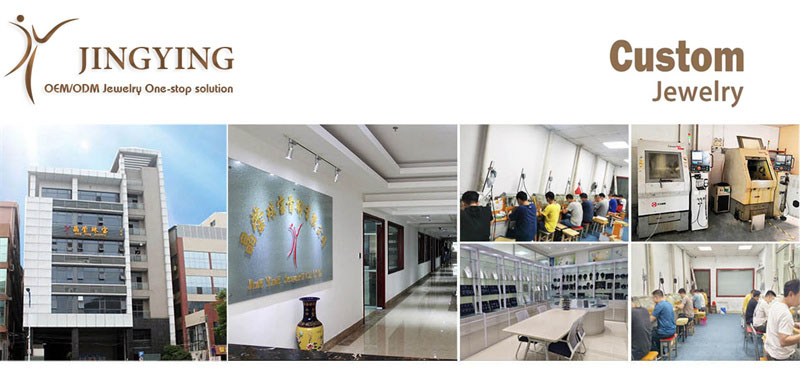
JINGYING is a manufacturer that offers high-quality, durable jewelry and private label / OEM services.
LET’S GET STARTED : mo@kingjy.com
Step 1: Thorough Cleaning – The Foundation of Adhesion
Before a single atom of gold can be deposited onto sterling silver, the surface of the silver must be absolutely pristine. In the world of electroplating, cleanliness is not next to godliness—it is godliness. Any contaminant on the surface of the base metal—be it oil from a jeweler’s hands, polishing compound residue, oxide layers, or airborne dust—will act as a barrier between the silver and the gold. This barrier prevents proper adhesion, leading to blistering, flaking, or premature wear.
The Science of Surface Contamination
Sterling silver is reactive. In ambient air, it naturally forms a thin layer of silver sulfide (tarnish) within hours. Furthermore, during the initial fabrication of the jewelry (casting, soldering, stamping), the piece accumulates:
- Lubricants and cutting oils from machining.
- Oxide scale from heat treatment.
- Residual polishing compounds (often wax or grease-based) from preliminary finishing.
Gold will not chemically bond to silver sulfide or grease. It will only bond to a pure, activated metallic silver surface. Therefore, the cleaning stage is a multi-bath chemical and electrochemical process.
Sub-Step 1A: Alkaline Degreasing
The first bath is typically a hot (60°C–80°C) alkaline solution with a pH between 9 and 12. These solutions contain surfactants, phosphates, and silicates designed to saponify (turn into soap) animal fats and emulsify mineral oils. The jewelry pieces, often strung on titanium or stainless steel racks or placed in rotating barrels, are immersed for 5–15 minutes. Agitation—either mechanical or via ultrasonic waves—is critical here. Ultrasonic degreasing, which uses high-frequency sound waves to create microscopic cavitation bubbles that implode and blast contaminants off surfaces, is the gold standard. These bubbles can reach into crevices, under stones (if present, though stones are typically set after plating), and into intricate filigree work that a cloth could never touch.
Sub-Step 1B: Alkaline Rinse
After degreasing, the jewelry is rinsed in deionized (DI) or distilled water. Tap water is forbidden in professional shops because it contains chlorine, calcium, magnesium, and other dissolved solids that would leave residues. The rinse is typically a two-stage or three-stage counterflow system, where the pieces move from the dirtiest rinse to the cleanest, ensuring no carryover of alkaline chemicals into the next bath.
Sub-Step 1C: Acid Activation (Pickling)
Even after degreasing, the silver surface is still covered with a natural oxide layer (tarnish) and possibly a thin layer of copper oxide from the 7.5% copper alloy in sterling silver. These oxides are non-conductive and will prevent gold deposition. To remove them, the jewelry enters an acid “pickle.” For silver, a mild acid is used—typically a 5–10% solution of sulfuric acid or sodium bisulfate (pH 1–2). Sometimes a proprietary “bright dip” containing a small amount of nitric acid is used for a few seconds to micro-etch the surface, creating a microscopically rough texture that enhances mechanical adhesion.
The piece remains in the acid bath for 30 seconds to 2 minutes. You will know the reaction is complete when the silver emerges with a uniform, matte, snow-white appearance, free of any discoloration.
Sub-Step 1D: Final DI Water Rinse
The final rinse is absolutely critical. The jewelry is rinsed in cascading, room-temperature deionized water until the resistivity of the rinse water matches that of the incoming DI water (typically 10–18 megohm-cm). Any residual acid or ions will contaminate the gold plating bath, which is a complex and expensive solution of gold cyanide or gold sulfite. A common trick: after the final rinse, the jeweler performs a “water break test.” If the water sheets uniformly across the surface without beading up into droplets, the surface is chemically clean. If it beads, organic contamination remains, and the piece must go back to degreasing.
Only after passing this test is the jewelry ready to move, dripping wet (never dry, as drying would allow airborne dust to settle), into the polishing stage or directly into the plating tank.
Step 2: Detailed Polishing – The Canvas for Reflection
While cleaning addresses chemistry, polishing addresses geometry and optics. Gold vermeil is prized for its mirror-like, warm glow. That glow cannot be created by the gold layer alone; the gold is only as smooth as the surface it covers. In fact, gold electrodeposits tend to follow the contours of the substrate. If the sterling silver base has scratches, pits, or a dull matte finish, the final gold layer will also have scratches, pits, or a dull matte finish. Therefore, detailed polishing of the silver substrate is arguably more important than the gold layer itself.
The Goal: Mirror Brightness
For high-end vermeil (especially with 18k or 24k gold), the target is a specular (mirror) finish on the silver before plating. This requires a progressive sequence of abrasive grits, followed by buffing with compounds.
Sub-Step 2A: Pre-Polishing (Cutting)
The first stage uses abrasive wheels or belts with a “cutting” action. For silver jewelry, this typically involves:
- Silicone carbide or aluminum oxide abrasive wheels (grit 400 to 800) for removing casting lines, sprue marks, and major surface irregularities.
- Stainless steel shot tumbling for mass-produced small items (rings, charms). The pieces are placed in a vibratory tumbler with abrasive ceramic media and a liquid lubricant. This runs for 1–6 hours, knocking down sharp edges and smoothing surfaces.
The goal here is not shine; it’s uniformity. All tool marks from the original fabrication must be erased.
Sub-Step 2B: Intermediate Polishing (Coloring)
After cutting, the jeweler switches to softer wheels (muslin, felt, or flannel) impregnated with medium-grit compounds such as Tripoli (a calcined silica and aluminum oxide blend). Tripoli is reddish-brown and removes the scratches left by the coarse abrasives, replacing them with a fine, satin-like sheen. This stage is often called “coloring” because it begins to reveal the true metallic luster of the silver.
For intricate pieces with deep recesses (e.g., filigree or engraved surfaces), the jeweler uses radial bristle brushes or small felt cones mounted on a flexible shaft (handpiece) to reach every internal corner.
Sub-Step 2C: Final Finishing (Rouge Buffing)
The final mechanical polishing stage uses a loose, soft flannel or cotton buffing wheel charged with “rouge”—specifically, red rouge (ferric oxide) for silver. Red rouge is extremely fine (particle size 0.5–3 microns) and produces a brilliant, mirror-like finish without scratching. The piece is gently pressed against the spinning wheel, constantly moving to avoid generating heat. Overheating is a real danger here: silver conducts heat exceptionally well, but if the jeweler lingers too long in one spot, the silver can soften, or worse, the polishing compound can melt and smear into microscopic crevices.
Sub-Step 2D: Final Solvent Cleaning
After polishing, the jewelry is covered in a thin film of rouge residue, waxes, and greases from the buffing wheels. This is a critical contamination point. The pieces are immediately transferred into an ultrasonic cleaner filled with a specialized jewelry degreasing solution (often a mild alkaline or neutral detergent) at 50°C–60°C. Ultrasonic action removes every trace of polishing compound from undercut areas and settings. This is followed by another thorough DI water rinse.
Inspection before plating: At this stage, the jeweler inspects the polished silver under a 5x to 10x loupe or microscope. Any remaining scratch, pit, or dull spot will be magnified by the gold layer. If the piece is perfect, it is stored in a sealed, lint-free container or immediately racked for electroplating. The human fingerprint is the enemy: from this point forward, the jewelry is handled only with clean nylon or nitrile gloves.
Step 3: Electroplating with Gold – The Birth of Vermeil
Electroplating is the magical, electrochemical heart of vermeil manufacturing. This is where the silver, meticulously cleaned and polished, is transformed into a gold-covered treasure. Unlike simple “gold plating” (which can use brass, copper, or nickel as a base and a gold layer as thin as 0.05 microns), vermeil demands a specific thickness (2.5+ microns) and a specific base (sterling silver). The process takes place in a specialized tank called a plating bath.
The Chemistry of Gold Plating
For jewelry, the most common electrolyte is an acidic gold cyanide solution. The chemical reaction looks like this:
At the Anode (positive terminal, gold source):
Gold metal (Au) oxidizes and dissolves into solution as gold cyanide complex ions:
Au → Au⁺ + e⁻ (in cyanide solution, this forms Au(CN)₂⁻)
At the Cathode (negative terminal, the silver jewelry):
The gold ions in solution are reduced back to metallic gold and deposit onto the silver surface:
Au(CN)₂⁻ + e⁻ → Au + 2CN⁻
A typical formulation for gold vermeil might include:
- Gold as potassium gold cyanide (8–12 grams of gold metal per liter).
- Free potassium cyanide (5–15 g/L) to stabilize the gold complex and improve conductivity.
- Conductivity salts (potassium carbonate or potassium phosphate).
- Brighteners and grain refiners (typically proprietary organic compounds containing cobalt, nickel, or indium to create a bright, hard deposit).
Sub-Step 3A: Racking and Setup
The clean, polished silver pieces are carefully mounted onto conductive racks. Each piece must have secure electrical contact—usually a titanium or stainless steel spring clip that touches an inconspicuous area (e.g., inside a ring band or behind a pendant). The entire rack is then rinsed again and placed in a pre-treatment tank (a dilute acid or cyanide strike bath) to ensure the surface is still activated.
Sub-Step 3B: The Gold Strike (Flash Layer)
Before the full-thickness plating, the jewelry receives a “gold strike.” This is a separate, highly concentrated gold cyanide solution (often 2–4 g/L gold) operated at a low current density and short duration (30–90 seconds). The strike performs two functions:
- It instantly deposits a very thin (0.05–0.1 micron) layer of gold onto the silver, preventing the silver from tarnishing or reacting with the main plating bath.
- It improves adhesion by providing a nucleation layer for subsequent gold growth.
Without a strike, the main plating bath (which has lower free cyanide) could cause “immersion deposition”—a powdery, non-adherent layer.
Sub-Step 3C: Main Electroplating (Building to 2.5+ Microns)
The racked jewelry is transferred to the main plating tank. The tank is heated to 40°C–60°C (depending on the formulation) and constantly agitated, either by a mechanical stirrer or air bubbling, to ensure a uniform concentration of gold ions at the cathode surface.
The critical parameters for true vermeil are:
- Current Density: Typically 0.5–1.5 amperes per square decimeter (ASD). Too low, and the deposit is dull and slow. Too high, and the deposit becomes “burnt,” rough, or nodular.
- Plating Time: The time required to achieve 2.5 microns of gold is calculated using Faraday’s Law. For a current density of 1 ASD, the deposition rate for gold is approximately 0.5 microns per 10 minutes. Therefore, 2.5 microns requires about 50 minutes of plating time. High-end manufacturers aiming for 5 microns will plate for 100 minutes.
- pH: Maintained between 3.5 and 4.5 for acid cyanide baths.
During plating, the operator periodically removes the rack and inspects the deposit color and uniformity. The gold builds on all conductive surfaces, including the rack contacts (which is why contacts are regularly cleaned).
Sub-Step 3D: Post-Plating Rinse and Neutralization
After the required time has elapsed, the rack is lifted from the tank, allowing the solution to drain back. The jewelry then goes through a series of rinses:
- Drag-out rinse: A still, unheated water tank to recover precious gold solution.
- Deionized water rinse: To remove bulk cyanide.
- Acid rinse (1% sulfuric acid): To neutralize any residual alkaline cyanide and remove carbonates.
- Final hot DI water rinse: To warm the piece for rapid drying.
At this stage, the jewelry is true gold vermeil. However, the gold layer is in its “as-plated” condition—which may be bright but can also be slightly hazy or have a matte texture depending on the brighteners used. Some pieces require a final electro-cleaning or a “bright dip” to enhance the mirror effect.
Step 4: Quality Inspection – Separating Vermeil from Veneer
The final step is the most subjective but arguably the most important for brand reputation. Quality inspection for gold vermeil is not a single glance; it is a multi-test protocol that verifies chemical composition, thickness, adhesion, and aesthetic perfection. A reputable manufacturer rejects 2–5% of pieces at this stage, sending them back either to stripping and re-plating or to the scrap gold recovery.
Sub-Step 4A: Visual and Tactile Inspection
Under bright, full-spectrum lighting (5000K–6500K) and with magnification, an inspector checks for:
- Color uniformity: No blotches, rainbows, or dark spots. The color should match the target karat (e.g., 18k has a richer, less yellow tone than 24k).
- Surface defects: Pitting, nodules, roughness, or “treeing” (dendritic growth from excessive current).
- Edge coverage: The gold must cover all surfaces, including the inside of jump rings, the backs of earring posts, and deep engravings. Unplated silver (which appears white) is a fatal defect.
- Burns or discoloration: Dark spots indicate organic contamination or poor electrical contact.
Sub-Step 4B: Thickness Verification (The Vermeil Mandate)
This is the non-negotiable test for legal vermeil. A manufacturer must prove that the gold layer is at least 2.5 microns thick. The standard tool is an X-ray fluorescence (XRF) analyzer equipped with a thickness measurement application. The XRF gun directs X-rays at the jewelry, which cause the gold atoms to fluoresce (emit secondary X-rays). The intensity of the fluorescence, combined with the known attenuation of the X-rays through the gold layer, allows the instrument to calculate thickness to within ±0.1 microns.
Measurements are taken on multiple points: flat surfaces (where thickness is highest), edges (where it is lower due to current distribution), and recesses. If any point falls below 2.0 microns (allowing a small tolerance), the entire batch is rejected.
Sub-Step 4C: Adhesion Testing (The Bend and Tape Test)
A gold layer that looks beautiful but peels off in a week is worthless. Adhesion tests are destructive, so they are performed on sacrificial samples from each production batch.
- The Bend Test: A sample wire or strip is bent back and forth 180 degrees until fracture. The fractured edge is examined under a microscope. If the gold layer separates from the silver substrate or flakes off, adhesion fails.
- The Tape Test: A piece of high-tack adhesive tape (e.g., 3M Scotch tape) is pressed firmly onto the plated surface and then ripped off rapidly. If any gold transfers to the tape, the adhesion is poor.
- The Scribe/Grid Test: A scalpel is used to cut a crosshatch pattern into the gold layer. Tape is applied and removed. No squares of gold should lift off.
Sub-Step 4D: Chemical Resistance and Porosity Testing
A hidden danger of gold plating is porosity—microscopic pinholes in the gold layer that expose the silver base. Through these pores, sweat and air can attack the silver, causing black tarnish to “bleed” through the gold. To test for porosity, samples are exposed to:
- Nitric acid vapor: A drop of concentrated nitric acid is placed on the sample. If the acid penetrates to the silver, a greenish reaction (silver nitrate) occurs.
- Artificial sweat solution (ISO 105-E04 or similar): The jewelry is immersed in a solution of sodium chloride, lactic acid, and urea for 24 hours. Any discoloration or tarnish indicates unacceptable porosity.
For high-end vermeil, manufacturers often apply a clear electroplated or spray-on e-coat (cathodic epoxy) to seal micro-pores, though this is controversial because it reduces the “feel” of real gold.
Sub-Step 4E: Final Cleaning, Drying, and Packaging
Pieces that pass all tests undergo a final, gentle cleaning in a mild detergent ultrasonic bath to remove handling oils. They are then dried in a warm air oven (not exceeding 80°C to avoid discoloration) or with forced, filtered air. Finally, they are individually wrapped in acid-free tissue paper, placed in anti-tarnish bags (often lined with VCI – vapor corrosion inhibitor), and sealed.
Each piece receives a serialized quality card stating: “Base: 925 Sterling Silver | Plating: 2.5+ Microns 18k Gold | Vermeil Certified.”
Conclusion: The Art and Science of Gold Vermeil
Gold vermeil manufacturing is a discipline that demands respect for chemistry, patience for mechanical finishing, and rigor in quality control. The four steps—Thorough Cleaning, Detailed Polishing, Electroplating with Gold, and Quality Inspection—are not sequential tasks to be checked off; they are interdependent phases where failure in any one dooms the entire process. A brilliantly polished silver piece that is not perfectly cleaned will shed its gold like a snake shedding skin. A perfectly cleaned piece that is plated too quickly will be rough and thin. A beautifully plated piece that is not inspected will send defects into the market, destroying brand trust.
For the consumer, understanding these four steps transforms gold vermeil from a mere product into a testament to skilled craftsmanship. When you hold a piece of true vermeil—silky, warm, and gleaming—you are seeing the result of degreasing baths, rouge wheels, cyanide solutions, and X-ray analyzers working in concert. It is accessible luxury, but it is not cheaply made. And in a world of fast fashion and disposable accessories, that distinction is the true value of gold vermeil.