Design Your Own Silver Charm Necklace with JINGYING in China: A Complete Guide to Personalized Jewelry Creation
Introduction: The Art of Personal Adornment in the Modern Age
In an era of mass production and algorithmic shopping experiences, the human desire for personal expression through adornment remains undiminished. If anything, it has grown stronger. We live in a time when individuality is both celebrated and commodified, where the objects we choose to wear increasingly serve as extensions of our identity, values, and personal narratives. Among these objects, jewelry holds a particularly potent position—it is intimate, enduring, and visible in our daily interactions.
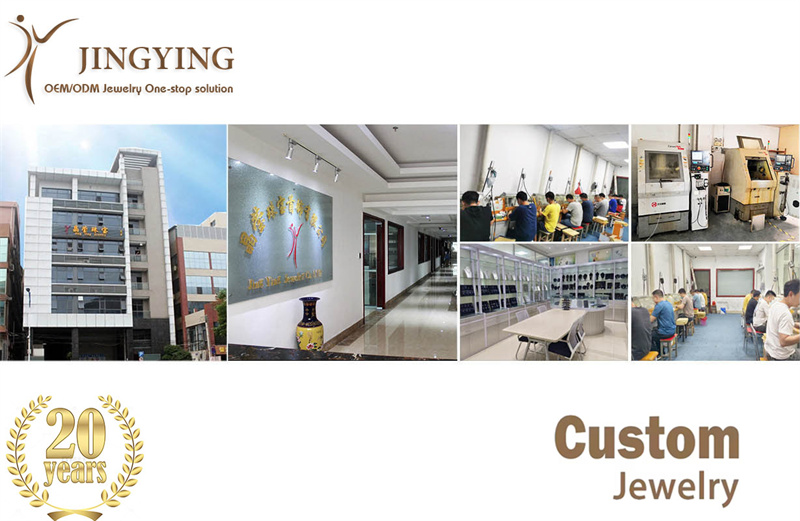
This brings us to the silver charm necklace, a jewelry form that has evolved from ancient amulets to Victorian sentimentalism to modern personal storytelling. And this evolution finds one of its most compelling contemporary expressions through JINGYING, a Chinese jewelry house that has mastered the delicate balance between ancient craftsmanship and modern personalization.
In this comprehensive guide, we will explore every facet of designing your own silver charm necklace with JINGYING. From understanding the philosophical underpinnings of personalized jewelry to navigating the practical steps of creation, from appreciating the cultural context of Chinese silver craftsmanship to anticipating the emotional resonance of wearing a piece that is uniquely yours—this article will serve as your complete companion on a journey toward wearable personal history.
Part 1: The Resurgence of Personalized Jewelry in a Digital World
The Psychology of Personal Adornment
Why do humans adorn themselves? Anthropologists trace jewelry back at least 100,000 years, to Nassarius shell beads found in prehistoric caves. These early adornments served multiple purposes: markers of status, symbols of belief, protections against evil, or simply expressions of an aesthetic sense. Fast forward to the 21st century, and while the materials and techniques have evolved, the fundamental impulses remain remarkably consistent.
In our contemporary context, personalized jewelry like charm necklaces satisfies several psychological needs:
- Identity Reinforcement: In a globalized world where cultural distinctiveness can feel diluted, personal jewelry serves as a marker of individual identity.
- Narrative Preservation: Each charm can function as a tangible memory—a miniature monument to a person, place, or moment.
- Connection and Belonging: Shared matching pieces or symbols representing relationships reinforce social bonds.
- Self-Expression: In an age of dress codes and fashion norms, jewelry remains one of the least regulated forms of personal expression.
- Control and Agency: Designing something yourself represents a reclaiming of agency in a consumer landscape often characterized by passive consumption.
The Digital Paradox: How Technology Enables Analog Personalization
Ironically, the digital age has fueled rather than diminished the desire for personalized physical objects. Several factors contribute to this phenomenon:
- Algorithmic Overload: As algorithms increasingly curate our consumption choices, there’s growing appreciation for items that reflect individual taste rather than aggregated preferences.
- Digital Ephemerality: In a world of disappearing messages and cloud-based storage, physical objects gain new significance as tangible anchors.
- Social Media Display: Platforms like Instagram have created spaces where unique items gain social currency, encouraging investment in distinctive pieces.
- E-commerce Accessibility: Companies like JINGYING can now reach global audiences while maintaining artisanal production methods.
This context sets the stage for understanding why designing a custom silver charm necklace represents more than a shopping experience—it’s a meaningful act of self-definition in the modern world.
Part 2: JINGYING: Where Chinese Craftsmanship Meets Contemporary Design
The JINGYING Philosophy: A Marriage of Heritage and Innovation
JINGYING (菁英), which translates to “essence” or “elite” in Mandarin, was founded in 2012 by sibling duo Liang Wei and Liang Mei. With backgrounds in traditional Chinese metalwork and contemporary design respectively, they envisioned a studio that would honor China’s rich history of silversmithing while speaking to modern aesthetic sensibilities.
The company’s philosophy rests on three pillars:
- Narrative Integrity: Every piece should tell a truth, whether about the wearer, the maker, or the materials.
- Technical Mastery: Respect for traditional techniques enhanced by precise modern technology.
- Sustainable Practice: Ethical material sourcing and production methods that consider environmental impact.
What Distinguishes JINGYING in China’s Jewelry Landscape
China’s jewelry industry is vast and varied, encompassing everything from massive wholesale manufacturers to luxury international boutiques. JINGYING occupies a distinctive niche:
Artisanal Scale with Technical Precision: Unlike large manufacturers focused on volume, JINGYING maintains small-batch production while employing advanced technologies like CAD modeling and 3D printing for prototyping.
Cultural Depth Without Cliché: While many brands incorporate Chinese motifs superficially, JINGYING designers engage deeply with cultural symbolism, often working with historians to understand context before reinterpretation.
Transparent Process: In an industry sometimes criticized for opaque supply chains, JINGYING practices radical transparency—clients can trace their silver to specific mines and know exactly which artisan worked on their piece.
Intergenerational Knowledge Transfer: The studio employs both master craftsmen in their sixties with decades of experience and young designers fresh from art academies, creating a dynamic environment of knowledge exchange.
The Significance of Silver in Chinese Culture
Understanding JINGYING’s work requires some appreciation of silver’s place in Chinese history:
- Historical Status: While gold was often reserved for imperial use, silver served as currency and adornment for merchant and scholarly classes during many dynasties.
- Symbolic Meaning: In Chinese tradition, silver represents clarity, purity, and protection. It’s associated with the moon (yin) as opposed to gold’s solar (yang) associations.
- Regional Traditions: Different areas developed distinct silversmithing styles—the intricate filigree of Yunnan minorities, the bold forms of Tibetan jewelry, the delicate patterns of Jiangnan artisans.
- Modern Renaissance: After periods of political turmoil that disrupted craft traditions, there’s been a deliberate revival of Chinese silver craftsmanship in recent decades, with JINGYING at the forefront of its contemporary expression.
Part 3: The Design Journey: A Step-by-Step Exploration
Phase 1: Inspiration and Conceptualization
The “Story Mining” Process
Before any sketching begins, JINGYING guides clients through what they term “story mining”—a structured exploration of personal narrative. This might involve:
- Timeline Mapping: Identifying key moments, relationships, and transitions in one’s life.
- Symbol Association: What images, shapes, or objects hold personal significance?
- Material Memory: Are there existing objects (a grandmother’s button, a seashell from a meaningful trip) that could be incorporated or referenced?
- Aesthetic Vocabulary Development: Collecting visual references that resonate, even if not directly jewelry-related.
JINGYING provides digital tools for this process, including a private Pinterest-style board and guided questionnaires that help uncover thematic connections.
Initial Consultation: Virtual or In-Person
Whether conducted via high-definition video call or in one of their studios (Shanghai, Beijing, or their flagship in historic Pingyao), the initial consultation typically lasts 90 minutes and follows this structure:
- Narrative Sharing (30 minutes): The designer listens to the client’s stories without immediately jumping to design solutions.
- Practical Parameters (20 minutes): Discussion of budget, timeline, wearing context (daily wear vs. special occasion), and any physical considerations (allergies, comfort preferences).
- Visual Exploration (40 minutes): Looking at samples, materials, and preliminary sketches based on the narrative sharing.
Phase 2: Collaborative Design Development
From Narrative to Symbol
A key challenge in charm necklace design is translating abstract concepts or memories into tangible forms. JINGYING designers employ several strategies:
- Literal Representation: A charm shaped like a specific object (a bicycle to represent a Paris trip, a particular flower from a wedding bouquet).
- Abstract Symbolism: Using geometric forms or patterns to represent concepts (interlocking circles for partnership, a spiral for growth).
- Text Integration: Incorporating meaningful words, dates, or coordinates in subtle ways.
- Material Symbolism: Choosing specific stones or finishes that carry meaning (moonstone for intuition, oxidized finishes for antiquity).
The Charm Ecosystem: Composition and Balance
Designing a multi-charm necklace requires considering how individual elements interact:
- Visual Hierarchy: Which charm serves as the focal point? How do others complement it?
- Narrative Flow: Does the arrangement of charms suggest a story sequence?
- Kinetic Considerations: How will the charms move and interact as the wearer moves?
- Negative Space: The importance of what’s not there—allowing each element room to breathe.
JINGYING designers typically present 2-3 distinct compositional approaches, often using digital mockups that can be adjusted in real-time during consultation.
Chain as Canvas
The chain is far from a mere functional element—it’s integral to the design:
- Style Selection: Rope, cable, box, figaro, or custom-designed chains each create different visual effects.
- Proportional Relationship: Chain thickness relative to charm size dramatically affects overall aesthetic.
- Functional Considerations: Clasp design, weight distribution, and length adjustability.
- Decorative Potential: Incorporating pattern, texture, or even miniature charms directly into the chain links.
Phase 3: Technical Design and Prototyping
Digital Modeling with Artistic Sensitivity
Once the visual design is finalized, JINGYING’s technical team creates precise 3D models. This stage balances several considerations:
- Wearability Engineering: Ensuring the piece hangs properly, doesn’t catch on clothing, and feels comfortable.
- Structural Integrity: Calculating appropriate metal thickness, especially for delicate elements.
- Production Method Matching: Determining which elements are best cast, which should be fabricated by hand, and which might require specialized techniques.
The Prototype Review
JINGYING creates resin prototypes using high-resolution 3D printing. This allows clients to:
- Assess Scale: What looks right in a drawing often feels different in actual size.
- Test Wearability: How the piece moves, its weight, and how it sits on the body.
- Make Final Adjustments: Even millimeter adjustments can significantly impact aesthetics and comfort.
The prototype stage represents a crucial checkpoint—the last opportunity for changes before metal is cast.
Phase 4: Artisanal Fabrication
Lost-Wax Casting: Ancient Technique, Modern Precision
For most charm designs, JINGYING uses the lost-wax casting method, which they’ve refined with contemporary technology:
- Master Model Creation: A precise wax model is created from the approved digital design.
- Mold Making: The wax model is used to create a rubber mold that can produce multiple wax copies if needed.
- Wax Tree Assembly: Wax replicas are attached to a central “tree” along with channels for metal flow.
- Investment: The wax tree is placed in a steel flask and surrounded with a plaster-like material that hardens.
- Burnout: The flask is heated to high temperature, melting out the wax and leaving a perfect cavity.
- Casting: Molten sterling silver (heated to approximately 900°C) is centrifugally forced into the cavity.
- Divestment and Cleaning: The investment material is broken away, and the silver tree is cut apart into individual charms.
Hand Fabrication and Assembly
Elements requiring particular precision or those unsuitable for casting are made by hand:
- Saw-Piercing: Using a fine jeweler’s saw to cut intricate shapes from silver sheet.
- Forming and Shaping: Using hammers, mandrels, and stakes to create three-dimensional forms.
- Soldering: Joining components with precision using different solder types with varying melting points.
- Stone Setting: For pieces incorporating gemstones, careful setting by experienced craftsmen.
Surface Treatment: Where Character Emerges
This stage transforms the raw metal into a finished piece:
- Initial Cleaning: Removing casting imperfections, filing rough edges.
- Assembly: Connecting charms to chain with secure but elegant jump rings.
- Texturing and Detailing: Hammering, engraving, or applying specialized textures.
- Finishing: Polishing to the desired sheen—high polish, satin, matte, or brushed.
- Oxidation: If an antique look is desired, applying a controlled patina that darkens recessed areas.
- Final Quality Control: Magnified inspection, weight verification, functional testing of all moving parts.
Phase 5: The Unveiling and Beyond
Presentation as Experience
JINGYING views the delivery of a finished piece as a culminating experience:
- Custom Packaging: Handcrafted boxes that reflect the design aesthetic of the piece itself.
- Documentation: A “birth certificate” detailing materials, craftsmen involved, and care instructions.
- Process Photography: A series of images showing the piece’s creation journey.
- Digital Record: Access to a private online portfolio showing the design evolution.
Aftercare and Evolution
A JINGYING piece is designed to evolve with its owner:
- Lifetime Maintenance: Complimentary cleaning and inspection services.
- Add-On Consultation: Future charms can be designed to complement the original piece.
- Repair Philosophy: Visible but elegant repair methods that honor the piece’s history rather than disguising it.
- Reconfiguration Services: As tastes change, pieces can be modified or elements repurposed.
Part 4: Design Possibilities: Themes, Techniques, and Customization
Popular Narrative Themes at JINGYING
Celestial and Cosmic
- Personal Astronomy: Charms based on star constellations from specific dates or locations
- Moon Phase Series: Multiple charms showing moon progression through a significant period
- Planetary Alignment: Representing relationships through planetary symbols in their astronomical positions at key moments
Botanical and Natural World
- Local Flora: Plants specific to meaningful locations, rendered with botanical accuracy
- Seasonal Markers: Representations of seasonal changes associated with life transitions
- Microlandscapes: Tiny detailed scenes representing special places
Personal Milestones
- Career Journey: Abstract representations of professional evolution
- Educational Path: Symbols of knowledge acquisition and growth
- Geographic Narrative: Maps, landmarks, or abstract representations of meaningful places
Relationships and Family
- Generational Connections: Elements that link family history with present
- Friend Constellations: Multiple small charms representing important relationships
- Pet Memorials: Thoughtful representations of animal companions
Advanced Customization Techniques
Mixed Materials
- Wood Inlay: Contrasting warm organic material with cool silver
- Resin Elements: Encapsulating meaningful tiny objects (sand, petals, handwritten text)
- Ceramic Components: Collaborations with ceramic artists for unique elements
- Textile Integration: Incorporating woven elements or fabric impressions
Surface Embellishment
- Keum-Boo: Korean technique of applying thin gold foil to silver through heat and pressure
- Mokume-Gane: Japanese-inspired metal laminating creating wood-grain patterns
- Chasing and Repoussé: Creating relief patterns by hammering from front and back
- Shibuchi: Creating abstract patterns through controlled alloying and etching
Interactive Elements
- Moving Parts: Charms with spinning elements or hidden compartments
- Modular Systems: Charms that can be rearranged or added to over time
- Transformable Pieces: Items that can be worn multiple ways or reconfigured
Part 5: The Cultural Context: Silver Craftsmanship in Contemporary China
The Revival of Chinese Craft in Global Context
China’s craft traditions experienced significant disruption during the 20th century due to war, revolution, and rapid industrialization. The recent revival—of which JINGYING is part—represents more than nostalgia; it’s a conscious re-engagement with cultural heritage in a globalized context.
Several factors enable this revival:
- Economic Shift: As China moves from manufacturing to creative economy, value placed on unique craftsmanship increases.
- Cultural Confidence: Younger generations seek connection to heritage without traditional constraints.
- Global Craft Movement: International interest in artisanal products creates new markets.
- Digital Documentation: Techniques once passed only orally are now recorded and shared widely.
How JINGYING Engages Tradition Responsibly
The studio approaches traditional Chinese motifs and techniques with both respect and creative liberty:
- Contextual Research: Before using traditional symbols, designers research their historical meanings and cultural significance.
- Collaboration with Masters: Regular workshops where young designers learn directly from aging masters.
- Modern Reinterpretation: Using traditional forms but with contemporary scale, combination, or material treatment.
- Regional Specificity: Acknowledging and celebrating distinct regional styles rather than creating a generic “Chinese” aesthetic.
Ethical and Sustainable Practices
In an industry with complex supply chains and environmental impacts, JINGYING has implemented several responsible practices:
- Traceable Silver: All silver comes from mines with certified responsible practices.
- Closed-Loop Production: Scrap metal is meticulously collected and recycled in-house.
- Non-Toxic Materials: Use of environmentally friendly chemicals and processes.
- Artisan Welfare: Fair compensation and safe working conditions for all craftspeople.
- Longevity Focus: Designing for durability and repair rather than disposability.
Part 6: Practical Considerations for Your Custom Design
Budget Planning and Value Proposition
Designing a custom piece represents an investment beyond typical jewelry purchases. JINGYING’s pricing structure reflects this:
Design Fees: ¥800-¥2,500 (approximately $115-$360 USD), often applied as credit toward final piece
Material Costs:
- Sterling silver: Priced by weight plus fabrication premium
- Gemstones: Wide range depending on type, quality, and ethical sourcing
- Special techniques: Additional costs for advanced craftsmanship
Labor Investment:
- Design time: 10-25 hours depending on complexity
- Fabrication time: 15-50 hours of artisan work
- Finishing and quality control: 5-15 hours
Typical Price Ranges:
- Single simple charm with chain: ¥2,000-¥4,000 ($290-$575 USD)
- Multi-charm narrative necklace: ¥5,000-¥12,000 ($720-$1,725 USD)
- Complex heirloom piece: ¥15,000+ ($2,150+ USD)
Timeline Expectations
- Design Phase: 2-4 weeks (allowing for reflection between consultations)
- Prototyping: 1-2 weeks
- Fabrication: 4-6 weeks
- Total Standard Timeline: 7-12 weeks
Seasonal considerations: Traditional Chinese holidays and peak wedding seasons may extend timelines.
Working Internationally with JINGYING
For clients outside China:
- Virtual Process: Entire design process can be conducted remotely with high-quality digital tools.
- Shipping and Customs: JINGYING handles all documentation; clients are responsible for any import duties.
- Time Zone Considerations: Design consultations scheduled at mutually convenient times.
- Currency and Payment: Multiple currency options with secure payment processing.
- International Warranty: Global repair network for maintenance needs.
Part 7: The Emotional Journey: Beyond the Object
Psychological Impact of Wearing Personal Narrative
Research on material culture suggests that personally meaningful objects function as what psychologists call “transitional objects”—items that help us navigate identity and memory. A custom charm necklace offers several psychological benefits:
- Continuity and Coherence: In a fragmented modern life, a tangible object that connects different life phases provides sense of continuity.
- Externalized Memory: As cognitive science shows, we offload memories onto objects, freeing mental space while preserving what matters.
- Conversation Catalyst: Personal jewelry often prompts meaningful conversations that might not otherwise occur.
- Tactile Comfort: The physical act of touching meaningful charms can provide grounding during stress.
The Heirloom Dimension: Creating Legacy
Unlike fast-fashion jewelry designed for temporary use, a JINGYING piece is created with longevity in mind:
- Material Permanence: Sterling silver properly cared for can last centuries.
- Narrative Transmission: The stories embedded in the design can be passed through generations.
- Repair as Ritual: Future repairs become part of the object’s history rather than deficiencies.
- Adaptive Relevance: As heirlooms are reinterpreted by new generations, their meanings evolve while maintaining connection to origin.
Community and Connection Through Shared Practice
JINGYING fosters community among its clients:
- Client Gatherings: Annual events where wearers share stories behind their pieces.
- Digital Platform: Private social network for sharing experiences and inspiration.
- Collaborative Projects: Opportunities to participate in special collections or charitable initiatives.
- Intergenerational Dialogues: Programs connecting older craftspeople with younger wearers.
Conclusion: Your Story, Immortalized in Silver
Designing your own silver charm necklace with JINGYING represents more than commissioning jewelry—it’s an act of personal archaeology, creative collaboration, and cultural participation. In a world increasingly characterized by digital abstraction and mass production, this process re-embeds meaning in material, narrative in object, and individuality in adornment.
The journey from initial inspiration to finished piece mirrors the very human process of making meaning from experience. Each decision—which moments to commemorate, which symbols to employ, how elements relate to one another—becomes a small act of self-definition. The resulting object serves not merely as decoration but as tangible autobiography, a wearable archive of what matters most.
As you consider embarking on this creative journey, remember that you’re participating in multiple traditions: the ancient human practice of adornment, the rich history of Chinese silversmithing, and the contemporary movement toward meaningful consumption. With JINGYING as your guide and collaborator, you have the opportunity to create something that transcends fashion trends—a piece that speaks specifically to your story while connecting you to centuries of craft and culture.
In the elegant weight of silver around your neck, you’ll carry not just metal, but meaning—not just ornament, but essence. Your story is worth telling, and with JINGYING, it’s worth wearing close to your heart, every day.