JINGYING: The Custom Sterling Silver Jewelry Manufacturer Behind the Classic Double Huggie
In the modern jewelry landscape, where trends cycle with dizzying speed, few designs achieve the rare distinction of becoming both a fashion staple and a commercial cornerstone. The double huggie—a pair of close-fitting, hinged hoops designed to embrace the earlobe in a curated stack—has emerged as precisely such a piece. Its popularity has shifted the sourcing strategies of brands worldwide, driving demand for manufacturers who can deliver this deceptively simple design with uncompromising precision in sterling silver. Among the names that have built a reputation in this specialized space, JINGYING stands out as a manufacturer that combines decades of metallurgical expertise with a modern, client-centric approach to custom production.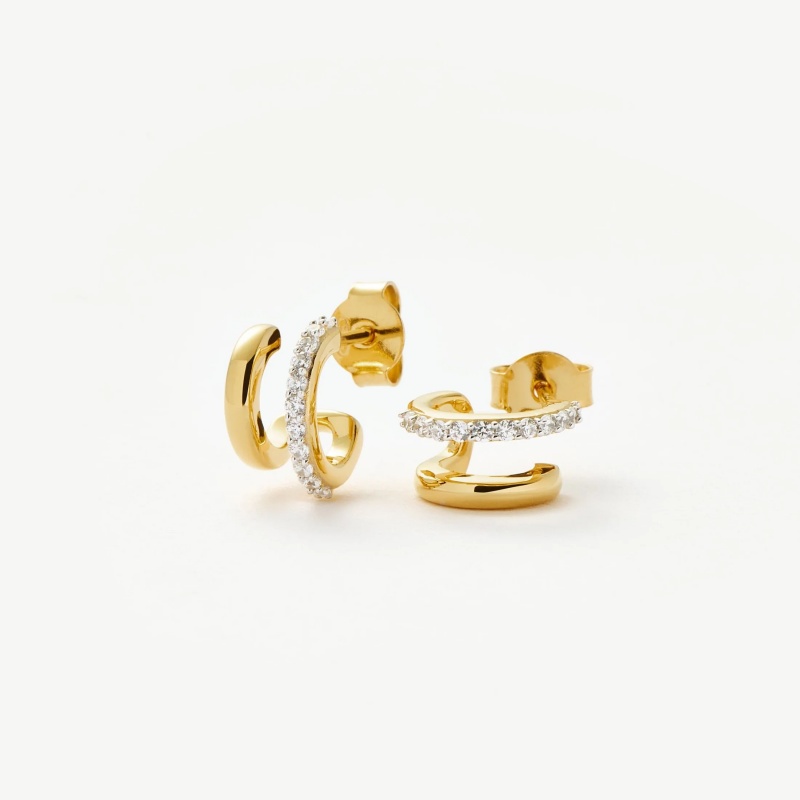
This article explores the anatomy of the classic double huggie, the technical and aesthetic reasons for sterling silver’s dominance in this category, and the manufacturing philosophy that positions JINGYING as a reliable OEM/ODM partner for jewelry brands seeking to capitalize on the enduring appeal of the huggie.
The Rise of the Huggie and the Double Huggie Phenomenon
The huggie earring—so named because it “hugs” the earlobe rather than swinging below it—has been the breakout star of the earring world for several seasons running. Industry trend analyses for 2026 confirm that the huggie remains central to the “curated ear” aesthetic, with compact, close-fitting hoops serving as the foundational building block for layered piercings. Unlike oversized statement hoops that demand a singular focus, huggies are inherently social pieces: they are designed to be worn in multiples, mixed with studs, cuffs, and dangles, and styled differently depending on the wearer’s mood or the occasion.
The double huggie takes this logic a step further. By presenting two coordinated hoops—either permanently linked, stacked as a set, or designed as a single earring that creates the illusion of a double piercing—it offers the visual payoff of a curated stack with the convenience of a single purchase. Retailers and brands have recognized that this format encourages multi-unit baskets: a customer who might otherwise buy one pair of earrings is more inclined to leave with three pieces when the design invites stacking and layering. The double huggie thus occupies a sweet spot between accessibility and perceived value, making it an attractive SKU for both emerging direct-to-consumer brands and established wholesale operations.
Why Sterling Silver Is the Material of Choice for Huggies
The huggie’s close-fitting form factor imposes specific material demands. Because the earring sits flush against the skin and is often worn for extended periods—sometimes overnight—the metal must be comfortable, durable, and safe for sensitive ears. 925 sterling silver meets these requirements with an almost tailor-made precision. The alloy consists of 92.5% pure silver combined with 7.5% other metals, typically copper, which hardens the metal enough to hold a clasp and survive daily wear while preserving the bright white color associated with fine silver.
For huggies specifically, the mechanical integrity of the hinge and snap-lock closure is a critical quality checkpoint. The metal must be rigid enough to maintain tension over thousands of open-and-close cycles, yet supple enough to avoid brittleness at the hinge joint. Sterling silver, when properly cast and heat-treated, provides this balance. It is also hypoallergenic when produced without nickel, a consideration that has become non-negotiable for brands targeting health-conscious consumers.
JINGYING’s material specifications reflect this understanding. The company works primarily with 925 sterling silver, applying finishes that range from high-polish rhodium plating for a bright, cool-toned look to warm gold plating (vermeil and filled options) and oxidized or matte treatments for vintage and minimalist aesthetics. Crucially, the manufacturer emphasizes that its sterling silver jewelry is waterproof and sweat-proof, addressing the consumer expectation that everyday fine jewelry should withstand the realities of daily life without turning green or losing its finish.
JINGYING: A Legacy Manufacturer Built for the Custom Era
Founded in 1998 in Panyu, Guangzhou—a region globally recognized for fine silver manufacturing—Guangzhou JINGYING Jewelry Co., Ltd. has grown from a modest workshop into a vertically integrated operation. Over more than two decades, the company has accumulated the kind of process knowledge that cannot be replicated quickly: how different alloys behave under casting, how plating thickness affects longevity, and how the tolerance of a hinge determines whether a huggie feels secure or flimsy on the ear.
JINGYING’s core offering is OEM and ODM jewelry manufacturing, with a specialization in earrings—including huggies, hoops, studs, and dangles—alongside rings, necklaces, bracelets, and pearl jewelry. The company positions itself as a one-stop solution for brand jewelers, handling everything from design interpretation and prototyping to mass production, quality control, and packaging. This end-to-end capability is particularly valuable for brands launching a double huggie collection, because it eliminates the coordination overhead of managing separate casting, plating, and assembly vendors.
The Custom Double Huggie Workflow: From Concept to Finished Pair
Producing a custom double huggie is a multi-stage process where design intent and metallurgical reality must be reconciled at every step. JINGYING’s workflow follows a structured path that has been refined over years of OEM/ODM production.
1. Design Interpretation and 3D Modeling. The process begins with the client’s concept—a sketch, a reference sample, a CAD file, or even a verbal description of a desired look. JINGYING’s design team translates this into a 3D CAD model, which serves as the digital blueprint for the piece. At this stage, critical decisions are made about hoop diameter, tube thickness, hinge geometry, and the spacing between the two hoops in a double design. The 3D model is then rendered as a resin prototype using rapid prototyping technology, allowing the client to evaluate scale and proportion before committing to metal.
2. Mold Creation and Casting. Once the design is approved, a metal master is created using CNC machining. This master becomes the basis for the production mold. In the casting stage, wax patterns are injected into the mold, assembled onto a tree, and invested in plaster. After the plaster hardens, the wax is burned out, and molten sterling silver is cast into the cavity under vacuum or centrifugal force. The quality of the cast is decisive: porosity, incomplete filling, or shrinkage can compromise the structural integrity of the hinge, the most mechanically stressed part of any huggie.
3. Finishing, Assembly, and Stone Setting. After casting, each piece is cleaned, filed, and polished. For double huggies with gemstone accents—a popular variation that adds perceived value without overwhelming the minimalist silhouette—stones are set using micro-inlay techniques. JINGYING employs precision setting methods designed to minimize stone loss, a common failure point in lower-cost huggies. The hinge and clasp are then assembled and tested for tension and alignment.
4. Plating and Surface Treatment. Plating is where visual consistency and durability are won or lost. JINGYING applies a two-stage plating process for its sterling silver pieces: a thick silver plating base is applied first to smooth the surface, followed by the final color layer—rhodium for white silver, or 14K/18K gold for vermeil and gold-plated variants. The company reports plating thickness of up to 3 microns, a specification intended to extend the wear life of the finish to approximately one year under normal conditions. For brands positioning their huggies as “sleep-safe” or “everyday wear,” this plating durability is a meaningful differentiator.
5. Quality Control and Packaging. Every finished piece passes through a multi-stage inspection. JINGYING’s QC protocol includes stone-security testing (using a steel needle to verify each setting and a 3-meter drop test) and plating adhesion testing (manual friction testing and machine reports on thickness). The final pieces are then cleaned, inspected for surface defects, and packaged according to the client’s branding requirements, whether that involves individual poly bags, branded cards, or custom gift boxes.
The Commercial Case for JINGYING’s Double Huggie Capability
For brands evaluating manufacturing partners, the double huggie presents a specific set of commercial and technical questions: Can the factory maintain hinge consistency across a production run? Will the plating survive the handling and try-on cycle at retail? Can the design be adapted to different finishes and stone options without requiring a new mold? JINGYING’s vertical integration addresses these questions directly. Because casting, polishing, plating, and assembly all occur under one roof, the company can control tolerances and trace defects back to their source more effectively than a fragmented supply chain.
The manufacturer also offers flexibility in materials and finishes. While sterling silver is the core substrate for the classic double huggie, JINGYING produces pieces in copper with gold plating for fashion-forward lines where cost sensitivity is higher, as well as 9K, 10K, 14K, and 18K gold for luxury-tier collections. Surface options include rhodium plating (for a bright white finish), gold plating in yellow or rose tones, oxidized finishes for a vintage or gothic look, and matte treatments for a modern, understated aesthetic. This breadth allows a brand to launch a cohesive double huggie collection across multiple price points without sourcing from different factories.
Customization, Privacy, and the OEM/ODM Advantage
JINGYING’s OEM/ODM model is built around the principle that the client’s brand, not the factory’s, should be visible in the final product. The company offers private label services, including personalized logos on the jewelry itself and on packaging. For brands that treat design as a competitive moat, JINGYING signs non-disclosure agreements (NDAs) before the manufacturing process begins, ensuring that proprietary designs are not shared or replicated for other clients.
This confidentiality commitment is particularly relevant in the huggie category, where design differentiation often lies in subtle proportions—a slightly thicker tube, a distinctive hinge profile, a unique spacing between the two hoops—rather than in dramatic ornamentation. A manufacturer that understands and protects these nuances becomes a strategic partner rather than a transactional supplier.
Aligning with Market Demand: Why the Double Huggie Belongs in the 2026 Collection
The commercial rationale for investing in double huggie production is supported by broader market signals. Wholesale data indicates that huggies are among the highest-velocity earring categories, with top-performing styles turning over within approximately forty-five days at the wholesale level—a signal of strong end-customer demand and healthy margin retention for retailers. The “stacked ear” trend, which positions huggies as the anchor of a layered look, has proven resilient across seasons, and industry forecasts for 2026 place huggies alongside chunky hoops and sculptural statement pieces as the defining earring silhouettes of the year.
The double huggie format amplifies these dynamics. It simplifies the styling decision for the consumer (the “stack” is built into the product) while creating a natural upsell pathway for the brand (the double huggie serves as a gateway to additional single huggies, studs, and cuffs). For manufacturers, this translates into predictable demand for a product family that rewards precision and finish consistency—precisely the capabilities that JINGYING has spent over two decades refining.
Conclusion: A Manufacturing Partner for the Long Arc of a Classic
The double huggie is not a fleeting trend piece. Its success is rooted in a fundamental shift in how consumers approach jewelry: toward fewer, better pieces that can be worn daily, layered intentionally, and trusted to hold up to the rhythms of real life. Sterling silver is the material that makes this promise credible, and the manufacturer behind the piece is the variable that determines whether the promise is kept.
JINGYING’s value proposition in this context is straightforward: deep material expertise, end-to-end production control, and a customization model designed around the brand’s needs rather than the factory’s convenience. From the first CAD sketch to the final QC inspection, the company’s workflow is structured to deliver double huggies that feel secure on the ear, maintain their finish through repeated wear, and carry the client’s identity with quiet confidence. For brands building a sterling silver earring collection in 2026 and beyond, that combination of craft and reliability is not merely an advantage—it is the foundation of a product line that can endure.