Custom Helium Bracelet Silver Jewelry Manufacturing: A Complete Guide from Design to Delivery
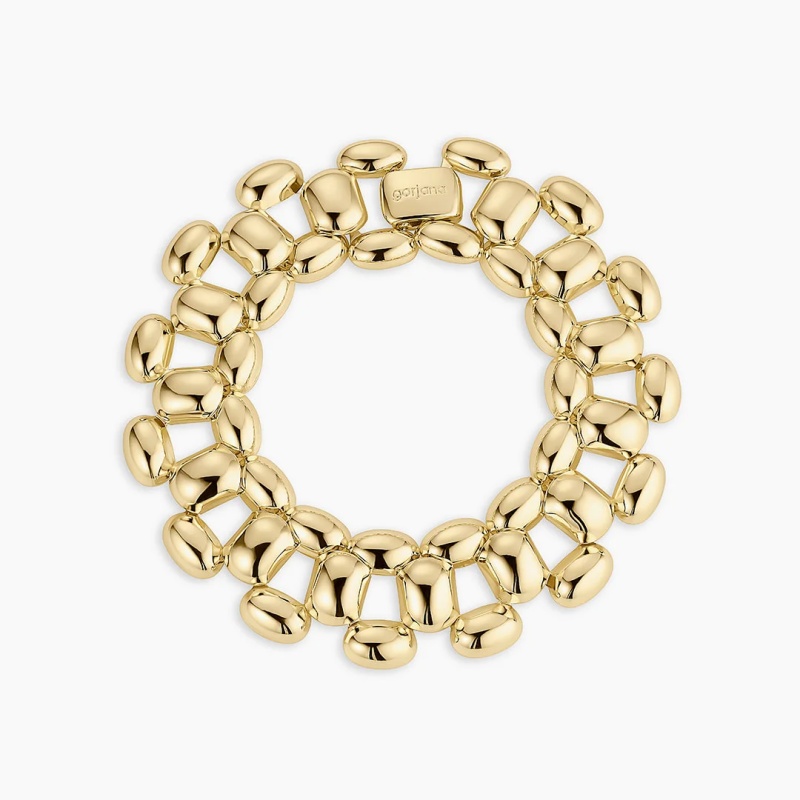
A “helium bracelet” in silver jewelry occupies an unusual position. It is not a mass-market category in the way that a tennis bracelet or a curb chain is. Instead, the term carries two overlapping meanings. In commercial product lines, it often names a lightweight, high-shine bangle or cuff designed to sit easily in a stack—pieces such as the Zoey Helium Bracelet use silver plating over brass to achieve a bright, wearable finish at an accessible price point. At the upper end, it can denote a sculptural, made-to-order cuff, such as the Rosario Navia Helium Cuff, where the “helium” reference signals levity, volume, and a floating quality in the metal.
There is, however, a third and more technically precise meaning that deserves attention in a manufacturing guide: helium as a process gas in precision silver casting. In investment casting of silver jewelry, the mould cavity is evacuated and then flushed with a light gas—helium is specifically identified in precision-casting patents—before the molten metal is poured. Because helium penetrates porous investment material rapidly and thoroughly, it helps displace air and reduce the gas-related defects that can mar a silver surface. Argon is then introduced as a heavier pressurising gas to drive the melt into fine detail and minimise shrinkage porosity. A custom helium bracelet, understood in this fuller sense, is therefore a silver bracelet whose manufacture has been designed around clean, controlled casting conditions—conditions that matter enormously when the final object is a thin, wide, or hollow-form bracelet with no room for hidden porosity.
This guide follows that object from the first design conversation to the moment it reaches the wearer. It treats helium neither as a gimmick nor as a decorative label, but as one variable among many in a disciplined manufacturing sequence. The aim is practical: to show how a custom silver bracelet is designed, cast, finished, tested, marked, packed, and delivered in a way that justifies the word “custom” and survives the scrutiny of daily wear.
1. Design and Specification: Defining the Object Before the Metal
Custom silver bracelet manufacturing begins not with silver but with constraints. A bracelet is mechanically different from a pendant or an earring: it must open and close, or pass over the hand, and it must tolerate repeated flexing at a hinge, clasp, or continuous band. Before any CAD file is drawn, the specification should settle the bracelet’s inner circumference, band width, thickness profile, closure type, and intended fit. A close-fitting cuff may require a different alloy temper and cross-section from a loose bangle that will be stacked with other pieces.
The design stage is also where the “helium” character of the piece is defined. If the intention is a lightweight visual effect—a broad face with a hollow or tapered interior—the wall thickness must be modelled explicitly. A bracelet that looks substantial but weighs less than expected depends on controlled internal geometry, not on guesswork at the bench. If the intention is a solid, sculptural cuff, the design must account for the higher silver weight and the casting time required to fill a thicker section without shrinkage. Digital modelling allows these decisions to be tested before precious metal is committed: CAD software is used to visualise surface, pattern, and proportion, and a 3D-printed prototype lets the maker fine-tune fit and form before casting in silver. This is not a rejection of handcraft; it is a way of ensuring that hand-finishing time is spent on refinement rather than on correcting structural errors.
Material specification runs alongside geometry. Sterling silver, the default for fine silver jewelry, is an alloy of 92.5% silver and 7.5% copper (or another hardening element). Pure silver is too soft for most bracelet applications; the copper addition raises hardness and durability while preserving the white colour of silver. For a bracelet that will be worn daily, the alloy choice, temper, and cross-sectional thickness together determine whether the piece will hold its shape. A custom manufacturer should be able to state the silver fineness, the planned cast weight, and the expected finished weight after filing and polishing. These figures become the basis for pricing and for the client’s approval.
2. From Digital File to Castable Pattern
Once the CAD model is approved, the file is prepared for production. In the most common workflow, the model is 3D-printed in a castable wax or resin, and the printed pattern becomes the sacrificial core of an investment mould. The “tree” method is widely used: multiple wax patterns are attached to a central stem, the tree is encased in investment plaster, and the wax is burned out to leave a network of cavities. For a single custom bracelet, the tree may carry only one or two patterns, but the principle is the same: the mould must reproduce the bracelet’s internal and external surfaces with enough fidelity that finishing does not erase the design.
This is the point at which the casting atmosphere becomes decisive. Silver melts at approximately 961°C, and molten silver is sensitive to gas pickup. Porosity in silver castings is commonly associated with the large difference in gas solubility between liquid and solid silver: gases dissolved in the melt can be rejected as the metal freezes, leaving bubbles or pinholes. For a bracelet with a broad, visible surface, even small porosity can become a finishing problem, because polishing opens the surface and reveals subsurface voids.
The helium-assisted casting approach addresses this problem from two directions. Before pouring, the mould cavity is evacuated and flushed with helium, a light gas that enters the pores of the investment material quickly and displaces air. After the melt is introduced, a heavier gas such as argon is used to pressurise the cavity, pushing the silver into the finest recesses and helping to suppress shrinkage porosity. The result is not a “helium-filled” bracelet in any literal sense; it is a bracelet cast under conditions designed to produce a cleaner, more predictable silver surface. For a custom piece where the client has approved a specific surface texture or a high-polish finish, that difference is directly visible.
3. Casting, Cleaning, and Structural Inspection
When the investment mould has been burned out and brought to casting temperature, the molten sterling silver is poured or pressure-assisted into the cavity. After solidification and cooling, the investment is broken away and the raw casting is separated from the sprue. The bracelet at this stage is a rough, grey-white object: the surface may carry investment residue, the sprue mark must be removed, and the edges are typically thicker than the final design requires.
The first inspection happens here, before any cosmetic finishing. The caster or bench jeweller should check the bracelet for incomplete fill, visible porosity, cracks, and dimensional distortion. A bracelet that has not filled completely at a thin section cannot be saved by polishing; it must be re-cast or re-designed. Similarly, porosity on a visible face may only become apparent after the first cut with a file. Catching these defects at the raw-casting stage protects the finishing budget and prevents a flawed piece from reaching the client.
This inspection is also where the helium-assisted process earns its place in the workflow. If the casting atmosphere and pressure sequence have done their job, the raw surface should be denser and more uniform than a gravity-poured silver casting, with fewer subsurface voids waiting to emerge during polishing. The maker should still expect to remove metal, but the removal should reveal solid silver rather than hidden cavities.
4. Bench Work: Filing, Assembly, and Dimensional Truth
Raw castings are refined by hand. Files of varying grain are used to true the edges, remove the sprue remnants, and bring the bracelet to its intended cross-section. For a cuff or bangle, this is also the stage at which the opening is adjusted, the ends are shaped, and the bracelet is checked against the agreed inner circumference. If the design includes a clasp or hinge, the components are fitted and soldered or assembled before final polishing. Bracelets are mechanically demanding objects: a clasp that looks correct on a flat pattern may bind once the band is curved, and a hinge that is slightly misaligned will transfer stress to the silver around it.
Handwork at this stage is not decorative. It is the step that converts a cast shape into a wearable object. The bench jeweller reads the bracelet in the hand, checking balance, springiness, and the comfort of the inner surface against the wrist. A custom bracelet that is dimensionally correct but uncomfortable has failed its specification. This is also where the surface character begins to be defined: a mirror-polished helium cuff, a brushed bangle, and a textured band all require different filing sequences and different degrees of metal removal.
5. Pre-Finishing and Polishing: Controlling the Surface
Polishing is often treated as a final cosmetic step, but in silver bracelet manufacturing it is a structural and economic decision. A high-polish finish removes metal from the surface; if the casting contains porosity, polishing will expose it. The finishing sequence must therefore be matched to the casting quality and to the design’s tolerance for metal removal.
Mass finishing methods such as tumbling or vibratory polishing can be used for pre-finishing, especially where multiple bracelets are processed together. Tumbling with a suitable media can produce a uniform surface and, in sterling silver, has been associated with a hardening effect in the surface layer. However, tumbling alone rarely produces the crisp, mirror-bright surface expected of a fine silver bracelet. Bench polishing with a wheel and progressively finer compounds remains necessary for visible faces, edges, and recesses. The final step should always be a clean, lint-free polish by hand or with a dedicated silver polishing cloth, ensuring that no compound residue remains in the details.
For a helium-concept bracelet, the finishing strategy should support the design intention. If the piece is meant to look light and reflective, a high polish on the broad faces and a softer finish on the inner surface can enhance the effect without making the bracelet feel fragile. If the piece is meant to be sculptural, a controlled satin or brushed finish may be more appropriate, with polishing reserved for raised edges and the interior of the curve.
6. Plating, Anti-Tarnish Protection, and the Question of Longevity
Sterling silver tarnishes. The copper in the alloy reacts with sulphur-containing compounds in air, and the resulting dark film is especially noticeable in recessed areas and on pieces that are worn intermittently. For a custom bracelet intended as a long-term piece, tarnish management is part of manufacturing quality, not an afterthought.
Two approaches are common. The first is electroplating: a thin layer of rhodium or gold can be applied over the silver to deepen lustre and add a barrier against tarnish. Rhodium plating produces a bright, white surface; gold plating changes the colour entirely. Plating thickness matters: a very thin decorative plate will wear through at high-contact points, while a thicker plate adds durability but changes the feel and colour of the piece. Some manufacturers apply a base silver strike before the final plating to improve adhesion and surface smoothness. The second approach is an anti-tarnish e-coat: an invisible electrophoretic lacquer that seals the silver against oxidation and humidity. E-coat is particularly useful for bracelets with intricate recesses or mixed finishes, where plating would obscure detail. The choice depends on the design, the client’s colour preference, and the expected wear pattern.
For a custom helium bracelet, the finishing specification should state the plating or coating type, the target thickness where relevant, and the aesthetic result the client has approved. A “bright silver” bracelet that is actually rhodium-plated and a “sterling silver” bracelet with an anti-tarnish coat are different products, and the client should know which one they are receiving.
7. Hallmarking, Laser Marking, and Compliance
In many markets, a silver bracelet above a certain weight or offered for sale as a precious metal article must carry a hallmark indicating fineness. Hallmarking is not merely a stamp of origin; it is a statement of assayed purity. National systems differ, but the principle is consistent: the article is tested, and if it meets the declared standard—commonly 925 for sterling silver—it is marked with the purity grade and, in some jurisdictions, a unique identification code. Laser marking is increasingly used for hallmarks and for custom personalisation because it is non-contact, permanent, and suitable for finished or intricate pieces.
For a custom manufacturer, hallmarking should be planned into the production schedule, not added as a last-minute service. The bracelet must be finished enough for assay but not so far advanced that marking will damage a final surface. If the piece carries a client logo, a date, or a personal inscription, the layout of the hallmark and the personalisation must be resolved together so that neither is crowded or placed in a high-wear area. In markets where hallmarking is voluntary but widely recognised, the presence of a credible mark is a signal of quality that supports the custom price.
8. Packaging: Protection, Presentation, and Discretion
A finished silver bracelet is vulnerable in transit. It can be scratched by contact with other metal objects, tarnished by humidity, or bent if the package is compressed. Packaging must perform three functions simultaneously: protect the piece, present it as a considered object, and avoid advertising its value to opportunists.
The inner packaging should begin with acid-free tissue or a soft pouch, wrapped individually around the bracelet to prevent scratching and tangling. An anti-tarnish strip or bag adds a further barrier against oxidation during shipment. The wrapped bracelet then sits in a rigid jewellery box or a padded compartment; a bracelet should not be allowed to move loosely inside a larger box. Branded outer packaging can elevate the unboxing experience, but it should be placed inside a plain, unbranded outer carton so that the shipment does not announce “fine jewellery” on the doorstep. Corrugated outer packaging is the practical default for any insured jewellery shipment, and void fill should be used on all sides so that the inner box cannot shift.
9. Shipping, Insurance, and Delivery
The final stage is logistics, and it is here that many custom jewellery projects lose the quality they built in the workshop. Carriers have different declared-value limits and packaging requirements for jewellery. Some restrict jewellery shipments to a maximum declared value per package; others require corrugated boxes for insured pieces above a certain threshold. For high-value custom bracelets, a service with signature confirmation and a documented chain of custody is appropriate; registered or fully insured services exist precisely for pieces whose loss would be difficult to absorb.
The maker should also build a realistic delivery window into the client agreement. Custom silver bracelet production typically involves several sequential stages: design and CAD approval, pattern printing, casting, bench work, polishing, plating or coating, hallmarking, and packing. Lead times of several weeks are normal for made-to-order silver pieces, and complex custom work can extend beyond that. Quoting a delivery date without accounting for hallmarking turnaround or carrier transit time creates avoidable disappointment. A professional schedule includes buffer time for a re-cast or a finishing correction, because a custom piece that is rushed through inspection is not truly finished.
Conclusion
Custom helium bracelet silver jewelry manufacturing is, at its best, a chain of controlled decisions rather than a single dramatic act of creation. The design stage defines the object and its mechanical requirements. The casting stage uses atmosphere and pressure—including helium as a light flushing gas—to produce a silver surface that can survive finishing. The bench and polishing stages convert that casting into a wearable, comfortable bracelet. Plating or e-coating determines how the surface will age. Hallmarking certifies what the metal actually is. Packaging and shipping protect the finished piece and deliver it without diminishing the care that went into it.
The word “helium” can remain a design language, a product name, or a reference to a casting atmosphere; what matters is that the manufacturing process behind it is transparent and disciplined. A client who commissions a custom silver bracelet is entitled to know the silver fineness, the casting method, the finishing specification, and the delivery schedule. A maker who can answer those questions precisely—and who builds helium-assisted casting, proper hallmarking, and protective logistics into the quoted price—is offering something more valuable than a decorative object. They are offering a bracelet that will still be recognisably itself after years of wear.