The Sovereign Standard: A Treatise on the Craft and Commerce of Bespoke Crossguard-Style Pendant Manufacturing
In the pantheon of personal adornment, the pendant necklace holds a unique sovereignty. It is a locus of identity, a declaration of allegiance, an artifact of personal mythology suspended against the heart. Within this domain, a specific archetype has emerged from the mists of history and popular culture to command a formidable and enduring presence: the crossguard-style pendant. Evoking the timeless silhouette of a sword’s hilt—the guard that separates blade from grip, the crucible of force and control—this design motif speaks to themes of protection, strength, heritage, and resolved will. It is more than jewelry; it is a wearable sigil.
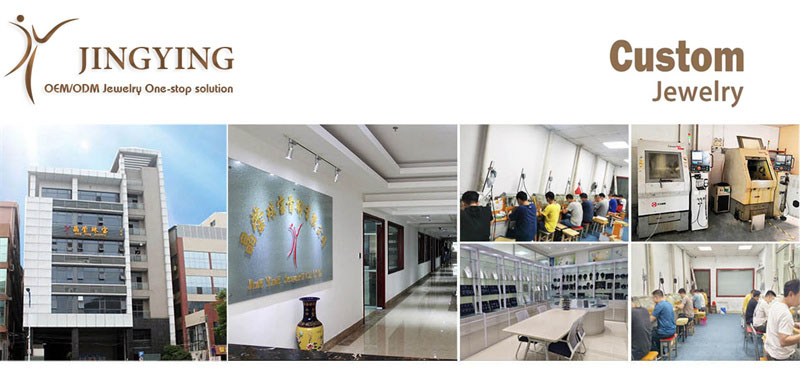
Yet, for a brand, retailer, or designer seeking to translate this potent symbolism into a tangible product line, the journey from concept to consumer is fraught with complexity. It demands not just creative vision but a deep, synergistic partnership with a manufacturing entity of commensurate capability and integrity. This is the realm of the specialist OEM/ODM (Original Equipment Manufacturing/Original Design Manufacturing) manufacturer. This treatise explores the multifaceted world of custom crossguard-style pendant manufacturing, using the exemplary 23-year tenure of a manufacturer like JINGYING as our archetype. We will dissect the materials, processes, design collaboration, ethical imperatives, and strategic value that transform a sketch or an idea into a high-quality, market-ready piece of art jewelry.
I. The Symbolism Ascendant: Why the Crossguard Endures
To appreciate the manufacturing nuance, one must first understand the cultural and psychological weight of the design. The crossguard, as a component of the sword, is rich in iconography:
- Protection & Boundary: Its primary function is defensive, physically preventing an opponent’s blade from sliding down to injure the hand. Symbolically, as a pendant, it becomes an amulet of warding, a marker of personal boundaries.
- Balance & Justice: It sits at the fulcrum of the weapon, balancing the weight of the blade with the grasp of the wielder. This translates to metaphors of equilibrium, measured judgment, and the ethical application of power.
- Heritage & Lineage: From medieval broadswords to cinematic legends like Excalibur or the lightsabers of Star Wars, the sword hilt is an instantly recognizable emblem of chivalric codes, ancestral legacy, and epic narrative.
- Modern Minimalism: Stripped of literal ornamentation, the clean, geometric lines of a crossguard can be rendered in a sleek, contemporary aesthetic, appealing to a modern sensibility that values abstract strength and architectural form.
This symbolic density makes the crossguard-style pendant incredibly versatile. It can anchor collections for niche markets: martial arts aficionados, historical reenactors, fantasy genre fans, luxury menswear, or boutique brands crafting a narrative of resilience and empowerment. The manufacturer’s task is to be fluent in this language of forms, capable of interpreting it across a spectrum from historically accurate replica to avant-garde abstraction.
II. The Foundation of Fidelity: Materials and Metallurgy
The soul of a pendant lies in its material constitution. A manufacturer’s expertise is fundamentally rooted in its mastery of metals and finishes, determining not only aesthetics but longevity, skin safety, and perceived value. For a crossguard-style pendant, which often features sharp angles, fine detailing, and a substantial presence, material integrity is paramount.
1. The Substrate: Base Metals with Purpose
- Copper Alloys (Brass, Bronze): The workhorse of detailed jewelry manufacturing. Excellent for casting intricate designs like filigree or engraved patterns on a crossguard. It provides a smooth, dense base for plating. A premium manufacturer will use high-purity alloys to minimize porosity, which can lead to pitting and plating failure.
- Sterling Silver (925): The entry point into precious metal jewelry. Sterling silver (92.5% pure silver, 7.5% strengthening alloy, usually copper) is hypoallergenic, possesses a timeless intrinsic value, and offers a brilliant white sheen. Its malleability allows for fine sculpting and engraving. Crucially, a manufacturer like JINGYING, which emphasizes quality, will ensure their sterling silver is nickel-free and lead-free, and processed to resist tarnishing and never turn skin green—a common complaint with inferior alloys or improper sealing.
2. The Alchemy of Surface: Plating and Finishing
The crossguard’s visual impact is largely defined by its finish. Durability here is non-negotiable.
- Gold Plating (Vermeil & Gold Filled): Simply “gold plating” is insufficient. Distinctions matter.
- Vermeil: A premium standard. Refers to a thick layer of gold (typically 2.5+ microns) plated over a sterling silver base. This combination offers the nobility of solid gold’s appearance with the affordability of silver. It is highly durable and suitable for heirloom pieces.
- Gold Filled: Mechanically bonded layer of gold (constituting at least 5% of the item’s total weight) onto a brass core. Extremely durable, resistant to tarnishing and wear, often lasting decades with care. It is a superior alternative to thin electroplating.
- Advanced Plating Techniques: Top manufacturers employ multi-stage plating processes: a barrier layer (like nickel-free palladium) to prevent metal migration, followed by multiple layers of gold, finished with a protective anti-tarnish sealant (e.g., rhodium for white gold looks) to enhance scratch resistance and maintain color fidelity.
- Solid Gold Options (10K, 14K, 18K): The pinnacle of material choice. For luxury brands, offering solid gold crossguard pendants is essential. Manufacturing in solid gold requires specialized expertise in alloying, casting, and finishing to ensure the gold’s karat purity and color (yellow, white, rose) are perfectly consistent. This represents the highest level of trust and investment between brand and maker.
3. The Crucible of Durability: Engineering for Wear
A pendant is subject to friction, sweat, cosmetics, and environmental factors. A crossguard’s edges are particular stress points. A sophisticated manufacturer addresses this through:
- Rounded/Polished Edges: Even on a “sharp” design, microscopic rounding prevents wear points from thinning plating excessively.
- Superior Soldering: For any assembled parts (e.g., a bail attached to the guard), high-temperature, high-purity solder is used to create seamless, strong joints that resist breaking.
- Waterproof & Sweat-Proof Assurance: Through meticulous sealing of plating and the use of stable alloys, a quality piece is engineered to withstand daily life, including contact with water and perspiration, without degrading.
III. The Collaborative Genesis: The OEM/ODM Process from Conception to Creation
This is where the manufacturer transforms from a fabricator into a strategic creative partner. The process is a meticulously choreographed dialogue.
Phase 1: The Spark – Initiation & Briefing
The client arrives with a vision. This could be a mood board, a hand sketch, a reference photo, or simply a verbal concept. For a crossguard pendant, references might range from a Viking sword hilt to a minimalist Art Deco interpretation. The manufacturer’s design team engages in a deep-dive consultation to understand: target audience, price point, desired materials, aesthetic (rugged vs. refined), and brand story.
Phase 2: The Blueprint – Design & Technical Translation
- ODM Leverage: If the client seeks design support, the manufacturer’s in-house designers draw upon their library of successful forms and market trends to present original design concepts. For a crossguard, they might propose variations in proportion, texture (hammered, brushed, polished), or the incorporation of gemstones or enamel into the guard’s quillons.
- CAD Modeling & Engineering: The approved concept moves into Computer-Aided Design (CAD). This is the critical engineering phase. A 3D model is created with exact dimensions, ensuring structural integrity. The bail (the loop for the chain) is strategically placed for optimal hang and balance. Wall thickness is calculated to be robust without being clumsily heavy. This digital model is shared with the client for approval, often with photorealistic renderings in different finishes.
- Prototyping: Once the CAD is approved, a prototype is made, usually via 3D printing in resin or wax. This tangible model allows the client to feel the weight, inspect the details, and test the wearability. For a crossguard pendant, checking how it lies on the chest is essential. Refinements are made at this stage.
Phase 3: The Forge – Production Mastery
- Mold Making: For casting, a master model is used to create a precise rubber mold.
- Casting: Molten metal is injected into the mold—the “lost-wax” casting method for precious metals, centrifugal casting for brass. This step captures every detail.
- Devesting & Cleaning: The raw casting is removed, and its sprue (feeding channel) is cut away.
- Pre-Polishing & Assembly: The pendant is filed, sanded, and pre-polished to remove any casting seams. Any components are soldered together.
- Finishing: This includes final texturing (satin, mirror polish, sandblasting) and meticulous hand-polishing to achieve the desired luster.
- Quality Control (QC): Each piece undergoes rigorous inspection for surface flaws, structural soundness, and plating uniformity. This is where the promise of “not turning green” is validated through chemical stability checks.
Phase 4: The Presentation – Branding & Packaging
The manufacturer’s service extends to becoming an extension of the brand’s identity.
- Private Label & Custom Packaging: Pieces can be finished with the client’s personalized logos, hallmarks, or engravings. They are presented in branded ring boxes, pendant cards, or velvet pouches, completing the unboxing experience.
- Full Collection Development: Beyond a single pendant, the partnership can scale to develop full collections: matching rings, earrings, bracelets, and chains, ensuring design coherence across the product line.
IV. The Bastion of Trust: Intellectual Property, NDA, and Strategic Partnership
In the competitive world of jewelry, a design is sacred intellectual property. The relationship between brand and manufacturer is built on a foundation of unwavering trust.
- The Non-Disclosure Agreement (NDA): As explicitly stated by principled manufacturers, an NDA is not a mere formality but the bedrock of the partnership. Signed before any exchange of sensitive ideas, it legally binds the manufacturer to confidentiality. It guarantees that a unique crossguard design, born from a client’s imagination, will never be replicated, sold, or shared.
- Preserving Client Anonymity: A manufacturer serving global brands understands the market sensitivity of its client list. Discretion is paramount. A manufacturer like JINGYING rightly states its responsibility to never reveal client identities or operations, allowing brands to maintain their market mystique and competitive edge.
- Ethical Sourcing & Compliance: Increasingly, brands require assurance that materials are responsibly sourced. A leading manufacturer will have traceable supply chains for metals and gems, adhering to regulations concerning conflict minerals and environmental stewardship.
V. The Competitive Edge: Why Partner with a Specialist Manufacturer?
Choosing a generic jewelry factory versus a specialized OEM/ODM partner like JINGYING, with over two decades of focused experience, is a strategic decision with profound implications.
- Deep Material Expertise: They understand how different metals and plating behave with a design featuring the angles and mass of a crossguard, pre-empting production issues.
- Design Fluency: They are not just executing a drawing; they are collaborating in the language of the form, offering constructive insights to enhance manufacturability and wearer comfort.
- Vertical Integration & Quality Control: Controlling most stages of production in-house ensures consistent quality, shorter lead times, and better cost management.
- Long-Term Value & Brand Protection: By delivering durable, high-plating-quality pieces, they protect the brand from returns, complaints, and reputational damage. A pendant that lasts builds customer loyalty.
- Scalability and Flexibility: They can handle small initial runs for market testing and seamlessly scale to large production volumes, adapting to the brand’s growth trajectory.
Conclusion: Forging Legacies, Not Just Products
The creation of a custom crossguard-style pendant necklace is a microcosm of modern luxury and brand craftsmanship. It is an alchemical process where symbolism is translated into substance, where a partner manufacturer’s technical prowess and ethical framework become the invisible pillars supporting a brand’s visible identity.
For the entrepreneur launching a niche line, the established jeweler expanding a collection, or the designer with a singular vision, the message is clear: the path to a successful, durable, and meaningful product lies in a strategic alliance with a manufacturer that embodies more than just workshop capability. It requires a partner who respects the sanctity of ideas, masters the science of materials, and is committed to a philosophy of quality, durability, and discrete excellence.
Thus, the final product—the crossguard pendant that finds its way to the end customer—is more than a fashion statement. It is the culmination of a trusted partnership, a piece forged not only in metal but in confidence, collaboration, and a shared dedication to the sovereign standard of craftsmanship.