How to Manufacture Emerald Bezel Marquise Ring | May Birthstone Jewelry at JINGYING
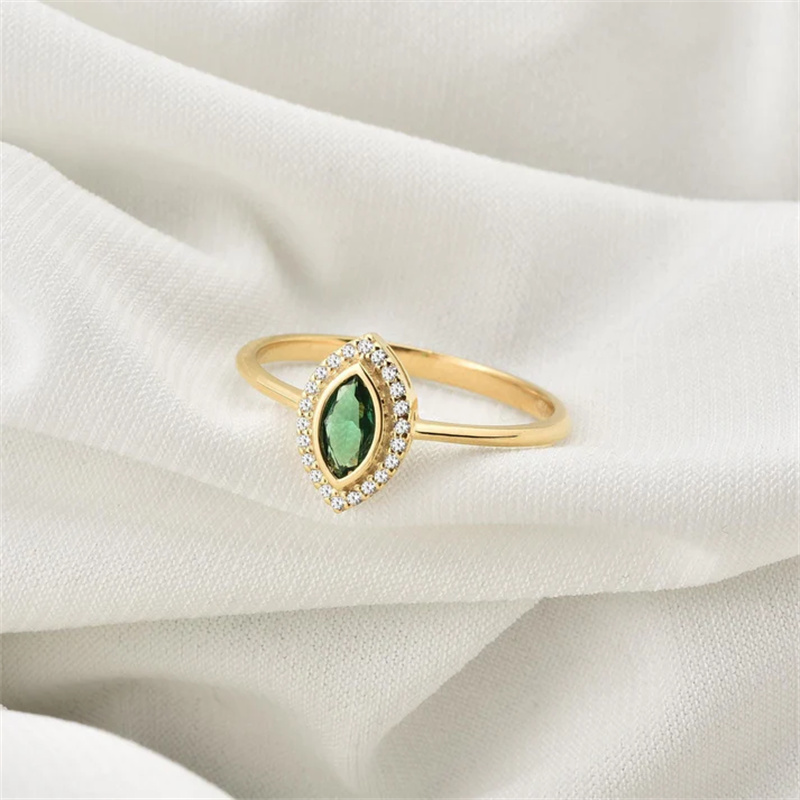
How to Manufacture Emerald Bezel Marquise Ring | May Birthstone Jewelry at JINGYING
LET’S GET STARTED : mo@kingjy.com
Introduction: The Art of the Marquise
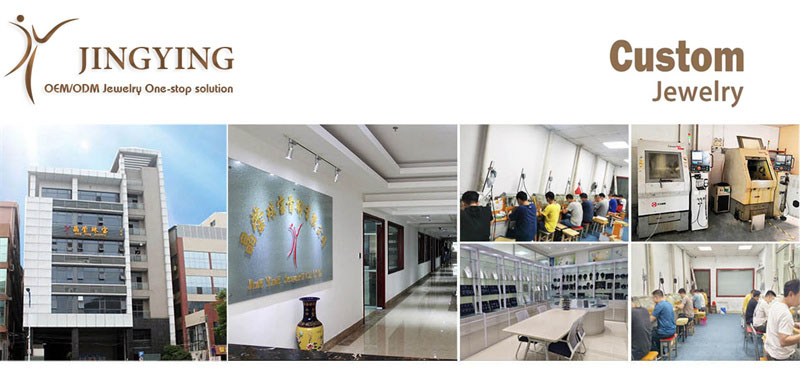
The Marquise cut, with its elongated, boat-like silhouette and pointed ends, is a shape that maximizes carat weight and creates an illusion of length on the finger. When paired with the lush, deep green of an emerald—the birthstone for May—the result is a piece of jewelry that speaks of royal elegance and botanical vitality. At JINGYING, a Guangzhou-based manufacturing powerhouse with over 23 years of industry experience, the creation of such a piece is not merely a production process; it is a precise orchestration of metallurgy, gemology, and digital craftsmanship .
This guide provides a technical deep dive into the exacting process of manufacturing an Emerald Bezel Marquise Ring at JINGYING. We will explore the journey from the initial CAD concept to the final quality assurance (QA) checks, focusing on the specific challenges of the marquise shape and the security demanded by the bezel setting.
Chapter 1: Design & Digital Engineering (CAD)
Before any metal is melted or stone is set, the ring exists as data. At JINGYING, the process begins with the client’s vision—whether a hand-drawn sketch, a photograph, or a brief .
1.1 The Marquise Parameters
The engineering team utilizes RhinoGold and Matrix software to construct the 3D model. The marquise shape presents specific structural challenges: the pointed ends (tips) are vulnerable to chipping if not properly protected. In the digital model, engineers calculate the exact thickness of the bezel wall required to cover these tips without obscuring the stone’s brilliance .
1.2 Design for Manufacturing (DFM)
JINGYING emphasizes “Design for Manufacturing” to avoid production pitfalls. For a bezel setting, the CAD must account for the “seat”—the shelf inside the metal collar where the emerald will rest. The tolerance is calculated to within 0.02mm; too loose and the stone will wobble, too tight and the stone will crack during setting. The wall thickness of the bezel is standardized at approximately 0.3mm to 0.4mm for 925 sterling silver or 14K gold bases, ensuring enough malleability to fold over the stone .
1.3 Rendering and Approval
Photorealistic renders are generated to simulate the light interaction with the emerald. Given that May birthstones range from pale green to deep forest hues, the client approves the digital “color story” at this stage. For high-end precision, JINGYING utilizes 3D printed resin prototypes to allow the client to feel the ergonomics of the marquise band before casting .
Chapter 2: Material Selection – The Foundation of Quality
JINGYING operates a strict inventory system, primarily utilizing 925 Sterling Silver and solid 10K-18K Gold as base metals for fine jewelry .
2.1 The Base Metal
For the Emerald Bezel Marquise Ring, 925 Sterling Silver is a premium choice for its hypoallergenic properties and bright white backdrop, which enhances the green of the emerald. JINGYING sources certified, lead-free, and nickel-free silver alloys to prevent skin reactions .
2.2 The Emerald (May Birthstone)
The “star” of the ring is the emerald. JINGYING offers two distinct paths for sourcing this gem:
- Natural Emeralds: Known for their unique inclusions (the “jardin” or garden), these are sourced for high-value collections.
- Lab-Created Emeralds: For commercial fine jewelry, JINGYING frequently utilizes lab-grown emeralds. Chemically identical to mined stones (Chromium and Vanadium beryl), they offer superior durability and clarity. Because they lack the fractures of natural stones, they are significantly safer to set in a high-stress bezel, reducing the risk of the tips snapping during the crimping process .
Chapter 3: From Wax to Metal (Casting)
Once the design and materials are approved, JINGYING initiates the “Lost-Wax Casting” process, the industry standard for high-detail jewelry.
3.1 3D Printing and Tree Assembly
The approved CAD file is sent to high-resolution SLA (Stereolithography) 3D printers. These printers produce a wax or resin replica of the ring. Multiple replicas are attached to a central metal sprue, forming a “tree.” This allows for multiple rings to be cast in a single pour .
3.2 Investment and Burnout
The wax tree is placed into a flask and filled with a gypsum-based investment plaster. Once set, the flask enters a kiln (the burnout furnace) heated to approximately 1,382°F (750°C). The wax melts away, leaving a perfect negative cavity of the ring. Crucially, for the marquise bezel, the burnout must be complete; any ash residue left in the cavity will create porosity in the final metal ring .
3.3 Vacuum Casting
Molten 925 Silver is melted in a crucible. JINGYING uses vacuum casting machines to force the liquid metal into the hot flask. The vacuum pulls the metal into the sharp corners of the marquise bezel wall, ensuring the fine detail of the setting is captured perfectly .
Chapter 4: The Art of the Bezel Setting
This is the most delicate phase of manufacturing the Marquise Ring. Unlike prongs, which hold a stone at specific points, a bezel wraps entirely around the circumference of the gem.
4.1 Preparing the Seat
Once the raw casting is cut from the tree, a skilled settler uses a micro-motor drill (a “pulley”) to cut the bearing (seat) inside the bezel wall. For a marquise stone, the settler must ensure the seat is level at both pointed ends. If the seat is deeper on one tip than the other, the stone will sit crooked .
4.2 Stone Placement
The lab-created or natural emerald is gently pressed into the bezel seat. It should fit snugly, often requiring a jeweler’s press to snap it into place.
4.3 Burnishing the Bezel
Using a specialized tool called a burnisher or a roller, the jeweler begins to push the fine metal wall over the edge of the emerald.
- The Challenge: The marquise has straight sides and sharp points. If the metal is pushed too hard at the points, it can crack the stone. If not pushed enough, the stone will fall out.
- The Technique: JINGYING artisans first secure the straight sides, moving methodically from the center toward the points. They use a “rocking” motion with a flat burnisher to slowly draw the metal over the crown of the emerald, creating a smooth, polished rim that holds the May birthstone securely without the need for claws .
Chapter 5: Plating, Polishing, and Surface Finishes
The raw silver or gold casting emerges from casting with a dull, matte “cast skin.” The transformation to a high-luxury finish occurs in the finishing department.
5.1 Pre-Finishing (Tumbling)
The rings are placed in magnetic pin tumblers or rubber barrels with stainless steel shot. This process work-hardens the metal and polishes hard-to-reach areas inside the band .
5.2 Hand Polishing
Master polishers use a series of abrasive wheels (Silicon wheels, Tripoli, and Rouge compounds) to bring the ring to a mirror shine. For a bezel-set marquise ring, the polisher must be careful not to touch the emerald with the high-speed buffing wheel, as heat can damage the stone or melt the wax often used to protect it during final polish.
5.3 Plating (Rhodium or Gold)
If the ring is made of 925 Silver but requires a white gold or yellow gold look, it enters the electroplating baths. JINGYING utilizes “green electroplating” technology, which avoids toxic cyanides.
- Rhodium Plating: For white metals, a flash of Rhodium (a platinum-group metal) is applied. This gives the ring a hyper-white, mirror finish that resists tarnishing and enhances the green of the emerald through contrast.
- Vermeil/ Gold Plating: For yellow gold versions, a thick layer of 18K or 24K gold is electroplated over the silver, meeting the 2.5-micron standard for Vermeil .
Chapter 6: Quality Control (QC) and Assurance
No ring leaves the JINGYING facility without passing the rigorous 7-Point Inspection. For the Emerald Bezel Marquise Ring, the checklist is specific:
- Stone Security: The bezel wall is inspected under 10x magnification to ensure there are no gaps between the metal and the emerald. A “wiggle test” confirms the stone is locked.
- Tip Protection: The pointed ends of the marquise are checked for “puckering” (where the metal folds unevenly) or sharp edges that could snag clothing.
- Plating Thickness: X-Ray Fluorescence (XRF) analyzers verify the karat and micron thickness of the gold or rhodium plating .
- Fit and Comfort: The inner band is checked for burrs. The outer profile is checked for symmetry.
- Final Aesthetic: The alignment of the emerald’s facets is checked against the centerline of the ring shank.
Conclusion
Manufacturing an Emerald Bezel Marquise Ring at JINGYING is a symphony of old-world craftsmanship and new-world technology. The process relies on the precision of CAD to construct the delicate bezel wall, the chemistry of vacuum casting to form the metal, and the steady hand of the setter to push that wall over the fragile tips of the May birthstone.
For brands and designers looking to offer high-quality birthstone jewelry, JINGYING provides a complete one-stop solution—from the initial 3D render to the final rhodium dip. The result is a ring that not only captures the essence of May but is engineered to last a lifetime, protecting the precious emerald within its sleek, modern cradle.